Award-Winning Physics Tutors
serving Green Bay, WI
Physics
Tutors in Green Bay
Private 1-on-1 tutoring, weekly live classes for academic support, test prep & enrichment, practice tests and diagnostics, and more to elevate grades and test scores.
Based on 3.4M Learner Ratings
UniversitiesSchools & Universities
DeliveredHours Delivered
ProficiencyGrowth in Proficiency
Who needs tutoring?
No obligation. Takes ~1 minute.
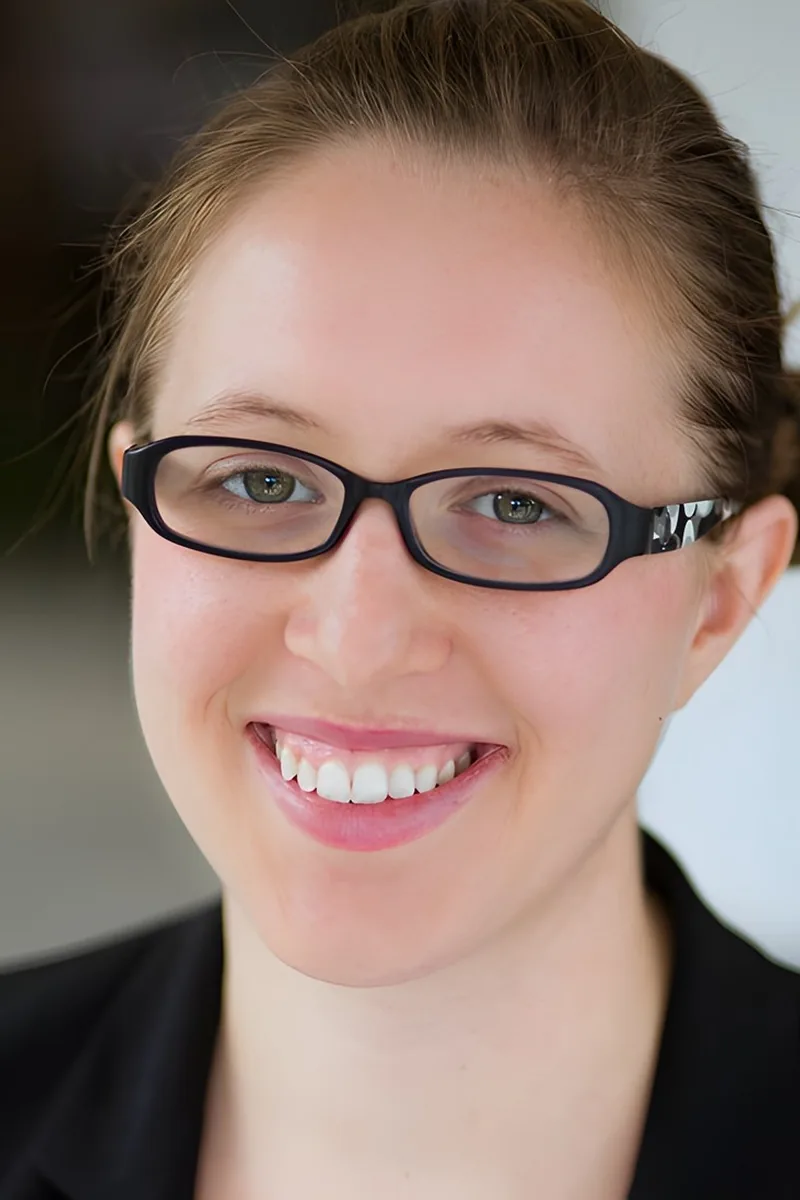
Understanding physics means seeing the same core principles — Newton's laws, conservation of energy, wave behavior — show up in wildly different problems. Amber teaches students to identify which principle applies and how to set up the math, drawing on her strong background in both science and mathematics. Her 5.0 client rating speaks to an approach that makes even tricky free-body diagrams and projectile motion problems feel manageable.
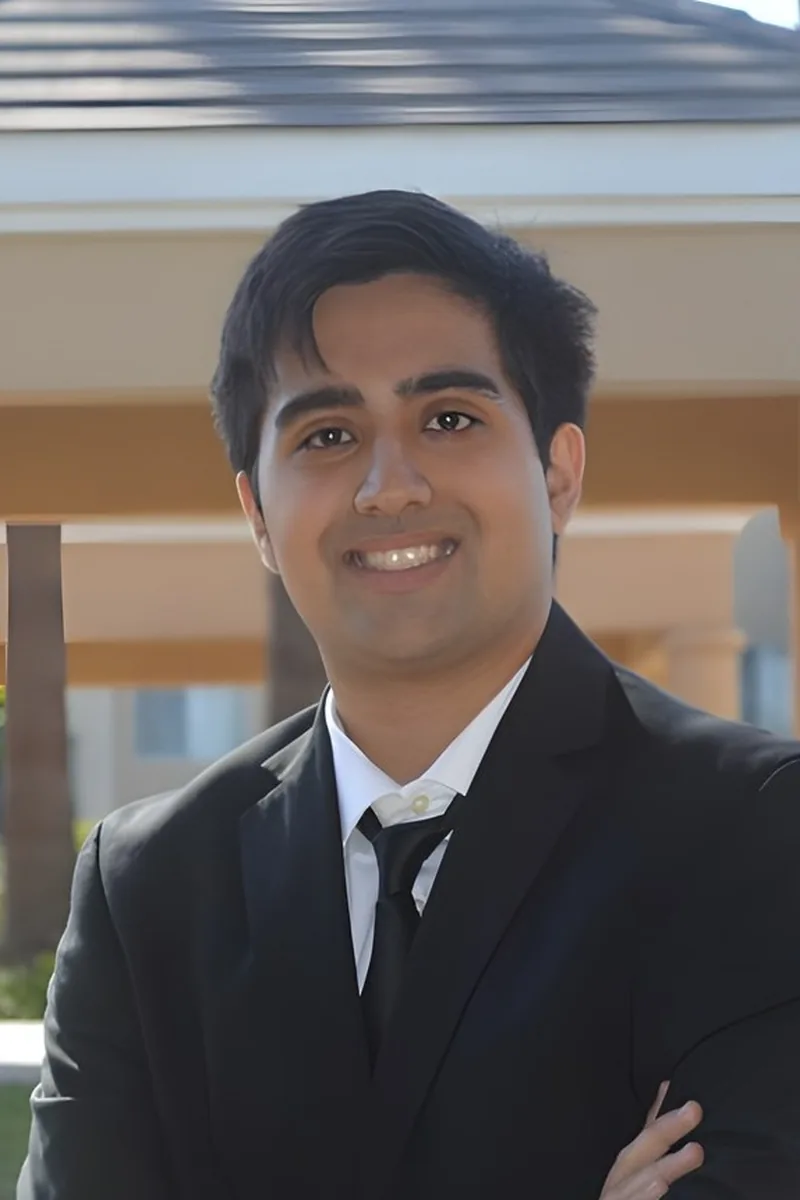
Medical school at the Medical College of Wisconsin demands a command of mechanics, fluid dynamics, and thermodynamics that goes well beyond intro-level physics — Abrahim applies those principles daily in contexts like blood pressure dynamics and respiratory mechanics. His biology degree from UCLA (cum laude) and a 34 ACT underscore the quantitative chops he brings to breaking down force diagrams, energy conservation setups, and multi-step kinematics problems. Rated 5.0 by students.
Kinematics, force diagrams, and energy conservation problems all require translating a physical scenario into math — a skill Karann sharpened through her biological engineering degree and her current work modeling ecological systems. She walks students through each physics problem by first building a clear picture of what's happening physically before touching a single equation.
Thomas's math and statistics training at Carleton means the calculus and vector algebra that derail most physics students are second nature to him — so sessions stay focused on the physics itself, not on untangling the math underneath. He's especially sharp at teaching students to translate a messy word problem into a clean free-body diagram or energy equation, then carry the quantitative work through without losing track of what the numbers mean. Holds a 5.0 rating.
Two physics degrees and a master's in atmospheric and space sciences mean Richard doesn't just know the textbook — he's applied Newtonian mechanics, electromagnetism, and fluid dynamics to research-level problems. He unpacks each concept by building it from first principles, so students develop physical intuition alongside the math.
Aaron's applied math background means he tackles physics problems by unpacking the math behind them — showing why a differential equation describes a spring, or how vector components actually simplify a force diagram. He teaches students to set up problems from first principles rather than hunting for the right formula to plug into. His 5.0 rating speaks to how well that approach translates to real understanding.
Justin supplements science courses alongside his primary math teaching, which gives him a practical angle on physics: he connects equations to the algebra skills students already have. He's particularly effective at translating word-heavy physics problems into mathematical setups, a crossover skill he practices daily in his classroom.
Breanna's background is in education and counseling rather than engineering or lab science, but she's taught physics alongside math subjects from pre-algebra through calculus — so she knows exactly where the mathematical scaffolding breaks down for students tackling Newton's laws or energy conservation problems. She's especially effective with students who understand the concepts qualitatively but freeze when it's time to set up equations, bridging that gap between intuition and calculation.
Joseph's background is in education and history, not physics — but his Special Education master's means he's trained to diagnose exactly where a student's understanding breaks down and rebuild it step by step, which matters enormously when a student is lost somewhere between Newton's second law and the free-body diagram they're supposed to draw. He approaches physics problems as reading comprehension exercises first, teaching students to decode what a problem is actually asking before any math happens. Rated 4.8 by students.
Studying mechanical engineering means Brendan lives inside physics — free-body diagrams, torque calculations, energy conservation, and fluid dynamics are part of his weekly problem sets. He approaches each topic by sketching the physical setup first, then translating it into math, which is the same process that earns full marks on AP and college-level exams. Rated 5.0 by students.
Studying neuroscience at the cellular and molecular level means Rameen lives in the overlap between physics and biology — membrane potentials, diffusion, and electrical signaling all rely on core physics principles. She breaks down kinematics, forces, and energy conservation by tying abstract formulas to tangible, real-world scenarios students can visualize.
Steven teaches physics alongside calculus, algebra, and trigonometry, which means he can spot when a student's real obstacle in a force or energy problem isn't the physics — it's the vector components or the trig. That crossover awareness lets him patch the math gap on the spot instead of letting it silently derail every problem set. Rated 5.0 by students.
I am currently an undergraduate student at Cornell University. I intend to major in physics and either minor or double major in computer science.
I am interested in making physics and math relatable to people who are not naturally adept at it. I have taken the SAT, the general GRE and the physics GRE subject tests.
I am a player on a student's team with the goal of academic success and increased intellectual understanding. This outcome is impossible without getting down to the student's level, utilizing age appropriate vocabulary, providing constructive criticism, and establishing their baseline.
I tutor college physics and teach physics at a technical college. To me, tutoring is a relationship, forged with each student individually to meet you where you are and help you along your own best path toward mastery. In my free time, I love reading and writing science fiction and fantasy.
I am an international student from China graduating from University of Wisconsin Madison majoring in Math. I also studied in Bonn University in Germany for one semester. While I was in UW Madison, I tutored college students enrolled in up to 13 math courses and entry level German courses both in large groups and individually. I am enthusiastic in teaching what I know and helping others develop problem solving skills by well explaining both concepts and specific related problems. I believe that everyone is unique. It is my pleasure to assist everyone to develop their own way to study based on their strength and weakness.
As a passionate educator with a Master's in Educational Psychology from the University of Wisconsin - Madison, I have over 8 years of tutoring and classroom experience, currently teaching a range of subjects including AP Biology and Physics. My approach centers on fostering a supportive learning environment that encourages curiosity and critical thinking, helping students connect complex concepts to real-world applications. I believe that every student has the potential to succeed, and I am dedicated to tailoring my methods to meet individual learning styles. Outside the classroom, I enjoy exploring the latest scientific research and engaging in outdoor activities, which I find enriches my teaching and connects me with my students.
Cornell's biology curriculum put Alec through the full gauntlet of introductory and intermediate physics — mechanics, electromagnetism, and thermodynamics — all in the calculus-based sequence that pre-med and science majors dread most. His experience as a general chemistry TA sharpened his instinct for spotting where students lose track of units, signs, or vector directions in multi-step problems, and he teaches the habit of mapping out the physical situation before writing a single equation. Rated 4.8 by students.
Understanding physics means learning to translate a word problem into a free-body diagram or energy equation — and then trusting the math to get you to the answer. Dennis developed that skill set through years of quantitative research at Vanderbilt, where physical principles underpinned his graduate work in Chemical and Physical Biology. He's patient enough to let students wrestle with a concept before stepping in to clarify.
Emily approaches physics problems the way her science training taught her: sketch the situation, identify the forces, then translate the diagram into math. That structured method is especially useful for kinematics and Newton's laws, where students often know the equations but struggle to set problems up correctly. Her background in neurobiology also means she's comfortable with the biophysics applications that make the subject feel more relevant.
Benjamin's finance and economics training at Notre Dame runs on the same quantitative backbone that physics demands — modeling systems, isolating variables, and reasoning through multi-step problems where one misstep cascades. He brings a toolkit of computation shortcuts and pattern-recognition tricks to kinematics and energy problems that make the math faster and less error-prone. Holds a 5.0 rating from students.
A mechanical engineering degree from WashU means Caroline didn't just study physics — she applied it daily, from fluid dynamics to stress analysis. She teaches students to set up free-body diagrams and energy conservation problems by connecting the math to physical intuition, making kinematics and Newton's laws click rather than feel like formula hunts.
Engineering students use physics every day, and Ava's dual degree in mechanical and energy engineering means she didn't just learn kinematics, Newton's laws, and energy conservation — she applied them to real systems. She TAed physics-related engineering courses at WashU and tutored high school physics students for several years, so she's comfortable adjusting her explanations whether someone is solving their first free-body diagram or wrestling with rotational dynamics.
Three science degrees from Yale — including one in chemistry — mean Zosia has worked through mechanics, thermodynamics, and electromagnetism problems repeatedly across disciplines, building the kind of cross-subject fluency that makes her especially clear on where physics concepts connect to the math underneath. She digs into the specific step where a student's reasoning breaks down, whether that's setting up Newton's second law for a pulley system or tracking signs through a conservation-of-energy equation. Rated 4.9 by students.
A Caltech economics and computer science graduate, Brian brings serious quantitative depth to physics — from Newtonian mechanics and energy conservation through electromagnetism and wave behavior. He teaches students to set up problems systematically, identifying which principles apply before touching a single equation, which is the skill that separates students who understand physics from those who just memorize formulas.
Teaching middle school math in Chicago Public Schools means Elizabeth tackles the foundational algebra and proportional reasoning that physics problems demand — and with a 34 ACT, her quantitative skills extend well beyond the middle school level. She breaks down force and motion problems by anchoring them in concrete, everyday scenarios, making the leap from intuition to equation feel natural for students who might otherwise freeze at the sight of a formula.
Jackie took AP Physics C — the calculus-based version — and scored a 5 on the exam, which means she's comfortable with everything from Newtonian mechanics to electromagnetic induction. She unpacks free-body diagrams and energy conservation problems by tying the math to real physical situations students can visualize. That combination of calculus fluency and physical intuition makes her especially effective for students preparing for AP or college-level physics.
Akarsh's cellular and molecular biology training — both bachelor's and master's — required grinding through the same mechanics, thermodynamics, and electromagnetism that physics students face, particularly in biophysics coursework where forces, pressure gradients, and energy transfer aren't optional. He tackles problem sets by first isolating which physical law is actually at work, then mapping the math onto it step by step, so students stop guessing at formulas and start reasoning through solutions.
Engineering is applied physics, which means Charles doesn't just remember the formulas for kinematics, energy conservation, or rotational dynamics — he uses them to solve design problems at Yale every week. That practical fluency lets him explain not just how to set up a free-body diagram but why each force matters and what happens when you change a variable. Rated across math and science subjects, he's especially sharp on real-world application problems.
Testimonials
Because the right Physics tutor makes all the difference.
Average Session Rating – Based on 3.4M Learner Ratings
Practice Physics
Free practice tests, flashcards, and AI tutoring for Physics
Nearby Physics Tutors
Other Green Bay Tutors
Related Science Tutors in Green Bay
Frequently Asked Questions
Varsity Tutors matches Green Bay students with expert Physics tutors for 1-on-1 instruction. We pair each student with a tutor based on their specific needs, learning style, and goals.
Whether you need homework help, exam prep, or want to get ahead, our Physics tutors are ready to help.
Common challenges include gaps from earlier material, difficulty with specific concepts, and trouble applying learning to new problems. These issues can snowball quickly in Physics.
A tutor identifies where you're stuck, fills in gaps, and provides targeted practice. The 1-on-1 format means you get help exactly where you need it.
Tutors work with your student's actual coursework—homework assignments, class notes, and upcoming tests. This keeps tutoring directly relevant to what's happening in the classroom.
When you share information about your student's school and curriculum, we can match you with a tutor who has relevant experience.
All tutors complete background checks, credential verification, and teaching evaluation. Many of our Physics tutors hold advanced degrees or have years of teaching experience.
You can review tutor profiles to find someone with the right background for your student's level and needs.
Many students see improved grades within a few weeks, along with better understanding of Physics concepts and more confidence tackling challenging material.
Tutors track progress and adjust their approach to ensure continued improvement.
Most students benefit from 1-2 sessions per week. More frequent sessions help if your student is significantly behind or has an important exam coming up.
Your tutor can recommend a schedule based on your student's specific situation and goals.
Tutoring is purchased in packages of hours, with rates varying by tutor experience. Varsity Tutors offers several options to fit different budgets and needs.
You can discuss pricing during your consultation to find what works best.
Your tutor will assess where your student is, discuss goals, and start working on priority areas. Most students bring current homework or upcoming test material to focus on.
By the end, you'll have a clear sense of how the tutor can help and a plan for moving forward.
Let’s find your perfect tutor
Answer a few quick questions. We’ll recommend the right plan and match you with a top 5% tutor.