Award-Winning Middle School Math Tutors
serving Green Bay, WI
Middle School Math
Tutors in Green Bay
Private 1-on-1 tutoring, weekly live classes for academic support, test prep & enrichment, practice tests and diagnostics, and more to elevate grades and test scores.
Based on 3.4M Learner Ratings
UniversitiesSchools & Universities
DeliveredHours Delivered
ProficiencyGrowth in Proficiency
Who needs tutoring?
No obligation. Takes ~1 minute.
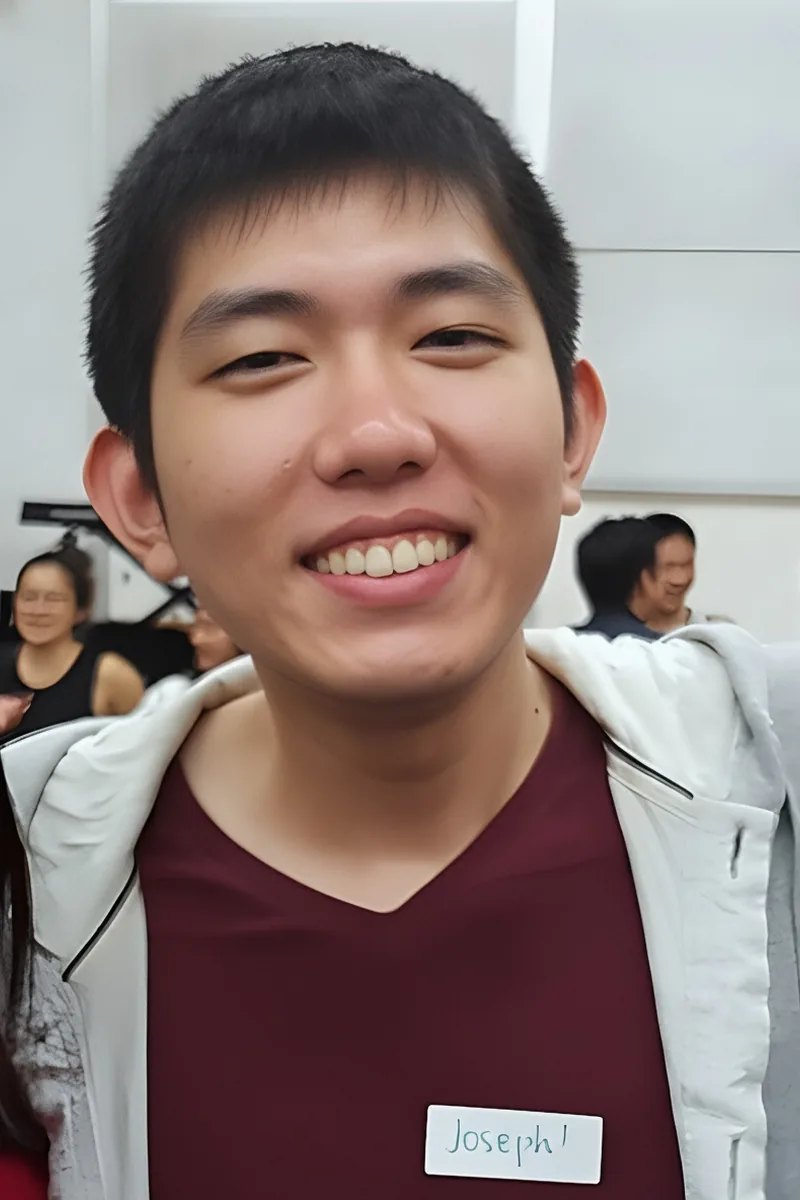
Biology majors do more math than most people realize — Joseph spent his UCLA undergrad calculating dilution ratios, analyzing statistical datasets, and working through quantitative models, all of which map directly onto the proportional reasoning and equation-solving middle schoolers are tackling for the first time. His public health master's at Yale keeps him knee-deep in data interpretation daily, so he teaches these concepts as practical skills with real stakes rather than abstract exercises. Rated 4.9 by families.
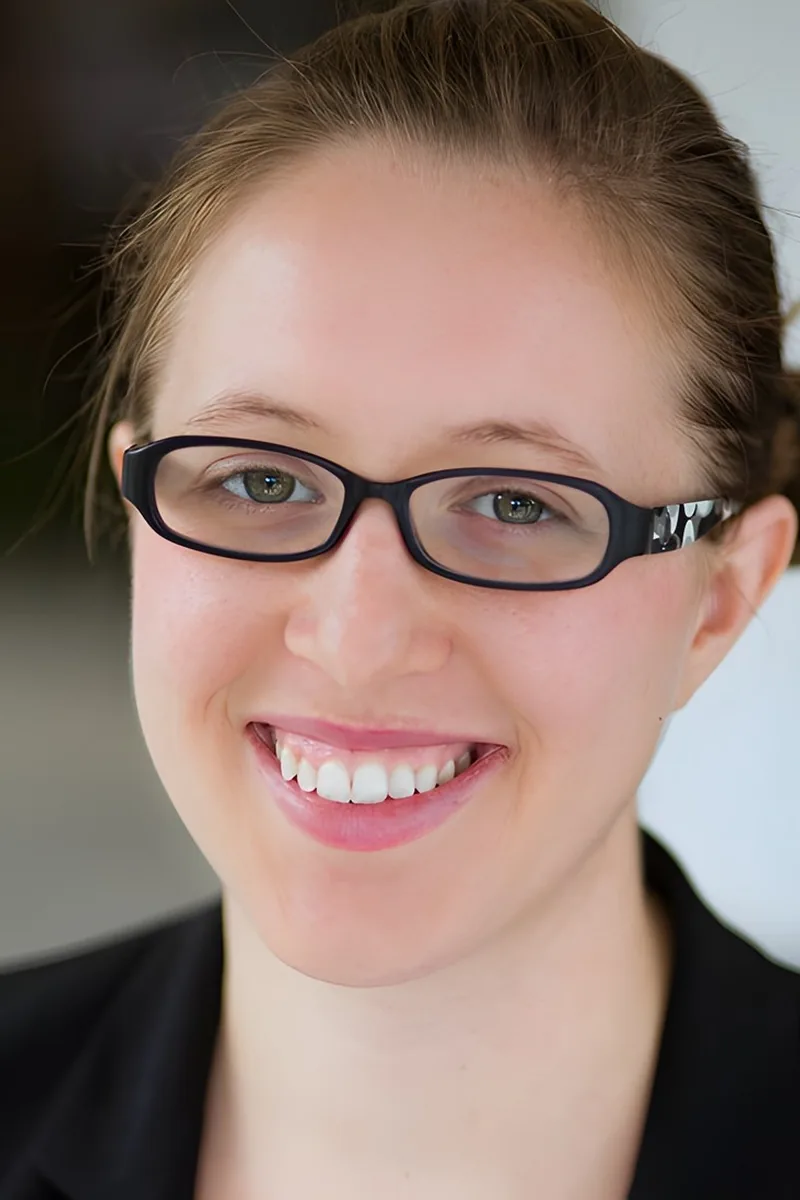
Scoring a 35 ACT and 1570 SAT means Amber has the quantitative chops to teach middle school math cold, but her theater background is what makes her especially effective — she knows how to read an audience, adjust on the fly, and make a concept land. She zeroes in on the specific spot where a student's understanding breaks down, whether that's negative number operations or setting up basic equations, and rebuilds from there. Rated 5.0 by students.
Every concept in middle school math — ratios, proportional reasoning, negative numbers, basic geometry — becomes a building block for high school. Tracy pinpoints exactly which block is wobbly before stacking more on top, whether that means revisiting fraction operations or pushing ahead into linear equations. She's been tutoring students at this level since she was in middle school herself, so she understands where confusion typically hides.
Fractions, ratios, and proportional reasoning click faster when a student sees how the concepts link together instead of treating each chapter as a separate thing to memorize. Samuel's statistics background from the University of Chicago gives him a knack for showing middle schoolers how number relationships actually work — and his 4.9 rating suggests the approach lands well.
Fractions, ratios, and proportional reasoning trip up more middle schoolers than almost any other topic — and the confusion usually traces back to a shaky mental model of what these operations actually mean. Abrahim breaks each concept into concrete visual steps before moving to abstract procedures, an approach that earned him a 5.0 rating from students. His science and medical background also means he can show kids where middle school math shows up in the real world.
Ratios, proportional reasoning, and early equation-solving form the backbone of middle school math — and they're also the skills students need most when math gets harder later. Karann makes these concepts click by tying them to tangible scenarios, like scaling a recipe or interpreting data from a science experiment, so the logic sticks.
The jump from arithmetic to algebraic thinking trips up a lot of middle schoolers — suddenly they're dealing with negative numbers, coordinate planes, and multi-step word problems. Megan tackles these transitions by connecting new concepts to the intuitive math students already know. Her 5.0 rating speaks to how well that approach lands with younger learners.
Fractions, ratios, and proportional reasoning are the stumbling blocks that quietly derail students in middle school math. Through years of volunteer tutoring with young learners, Matt has developed a knack for diagnosing exactly where a concept breaks down and rebuilding understanding from that point. He holds a 5.0 rating from students.
Seven years teaching high school math and science in San Francisco means Elizabeth knows exactly what skills middle schoolers need to lock down before algebra hits — and where the gaps usually hide. Her Johns Hopkins math degree gives her deep fluency with the subject, but it's her classroom experience that makes her effective at catching shaky foundations in fractions, decimals, and proportional reasoning before they snowball. She treats middle school math as the bridge it actually is, making sure each concept is solid enough to carry weight later.
From fractions and ratios to basic equation solving, middle school math covers a huge range of skills in a short time. Maddy's business coursework at Vanderbilt keeps her fluent in applied math, and she's especially good at showing students how concepts like proportions and percentages actually show up in everyday decisions. She holds a 5.0 client rating.
Fractions, ratios, and pre-algebra concepts click faster when a student understands the reasoning behind each step instead of just following a formula. James spent time at LearningRx building cognitive and math skills with younger learners, so he knows how to make integer operations or proportional reasoning feel intuitive. Rated 5.0 by students.
A mechanical engineering degree means Neil spent years solving problems where geometry, proportions, and algebraic reasoning aren't abstract exercises — they're how you design things that actually work. He brings that applied mindset to middle school topics like ratios, equations, and coordinate graphing, giving students a concrete sense of where the math is headed. Rated 4.7 by students.
Fractions, ratios, and proportional reasoning click faster when students can actually see what's happening — and Elise's fine arts background means she's constantly sketching out visual models and diagrams to make abstract middle school math concepts concrete. Her special education training also gives her a deep toolkit for breaking multi-step problems into manageable pieces. Rated 5.0 by students.
Fractions, ratios, and early equation-solving can feel like a maze when the rules keep changing from one unit to the next. Elizabeth breaks each concept down into logical steps — her math degree and experience as a software developer mean she's used to translating abstract ideas into concrete, repeatable processes that click for younger learners.
A physics degree means Nupur learned math by actually using it — calculating forces, modeling motion, working through equations that describe how the physical world behaves — so when she teaches middle schoolers topics like ratios, negative numbers, or solving for unknowns, she can ground each concept in something tangible. Her 5.0 rating speaks to an approach that treats every wrong answer as useful information about what to clarify next, not something to gloss over.
Between ratios, proportional reasoning, and early equation work, middle school math covers more conceptual ground than most people realize. Shona earned her B.S. in Applied Mathematics from Johns Hopkins and has spent years in education, so she knows how to make topics like fraction operations and coordinate graphing accessible without dumbing them down. Rated 4.9 by students.
Fractions, ratios, and integer operations click faster when a student sees how each concept builds on the last — and that's exactly how Philip structures his sessions. His mechanical engineering background at the University of Illinois means he uses real-world examples (like scaling a recipe or splitting distances) to make abstract arithmetic feel concrete.
From fractions and ratios to early equation-solving, middle school math piles on new concepts fast. Dylan spent time leading a K-8 tutoring program where he saw firsthand which topics — proportions, negative numbers, basic geometry — tend to cause the most confusion. He builds each session around the specific skill a student is stuck on, connecting it back to what they already know.
Fractions, ratios, and proportions don't have to feel like abstract puzzles — George treats them as everyday tools, connecting each concept to real situations students already understand. His background in accounting and finance means he's spent years working fluently with the exact numerical reasoning middle schoolers are building right now.
Fractions, ratios, and proportions click faster when students see how the numbers connect to real situations — and Aubriana's accounting and finance background gives her a deep well of practical examples to draw from. She breaks down pre-algebra concepts like integer operations and order of operations into clear, repeatable steps that build genuine confidence.
From fractions and decimals to basic geometry and proportional reasoning, middle school math covers a huge range of skills in a short time. Blaque's experience tutoring middle schoolers means she knows exactly where students tend to get stuck — and she's consistently helped them jump one to two grade levels in performance. Her approach connects each topic back to something tangible so the math doesn't feel like a set of random rules.
The jump from arithmetic to algebraic thinking is one of the trickiest transitions in middle school, and it's where a lot of math anxiety starts. Nicole tackles topics like integer operations, ratios, and basic equation-solving by connecting each new idea to something concrete the student already knows. Her 3.97 GPA in an honors program reflects genuine academic discipline she passes along to younger students.
Jeffry's biology background means he's constantly pulling from real data — growth rates, population models, measurement conversions — to make middle school topics like ratios, percentages, and basic equations feel grounded in something tangible. When a student struggles with, say, order of operations or fraction arithmetic, he digs into the specific step where confusion started rather than re-teaching the whole concept from scratch. Rated 4.9 by students.
The jump to middle school math catches a lot of students off guard, especially when ratios, proportions, and negative numbers enter the picture all at once. Ellie's approach is to build each new concept onto something familiar so students aren't just memorizing procedures they'll forget by next week. Her neuroscience studies have deepened her understanding of how learning actually sticks.
The jump from elementary arithmetic to middle school math catches a lot of students off guard, especially when fractions, ratios, and proportional reasoning all land at once. Breanna tackles these topics by identifying exactly where a student's understanding breaks down and rebuilding from that specific point. Her training in human development gives her a sharp read on how each age group processes mathematical ideas differently.
Every day in his math-intensive classroom in Wisconsin, Justin sees exactly where middle schoolers get tripped up — whether it's integer operations, proportional reasoning, or the jump into basic equation solving. He diagnoses gaps quickly and builds targeted practice around them, drawing on years of running math interventions for students at different levels.
From decimals and percentages to introductory geometry and basic equation solving, middle school math covers a huge range in a short time. Younjoo zeroes in on whichever topic is causing the most confusion and builds clarity there first, so students stop falling behind as new material stacks on top of old gaps.
As the oldest of five siblings spanning different ages, Maya has spent years explaining math concepts at exactly the right level — whether that's fractions, proportions, or introductory equations. She zeroes in on the specific gap holding a middle schooler back rather than re-teaching everything from scratch. Her approach builds genuine number sense that carries forward into algebra and beyond.
The jump from arithmetic to algebraic thinking trips up a lot of middle schoolers, especially around proportional reasoning, negative numbers, and interpreting graphs. Samantha approaches these topics patiently and concretely, rated 5.0 by students for making tricky transitions feel manageable.
Fractions, proportions, and early equation-solving are the skills that either build lasting math confidence or quietly erode it. Ian teaches middle schoolers to think about *why* cross-multiplication works or what a negative number actually represents, turning procedural steps into genuine understanding. He keeps sessions structured but low-pressure, which matters a lot at this age.
Joseph's master's in special education and his secondary teaching background mean he knows how to spot exactly where a middle schooler's understanding of something like integer operations or basic equations is breaking down — and how to reteach it in a way that actually lands differently the second time. His history training also makes him unusually good at walking students through multi-step word problems, since he treats each one like a narrative with a logical sequence rather than a pile of numbers. Rated 4.8 by students.
Joseph treats middle school math as the proving ground for mathematical thinking — not just getting the right answer on a ratio problem, but understanding why cross-multiplication works in the first place. His UW-Madison math background gives him the depth to explain proportional reasoning, integer operations, and early geometry in ways that make intuitive sense. He holds a 5.0 rating from students.
Halle's biology major at UW-Madison means she's constantly converting between fractions, decimals, and percentages in lab settings — the same skills middle schoolers are formalizing when they work through ratio and proportion problems. She emphasizes making sure a student can reason through why a method works, not just repeat steps, so the jump into algebra feels like a natural next move rather than a cliff. Rated 5.0 by students.
Danny's graduate work in urban planning at UW-Madison is heavy on spatial reasoning and quantitative analysis — skills that map directly onto the geometry, ratio, and measurement concepts middle schoolers encounter. His teaching assistant role means he's practiced at breaking down multi-step problems for students who are still building comfort with abstract thinking. He also teaches algebra and pre-algebra, so he knows exactly which middle school math habits pay off once the work gets harder.
Every middle school math student hits a moment where fractions, ratios, or early equation-solving feels like a foreign language. Wei tackles that by tying each concept to something tangible — proportions through cooking, percentages through sports stats — so the reasoning sticks long after the homework is finished. He holds a 5.0 rating from families he's worked with.
One of the most important things in tutoring math is to make sure students understand why a mathematical procedure works, not just how to do it. When student know how to do the procedure, but don't understand why it works, they will forget the procedure or misapply it, or worse, they may begin to hate math, not because they can't do it, but because they don't understand its relevance.
Fractions, decimals, and negative numbers don't have to be the confidence-killers they often become in middle school. India teaches these topics using visual models and step-by-step reasoning that make operations with rational numbers feel logical. Her 4.8 rating speaks to how well she connects with younger math learners.
Taylor studied mathematics as her actual major, which means she can trace every middle school topic — from fraction operations to the first taste of variables — back to the deeper structure it's preparing students for. That perspective lets her explain *why* a rule works, not just how to follow it, so concepts build on each other instead of feeling like disconnected procedures. She holds a 5.0 rating and a 35 ACT composite.
Ratios, proportional reasoning, and early work with negative numbers — middle school math is where students either build genuine number sense or start relying on memorized shortcuts that collapse later. Mingxi's experience tutoring across 13 college math courses gives her an unusually clear view of which middle school foundations actually matter long-term. She connects each topic to a concrete reason students will need it.
Fractions, ratios, and proportional reasoning trip up a lot of middle schoolers because the concepts feel abstract until someone connects them to something concrete. Amalia breaks these ideas down using real-world scenarios — splitting recipes, comparing distances, scaling drawings — so the math clicks instead of feeling like a set of arbitrary rules. She creates a low-pressure space where asking "why does this work?" is always encouraged.
Testimonials
Because the right Middle School Math tutor makes all the difference.
Average Session Rating – Based on 3.4M Learner Ratings
Nearby Middle School Math Tutors
Other Green Bay Tutors
Related Math Tutors in Green Bay
Frequently Asked Questions
Varsity Tutors matches Green Bay students with expert Middle School Math tutors for 1-on-1 instruction. We pair each student with a tutor based on their specific needs, learning style, and goals.
Whether you need homework help, exam prep, or want to get ahead, our Middle School Math tutors are ready to help.
Common challenges include gaps from earlier material, difficulty with specific concepts, and trouble applying learning to new problems. These issues can snowball quickly in Middle School Math.
A tutor identifies where you're stuck, fills in gaps, and provides targeted practice. The 1-on-1 format means you get help exactly where you need it.
Tutors work with your student's actual coursework—homework assignments, class notes, and upcoming tests. This keeps tutoring directly relevant to what's happening in the classroom.
When you share information about your student's school and curriculum, we can match you with a tutor who has relevant experience.
All tutors complete background checks, credential verification, and teaching evaluation. Many of our Middle School Math tutors hold advanced degrees or have years of teaching experience.
You can review tutor profiles to find someone with the right background for your student's level and needs.
Many students see improved grades within a few weeks, along with better understanding of Middle School Math concepts and more confidence tackling challenging material.
Tutors track progress and adjust their approach to ensure continued improvement.
Most students benefit from 1-2 sessions per week. More frequent sessions help if your student is significantly behind or has an important exam coming up.
Your tutor can recommend a schedule based on your student's specific situation and goals.
Tutoring is purchased in packages of hours, with rates varying by tutor experience. Varsity Tutors offers several options to fit different budgets and needs.
You can discuss pricing during your consultation to find what works best.
Your tutor will assess where your student is, discuss goals, and start working on priority areas. Most students bring current homework or upcoming test material to focus on.
By the end, you'll have a clear sense of how the tutor can help and a plan for moving forward.
Let’s find your perfect tutor
Answer a few quick questions. We’ll recommend the right plan and match you with a top 5% tutor.