Award-Winning AP Calculus AB Tutors
serving Green Bay, WI
AP Calculus AB
Tutors in Green Bay
Private 1-on-1 tutoring, weekly live classes for academic support, test prep & enrichment, practice tests and diagnostics, and more to elevate grades and test scores.
Based on 3.4M Learner Ratings
UniversitiesSchools & Universities
DeliveredHours Delivered
ProficiencyGrowth in Proficiency
Who needs tutoring?
No obligation. Takes ~1 minute.
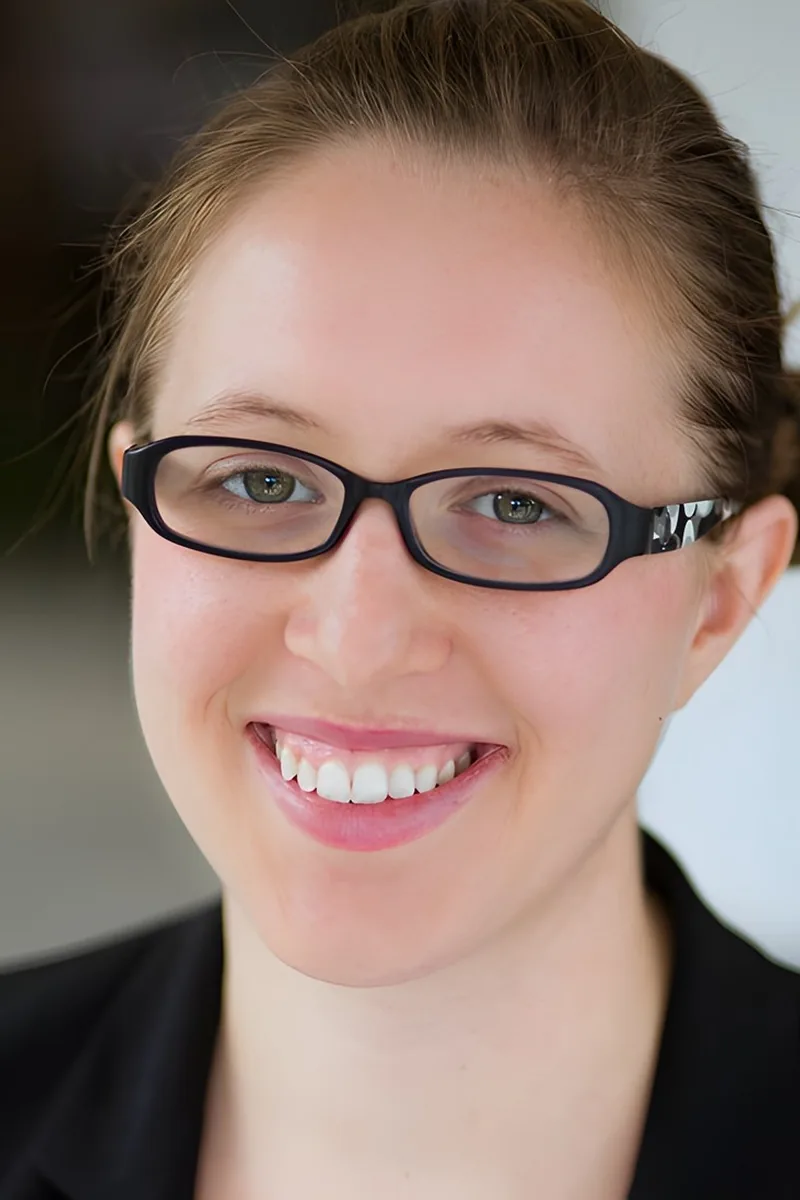
Scoring a 1570 SAT and 35 ACT takes the kind of disciplined problem-solving that translates directly into teaching limits, derivatives, and integration techniques at the AB level. Amber zeroes in on the moment students go from mechanically applying the power rule to actually understanding why the Fundamental Theorem ties differentiation and integration together — a shift that unlocks the entire second half of the course. Rated 5.0 by students.
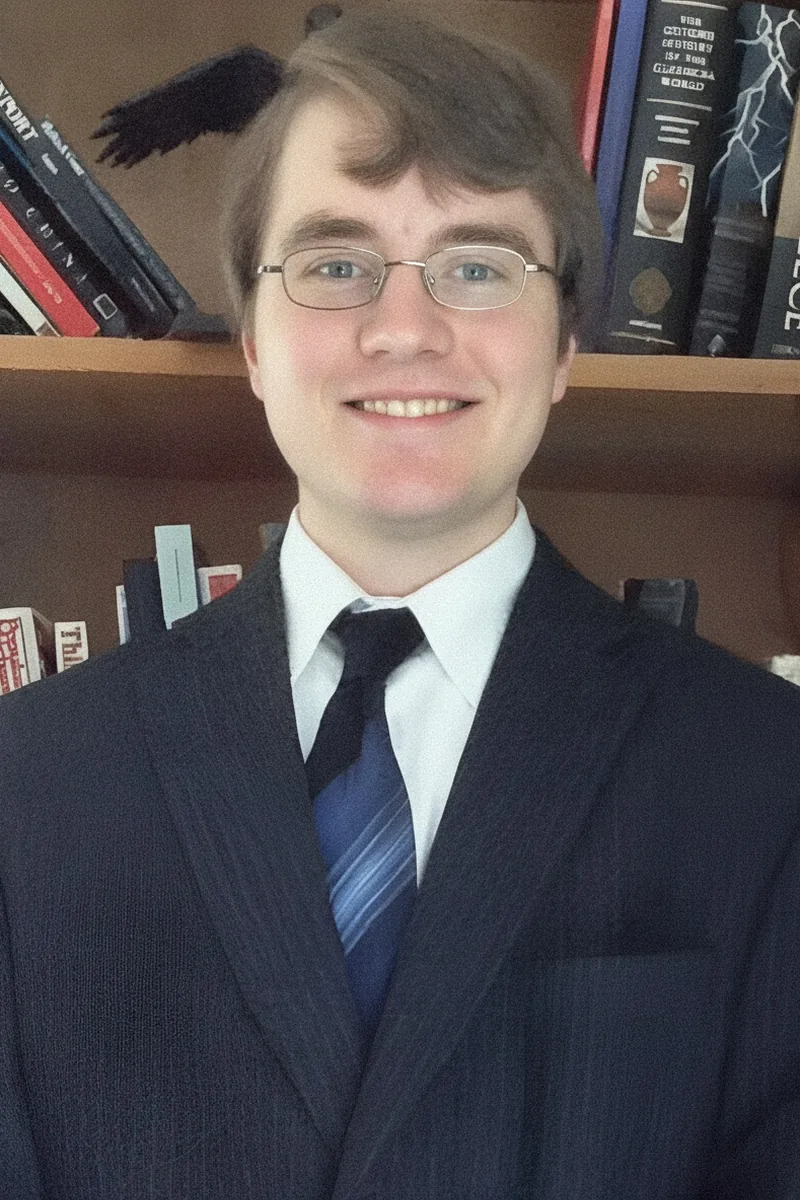
Scoring a 36 ACT while pursuing a math/stats degree at Carleton means Thomas has both the formal training and the test-taking instinct to know exactly where AB students lose points — particularly on limit definitions, continuity arguments, and the conceptual leaps the exam demands in its free-response section. He teaches the 'why' behind each differentiation and integration technique so that unfamiliar problem setups feel approachable rather than paralyzing. Rated 5.0 by students.
Seven years teaching high school math in San Francisco — plus a Johns Hopkins mathematics degree and medical school training — means Elizabeth has walked hundreds of students through the exact moment where limits, derivatives, and the Fundamental Theorem either click or collapse. She's especially sharp at diagnosing why a student's related rates setup goes wrong, because she's seen every common misstep enough times to spot the pattern before frustration sets in. Her medical background also gives her a unique angle on applied problems, connecting rate-of-change concepts to biological contexts that make the abstraction tangible.
Limits, derivatives, and integrals each build on the last, so a shaky grasp of one concept tends to snowball through the entire AP Calculus AB curriculum. Aaron treats each new idea as a chance to revisit and strengthen what came before — his approach to the chain rule, for instance, starts by reconnecting students to composition of functions until the derivative feels inevitable. His PhD in math and 5.0 rating speak to how well this works in practice.
Computer science with a math emphasis at UW-Madison means Sarah writes code that depends on calculus concepts daily — recursive functions mirror summation, algorithm analysis relies on limits, and optimization problems are literally what derivatives were built for. That crossover makes her especially effective at teaching the AB curriculum's limit definitions and optimization units, where she can show students the logic underneath the formulas instead of just the mechanics. Rated 4.9 by students.
When limits, derivatives, and integrals are taught as disconnected procedures, the AB exam's free-response section can feel like a minefield — Halle tackles that by building each new concept directly on top of the previous one so students see calculus as a single connected story. Her biology coursework at UW-Madison means she's comfortable using rate-of-change problems grounded in growth models and population dynamics to make abstract differentiation feel tangible. Rated 5.0 by students.
Working as a systems design engineer and automation technician after earning his EE degree from UIUC, Wei has spent years applying derivatives and integrals to real control systems — tuning feedback loops, modeling signal behavior, analyzing rate-of-change problems that mirror exactly what shows up on the AB exam. That engineering instinct is especially valuable when students hit the AB curriculum's differential equations and accumulation problems, where knowing how to frame the math matters more than grinding through algebra. Rated 5.0 by students.
Mechanical engineering coursework at Marquette means Brendan uses AP Calculus AB concepts daily — from computing integrals for area and volume to applying the chain rule in kinematics problems. He breaks down the reasoning behind each differentiation and integration technique so students can tackle free-response questions with confidence. Rated 5.0 by students.
One of the most important things in tutoring math is to make sure students understand why a mathematical procedure works, not just how to do it. When student know how to do the procedure, but don't understand why it works, they will forget the procedure or misapply it, or worse, they may begin to hate math, not because they can't do it, but because they don't understand its relevance.
Where many tutors teaching AP Calculus AB come from engineering or science backgrounds, India approaches the subject from the math-emphasis track of her liberal arts program — meaning she learned limits, derivatives, and integration as ideas worth understanding on their own terms, not just as tools for another field. That perspective is especially useful for students who need to build genuine comfort with concepts like continuity and the Fundamental Theorem before tackling free-response applications. Rated 4.8 by students.
Something clicked for Steven when calculus stopped being about memorizing formulas and started being about understanding why things change — and that shift from frustration to genuine enthusiasm for math is exactly what he brings to teaching limits, derivatives, and integrals in the AB curriculum. He's especially good at walking students through the conceptual buildup from pre-calculus into calculus territory, since he also teaches trig, pre-calc, and physics, giving him a clear picture of where the gaps usually hide. Rated 5.0 by students.
I am currently studying at Northwestern University, on the track to a Bachelor of Arts in Statistics with a double major in Mathematical Methods in the Social Sciences, which is just a fancy way of saying math-based economics, and a minor in Legal Studies as well as Marketing. After my undergraduate studies, I plan on working in consulting for a few years before attending law school. Finally, I hope to combine my law studies with my consulting work to become a well-rounded corporate lawyer. At Northwestern, I provide SAT tutoring to Chicago-area juniors and seniors. In high school, I tutored third through fifth graders in basic reading and writing skills and developed their interpersonal skills through group crafts and teamwork activities. While I am open to tutoring a broad range of subjects and tests, I am most passionate about Math, Statistics, Economics, and US History. In my experience helping students prepare for the SAT, I have found that interactive activities and group work really help! I am a firm believer in the work-hard-play-hard mindset and find it to be absolutely necessary for a balanced lifestyle, and I try to impart this appreciation to all of my students. While I encourage my students to keep up with their studies and work hard, I also believe that studying needs to be balanced out with interests and fun.
The jump from memorizing derivative rules to actually understanding limits, the chain rule, and the Fundamental Theorem is where most AB students struggle. Anthony approaches calculus the way he learned it as a Yale physics and math major: every rule has a reason, and once students see that reason, problem-solving becomes intuitive rather than mechanical. He holds a 5.0 client rating.
A PhD in statistics built on a biomedical engineering foundation means Sam has spent years where calculus isn't a course — it's the machinery underneath everything, from deriving probability distributions to modeling biological systems. That depth shows when teaching limits and the Fundamental Theorem, where he can trace each concept forward into the math students will actually use in college. Rated 4.9 by students.
Limits, derivatives, and integrals become far more intuitive when a student sees why they matter, not just how to compute them. Dennis's physics background means he can ground every AB Calculus concept — from the chain rule to Riemann sums — in tangible problems involving motion, area, and rates of change.
Neuroscience research at places like the Jungers Center and Oregon National Primate Research Center means Daniel has spent real time using calculus to model biological data — fitting curves to neural signals, differentiating rate functions, interpreting what a change in slope actually means in a living system. That research instinct sharpens how he teaches AB topics like the chain rule and definite integrals, because he's used to asking what the math is telling you before jumping to computation. His 1530 SAT and biomedical engineering coursework at Rice anchor the quantitative rigor behind his approach.
Having tutored college students through calculus at Harvard while majoring in chemistry, James knows exactly where AB students hit friction — limits that seem pointless, the conceptual jump to integration, and free-response problems that demand more than mechanical differentiation. His approach leans on building the reasoning behind each technique, so when the exam asks students to justify a answer using the Mean Value Theorem or interpret a definite integral in context, the logic is already there. A 1570 SAT and 4.9 rating back up the precision he brings to every session.
Most AB students can differentiate a polynomial just fine — it's the moment a free-response question asks them to interpret the meaning of a derivative or set up an integral from a word problem that things fall apart. Zac tackles those conceptual gaps head-on, breaking application problems into smaller reasoning steps before any computation starts. His 34 ACT and 4.9 rating point to the kind of structured, clear thinking that makes tough calculus concepts land.
Mechanical engineering at Harvard means Christopher builds with calculus daily — every force balance is a derivative, every energy calculation an integral — so the AB curriculum maps directly onto problems he's already solving in his coursework. He's especially sharp at teaching students how to navigate optimization and area-between-curves setups, where translating the scenario into the right expression is the real challenge. His 35 ACT and 4.8 rating back up an approach grounded in engineering intuition rather than formula memorization.
MIT's core curriculum throws you into calculus, physics, and chemistry simultaneously — Vania has been tutoring peers through all three via MIT's Seminar XL and Tutorial Services Room, which means she's spent years watching exactly where AB students lose the thread between derivative rules and what those rules actually compute. Her 1590 SAT and mechanical engineering training give her the quantitative fluency to unpack topics like the Mean Value Theorem or area-between-curves setups in ways that feel concrete rather than formulaic. Rated 5.0 by students.
Getting comfortable with limits, derivatives, and the Fundamental Theorem of Calculus is less about memorizing rules and more about seeing why each piece connects. Nicholas approaches AB Calculus the way his MIT science courses demand — building reasoning from definitions so that chain rules and related rates problems feel logical instead of formulaic.
The jump from memorizing derivative rules to actually reasoning through related rates and accumulation problems is where most AP Calc AB students stall. Agustin breaks those multi-step problems into smaller physical questions — what's changing, what's fixed, what depends on what — an approach rooted in how he uses calculus in his molecular biology studies. Rated 4.5 by students.
The jump from Pre-Calc to AP Calculus AB trips up students who never fully grasped limits or the logic behind the chain rule. Daniel's approach is to rebuild each concept from scratch when needed — he's an applied math major who got where he is by sitting with hard material until it clicked, not by breezing through it. That means he knows exactly where the confusion usually lives in topics like related rates, Riemann sums, and the Fundamental Theorem.
Having already completed multivariable calculus and linear algebra as a freshman in Northwestern's engineering program, Dylan teaches AB concepts like limits, derivative rules, and integration techniques with the confidence of someone who uses them as building blocks for more advanced work every week. His 1500 SAT and 5.0 rating back up an approach grounded in making sure students understand the reasoning behind each step before moving on to the next application.
Testimonials
Because the right AP Calculus AB tutor makes all the difference.
Average Session Rating – Based on 3.4M Learner Ratings
Practice AP Calculus AB
Free practice tests, flashcards, and AI tutoring for AP Calculus AB
Nearby AP Calculus AB Tutors
Other Green Bay Tutors
Related Math Tutors in Green Bay
Frequently Asked Questions
Varsity Tutors matches Green Bay students with expert AP Calculus AB tutors for 1-on-1 instruction. We pair each student with a tutor based on their specific needs, learning style, and goals.
Whether you need homework help, exam prep, or want to get ahead, our AP Calculus AB tutors are ready to help.
Common challenges include gaps from earlier material, difficulty with specific concepts, and trouble applying learning to new problems. These issues can snowball quickly in AP Calculus AB.
A tutor identifies where you're stuck, fills in gaps, and provides targeted practice. The 1-on-1 format means you get help exactly where you need it.
Tutors work with your student's actual coursework—homework assignments, class notes, and upcoming tests. This keeps tutoring directly relevant to what's happening in the classroom.
When you share information about your student's school and curriculum, we can match you with a tutor who has relevant experience.
All tutors complete background checks, credential verification, and teaching evaluation. Many of our AP Calculus AB tutors hold advanced degrees or have years of teaching experience.
You can review tutor profiles to find someone with the right background for your student's level and needs.
Many students see improved grades within a few weeks, along with better understanding of AP Calculus AB concepts and more confidence tackling challenging material.
Tutors track progress and adjust their approach to ensure continued improvement.
Most students benefit from 1-2 sessions per week. More frequent sessions help if your student is significantly behind or has an important exam coming up.
Your tutor can recommend a schedule based on your student's specific situation and goals.
Tutoring is purchased in packages of hours, with rates varying by tutor experience. Varsity Tutors offers several options to fit different budgets and needs.
You can discuss pricing during your consultation to find what works best.
Your tutor will assess where your student is, discuss goals, and start working on priority areas. Most students bring current homework or upcoming test material to focus on.
By the end, you'll have a clear sense of how the tutor can help and a plan for moving forward.
Let’s find your perfect tutor
Answer a few quick questions. We’ll recommend the right plan and match you with a top 5% tutor.