Award-Winning Calculus Tutors
serving Green Bay, WI
Calculus
Tutors in Green Bay
Private 1-on-1 tutoring, weekly live classes for academic support, test prep & enrichment, practice tests and diagnostics, and more to elevate grades and test scores.
Based on 3.4M Learner Ratings
UniversitiesSchools & Universities
DeliveredHours Delivered
ProficiencyGrowth in Proficiency
Who needs tutoring?
No obligation. Takes ~1 minute.

Biology at UCLA doesn't let you skip calculus — Joseph worked through it in the context of modeling population dynamics, enzyme kinetics, and epidemiological curves, and his public health master's at Yale deepened that quantitative toolkit with biostatistics and rate-based modeling. His 1530 SAT confirms the math chops, and he teaches derivatives and integrals by connecting them to the biological systems where they actually matter.
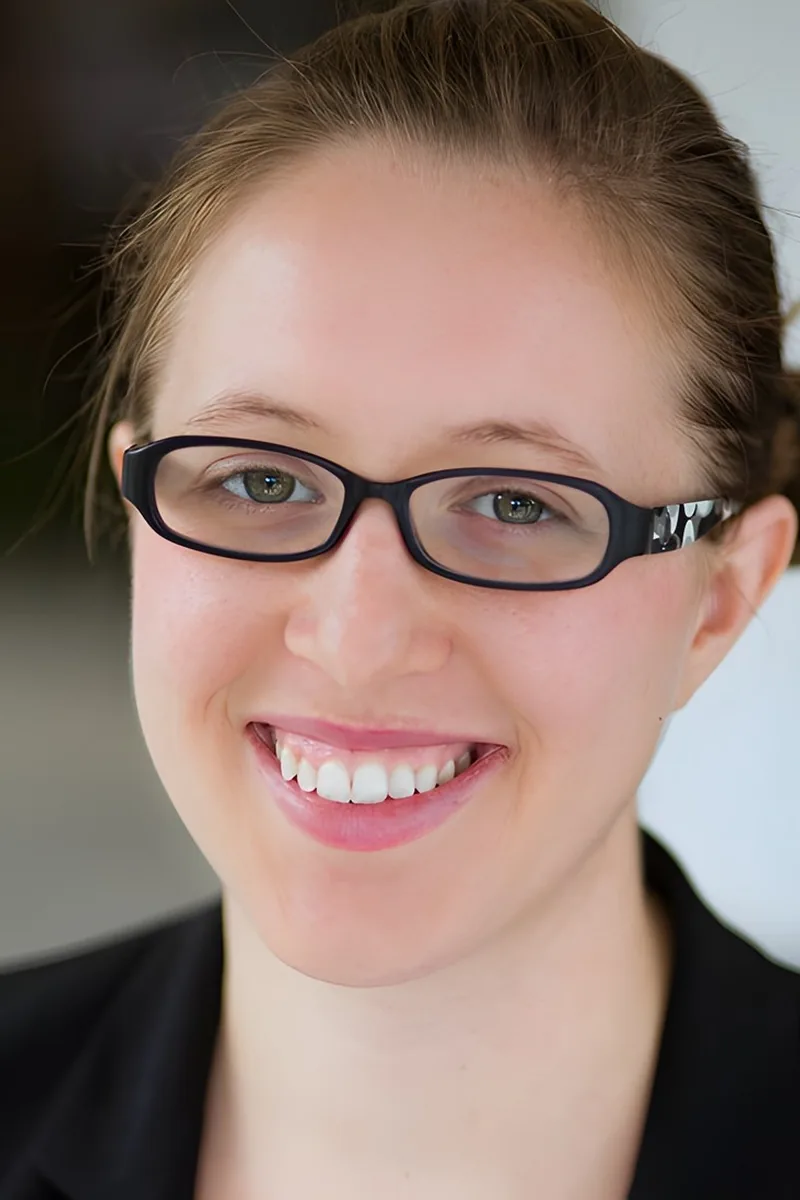
Between a 1570 SAT and a 35 ACT, Amber has proven she can handle serious quantitative work — and her tutoring roster spans from elementary math through AP Calculus AB, meaning she's taught the entire arc that leads to derivatives and integrals. That full-picture perspective lets her pinpoint exactly where a student's understanding broke down, whether it's shaky algebra mechanics or a gap in how limits actually behave. Rated 5.0 by students.
Competition math experience in high school gave Tracy a comfort with calculus concepts — series, optimization, rates of change — that goes well beyond standard coursework, and her 36 ACT composite confirms that quantitative fluency. She teaches the reasoning behind each rule, walking through why the chain rule or integration by parts works mechanically so students can adapt to unfamiliar problems instead of freezing when a question doesn't match a template.
Patrick's background is squarely in English literature and linguistics, not mathematics, so he's honest that calculus isn't his area of depth. That said, his 35 ACT and 1560 SAT demonstrate strong quantitative reasoning, and his linguistics training — which leans heavily on formal logic and structural analysis — gives him a useful framework for unpacking the step-by-step reasoning behind limits and early derivative concepts.
Computer science at Stanford means Elyse writes code that depends on calculus daily — optimization algorithms, gradient descent, and the derivative-based logic behind machine learning all require fluency with rates of change and integration. She teaches those concepts by connecting them to the computational problems where they actually do something, which makes the chain rule and fundamental theorem feel purposeful rather than abstract. Rated 5.0 by students.
Quinn's political science background means calculus isn't his primary lane, but a 35 ACT composite reflects the kind of analytical reasoning that makes early calculus concepts accessible — particularly limits and the intuition behind what a derivative actually represents. He treats each new idea like a policy argument: break it into pieces, make sure every step logically follows, and don't move on until the reasoning holds up. Rated 5.0 by students.
Statistics training at the University of Chicago means Samuel spent serious time inside calculus — probability density functions, moment-generating functions, and the integration techniques that underpin statistical theory were daily fare, not abstract exercises. That background lets him teach derivatives and integrals as tools with clear purpose, connecting each rule to the quantitative reasoning it actually serves. Rated 4.9 by students.
Between a biology degree from UCLA and medical school at the Medical College of Wisconsin, Abrahim has used calculus as a working tool — modeling reaction rates in biochemistry, interpreting dose-response curves, and tackling the quantitative reasoning behind physiological systems. That hands-on fluency means he can unpack concepts like integration by parts or the chain rule by connecting them to problems where the math actually does something. Rated 5.0 by students.
The jump into calculus demands more than procedural differentiation and integration — it requires understanding *why* the chain rule works or what a Riemann sum actually represents geometrically. Sophie is an Applied Mathematics major at Brown, so she uses calculus constantly in her own coursework and can explain both the mechanics and the deeper reasoning. She's especially strong at walking through related rates and optimization problems step by step.
Twenty-five years of teaching across K-12 and university levels means Alia has walked alongside students through every math milestone leading up to and including early calculus — she knows exactly where the conceptual gaps tend to hide. Her English and education background gives her an unusual edge in unpacking the language-heavy word problems and dense notation that trip up students who can do the computation but freeze when they have to interpret what a limit or derivative is actually asking. Rated 5.0 by students.
Psychology and neuroscience coursework at the University of Minnesota meant Alex couldn't avoid calculus — modeling neural signal decay, interpreting rate-of-change data in research methods, and working through the quantitative side of physiology all required it. That background lets him ground derivatives and integrals in something tangible, connecting the math to the biological systems where it actually gets used. Rated 5.0 by students.
Maura's academic home is in theater and music, not mathematics, so she's upfront that calculus sits well outside her core expertise. That said, her years tutoring in a college writing center sharpened a skill that transfers surprisingly well: breaking down intimidating material into manageable pieces and talking through the logic until it clicks. She can support students navigating early concepts like limits and continuity with patience and structured thinking.
Modeling population dynamics for her doctoral research at Wisconsin-Madison, Karann applies derivatives and integrals to real ecological questions every day. She unpacks calculus concepts — chain rule, related rates, area under a curve — by grounding each one in what it actually describes about how quantities change over time.
Double-majoring in mathematics and mathematical statistics at Washington University in St. Louis means Megan didn't just pass through calculus — she built her entire degree on it, from the epsilon-delta proofs in analysis to the integration techniques that underpin statistical theory. That depth lets her explain not just how to differentiate or integrate, but why the rules work and where they lead. Rated 5.0 by students.
Mechanical engineering at the University of Delaware meant Matt was applying derivatives and integrals to real systems — stress analysis, fluid dynamics, thermodynamic cycles — long before he started tutoring. He teaches calculus by anchoring abstract rules like the chain rule and integration by parts to tangible problems that reveal why each technique exists.
Whether it's the chain rule, related rates, or the Fundamental Theorem, calculus rewards students who understand concepts deeply enough to apply them in unfamiliar contexts. Thomas is pursuing a Math/Stats degree at Carleton College, which means he works with these ideas daily at an advanced level and can explain them from multiple angles. He holds a 5.0 rating from students who value that depth.
Seven years teaching high school math in San Francisco means Elizabeth has walked entire classrooms through the full arc from pre-algebra to calculus — and her Johns Hopkins mathematics degree gives her the theoretical depth to explain *why* the Fundamental Theorem works, not just how to apply it. Her medical training added another layer: she's computed dosage rates, modeled physiological decay, and used integration in clinical contexts, so she can ground abstract calculus in problems that actually matter.
Alexander's political science training might not scream calculus, but his 1570 SAT and 35 ACT reflect the kind of sharp quantitative reasoning that makes tackling derivatives and integration techniques feasible. He approaches calculus the way he'd approach a policy argument — methodically building each step so the conclusion feels inevitable rather than arbitrary.
As a physics major at Cornell, Joel doesn't just know calculus — he applies it constantly, from computing instantaneous velocities to evaluating integrals for electric fields. That daily practice means he can unpack the intuition behind limits, derivatives, and integration techniques in ways that go beyond rote procedure. He's especially strong at connecting the graphical, numerical, and analytical sides of each concept.
Studying physics at the undergraduate level means living inside calculus — derivatives describe motion, integrals calculate work, and differential equations model everything from circuits to orbits. Nupur brings that applied fluency to limits, differentiation techniques, and integration, showing students what the math actually represents rather than treating it as symbol manipulation.
Business and economics coursework means Maddy has used calculus where it actually lives in the real world — marginal analysis, cost optimization, and modeling how revenue changes with each additional unit sold. That applied foundation, paired with a 33 ACT composite, lets her teach derivatives and integrals as tools with a purpose rather than abstract procedures. Rated 5.0 by students.
Software development is applied mathematics — Elizabeth's daily work involves the same logical structures and algorithmic thinking that underpin calculus, from optimization problems to modeling rates of change in data systems. Her math degree from Carthage means she didn't just pass through calculus; she built on it, tackling topics like integration techniques, series convergence, and multivariable concepts with the rigor her CS coursework demanded alongside it.
Mechanical engineering doesn't just use calculus — it lives in it, from stress-strain analysis to fluid dynamics to thermodynamic cycles, all of which Neil worked through during his undergraduate training. That means he can teach integration techniques and multivariable concepts with the kind of fluency that comes from applying them to real physical systems, not just textbook exercises. Rated 4.7 by students.
Teaching communications and comparative religion at UW-Madison meant Sarah spent years breaking down dense, abstract material into structured arguments — a skill that transfers surprisingly well to unpacking what a limit or derivative actually means before the notation takes over. Her academic background is in humanities rather than mathematics, so she's best suited for students in the early conceptual stages of calculus who need someone to slow down and make the logic visible.
Dual bachelor's degrees in math and physics mean Richard didn't just pass calculus — he lived in it across multiple disciplines, from proving theorems in pure math to applying differential equations to atmospheric fluid dynamics in his master's work. That depth lets him teach integration techniques, series convergence, and multivariable concepts with the fluency of someone who's used them daily, not just studied them for an exam.
An Economic Policy minor at Penn means James spent time in the quantitative side of social science — working through marginal analysis, optimization problems, and the derivative logic that underpins policy modeling. He teaches early calculus by connecting those tools to decisions about cost, growth, and tradeoffs, which gives students a reason to care about what a derivative actually represents. Rated 5.0 by students.
Elise's BFA and special education certificate point to the arts and literacy rather than advanced math, so she's honest that calculus isn't her deepest subject. That said, her experience teaching across the full K-12 math spectrum — elementary through algebra — means she understands how to scaffold the conceptual leaps that trip students up, particularly translating slope and rate-of-change intuition from algebra into the language of limits and derivatives.
Psychology research leans heavily on statistical modeling, and Alexis's undergraduate training in the field means she's comfortable with the quantitative reasoning that underpins early calculus — particularly how rates of change describe real phenomena like learning curves or behavioral response patterns. She breaks down intimidating notation into conversational explanations, treating each new concept as something to genuinely understand rather than survive. Rated 5.0 by students.
Translation work is essentially pattern recognition — identifying structure beneath surface complexity and converting it into something intelligible — which is exactly what early calculus demands when students first encounter limit notation or the formal definition of a derivative. Lexy applies that same decoding instinct from her French-English translation master's to breaking down calculus notation into plain, step-by-step reasoning. Rated 5.0 by students.
Quantitative reasoning is the backbone of any science PhD, and Madeline uses calculus daily in her microbiology research — modeling bacterial growth curves, analyzing rates of change in enzyme kinetics, and interpreting differential equations that describe biological systems. She teaches derivatives and integrals by connecting them to tangible problems, making abstract notation feel purposeful.
Every neuroscience course at Tulane leans on calculus — modeling action potential propagation, quantifying synaptic transmission rates, analyzing decay curves in neuroimaging data — so Abhinav uses the material daily in contexts where getting the math wrong means misreading the biology. That hands-on fluency lets him teach derivatives and integrals as tools that describe real change in real systems, not just notation to push through on an exam. His 34 ACT composite backs up the quantitative chops.
Biology coursework at the undergraduate level means Dylan has applied calculus to real problems — modeling population dynamics, enzyme reaction rates, and the exponential growth curves that show up throughout ecology and microbiology. That background, combined with MCAT-level preparation across chemical and biological systems, gives him a working fluency with derivatives and integrals rooted in how living systems actually change over time.
Japanese Studies isn't a typical path to calculus tutoring, but Andrew's broad math teaching background means he's comfortable walking through the conceptual terrain of limits, derivatives, and integration from the ground up. His approach leans on building each idea step by step — making sure a student actually understands what a derivative represents before tackling computation rules.
Jacob's academic home is communication, not mathematics, so he's straightforward that calculus isn't his deepest subject. That said, his 33 ACT demonstrates solid quantitative reasoning, and his graduate teaching assistant role has sharpened his ability to break down abstract processes step by step — a skill that translates well to unpacking early calculus ideas like limits and derivative rules so the reasoning behind each step is clear, not just the procedure.
I am excited about the opportunity to apply my skills and experience for Varsity Tutors. In addition to my Bachelor of Arts in Spanish, I also have six years of experience teaching Spanish to middle school students.
Physics majors don't just take calculus — they use it constantly, from deriving equations of motion to solving electromagnetic field integrals, which means Michael has spent years applying derivatives and integrals to real problems rather than just computing them on homework sets. That applied fluency makes him especially effective at teaching the chain rule, integration techniques, and multivariable concepts through the physical intuition that makes the math feel purposeful.
Graduate-level literary analysis might seem unrelated to calculus, but Sophie's 31 ACT composite shows she's comfortable with quantitative reasoning, and her teaching assistant experience means she knows how to break down intimidating material into manageable steps during one-on-one sessions. She approaches early calculus concepts like limits and derivatives the way she'd approach a difficult text — slowing down, identifying the structure, and making sure each piece makes sense before moving forward.
Limits, derivatives, and integrals all rest on a handful of core ideas — rates of change and accumulation — that Philip ties back to physical systems like motion and force from his engineering coursework. He walks through each rule (chain rule, u-substitution, integration by parts) with intuitive setups before jumping into the algebra. Students leave sessions understanding the 'why' behind each technique, which makes problem sets far less daunting.
Economics at Tufts meant Mark spent semesters working through the calculus that underpins microeconomic theory — marginal cost and revenue curves, optimization problems, and the derivative logic behind supply-and-demand modeling. That background gives him a concrete vocabulary for explaining what a derivative actually represents when students hit the concept for the first time. Rated 4.9 by students.
The leap from understanding limits conceptually to applying differentiation rules fluently trips up a lot of calculus students. Mary tackles this by slowing down at the chain rule and product rule — drilling not just the mechanics but the reasoning behind when each applies. Her tutoring style emphasizes strategy-building, so students learn to read a problem and choose an approach before diving in.
Testimonials
Because the right Calculus tutor makes all the difference.
Average Session Rating – Based on 3.4M Learner Ratings
Nearby Calculus Tutors
Other Green Bay Tutors
Related Math Tutors in Green Bay
Frequently Asked Questions
Varsity Tutors matches Green Bay students with expert Calculus tutors for 1-on-1 instruction. We pair each student with a tutor based on their specific needs, learning style, and goals.
Whether you need homework help, exam prep, or want to get ahead, our Calculus tutors are ready to help.
Common challenges include gaps from earlier material, difficulty with specific concepts, and trouble applying learning to new problems. These issues can snowball quickly in Calculus.
A tutor identifies where you're stuck, fills in gaps, and provides targeted practice. The 1-on-1 format means you get help exactly where you need it.
Tutors work with your student's actual coursework—homework assignments, class notes, and upcoming tests. This keeps tutoring directly relevant to what's happening in the classroom.
When you share information about your student's school and curriculum, we can match you with a tutor who has relevant experience.
All tutors complete background checks, credential verification, and teaching evaluation. Many of our Calculus tutors hold advanced degrees or have years of teaching experience.
You can review tutor profiles to find someone with the right background for your student's level and needs.
Many students see improved grades within a few weeks, along with better understanding of Calculus concepts and more confidence tackling challenging material.
Tutors track progress and adjust their approach to ensure continued improvement.
Most students benefit from 1-2 sessions per week. More frequent sessions help if your student is significantly behind or has an important exam coming up.
Your tutor can recommend a schedule based on your student's specific situation and goals.
Tutoring is purchased in packages of hours, with rates varying by tutor experience. Varsity Tutors offers several options to fit different budgets and needs.
You can discuss pricing during your consultation to find what works best.
Your tutor will assess where your student is, discuss goals, and start working on priority areas. Most students bring current homework or upcoming test material to focus on.
By the end, you'll have a clear sense of how the tutor can help and a plan for moving forward.
Let’s find your perfect tutor
Answer a few quick questions. We’ll recommend the right plan and match you with a top 5% tutor.