Award-Winning AP Biology Tutors
serving Green Bay, WI
AP Biology
Tutors in Green Bay
Private 1-on-1 tutoring, weekly live classes for academic support, test prep & enrichment, practice tests and diagnostics, and more to elevate grades and test scores.
Based on 3.4M Learner Ratings
UniversitiesSchools & Universities
DeliveredHours Delivered
ProficiencyGrowth in Proficiency
Who needs tutoring?
No obligation. Takes ~1 minute.
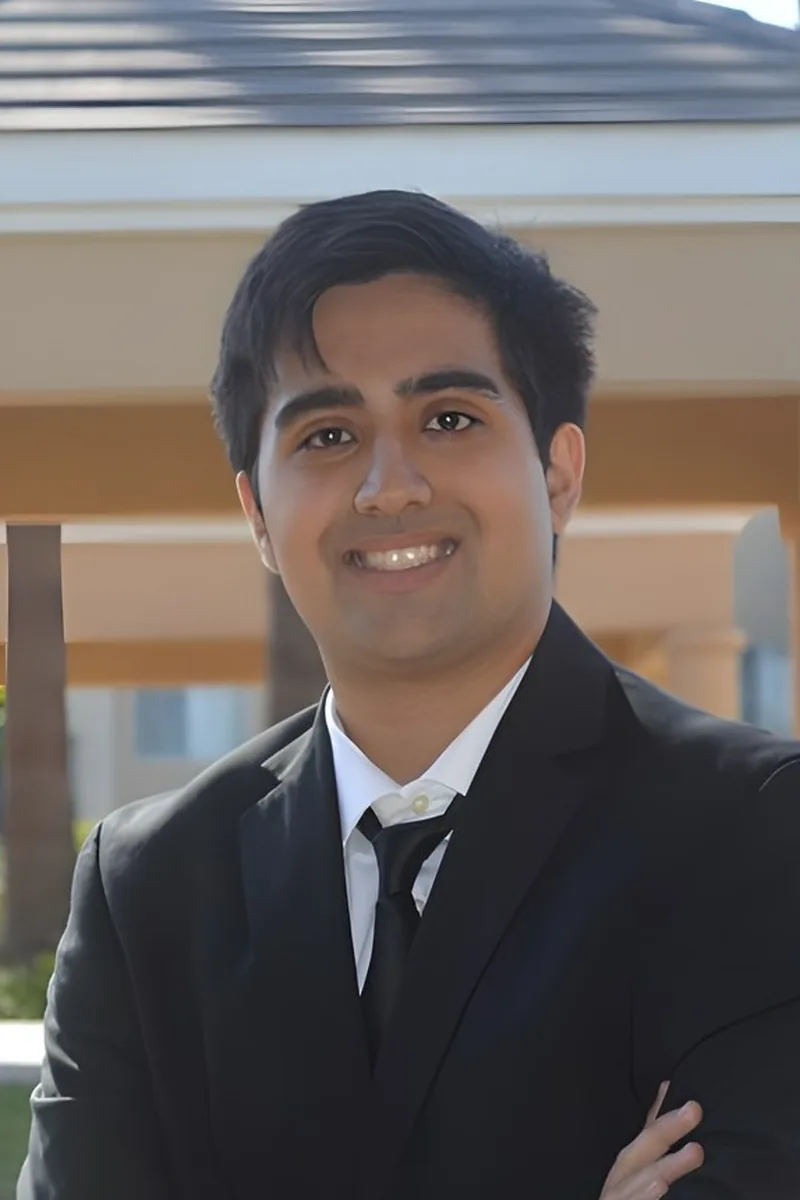
A UCLA biology grad with cum laude honors now pursuing his MD at the Medical College of Wisconsin, Abrahim has studied AP Bio's content at every level — from undergrad genetics and cell biology through the clinical physiology he encounters in medical school daily. He's particularly sharp at teaching students how to design and interpret experiments, a skill he honed through years of science coursework and standardized exam prep where data analysis is make-or-break. Rated 5.0 by students.

Studying tiger ecology and modeling population dynamics for a doctorate at Wisconsin-Madison means Karann lives in the intersection of AP Bio's ecology and evolution units — predator-prey relationships, population growth models, and biodiversity aren't abstract textbook topics for her but active research problems. Her dual undergraduate major in biological engineering and biological sciences also gives her unusual fluency with the quantitative side of the course, like analyzing data from Hardy-Weinberg equilibrium problems or interpreting graphs of logistic growth. She brings a field biologist's perspective that makes the organism-level and ecosystem-level questions click.
Miriam is currently finishing her biology degree at UW-Madison, which means the AP Bio curriculum — from cellular energetics to gene expression to ecology — overlaps directly with coursework she's taking right now. Her dual focus in English also makes her unusually good at teaching students to write the kind of precise, mechanistic explanations that earn full credit on free-response questions, since she spends her days both in biology lectures and tutoring writing at the university's writing center. Rated 4.9 by students.
Genetics is where a lot of AP Bio students hit a wall — not because the content is impossibly hard, but because it demands switching between molecular-level thinking (gene expression, mutations) and population-level reasoning (Hardy-Weinberg, natural selection) sometimes within the same free-response question. Jeffry's biology degree and his work across genetics, microbiology, and evolutionary biology mean he can teach students to move fluidly between those scales. Rated 4.9 by students.
Teaching a microbiology lab at UW-Madison means Samantha has walked students through real experimental design and data interpretation — the exact skills AP Bio's lab-based free-response questions probe hardest. Her genetics and microbiology coursework, combined with active bench research, gives her a working fluency with topics like gene expression, microbial diversity, and evolutionary mechanisms that she can translate into the kind of evidence-based reasoning the exam rewards. Rated 5.0 by students.
As a passionate educator with a Master's in Educational Psychology from the University of Wisconsin - Madison, I have over 8 years of tutoring and classroom experience, currently teaching a range of subjects including AP Biology and Physics. My approach centers on fostering a supportive learning environment that encourages curiosity and critical thinking, helping students connect complex concepts to real-world applications. I believe that every student has the potential to succeed, and I am dedicated to tailoring my methods to meet individual learning styles. Outside the classroom, I enjoy exploring the latest scientific research and engaging in outdoor activities, which I find enriches my teaching and connects me with my students.
I'm here to help students become the best versions of themselves! With 4+ years of tutoring experience, I aim to customize every lesson to fit the needs of the student. If you're looking for an approachable mentor who will work with you to develop a plan of action, I'm here for you!
UCLA's Physiological Sciences program and subsequent research work gave Annie deep fluency with the organ-system and cellular-level biology that AP Bio tests — particularly the units on homeostasis, membrane dynamics, and metabolic regulation. Now a second-year medical student, she teaches students to think like the exam writers do: tracing a biological mechanism from molecule to organism, which is the connective reasoning that earns full marks on free-response questions. Rated 5.0 by students.
Annabel is a molecular biology major heading to medical school, so the content on the AP Bio exam — from cellular respiration and signal transduction to gene regulation and evolutionary evidence — is material she uses daily in her coursework and lab work. She teaches students to think in the way the exam rewards: interpreting data sets, designing experiments, and connecting molecular details to big-picture biological themes.
Christina's computer science background gives her an unusual edge for AP Bio's data analysis and experimental design questions — she's comfortable with statistical reasoning, interpreting graphs, and the kind of algorithmic thinking that makes tracing metabolic pathways or gene expression cascades more systematic. Her ACT score of 34 also signals strong science reading skills, which matters for an exam where decoding dense passages and pulling evidence from figures is half the battle.
Cell and molecular biology was Emily's concentration at Duke, where she graduated summa cum laude — so the AP Bio units on gene expression, cell communication, and the central dogma aren't review material she's recalling vaguely, they're concepts she studied at an advanced level and now revisits daily as a Columbia medical student. She's especially sharp at teaching students to diagram signal transduction pathways and trace how a single mutation can ripple through protein function, cell behavior, and organism-level phenotype — the kind of multi-scale reasoning that separates 4s from 5s on the exam. Rated 5.0 by students.
The AP Biology exam tests whether you can apply concepts — designing experiments around cellular respiration, interpreting data on gene expression, reasoning through ecological models. As a biology major at Stanford, Helen digs into these application-style questions and teaches the kind of scientific thinking the exam actually rewards. She holds a 5.0 client rating.
AP Bio covers an enormous range — from molecular genetics to ecology — and the exam rewards students who can apply concepts to unfamiliar experimental scenarios, not just recall definitions. Phillip studies biomedical engineering at Brown, so he regularly engages with cell signaling, gene expression, and physiological systems at a level well beyond the AP curriculum. He teaches students to interpret data figures and design experiments the way the free-response questions demand.
Owen is a neuroscience major at Brown, which means AP Biology's toughest units — cell signaling, gene expression, and cellular energetics — overlap directly with material he's studied at the college level. He teaches students to think like the exam demands: interpreting experimental data, constructing explanations using evidence, and connecting molecular-scale processes to organism-level outcomes.
Dennis's physics research — simulating turbulent plasmas at Princeton and building optical filters at Norfolk State — might seem distant from AP Bio, but it trained him to think in systems and trace energy through complex processes, which is exactly what cellular energetics and ecosystem dynamics demand. His 36 ACT and strong science foundation mean he can teach students to reason through photosynthesis and respiration as energy transfer problems, not just memorization lists, which pays off on the exam's data-analysis and free-response questions.
AP Bio covers a staggering range — from cellular respiration pathways to ecology population models to gene regulation — and the exam rewards students who can analyze data, not just recall facts. Kate's science background and engineering training make her especially sharp on the quantitative side of the course, including Chi-square analysis, Hardy-Weinberg calculations, and interpreting experimental results.
Between her teaching assistant role for introductory biology at Cornell and her active cancer immunotherapy research on melanoma, Annie lives the material that AP Biology tests. She digs into the toughest units — cell signaling, gene expression and regulation, energy pathways — with the kind of mechanistic detail that earns 4s and 5s on the exam.
As a premed biosciences student at Rice University, Jessy is actively working through the same molecular biology, genetics, and physiology content that AP Bio covers — which means she can pinpoint exactly where textbook explanations lose students and rephrase them on the fly. She recently peer-tutored classmates through AP-level coursework in high school and earned a 34 ACT, so she understands both the science and the test-taking strategy behind interpreting data sets and constructing free-response answers. Rated 5.0 by students.
Saniya's neuroscience degree at Rhodes College required her to learn biology from the molecular scale up — gene expression, cell signaling, neural communication — which means she's tackled AP Bio's toughest conceptual territory in a context where every pathway had to connect to a bigger physiological story. She's continued auditing advanced coursework in anatomy, histology, and embryology since graduating, so the organism-level units on body systems and development are still sharp. Rated 5.0 by students.
Testimonials
Because the right AP Biology tutor makes all the difference.
Average Session Rating – Based on 3.4M Learner Ratings
Practice AP Biology
Free practice tests, flashcards, and AI tutoring for AP Biology
Nearby AP Biology Tutors
Other Green Bay Tutors
Related Science Tutors in Green Bay
Frequently Asked Questions
Varsity Tutors matches Green Bay students with expert AP Biology tutors for 1-on-1 instruction. We pair each student with a tutor based on their specific needs, learning style, and goals.
Whether you need homework help, exam prep, or want to get ahead, our AP Biology tutors are ready to help.
Common challenges include gaps from earlier material, difficulty with specific concepts, and trouble applying learning to new problems. These issues can snowball quickly in AP Biology.
A tutor identifies where you're stuck, fills in gaps, and provides targeted practice. The 1-on-1 format means you get help exactly where you need it.
Tutors work with your student's actual coursework—homework assignments, class notes, and upcoming tests. This keeps tutoring directly relevant to what's happening in the classroom.
When you share information about your student's school and curriculum, we can match you with a tutor who has relevant experience.
All tutors complete background checks, credential verification, and teaching evaluation. Many of our AP Biology tutors hold advanced degrees or have years of teaching experience.
You can review tutor profiles to find someone with the right background for your student's level and needs.
Many students see improved grades within a few weeks, along with better understanding of AP Biology concepts and more confidence tackling challenging material.
Tutors track progress and adjust their approach to ensure continued improvement.
Most students benefit from 1-2 sessions per week. More frequent sessions help if your student is significantly behind or has an important exam coming up.
Your tutor can recommend a schedule based on your student's specific situation and goals.
Tutoring is purchased in packages of hours, with rates varying by tutor experience. Varsity Tutors offers several options to fit different budgets and needs.
You can discuss pricing during your consultation to find what works best.
Your tutor will assess where your student is, discuss goals, and start working on priority areas. Most students bring current homework or upcoming test material to focus on.
By the end, you'll have a clear sense of how the tutor can help and a plan for moving forward.
Let’s find your perfect tutor
Answer a few quick questions. We’ll recommend the right plan and match you with a top 5% tutor.