Award-Winning Physics Tutors
serving Milwaukee, WI
Physics
Tutors in Milwaukee
Private 1-on-1 tutoring, weekly live classes for academic support, test prep & enrichment, practice tests and diagnostics, and more to elevate grades and test scores.
Based on 3.4M Learner Ratings
UniversitiesSchools & Universities
DeliveredHours Delivered
ProficiencyGrowth in Proficiency
Who needs tutoring?
No obligation. Takes ~1 minute.
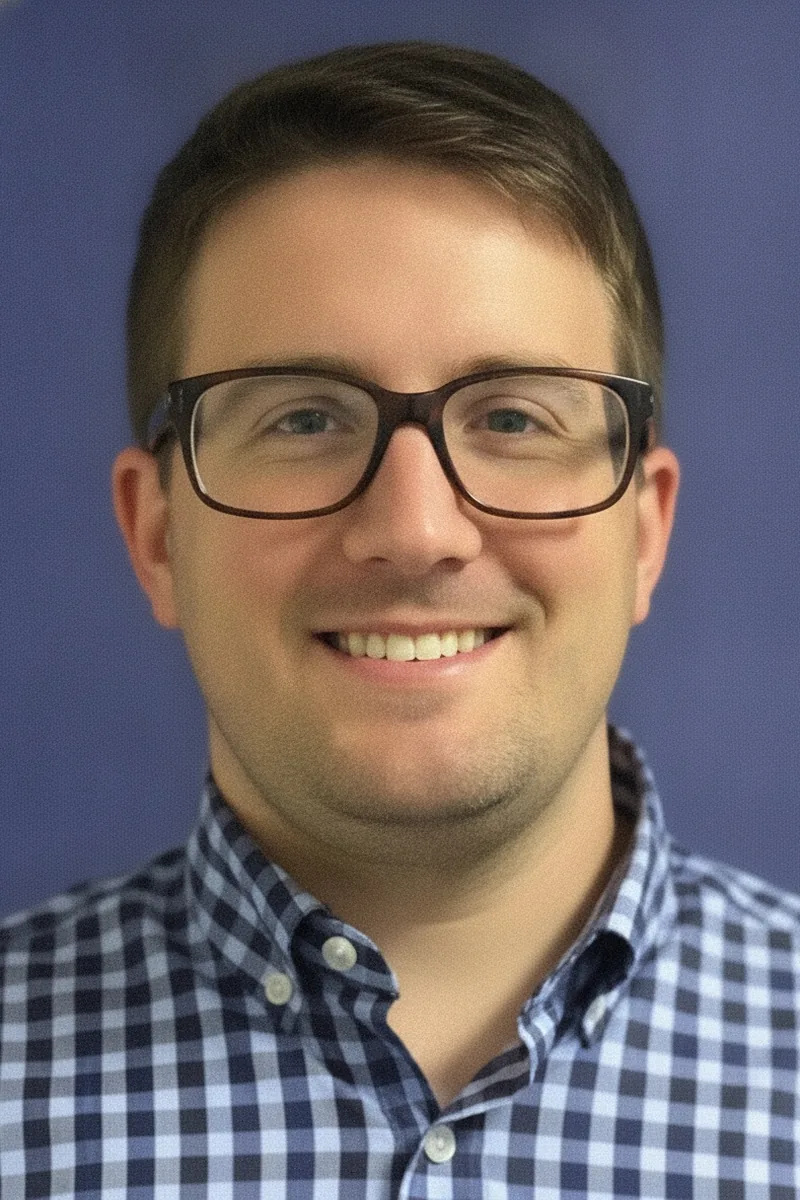
Joseph's background is in education and history, not physics — but his Special Education master's means he's trained to diagnose exactly where a student's understanding breaks down and rebuild it step by step, which matters enormously when a student is lost somewhere between Newton's second law and the free-body diagram they're supposed to draw. He approaches physics problems as reading comprehension exercises first, teaching students to decode what a problem is actually asking before any math happens. Rated 4.8 by students.

I tutor college physics and teach physics at a technical college. To me, tutoring is a relationship, forged with each student individually to meet you where you are and help you along your own best path toward mastery. In my free time, I love reading and writing science fiction and fantasy.
As a passionate educator with a Master's in Educational Psychology from the University of Wisconsin - Madison, I have over 8 years of tutoring and classroom experience, currently teaching a range of subjects including AP Biology and Physics. My approach centers on fostering a supportive learning environment that encourages curiosity and critical thinking, helping students connect complex concepts to real-world applications. I believe that every student has the potential to succeed, and I am dedicated to tailoring my methods to meet individual learning styles. Outside the classroom, I enjoy exploring the latest scientific research and engaging in outdoor activities, which I find enriches my teaching and connects me with my students.
Understanding physics means seeing the same core principles — Newton's laws, conservation of energy, wave behavior — show up in wildly different problems. Amber teaches students to identify which principle applies and how to set up the math, drawing on her strong background in both science and mathematics. Her 5.0 client rating speaks to an approach that makes even tricky free-body diagrams and projectile motion problems feel manageable.
Medical school at the Medical College of Wisconsin demands a command of mechanics, fluid dynamics, and thermodynamics that goes well beyond intro-level physics — Abrahim applies those principles daily in contexts like blood pressure dynamics and respiratory mechanics. His biology degree from UCLA (cum laude) and a 34 ACT underscore the quantitative chops he brings to breaking down force diagrams, energy conservation setups, and multi-step kinematics problems. Rated 5.0 by students.
Kinematics, force diagrams, and energy conservation problems all require translating a physical scenario into math — a skill Karann sharpened through her biological engineering degree and her current work modeling ecological systems. She walks students through each physics problem by first building a clear picture of what's happening physically before touching a single equation.
Thomas's math and statistics training at Carleton means the calculus and vector algebra that derail most physics students are second nature to him — so sessions stay focused on the physics itself, not on untangling the math underneath. He's especially sharp at teaching students to translate a messy word problem into a clean free-body diagram or energy equation, then carry the quantitative work through without losing track of what the numbers mean. Holds a 5.0 rating.
Two physics degrees and a master's in atmospheric and space sciences mean Richard doesn't just know the textbook — he's applied Newtonian mechanics, electromagnetism, and fluid dynamics to research-level problems. He unpacks each concept by building it from first principles, so students develop physical intuition alongside the math.
Aaron's applied math background means he tackles physics problems by unpacking the math behind them — showing why a differential equation describes a spring, or how vector components actually simplify a force diagram. He teaches students to set up problems from first principles rather than hunting for the right formula to plug into. His 5.0 rating speaks to how well that approach translates to real understanding.
Breanna's background is in education and counseling rather than engineering or lab science, but she's taught physics alongside math subjects from pre-algebra through calculus — so she knows exactly where the mathematical scaffolding breaks down for students tackling Newton's laws or energy conservation problems. She's especially effective with students who understand the concepts qualitatively but freeze when it's time to set up equations, bridging that gap between intuition and calculation.
Justin supplements science courses alongside his primary math teaching, which gives him a practical angle on physics: he connects equations to the algebra skills students already have. He's particularly effective at translating word-heavy physics problems into mathematical setups, a crossover skill he practices daily in his classroom.
Studying neuroscience at the cellular and molecular level means Rameen lives in the overlap between physics and biology — membrane potentials, diffusion, and electrical signaling all rely on core physics principles. She breaks down kinematics, forces, and energy conservation by tying abstract formulas to tangible, real-world scenarios students can visualize.
Studying mechanical engineering means Brendan lives inside physics — free-body diagrams, torque calculations, energy conservation, and fluid dynamics are part of his weekly problem sets. He approaches each topic by sketching the physical setup first, then translating it into math, which is the same process that earns full marks on AP and college-level exams. Rated 5.0 by students.
Steven teaches physics alongside calculus, algebra, and trigonometry, which means he can spot when a student's real obstacle in a force or energy problem isn't the physics — it's the vector components or the trig. That crossover awareness lets him patch the math gap on the spot instead of letting it silently derail every problem set. Rated 5.0 by students.
I am currently an undergraduate student at Cornell University. I intend to major in physics and either minor or double major in computer science.
I am interested in making physics and math relatable to people who are not naturally adept at it. I have taken the SAT, the general GRE and the physics GRE subject tests.
I am a player on a student's team with the goal of academic success and increased intellectual understanding. This outcome is impossible without getting down to the student's level, utilizing age appropriate vocabulary, providing constructive criticism, and establishing their baseline.
I am an international student from China graduating from University of Wisconsin Madison majoring in Math. I also studied in Bonn University in Germany for one semester. While I was in UW Madison, I tutored college students enrolled in up to 13 math courses and entry level German courses both in large groups and individually. I am enthusiastic in teaching what I know and helping others develop problem solving skills by well explaining both concepts and specific related problems. I believe that everyone is unique. It is my pleasure to assist everyone to develop their own way to study based on their strength and weakness.
Michael holds a PhD in Physics from the University of Michigan and a BS from Rice, and he's spent years teaching everything from basic mechanics to advanced electrodynamics and special relativity. He's particularly effective at connecting abstract principles — like conservation laws or field theory — to real-world phenomena students can actually visualize. Rated 4.7 by students, he brings both deep subject knowledge and genuine teaching experience to every session.
Studying civil engineering at Cornell means Ryan doesn't just remember physics — he's still using free-body diagrams, energy conservation, and fluid mechanics in his coursework right now. He explains force problems and kinematics by connecting equations to the physical intuition behind them, which makes problem-solving strategies transferable across chapters. His 35 ACT reflects the same analytical rigor he brings to every tutoring session.
Breaking physics problems into free-body diagrams and energy conservation equations is second nature to Andrew, who built quantitative reasoning skills across both a molecular biology degree and doctoral-level study. He tackles everything from kinematics to electromagnetism by teaching students to identify which principle applies before touching a single formula.
Jackie took AP Physics C — the calculus-based version — and scored a 5 on the exam, which means she's comfortable with everything from Newtonian mechanics to electromagnetic induction. She unpacks free-body diagrams and energy conservation problems by tying the math to real physical situations students can visualize. That combination of calculus fluency and physical intuition makes her especially effective for students preparing for AP or college-level physics.
Three years of tutoring introductory physics at Washington University gave Justin a sharp sense of where students get stuck — usually at the gap between understanding a concept verbally and translating it into a free-body diagram or equation. His dual bachelor's degrees in physics and math, plus doctoral training in computational methods, let him attack problems from both the physical intuition side and the mathematical machinery side. Rated 5.0 by students.
A Caltech economics and computer science graduate, Brian brings serious quantitative depth to physics — from Newtonian mechanics and energy conservation through electromagnetism and wave behavior. He teaches students to set up problems systematically, identifying which principles apply before touching a single equation, which is the skill that separates students who understand physics from those who just memorize formulas.
Dylan's physics major at Vanderbilt means he's not recalling intro-level material from years ago — he's actively working through classical mechanics, electromagnetism, and modern physics right now, which keeps his explanations current and sharp. His instinct is to ground every abstract concept in a physical, graphical picture: showing what a free-body diagram actually represents, or why a velocity-time graph reveals more about acceleration than a formula ever could. That visual-first approach, backed by a 36 ACT and a math minor, makes the subject click for students who've been drowning in equations without understanding what they mean.
Between a mechanical engineering bachelor's and a PhD program at Rice, Jeffrey has spent years solving statics, dynamics, and thermodynamics problems that most students only encounter in their first physics course. He taught calculus-based physics at Notre Dame and assisted in Differential Equations and Mechanics, so he knows exactly where students lose the thread — especially when multi-step force and energy problems demand both physical reasoning and clean math. Rated 4.9 by students.
Studying applied math at Stanford gave Alex a deep comfort with the mathematical backbone of physics — setting up differential equations for oscillating systems, working through vector fields, or translating a word problem into a free-body diagram. He teaches the problem-solving process itself, showing students how to identify which principles apply before touching a single equation.
Most physics struggles come down to translating a word problem into the right free-body diagram or energy equation. Viraj teaches that translation step explicitly, walking through how to identify forces, choose coordinate systems, and apply Newton's laws before any numbers enter the picture. His science-heavy Cornell curriculum keeps these concepts sharp across mechanics, waves, and electricity.
Applied math at Caltech means Samuel's daily coursework is the calculus and differential equations that power every physics problem — from projectile motion to oscillating springs to electric fields. He teaches students to build the mathematical setup first, identifying which principles apply and why, so that plugging into formulas becomes the easy final step rather than a frantic guessing game.
As a Yale physics major who also teaches thermodynamics, special relativity, and statics and dynamics, Ian has worked through the full arc from introductory mechanics to upper-division theory — so he knows exactly where each concept builds on the last and where students tend to lose the thread. He's particularly sharp at finding the analogy or reframing that makes a stubborn idea finally click, whether that's torque, wave superposition, or conservation laws in multi-body systems. His 1550 SAT speaks to the quantitative precision he brings to every problem.
Testimonials
Because the right Physics tutor makes all the difference.
Average Session Rating – Based on 3.4M Learner Ratings
Practice Physics
Free practice tests, flashcards, and AI tutoring for Physics
Nearby Physics Tutors
Other Milwaukee Tutors
Related Science Tutors in Milwaukee
Frequently Asked Questions
Many students struggle with visualizing abstract concepts like forces, energy, and motion—especially when they can't see these phenomena in action. Others find it difficult to connect theoretical equations to real-world applications, or they rush through problem-solving without understanding the underlying principles. With Milwaukee's average student-teacher ratio of 20.5:1, personalized 1-on-1 instruction can help you slow down, ask questions freely, and build genuine understanding rather than just memorizing formulas.
Your first session is about understanding where you are right now. A tutor will review your current coursework, identify specific concepts that feel fuzzy, and assess whether you're struggling with the math, the conceptual reasoning, or both. From there, they'll create a personalized plan focused on your goals—whether that's acing an upcoming exam, building stronger fundamentals, or developing better problem-solving strategies. Most students leave feeling more confident about what they need to work on.
Absolutely. Beyond classroom instruction, tutoring can help you understand the scientific method, design experiments thoughtfully, and interpret your results correctly. Tutors can walk you through how to set up experiments, troubleshoot when things don't go as planned, and connect what you observe in the lab to the theory you're learning. This bridges the gap between hands-on work and conceptual understanding, making both more meaningful.
Physics definitely uses math, but struggling with math doesn't mean you can't excel in physics—it just means you might need support in both areas. Tutors can help you strengthen the specific math skills you need (unit conversions, algebraic manipulation, trigonometry) while also teaching you how to set up and solve physics problems. Many students find that once they see how the math connects to the physics concept, both become clearer.
These are procedural skills that benefit greatly from guided practice and immediate feedback. A tutor can show you the systematic steps, help you spot where you typically make mistakes, and give you plenty of problems to work through with support. Rather than memorizing rules, you'll understand why each step matters—making it easier to apply these skills across different problem types and remember them long-term.
Varsity Tutors connects you with tutors who have deep expertise in physics and experience helping students at your level. When you get matched with a tutor, you can discuss their background, teaching approach, and how they've helped other students overcome similar challenges. The right fit matters—you want someone who can explain concepts clearly, answer your questions patiently, and adapt their teaching to how you learn best.
Physics isn't just abstract equations—it explains how the world actually works, from how your phone's touchscreen responds to your finger to why bridges are built the way they are. When you see these connections, physics becomes less about memorizing and more about understanding. Tutors can help you recognize where physics shows up in everyday life, which deepens your comprehension and makes studying more engaging and meaningful.
Exam preparation with a tutor goes beyond reviewing material—it's about identifying your weak spots, practicing under test-like conditions, and developing problem-solving strategies that work for you. Tutors can help you manage time during exams, recognize which formulas and concepts apply to different question types, and build confidence through targeted practice. Whether you're preparing for a unit test or the AP Physics exam, personalized instruction focuses on what will actually improve your score.
Let’s find your perfect tutor
Answer a few quick questions. We’ll recommend the right plan and match you with a top 5% tutor.