Award-Winning Pre-Calculus Tutors
serving Spokane, WA
Pre-Calculus
Tutors in Spokane
Private 1-on-1 tutoring, weekly live classes for academic support, test prep & enrichment, practice tests and diagnostics, and more to elevate grades and test scores.
Based on 3.4M Learner Ratings
UniversitiesSchools & Universities
DeliveredHours Delivered
ProficiencyGrowth in Proficiency
Who needs tutoring?
No obligation. Takes ~1 minute.
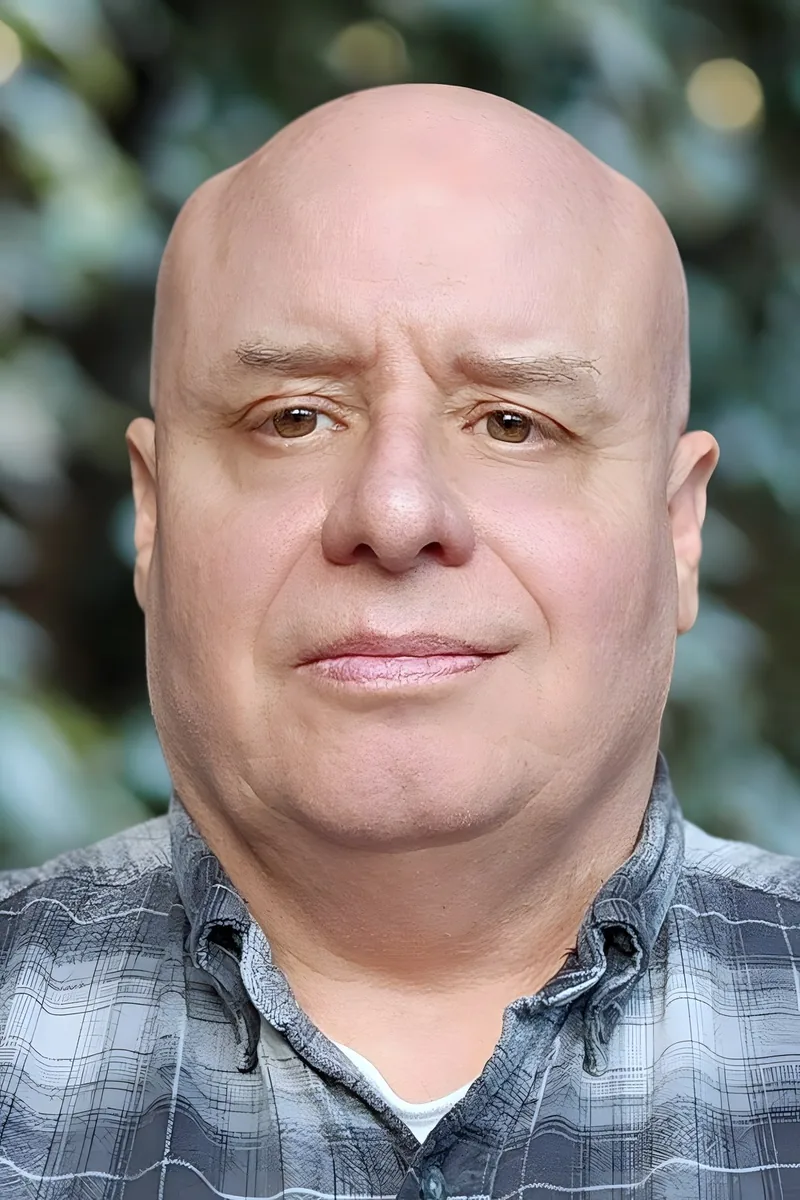
Intensely curious, I am interested in STEM subjects and the liberal arts. I tutor to help you reach your educational goals and because it's immensely gratifying to see my students succeed.
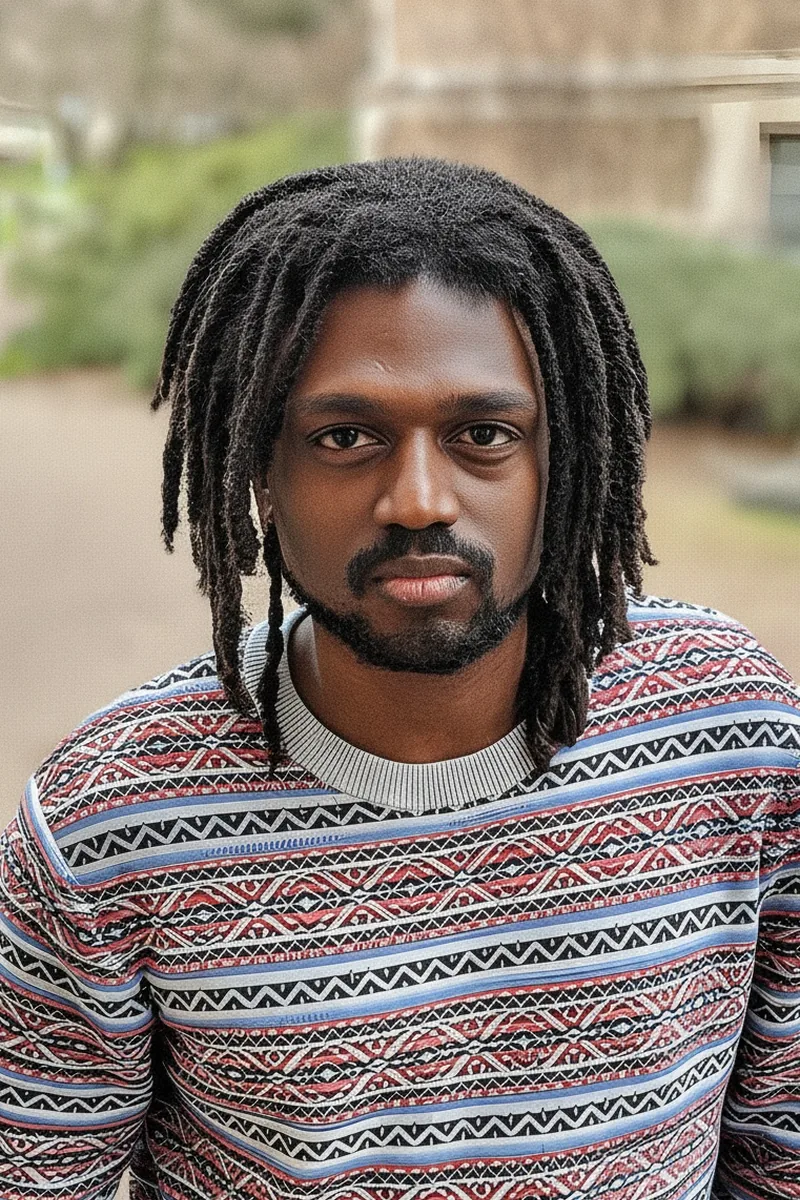
Najja earned a math degree from Stanford, where applying formulas and mathematical properties mattered far more than memorizing them — a habit he carries directly into how he teaches pre-calculus topics like trigonometric identities and composite functions. He digs into the reasoning behind each rule so students can reconstruct techniques on their own when a problem looks unfamiliar. His dual background in math and history gives him a knack for explaining abstract ideas in concrete, narrative terms.
Teaching pre-calculus as adjunct faculty at Washington State University means Moayad isn't just tutoring this material — he's designing syllabi, writing exams, and watching hundreds of students hit the same stumbling points around rational functions, limits intuition, and trigonometric identities. His two math degrees (BS and MS) give him the depth to explain why a concept works, not just how to execute it. Rated 4.5 by students.
The jump to Pre-Calculus trips up a lot of students because it demands fluency with trigonometric identities, complex functions, and limits all at once. Alice approaches each of these topics as its own mini puzzle, finding the specific strategy — graphical, algebraic, or numerical — that makes a concept click for each student. Her 5.0 rating speaks to how well that approach lands.
A physics degree means Cory learned pre-calculus concepts the hard way — by needing them to work in kinematics, wave equations, and circuit analysis before circling back to understand why they worked. That experience makes him especially sharp at teaching the bridge between algebraic manipulation and the functional thinking calculus demands, particularly when it comes to trigonometric relationships and limits of rational expressions. Rated 4.9 by students.
Most pre-calculus struggles trace back to a shaky handoff from algebra — students can solve equations but freeze when asked to think about functions as objects that transform, compose, and invert. Maria's applied math training at UCLA means she teaches that conceptual shift directly, connecting the algebraic manipulation students already trust to the functional reasoning calculus will demand. Her background in business economics also gives her a ready supply of real modeling contexts for exponential and logarithmic behavior.
Trigonometric identities, rational functions, and the unit circle are the concepts that separate students who are ready for calculus from those who aren't. Sameer teaches Pre-Calculus with an eye toward what's coming next, making sure students understand why limit behavior and function transformations matter before they ever see a derivative. His own path through AP Calculus BC and into university-level math keeps that connection sharp.
The jump into trigonometric identities, polar coordinates, and limit intuition is where pre-calculus either prepares a student for calculus or leaves them scrambling. Xiansheng teaches these topics by showing how each one feeds directly into the derivatives and integrals ahead, so students understand the purpose behind every new concept.
I am a Masters student in Physics at the University of Washington and have over 10 years of teaching and tutoring experience. Most recently, I worked as a teacher at the Yellow Wood Academy, a private high school that offers students a specialized one-on-one classroom environment. At YWA, I taught all high school science classes (including AP, Computer Programming, and Environmental Science) and all levels of high school math. In addition to my teaching and tutoring duties, I designed individualized lesson plans, curricula, homework assignments, and tests. Subjects I have successfully tutored Physics: all levels Chemistry: all levels high school, plus P-Chem, O-Chem Biology: all levels high school Math: all levels high school, plus Differential Equations, Statistics, some Group Theory. Standardized test preparation (incl. SAT, ACT, GRE, MCAT) Need help in another area? Just ask! While math and science are the subjects I am most passionate about, I am well-versed in many academic areas, and I may be able to help you.
I'm a tutor who loves the moment when a concept finally clickswhether that's solving a calculus problem or debugging a first Python script. With experience teaching math from elementary to college level and professional training in full-stack development, I help students build confidence alongside competence in both math and programming. At Mathnasium, I worked with groups of 4-6 students at different levels, learning to adapt quickly to different learning styles. I bring that same flexibility to teaching HTML, CSS, JavaScript, Python, and other programming languages. I don't just give answersI guide students to discover solutions themselves because that's what sticks. Whether it's explaining why a for-loop isn't working, walking through derivatives, preparing for the SAT, or building a first web page, I focus on understanding over memorization. I'm patient but direct, and I adjust my approach based on what's actually working for each student. My goal is simple: make learning feel achievable, not intimidating, and give students tools they can use long after our sessions end.
A math degree from Penn means Ben didn't just pass through pre-calculus — he built everything that came after on top of it, from linear algebra to multivariable calculus. That depth lets him teach topics like rational functions and trigonometric identities by revealing the structural logic underneath, so students carry real understanding into calculus instead of a fragile set of memorized steps. Holds a 5.0 rating.
Mechanical engineering at Harvard means Christopher spends most of his time in calculus and differential equations — but he knows exactly which pre-calculus skills hold that work together, especially fluency with trigonometric graphs, composite functions, and the algebraic manipulation that makes limits possible later. He teaches each topic by gradually removing scaffolding until a student can tackle problems independently, flagging the specific mistakes that tend to snowball in calculus. His 35 ACT and 4.8 rating reflect a tutor who's recently built the same bridge his students are crossing now.
The jump to pre-calculus is where many students first encounter trigonometric identities, polar coordinates, and limits — concepts that feel disconnected from anything they've done before. Eileen bridges that gap by tying each new idea back to familiar algebra and geometry, giving students a clear roadmap into calculus.
A philosophy major at Princeton with a certificate in Statistics and Machine Learning, Julie approaches pre-calculus proofs and function analysis with the logical rigor her coursework demands — she's especially sharp at breaking down the 'why' behind trigonometric identities and limit intuition before students hit calculus. She teaches across the full math ladder from elementary through Calculus II, so she knows exactly which algebraic instincts need to be solid and which conceptual leaps trip students up at the pre-calc stage. Rated 4.9 with a 1570 SAT.
A mechanical engineering degree from WashU (magna cum laude) means Caroline spent years where pre-calculus wasn't a course — it was the baseline language for everything from thermodynamic cycles to stress analysis, with polar coordinates, parametric equations, and trig identities showing up in nearly every problem set. She zeroes in on the conceptual leap from manipulating expressions to thinking in terms of function behavior, which is exactly where most students stall before calculus. Holds a 5.0 rating and a 1560 SAT.
A Cornell chemical engineering degree means Rahul spent years working with exponential decay, logarithmic scales, and trigonometric models before most students even encounter them in a textbook. He teaches pre-calculus by emphasizing the conceptual reasoning behind each topic — why a logarithm undoes an exponential, how the unit circle generates every trig value — so the mechanics actually make sense. Rated 4.9 by students, with a 36 ACT to back up the quantitative chops.
Mechanical engineering at the undergraduate level means Andrea spent semesters grinding through the exact transition pre-calculus prepares students for — mastering polar coordinates, parametric equations, and trigonometric identities before they became essential tools in dynamics and thermodynamics courses. She teaches that material as someone who knows precisely where each concept resurfaces, breaking down topics like composite functions and rational expressions by connecting them to the engineering problems they eventually power. Her 32 ACT and 4.8 rating reflect consistent results across a wide range of students.
Harvard's History of Science program is surprisingly math-heavy — Erica spent semesters tracing how logarithmic scales, conic sections, and trigonometric models evolved from practical tools into the abstract framework students now encounter in pre-calculus. That historical lens gives her a distinctive way of teaching function families: she builds intuition for why a concept was invented before drilling the mechanics of how to use it. Rated 4.9 by students.
The jump into pre-calculus — trigonometric identities, limits, and complex functions — trips up even strong math students who breezed through earlier courses. Julia breaks these topics into logical building blocks, connecting each new idea back to the algebra and geometry students already know. Her Stanford coursework in economics and quantitative methods keeps her sharp on exactly the kind of function analysis pre-calc demands.
The jump into pre-calculus is really about learning to think in terms of functions — how they behave, transform, and connect to each other across trigonometric, polynomial, and rational families. Dane's engineering coursework at Duke means he uses these tools daily and can show students how concepts like limits, composite functions, and unit circle values actually build toward calculus rather than existing as isolated topics.
Jeffrey's mechanical engineering PhD work at Rice means he's spent years relying on the exact toolkit pre-calculus introduces — function composition, trigonometric modeling, and exponential behavior all show up constantly in dynamics and thermodynamics problems. He teaches these topics by walking through the engineering contexts where they actually matter, which gives students a concrete reason to care about each concept. His 34 ACT and 4.9 rating speak to the clarity he brings to quantitative subjects.
Molecular biophysics at Brown throws Srini into the deep end of mathematical modeling — fitting protein folding kinetics to exponential curves, analyzing oscillatory molecular dynamics with trig functions, mapping multivariable relationships through composition. That daily immersion means he teaches pre-calculus topics like function transformations and logarithmic properties as tools he actively uses, not abstract concepts he's reciting from a textbook. A 1600 SAT and 35 ACT confirm the mathematical fluency behind his approach.
Testimonials
Because the right Pre-Calculus tutor makes all the difference.
Average Session Rating – Based on 3.4M Learner Ratings
Practice Pre-Calculus
Free practice tests, flashcards, and AI tutoring for Pre-Calculus
Other Spokane Tutors
Related Math Tutors in Spokane
Frequently Asked Questions
Varsity Tutors matches Spokane students with expert Pre-Calculus tutors for 1-on-1 instruction. We pair each student with a tutor based on their specific needs, learning style, and goals.
Whether you need homework help, exam prep, or want to get ahead, our Pre-Calculus tutors are ready to help.
Common challenges include gaps from earlier material, difficulty with specific concepts, and trouble applying learning to new problems. These issues can snowball quickly in Pre-Calculus.
A tutor identifies where you're stuck, fills in gaps, and provides targeted practice. The 1-on-1 format means you get help exactly where you need it.
Tutors work with your student's actual coursework—homework assignments, class notes, and upcoming tests. This keeps tutoring directly relevant to what's happening in the classroom.
When you share information about your student's school and curriculum, we can match you with a tutor who has relevant experience.
All tutors complete background checks, credential verification, and teaching evaluation. Many of our Pre-Calculus tutors hold advanced degrees or have years of teaching experience.
You can review tutor profiles to find someone with the right background for your student's level and needs.
Many students see improved grades within a few weeks, along with better understanding of Pre-Calculus concepts and more confidence tackling challenging material.
Tutors track progress and adjust their approach to ensure continued improvement.
Most students benefit from 1-2 sessions per week. More frequent sessions help if your student is significantly behind or has an important exam coming up.
Your tutor can recommend a schedule based on your student's specific situation and goals.
Tutoring is purchased in packages of hours, with rates varying by tutor experience. Varsity Tutors offers several options to fit different budgets and needs.
You can discuss pricing during your consultation to find what works best.
Your tutor will assess where your student is, discuss goals, and start working on priority areas. Most students bring current homework or upcoming test material to focus on.
By the end, you'll have a clear sense of how the tutor can help and a plan for moving forward.
Let’s find your perfect tutor
Answer a few quick questions. We’ll recommend the right plan and match you with a top 5% tutor.