Award-Winning Finite Mathematics Tutors
serving Seattle, WA
Finite Mathematics
Tutors in Seattle
Private 1-on-1 tutoring, weekly live classes for academic support, test prep & enrichment, practice tests and diagnostics, and more to elevate grades and test scores.
Based on 3.4M Learner Ratings
UniversitiesSchools & Universities
DeliveredHours Delivered
ProficiencyGrowth in Proficiency
Who needs tutoring?
No obligation. Takes ~1 minute.
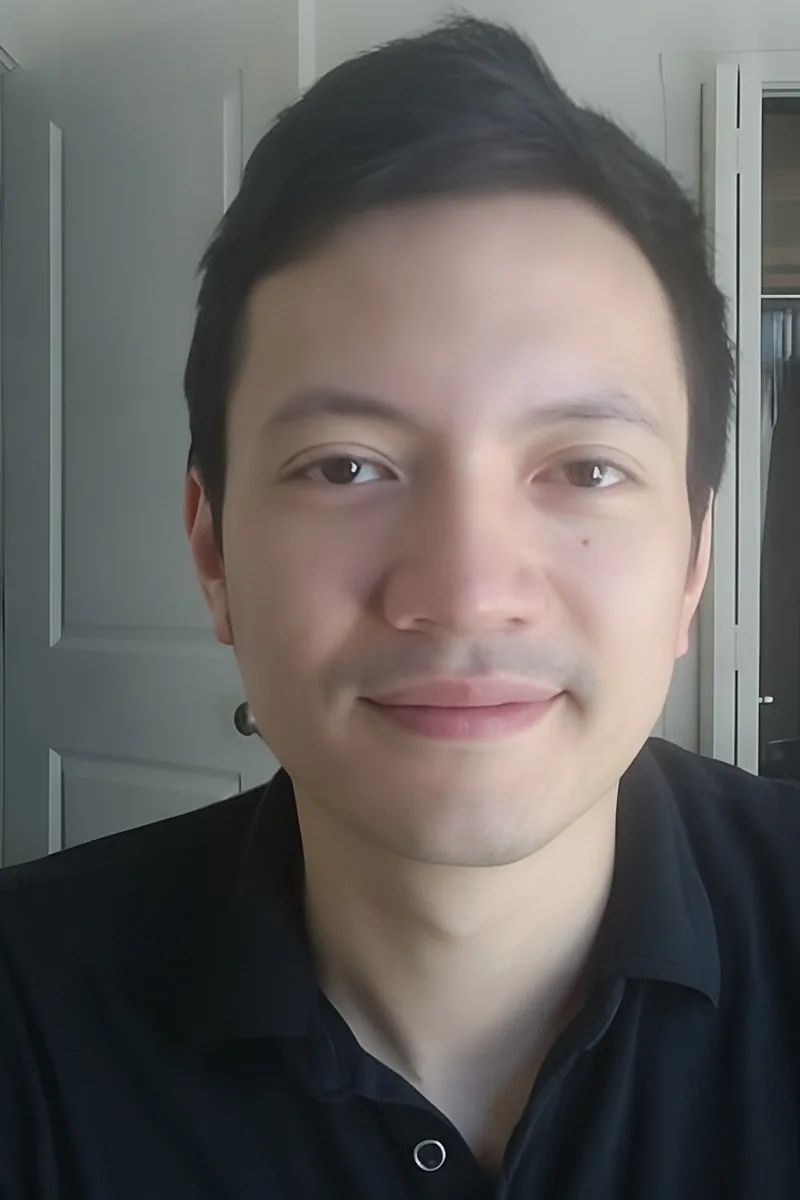
Physics training builds a habit of translating real situations into mathematical frameworks — exactly the skill that trips students up in finite mathematics when they're staring at a word problem about scheduling, resource allocation, or probability and can't figure out where the math starts. Cory uses that same translation instinct to teach students how to set up matrices, identify constraints for linear programming, and organize counting problems before jumping to computation. Rated 4.9 by students.
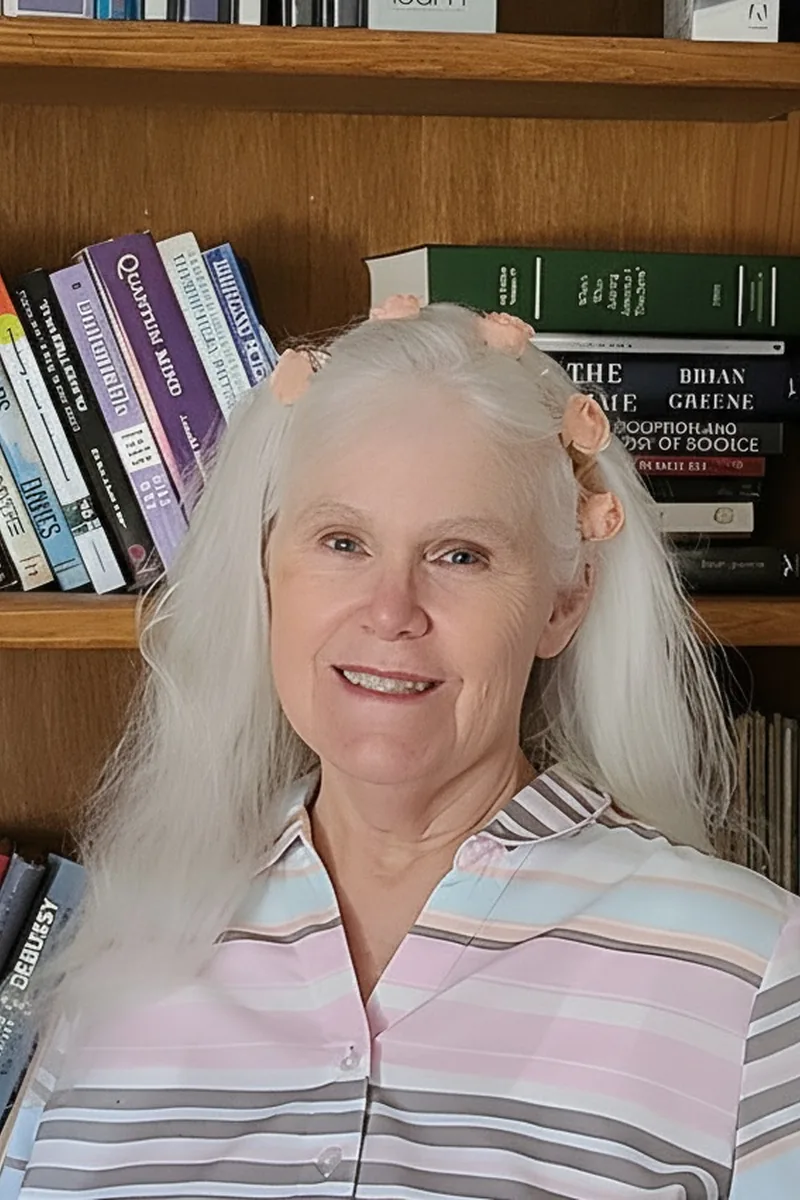
Clare's math degree and philosophy MPhil give her an unusual double fluency in the two things finite mathematics actually requires — algebraic computation and rigorous logical reasoning. She's especially strong on the logic-driven side of the course: truth tables, set operations, and the careful argument structure behind counting problems where students need to justify why a particular formula applies before using it.
Irene's PhD in Mathematics and Computer Science means she's worked with the discrete structures — set operations, combinatorics, graph models, and matrix algebra — that finite mathematics courses pull from, long before they were packaged into a single syllabus. She unpacks the logic behind each topic rather than rushing to formulas, which is especially useful when students hit the Markov chain or linear programming units and can't see how earlier material connects. Rated 4.9 by students.
Monika's math training runs from Delhi University through IIT Bombay to a PhD program at the University of Memphis — a path that built serious fluency with the matrix algebra, set theory, and probability that finite mathematics courses revolve around. She unpacks each topic by connecting it to the broader mathematical structure underneath, which is especially useful when students hit the wall on translating a word problem into a system of inequalities or a properly defined sample space.
William's applied statistics master's work and biomedical engineering background mean he's built and manipulated the matrices, probability models, and optimization setups that finite mathematics courses test — but in the context of real engineering and data problems. He's especially sharp at teaching students how to translate messy word problems into clean linear programming constraints or probability frameworks, since that translation step is where most errors actually happen. Rated 4.8 by students.
Pursuing an MS in Statistics at Portland State while having tutored the full calculus series, differential equations, and algebra at PCC since 2013, Danny brings unusual range to finite mathematics — a course that pulls from probability, matrix algebra, and counting techniques all at once. He unpacks each topic by connecting it to the statistical reasoning he uses daily in his graduate work, which is especially useful when students hit the probability and expected value chapters and can't see how the pieces fit together.
Teaching gifted students daily means Esteban regularly adapts math concepts for learners who move fast but sometimes skip over foundational reasoning — a habit that causes real trouble in finite mathematics when a counting problem demands careful distinction between ordered and unordered selections. His math degree and education training at Harvard give him both the technical depth and the pedagogical instinct to catch those gaps quickly, especially in probability and matrix units where sloppy setup leads to wrong answers. Rated 5.0 by students.
Most finite mathematics students hit a wall not on the math itself but on figuring out which tool fits which problem — is this a matrix setup, a counting argument, or a linear programming model? Ari's deep experience across algebra, calculus, and applied math means he can quickly diagnose where the confusion lives and rebuild the reasoning from there. Rated 4.9 by students.
Until age 16, Viktor thought math was just blind memorization — then a series of teachers at the right moment revealed the logic underneath, and he ended up majoring in mathematics at UChicago. That conversion story matters for finite mathematics, where topics like counting techniques and set operations look arbitrary until someone shows you why the rules work the way they do. His 1600 SAT and current master's work in computer science at NYU keep him sharp on the discrete reasoning these courses demand.
Linear programming, matrix operations, and combinatorics can feel disconnected from the rest of math until someone ties them together. Maggie's engineering background means she regularly uses these tools — from optimization models in her PhD research to probability applied in biomedical data analysis. She teaches Finite Mathematics by anchoring each topic in a concrete decision-making scenario.
Anna's policy analysis PhD at Pardee RAND means she uses matrix algebra, probability models, and optimization daily — the same toolkit that finite mathematics courses test in a more compressed format. She unpacks linear programming and decision-theory problems by tying them to the real policy scenarios where these methods actually get applied, which makes abstract setups feel less arbitrary.
Currently pursuing a graduate degree in mathematics while holding an applied math bachelor's, Drisana has worked through the matrix algebra, linear programming, and probability that finite math courses pile on — and she's done it from both the theoretical and computational sides. She's especially sharp at unpacking the logic behind setting up systems of inequalities, where most students can follow the arithmetic but struggle to build the model from a word problem. Rated 5.0 by students.
Pursuing a statistics and machine learning certificate at Princeton alongside her philosophy degree means Julie regularly works with the probability, combinatorics, and matrix operations that finite mathematics courses are built around — but her philosophy training also sharpens the logical reasoning that makes set theory and counting arguments click. She's especially strong at unpacking problems where the challenge isn't computation but figuring out how to structure the setup in the first place. Rated 4.9 by students.
Engineering coursework at MIT means Natasha has used matrix operations, linear systems, and optimization methods as everyday tools — not just textbook exercises — which maps directly onto the core of most finite mathematics syllabi. She's especially sharp at translating messy word problems into clean constraint inequalities for linear programming, a step where many students lose the thread between the scenario and the math. Rated 4.9 by students.
Testimonials
Because the right Finite Mathematics tutor makes all the difference.
Average Session Rating – Based on 3.4M Learner Ratings
Other Seattle Tutors
Related Math Tutors in Seattle
Frequently Asked Questions
Finite Mathematics covers practical math topics like logic, set theory, probability, statistics, linear programming, and matrices—without calculus. It's often required for business, social science, and computer science majors as a quantitative reasoning course. Many Seattle-area colleges use it as an alternative to precalculus for students who need math skills for specific fields rather than advanced STEM preparation.
Students often struggle with translating real-world word problems into mathematical models, understanding when to apply different probability techniques, and grasping the logic behind linear programming constraints. Many find the shift from computation-focused math to conceptual problem-solving challenging, especially when they can't see the "why" behind each step. Personalized tutoring helps students move beyond memorizing formulas to truly understanding the connections between concepts.
Expert tutors break down the problem-solving process by teaching students to identify what's being asked, define variables clearly, and map the problem to the right mathematical tools. Rather than jumping to answers, tutors guide students to recognize patterns—like spotting when a problem requires combinations versus permutations, or when linear programming applies. This strategic approach builds confidence and helps students tackle unfamiliar problems independently.
Yes. Varsity Tutors connects you with tutors who are familiar with various finite math curricula and can adapt their teaching to match your course materials and instructor's approach. Whether your class emphasizes applications, theoretical understanding, or a mix of both, tutors can align their instruction with your specific curriculum and learning objectives.
Your tutor will start by assessing your current understanding of key concepts, identifying specific areas of struggle, and learning about your learning style. They'll review your course materials, recent assignments, and any topics causing confusion. This foundation allows them to create a personalized plan that targets your needs—whether that's building conceptual understanding, improving problem-solving strategies, or preparing for exams.
One-on-one instruction creates a judgment-free space where students can ask questions without pressure and work through problems at their own pace. Tutors help build confidence by celebrating progress, breaking complex topics into manageable pieces, and showing students they can understand the material. As students see themselves solving problems correctly and grasping concepts they thought were impossible, their anxiety decreases and engagement increases.
Rather than treating each topic in isolation, expert tutors highlight how concepts like probability, combinatorics, and statistics relate to each other and to real-world applications. They ask guiding questions that help you discover patterns yourself, moving from memorizing procedures to understanding the underlying logic. This deeper understanding makes it easier to retain concepts and apply them to new problems.
Absolutely. Varsity Tutors connects Seattle students with experienced tutors who specialize in Finite Mathematics and understand the specific requirements of local colleges and high schools. With personalized 1-on-1 instruction tailored to your pace and learning style, you can get the support you need to succeed in this course.
Let’s find your perfect tutor
Answer a few quick questions. We’ll recommend the right plan and match you with a top 5% tutor.