Award-Winning AP Calculus BC Tutors
serving Seattle, WA
AP Calculus BC
Tutors in Seattle
Private 1-on-1 tutoring, weekly live classes for academic support, test prep & enrichment, practice tests and diagnostics, and more to elevate grades and test scores.
Based on 3.4M Learner Ratings
UniversitiesSchools & Universities
DeliveredHours Delivered
ProficiencyGrowth in Proficiency
Who needs tutoring?
No obligation. Takes ~1 minute.
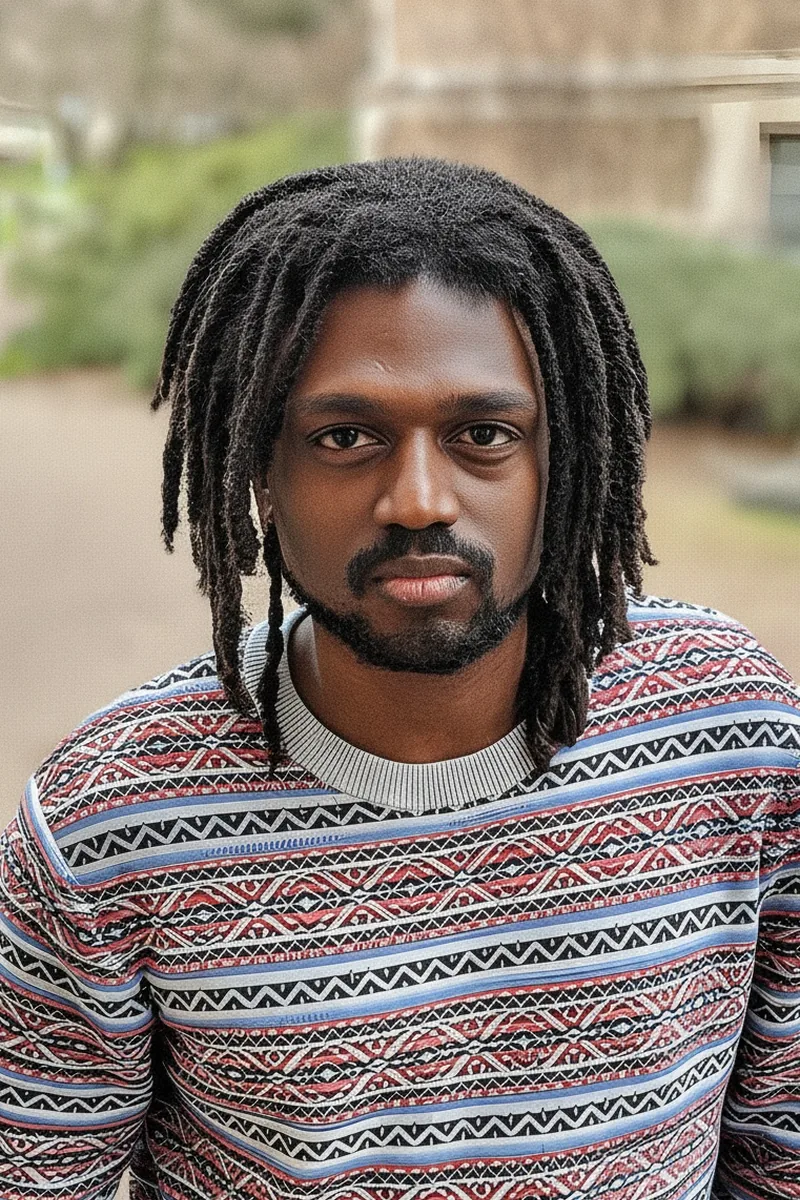
Having earned a math degree from Stanford, Najja brings genuine fluency with the theoretical underpinnings that separate BC from AB — particularly the logic behind convergence tests and the construction of series representations, where students often memorize steps without grasping why they're valid. His classroom teaching experience as a TA sharpened his ability to spot exactly where a student's reasoning breaks down, whether it's in setting up an improper integral or misapplying the ratio test. Rated 4.6 by students.
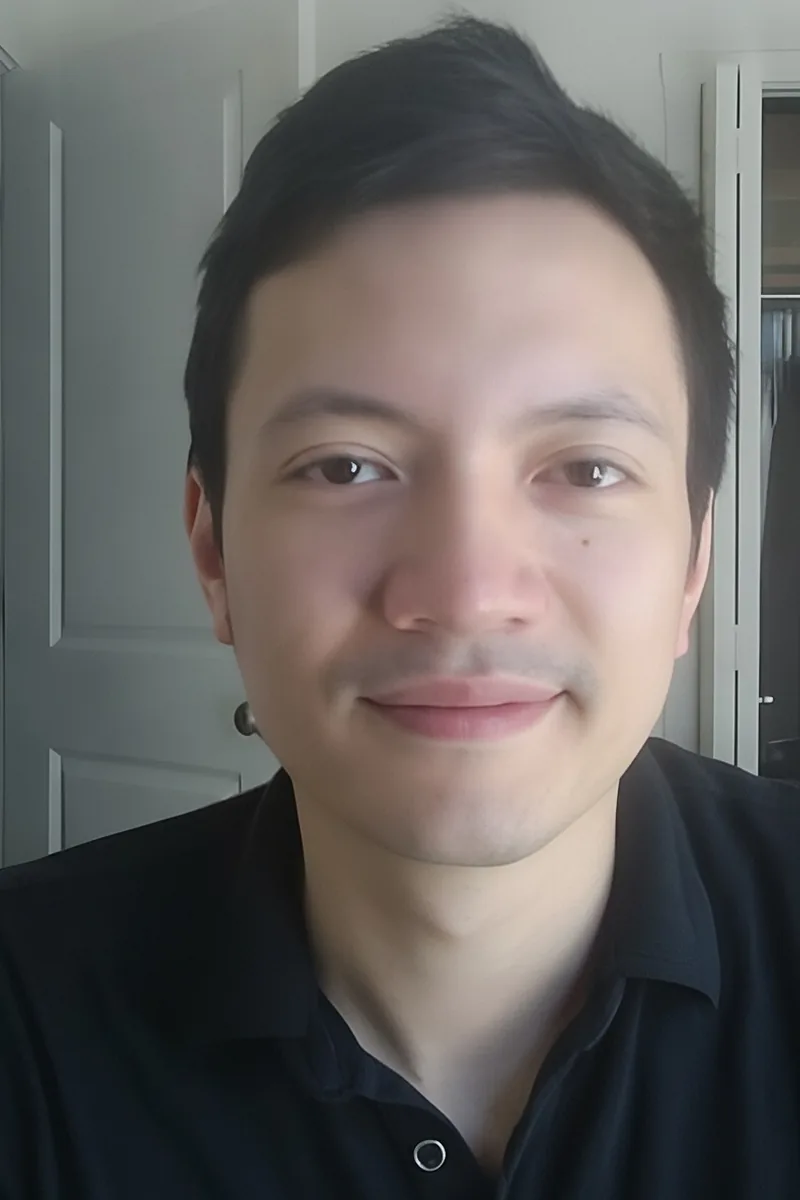
Physics majors don't just take BC Calculus — they breathe it, using series expansions to model oscillations, parametric equations to track projectile paths, and integration techniques to derive everything from moment of inertia to electric potential. Cory's physics degree means he teaches topics like convergence tests and Taylor polynomial error bounds with the intuition of someone who's relied on them to solve real problems, not just pass exams. Rated 4.9 by students.
Intensely curious, I am interested in STEM subjects and the liberal arts. I tutor to help you reach your educational goals and because it's immensely gratifying to see my students succeed.
BC Calculus covers a massive range — from parametric equations and polar curves to Taylor series and convergence tests — and Dennis's physics research at Princeton demanded fluency in all of it. He connects topics like integration techniques and differential equations to the physical problems they were invented to solve, which makes the logic behind each method click.
Sanjana doesn't just know AP Calculus BC — she teaches it, serving as a Course Assistant for Harvard's introductory calculus sequence. That means she's seen exactly where students stumble on Taylor series, parametric equations, and convergence tests, and she knows how to untangle those concepts in real time. Rated 5.0 by students.
BC Calculus layers convergence tests, parametric equations, and polar curves on top of an already demanding AB foundation, and the pacing leaves little room to fall behind. Vinson earned a 36 ACT and National AP Scholar distinction while building the kind of deep mathematical fluency that makes series analysis and integration techniques click. He breaks each new BC topic into the AB concept it extends, so the jump never feels arbitrary.
Biochemistry lab work at Columbia demands comfort with the calculus that models reaction kinetics and molecular behavior — Andrew has spent years using integration techniques and series approximations in that context, which gives his BC teaching a practical edge when students ask "why does this matter?" He's especially effective at breaking down the transition from AB to BC, tracing topics like Taylor polynomial construction and convergence criteria back to the derivative and integral logic students already trust. Rated 4.9 by students.
Princeton's public policy program is surprisingly calculus-heavy — Gianna's coursework in economic modeling and quantitative analysis means she's applied integration techniques and series approximations to real policy questions, not just problem sets. She's especially sharp at walking through the logic of convergence tests and parametric curves, connecting each BC topic back to the AB reasoning that makes it click.
Studying applied physics at Cornell, Ritesh encounters BC-level calculus constantly — parametric motion in mechanics, series approximations in wave theory, integration techniques in electromagnetism — so he teaches these topics as interconnected tools rather than isolated chapters. He's especially sharp at walking through the logic of convergence tests, where students often memorize steps without understanding which test to reach for and why. His 1440 SAT and 4.6 rating speak to that clarity.
Mackenzie scored a 35 on the ACT and tutors math at every level from elementary through AP, which means she knows exactly which algebra and AB gaps trip students up once BC introduces new integration techniques and series. She walks through problems like setting up improper integrals or applying ratio tests by tracing each step back to the reasoning behind it, so students build intuition they can rely on during the exam.
Biomedical engineering at Yale means Jonathan lives in the calculus that comes after most students stop — modeling biological systems with differential equations, approximating nonlinear tissue behavior with series expansions, running convergence analysis on numerical simulations. That daily exposure makes him especially effective at teaching the logic behind the ratio and integral tests, because he's seen firsthand what happens when you pick the wrong one. Holds a 5.0 rating.
Biology majors at WashU don't just memorize — Laura's upper-level coursework in evolutionary modeling and physical chemistry means she's actively using integration techniques, differential equations, and series approximations to solve problems outside a math classroom. That cross-disciplinary fluency is especially useful for BC's trickiest conceptual leap: understanding what a Taylor polynomial actually approximates and why specific convergence tests apply in specific situations. Rated 5.0 by students.
Notre Dame's Science-Computing program front-loads calculus-heavy coursework — Aidan moved through multivariable calc and differential equations while simultaneously applying integration techniques and series in his science courses, so BC topics like Taylor polynomials and convergence tests landed as tools he actually needed, not just exam hurdles. He's especially sharp at tracing where a BC struggle — say, setting up an integral in polar coordinates or choosing the right convergence test — traces back to an AB concept that needs reinforcing. His 35 ACT and premed science background keep explanations precise and grounded.
Having worked as a teaching assistant for multiple engineering courses at Washington University in St. Louis, Ava spent hours breaking down the calculus that trips students up most — and BC's jump into series convergence, parametric derivatives, and advanced integration techniques is exactly the material she kept revisiting with struggling engineers. Her dual degree in mechanical and energy engineering means she's applied Taylor expansions and improper integrals to real thermodynamic and fluid systems, giving her a concrete vocabulary for explaining why these tools matter beyond the AP exam.
Studying both biomedical engineering and applied mathematics at Johns Hopkins, Nicholas lives in the world where BC Calculus concepts — series approximations, parametric modeling, advanced integration — are daily requirements rather than abstract exercises. He's especially good at breaking down the transition from AB to BC, showing how something like a convergence test or polar area calculation grows directly out of derivative and integral logic students already trust. His 35 ACT and 4.8 rating speak to the clarity he brings to those explanations.
Testimonials
Because the right AP Calculus BC tutor makes all the difference.
Average Session Rating – Based on 3.4M Learner Ratings
Practice AP Calculus BC
Free practice tests, flashcards, and AI tutoring for AP Calculus BC
Other Seattle Tutors
Related Math Tutors in Seattle
Frequently Asked Questions
AP Calculus BC builds on Calculus AB and covers advanced integration techniques, differential equations, parametric equations, polar coordinates, and infinite series. The exam tests your ability to work with limits, derivatives, and integrals at a deeper level, plus new topics like convergence tests and Taylor series. Most students spend the year progressing through these topics systematically, with heavy emphasis on both computational skills and conceptual understanding.
AP Calculus BC moves quickly through abstract concepts—series convergence, polar curves, and parametric motion can feel disconnected from the concrete derivative and integral work students learn first. The exam also requires strong problem-solving skills under time pressure, and many students struggle with pacing through the 105-minute test. Additionally, weak foundational algebra or Calculus AB concepts can create gaps that compound as topics get more complex.
Score improvement depends on where you're starting and how consistently you engage with tutoring. Students who work with a tutor to identify weak topics, practice problem-solving strategies, and take timed practice tests typically see meaningful gains—often 1-2 points on the 1-5 scale. The key is starting early enough to address conceptual gaps and build confidence before test day, rather than cramming in the final weeks.
Practice tests are essential—they help you understand the exam format, identify which topics need more work, and build stamina for the full 105-minute test. Taking full-length practice tests under timed conditions reveals pacing issues and question types that trip you up. Most students benefit from taking 3-5 official or high-quality practice exams spread throughout their preparation, with focused review of mistakes between each one.
Students often rush through free-response questions without showing all required work, lose points on algebraic errors in integration, and struggle with series convergence tests—confusing when to use ratio test versus root test. Another frequent issue is misinterpreting parametric or polar problems, or failing to check answer reasonableness. Working with a tutor to review past exams and practice deliberate problem-solving helps catch these patterns before test day.
Varsity Tutors connects you with expert tutors who specialize in AP Calculus BC and understand the specific challenges students face. When getting matched with a tutor, look for someone with strong calculus credentials and experience helping students improve their AP scores. Your first session is a great opportunity to discuss your current level, target score, and whether you need help with specific topics like series or parametric equations.
The exam has two sections: 45 minutes for 30 multiple-choice questions (about 1.5 minutes per question) and 90 minutes for 6 free-response questions (roughly 15 minutes each). Most students benefit from skipping harder multiple-choice questions initially and returning to them later, then tackling free-response questions in order of difficulty. A tutor can help you practice this pacing strategy on timed practice tests so it feels natural on exam day.
Ideally, start tutoring early in the school year if you're struggling with foundational concepts or want to build a strong base. If you're already in the course and doing okay, starting 2-3 months before the exam gives you time to address weak areas and practice test-taking strategies. Starting too close to exam day limits your ability to fill conceptual gaps, so early intervention is always better than last-minute cramming.
Let’s find your perfect tutor
Answer a few quick questions. We’ll recommend the right plan and match you with a top 5% tutor.