Award-Winning High School Chemistry Tutors
serving Seattle, WA
High School Chemistry
Tutors in Seattle
Private 1-on-1 tutoring, weekly live classes for academic support, test prep & enrichment, practice tests and diagnostics, and more to elevate grades and test scores.
Based on 3.4M Learner Ratings
UniversitiesSchools & Universities
DeliveredHours Delivered
ProficiencyGrowth in Proficiency
Who needs tutoring?
No obligation. Takes ~1 minute.

I am an undergraduate earning my Bachelor's degree in Electrical Engineering from the University of Washington. I have already earned my Associate's of Arts with honors through the running start program, and graduated high school as a Valedictorian. I have worked with Disability Resource Services in taking notes for students, and have also offered assistance with homework to other students. As an engineering student, I am able to use my experience to offer assistance with math. I am also able to tutor in chemistry since I have already completed the general chemistry series. I believe that education is extremely important in life, not only for the purpose of knowledge, but also for the determination and ambition that learning teaches us. Understanding concepts not only takes time, but also dedication. As a student who has also attended many tutoring hours, I have come to understand that concepts sometimes require different approaches to finally have that idea click.
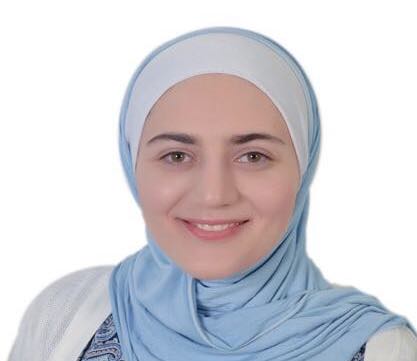
Helping students in their education is my passion. I understand how frustrating it is to keep trying on understanding a concept or master a skill without getting a satisfying result. I aim to help students enjoy learning and acquiring knowledge. Always remember that knowledge is power, and nobody can take it from you. I have sufficient tutoring and teaching experience in secondary and post-secondary settings. I worked as a tutor at the University of Wisconsin Oshkosh. I tutored college students different courses in mathematics, physics, biology, chemistry, and psychology. Also, l worked as a graduate teaching assistant at Marquette University. I taught the laboratory part of general chemistry, analytical chemistry, and organic chemistry. Furthermore, l worked as a science teacher at different secondary schools. I taught science for grades 4,5,6, and 8. Also, l taught chemistry for grade 9. When it comes to my education, l have a bachelor degree in biology healthcare science and chemistry biomolecular science (double major). In addition, l have a master's degree in chemistry. I received my undergraduate education at the University of Wisconsin Oshkosh and my graduate education at Marquette University. I tutor for numerous subjects such as algebra, trigonometry, calculus, physics, organic chemistry, analytical chemistry, human anatomy, developmental biology, ecology, and biochemistry. Also, l tutor for the GRE, DAT, TOEFL, and IELTS. My favorite subjects are the math, physics, biology, and chemistry subjects because l, simply, enjoy these fields. My teaching philosophy and tutoring style are based on practicing with various examples. When you are confronted with numerous problems to solve, you become more confident in that subject area. As a result, better performance in quizzes and exams. Outside of academia, learning about other cultures and countries around the world is my interest.
Currently, I am a Research Technician at New Mexico State University in Las Cruces, NM. I have tutored as an undergraduate student, and I have been the lead TA for General Chemistry courses at UC Berkeley. Chemistry is one of my passions, and I would love to share my experience!
Hi, I'm Stephanie! I recently graduated from Stanford University with a B.S. in Chemical Engineering and a minor in Biology, earning a 3.9 GPA. With three years of research experience and a strong background in chemistry, biology, physics, math, and engineering, I am eager to tutor STEM subjects from middle school through college levels. I look forward to simplifying challenging concepts, fostering a supportive learning environment, and helping students build confidence. I am committed to helping students find excitement in STEM.
Balancing equations, understanding mole ratios, and predicting reaction products all require a kind of structured problem-solving that Helen uses daily in her biomedical engineering studies at Johns Hopkins. She breaks down tricky topics like stoichiometry and periodic trends by linking them to patterns rather than asking students to memorize isolated rules. Rated 4.8 by students.
Stoichiometry, equilibrium, and acid-base reactions make more sense when a student can see where they lead. Bidyut ties high school chemistry concepts to biomedical applications he's encountered at Johns Hopkins, turning mole calculations and reaction balancing into something more tangible than textbook exercises.
Working at UPenn's Tutoring Center, Brittany spent semesters teaching General Chemistry I and II to both undergraduate and graduate students — so she's diagnosed the exact points where topics like stoichiometry, gas laws, and chemical equilibrium tend to fall apart for learners at different levels. That hands-on repetition with real students means she can spot whether a high schooler's confusion stems from the math, the conceptual model, or just shaky notation, and adjust accordingly.
Whether it's naming ionic compounds, predicting products of a reaction, or working through gas law calculations, Ravnoor zeroes in on the specific concept causing trouble and drills it with targeted practice problems. His 5.0 rating comes from a hands-on style that keeps sessions focused on doing chemistry, not just reading about it.
When mole conversions and electron configurations start piling up in high school chemistry, the subject can feel like pure memorization. Andrew reframes it: he walks through the logic of the periodic table so students can predict reactivity, bonding behavior, and molecular geometry from first principles instead of flashcards. Rated 4.8 by students.
Chemistry clicks when students see the logic underneath the formulas — why electron configurations predict reactivity, or how stoichiometry is really just bookkeeping for atoms. Dennis earned his Masters in Chemical and Physical Biology at Vanderbilt, so he teaches concepts like equilibrium, thermodynamics, and bonding from a place of deep daily familiarity rather than rote textbook review. Rated 5.0 by students.
Neuroscience at Yale meant David didn't just take chemistry — he needed it to work, especially when tracing how ion channels, neurotransmitters, and cellular signaling depend on concepts like electronegativity, polarity, and equilibrium. That gives him a concrete answer when students ask why any of this matters, and it shapes how he teaches topics like chemical bonding and reaction energetics: rooted in what molecules actually do, not just what shows up on a worksheet.
Running an immunology lab at Columbia means Matthew uses chemistry daily — from buffer calculations to understanding reaction kinetics in biological systems. For high school students tackling stoichiometry, equilibrium, or electron configurations, he explains the logic behind each concept rather than handing out shortcuts that fall apart on harder problems. Rated 5.0 by students, he makes the quantitative side of chemistry far less intimidating.
Fourth-year medical students don't usually think about stoichiometry or gas laws anymore, but Michael's path through Albert Einstein College of Medicine — plus his biology degree earned summa cum laude — means he's built on those high school chemistry foundations repeatedly in biochemistry, pharmacology, and physiology. He also spent time tutoring Regents-level chemistry and teaching MCAT prep for Kaplan, so he knows exactly where the gaps tend to form around topics like nomenclature, mole calculations, and balancing equations, and how to close them quickly.
Balancing equations, mole conversions, and electron configurations all follow patterns that become obvious once someone lays them out clearly. Tim's experience teaching chemistry at a STEM camp means he's practiced at breaking these topics down for students encountering them for the first time. His quantitative training at MIT keeps him sharp on the math-heavy units — gas laws, enthalpy, and solution chemistry — where many high schoolers hit a wall.
Chemistry can feel like learning a new language — balancing equations, interpreting the mole concept, predicting reaction types — and Asta treats it that way, breaking each topic into its own vocabulary and logic. Her experience tutoring internationally in Hong Kong gave her practice explaining scientific concepts to students from varied academic backgrounds. Rated 5.0 by students.
Stoichiometry, equilibrium, and electron configurations each demand a slightly different kind of thinking, and Emily switches between them fluidly thanks to her science-heavy coursework at Cornell. Her biology concentration means she often connects chemistry concepts to real biochemical contexts — why buffer systems matter, how thermodynamics drives reactions — which tends to make the material click faster for students who need more than rote formulas.
The jump from memorizing chemical formulas to actually solving equilibrium and redox problems is where most high school chemistry students struggle. JF tackles this gap head-on, walking through dimensional analysis, electron bookkeeping, and reaction predictions with the precision his Stanford math background provides. He's rated 5.0 by students who've worked with him.
Testimonials
Because the right High School Chemistry tutor makes all the difference.
Average Session Rating – Based on 3.4M Learner Ratings
Other Seattle Tutors
Related Science Tutors in Seattle
Frequently Asked Questions
High school chemistry requires balancing abstract thinking with practical application—students often struggle with visualizing molecular structures, balancing chemical equations, and understanding why reactions happen at the atomic level. Unit conversions and stoichiometry are frequent pain points, as is connecting theoretical concepts to real lab work. Personalized 1-on-1 instruction helps students move beyond memorization to develop genuine understanding of how chemistry works.
Chemistry labs reinforce concepts learned in class, but students often struggle with experimental design, data analysis, and scientific reasoning. Tutors help you understand the 'why' behind each step, connect observations to underlying chemical principles, and develop stronger scientific thinking skills. This support improves both your lab reports and your ability to troubleshoot when experiments don't go as expected.
Balancing equations requires understanding atomic structure, mass conservation, and oxidation states—concepts that feel disconnected when learned separately. Tutors break down the process step-by-step, showing you how to approach different equation types systematically and why the rules work. With guided practice and personalized feedback, what feels impossible becomes a manageable skill.
Chemistry involves invisible particles and forces that are hard to picture—molecules, electron orbitals, and reaction mechanisms exist at scales we can't see. Expert tutors use multiple strategies like molecular models, diagrams, animations, and real-world analogies to make these concepts concrete. When you can actually visualize what's happening at the atomic level, the chemistry clicks into place.
Your first session is about understanding where you are and where you want to go. A tutor will assess your current grasp of key concepts, identify specific areas of struggle (whether it's stoichiometry, thermodynamics, or lab skills), and learn about your learning style. From there, you'll build a personalized plan that targets your needs and prepares you for upcoming tests, labs, or the AP exam if that's your goal.
Unit conversions and stoichiometry problems intimidate many students because they involve multiple steps and require understanding the relationships between quantities. Tutors break these problems into manageable pieces, teach you reliable strategies for setting up conversions, and give you plenty of guided practice with feedback. Once you see the pattern, these problems become routine rather than panic-inducing.
Yes. AP Chemistry requires mastery of both content and problem-solving skills under time pressure. Tutors help you build a strong foundation in core concepts, practice with released exam questions, develop test-taking strategies, and identify weak areas before exam day. With personalized instruction focused on your specific needs, you'll feel confident tackling the exam.
Varsity Tutors connects you with expert tutors who have strong chemistry backgrounds and experience teaching high school students. When you get matched with a tutor, you can review their qualifications, teaching approach, and availability. You'll work with someone who understands both the Seattle school district curriculum and the best strategies for helping students truly understand chemistry rather than just memorize facts.
Let’s find your perfect tutor
Answer a few quick questions. We’ll recommend the right plan and match you with a top 5% tutor.