Award-Winning College Chemistry Tutors
serving Virginia Beach, VA
College Chemistry
Tutors in Virginia Beach
Private 1-on-1 tutoring, weekly live classes for academic support, test prep & enrichment, practice tests and diagnostics, and more to elevate grades and test scores.
Based on 3.4M Learner Ratings
UniversitiesSchools & Universities
DeliveredHours Delivered
ProficiencyGrowth in Proficiency
Who needs tutoring?
No obligation. Takes ~1 minute.
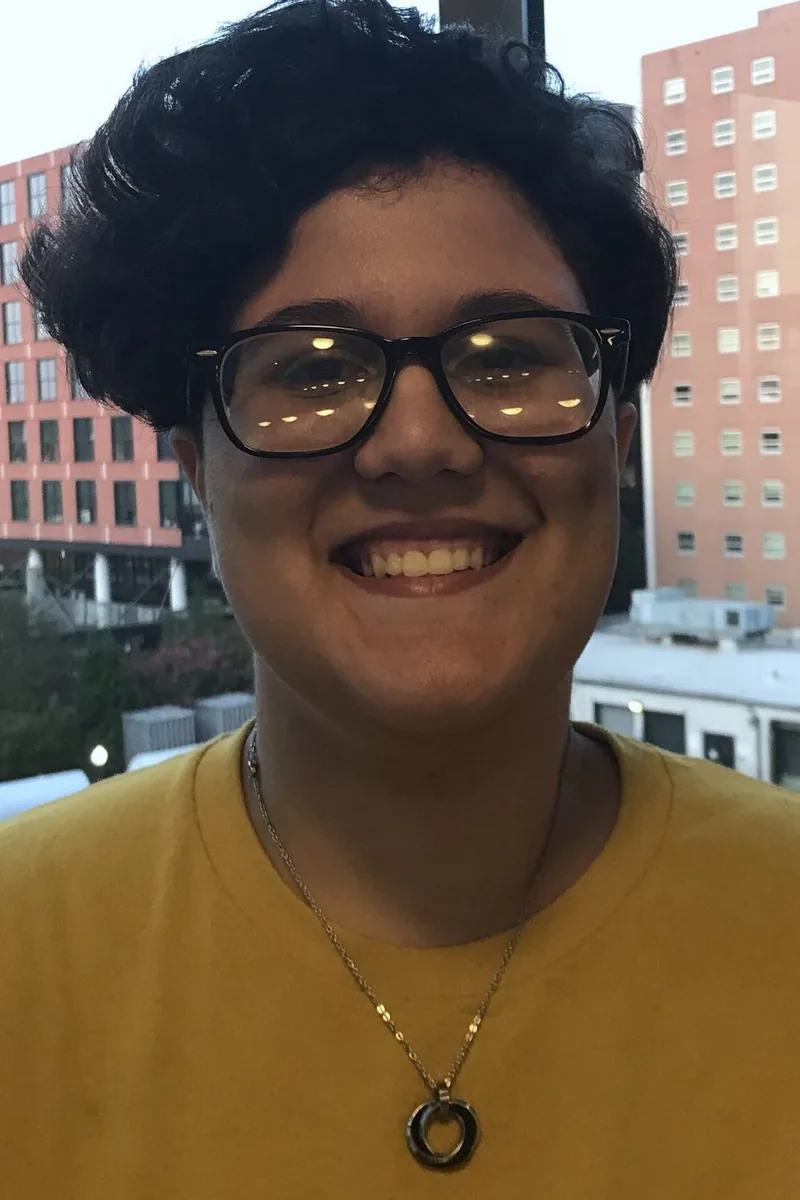
I'm a current medical student at VCU School of Medicine, and a graduate of Johns Hopkins University. I received my Bachelor of Science in Molecular and Cellular Biology. I've had the pleasure of tutoring a diverse range of students for 5 years; while I tutor a broad set of subjects, I'm most passionate about biology, psychology, and chemistry. I'm a big proponent of ensuring understanding over memorization and teaching concepts that last for years to come (particularly for other students interested in medicine!) In my free time, I love to write poetry, edit essays, and gush about game writing with friends.
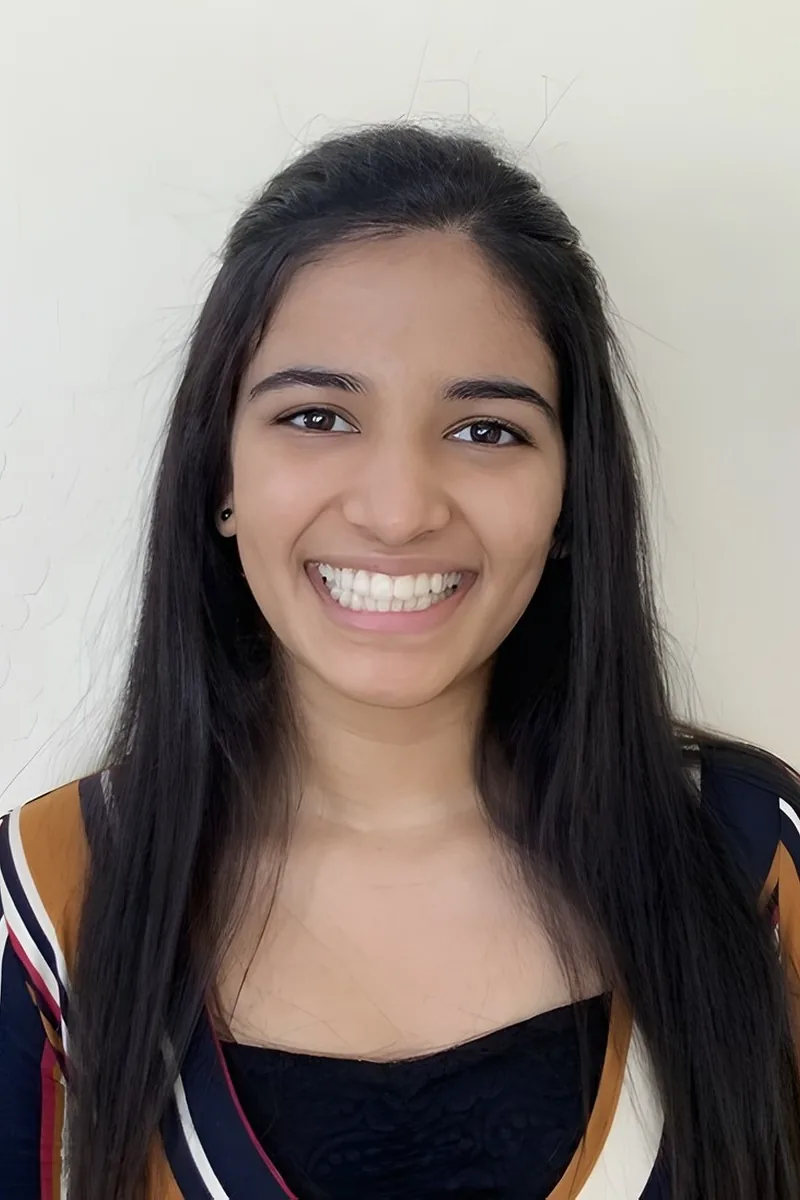
Being in VCU's BS/MD Guaranteed Admissions program means Roshni is taking college chemistry with real stakes — every gen chem concept, from electronegativity trends to buffer systems, feeds directly into the medical coursework waiting on the other side. She zeroes in on the logic behind reaction predictions and equilibrium shifts so students internalize the reasoning instead of memorizing disconnected rules. Rated 4.9 by students.
Having taken chemistry all the way through organic, analytical, and biochemistry at James Madison University, Ava knows which gen chem concepts — electron configuration, VSEPR theory, intermolecular forces — quietly become load-bearing walls for everything that follows. She zeroes in on the reasoning behind each model so students can predict molecular behavior on exams instead of scrambling to memorize exceptions.
Pre-med bioinformatics coursework at VCU's Honors College means Shahad has pushed through college chemistry with a chemistry minor backing her up — she's not just recalling gen chem for tutoring, she's actively using concepts like molecular interactions, reaction energetics, and solution behavior in her biology and genomics classes right now. That real-time fluency lets her explain where each topic resurfaces and why it's worth understanding deeply the first time around. Rated 4.9 by students.
Earning a chemistry degree at UVA means Brittany didn't just pass gen chem — she built on it through upper-level coursework where concepts like equilibrium, thermodynamics, and bonding theory get applied in increasingly complex contexts. Her IB Chemistry background adds another layer: she's familiar with both the American university approach and the IB framework, so she can translate between the two when students carry habits from one into the other. Rated 5.0 by students.
From the moment I began helping classmates in middle school study for math quizzes, I realized how much I enjoyed guiding others toward understanding. Over time, that spark grew into a genuine passion for education. What drives me most is witnessing the transformation in a student's confidencethe moment when confusion gives way to clarity, and they begin to believe in their own abilities. Tutoring, for me, is not simply about helping students achieve better grades; it's about empowering them to trust their capacity to learn and grow. My journey as a tutor began in high school, where I volunteered as a math tutor for underclassmen struggling with algebra and geometry. I worked one-on-one with students after school, helping them tackle difficult problems and build foundational skills. This early experience taught me how patience and consistent encouragement could make a lasting difference. In college, I served as a teaching assistant for general chemistry at the University of Virginia.
Engineering students don't just take college chemistry — they rely on it. Andrew's mechanical and aerospace engineering program at UVA required rigorous chemistry coursework covering thermochemistry, reaction kinetics, and electrochemistry, so he understands these topics from both a theoretical and applied standpoint. He walks through problem-solving strategies that make dense material more manageable.
Public health coursework at UT Austin meant Katherine couldn't just memorize gen chem — she had to internalize how concepts like solution chemistry, molarity, and acid-base behavior actually function in epidemiological and toxicological contexts. That applied perspective shapes how she teaches college chemistry: she grounds abstract topics in concrete scenarios first, then works backward into the calculations and notation so students understand what the numbers represent before solving for them.
Pre-med coursework at Duke forced Camille through the full gen chem gauntlet — stoichiometry, equilibrium, acid-base chemistry — while simultaneously juggling a humanities major, so she knows what it's like to learn dense quantitative material without the luxury of focusing on nothing else. That experience makes her especially effective with students who aren't pure STEM majors but still need to master college chemistry for their degree track. Rated 5.0 by students.
Tackling college chemistry topics like thermodynamics, kinetics, and electrochemistry is second nature for Greg, whose chemical engineering major at Vanderbilt requires him to apply these concepts in advanced contexts every semester. He breaks down intimidating derivations and multi-step problems by connecting them to the underlying physical intuition rather than treating each formula as something to memorize.
Four years of chemical engineering coursework at Pitt meant Olivia didn't just take gen chem — she leaned on it daily through material balances, reaction engineering, and process thermodynamics, so concepts like enthalpy, equilibrium constants, and stoichiometry are second nature rather than distant memories from freshman year. She's especially sharp at bridging the gap when students can set up a problem conceptually but lose the thread during multi-step calculations involving unit conversions or gas law algebra. Rated 4.9 by students.
Biochemistry and cell biology coursework at the undergraduate level, followed by Duke medical school, means Tammy has run the full gauntlet of college chemistry — from gen chem fundamentals like electron configurations and VSEPR theory through the organic and biochemical applications that make those foundations matter. She teaches the early material with an eye toward what's coming next, so students aren't just surviving gen chem but actually building fluency they'll use in later courses. Rated 5.0 by students.
Matt's neuroscience degree with a chemistry minor means he didn't just pass gen chem — he built on it through upper-level coursework in biochemistry and physiology, where concepts like molecular bonding, reaction energetics, and equilibrium stop being abstract and start explaining how biological systems actually function. That applied perspective lets him teach college chemistry topics by anchoring them to something concrete, which tends to make the leap from lecture notes to problem sets much less painful. Rated 5.0 by students.
Most college chemistry students don't expect a math major to be the one who makes electron configurations or equilibrium expressions click — but Tessa's mathematics training at Yale means she can cleanly separate the quantitative mechanics of a problem from the chemical reasoning, which is exactly where most gen chem confusion hides. She also scored a 36 ACT and holds a 4.9 rating, though what matters more is her knack for showing students the logical structure underneath topics that otherwise feel like pure memorization.
Predentistry at Columbia means Erica is preparing for a career where gen chem concepts like acid-base chemistry, molecular bonding, and solution properties aren't abstract — they're clinically relevant every day. Her Harvard history of science background also gives her an unusual knack for explaining *why* chemical models were built the way they were, which makes memorizing periodic trends and electron configurations feel less arbitrary. Rated 4.9 by students.
Pursuing a Doctorate of Physical Therapy means James encounters chemistry in a context most gen chem tutors don't — understanding how buffer systems maintain blood pH, how electrolyte concentrations drive cellular processes, and how thermodynamic principles govern metabolic reactions. His economics background also gave him strong quantitative reasoning, so he's comfortable walking through the math-heavy side of topics like stoichiometry and gas laws without losing sight of what the numbers actually represent. Rated 4.9 by students.
General chemistry at the college level lives or dies on whether you actually understand what's happening at the molecular level — equilibrium shifts, thermodynamic spontaneity, orbital hybridization — or just memorize formulas. Mosab's health sciences graduate work means he uses these concepts constantly and can connect them to real biochemical applications. Rated 5.0 by students.
MIT's general chemistry sequence is notoriously fast — Vania not only survived it but tutored other students through it via the university's Seminar XL and Tutorial Services Room programs, where she got fluent in the exact places students stall out on topics like thermochemistry, equilibrium, and electron configuration. Her mechanical engineering training means she thinks about chemistry problems quantitatively, tracing how molecular-level behavior connects to the math rather than treating equations and concepts as separate tasks. Rated 5.0 by students.
Dental school entrance exams and a microbiology degree meant Daniel had to master gen chem twice — once as an undergrad learning the fundamentals, and again at a higher level when topics like acid-base chemistry, solution concentration, and molecular interactions became the foundation for clinical science. That repetition gives him a sharp sense of which concepts students need to truly internalize versus which ones they can reference, and he teaches accordingly — spending more time on the reasoning behind equilibrium and bonding than on memorizing formulas that won't stick.
Having taken the full gen chem sequence at Cornell alongside organic chemistry and upper-level biology coursework, Jonathan knows exactly where college chemistry concepts like electron configuration, VSEPR theory, and solution stoichiometry start causing problems — usually when the course shifts from memorizable rules to applied reasoning. His human biology background means he naturally ties chemical principles back to biological systems, which tends to click for the pre-med and life science students who make up most of his college chemistry sessions. Rated 4.9 by students.
Testimonials
Because the right College Chemistry tutor makes all the difference.
Average Session Rating – Based on 3.4M Learner Ratings
Other Virginia Beach Tutors
Related Science Tutors in Virginia Beach
Frequently Asked Questions
College Chemistry demands both conceptual understanding and problem-solving skills—students often struggle with balancing equations, unit conversions, and connecting abstract molecular concepts to real-world applications. Many students also find the pace challenging, especially if they haven't had strong preparation in algebra or foundational chemistry. Personalized tutoring helps you move beyond memorization to develop the scientific reasoning skills that make chemistry click.
Yes—tutors can help you understand the scientific method, design experiments, interpret lab results, and connect your lab observations to lecture concepts. Whether you're struggling with data analysis, report writing, or understanding why experiments produce certain results, personalized instruction bridges the gap between theory and hands-on learning. This deeper understanding often improves both your lab grades and your performance on exams.
Chemistry involves visualizing molecules, bonding patterns, reaction mechanisms, and energy diagrams—things you can't see with your eyes. Expert tutors use multiple approaches—drawing Lewis structures, building molecular models, working through step-by-step mechanisms, and connecting concepts to tangible examples—to make abstract ideas concrete. When you can visualize what's happening at the molecular level, problem-solving becomes much more intuitive.
Your first session focuses on understanding your specific challenges—whether it's a particular unit like thermodynamics, difficulty with problem-solving strategies, or exam preparation. The tutor will assess your current understanding, identify gaps, and create a personalized plan tailored to your goals and learning style. This foundation ensures every session after builds on what works best for you.
Tutors help you move beyond cramming by building mastery over time through targeted practice, retrieval practice, and spaced repetition—proven strategies for long-term retention. They'll work through past exams with you, identify patterns in question types, teach you problem-solving strategies for different scenarios, and help you manage test anxiety. This approach typically leads to stronger exam performance and deeper understanding of the material.
Varsity Tutors connects you with expert tutors who have strong backgrounds in chemistry and experience helping students at your level. You can specify your needs—whether it's help with general concepts, lab reports, or exam prep—and get matched with someone who fits your schedule and learning style. The personalized 1-on-1 instruction means you're working with someone focused entirely on your success.
Chemistry is fundamentally about understanding how and why reactions occur—memorizing facts won't help you solve novel problems or apply concepts to new situations. When you truly understand bonding, equilibrium, or kinetics, you can tackle any problem the exam throws at you. Tutors focus on building this conceptual foundation so you're not just learning facts, but developing the scientific reasoning skills that carry through your chemistry courses and beyond.
Many students see noticeable improvement within 2-4 weeks of consistent tutoring, especially if they're working on specific problem areas like balancing equations or thermodynamics. However, deeper conceptual mastery and exam performance gains typically develop over a longer period as you build confidence and problem-solving skills. The timeline depends on your starting point, how frequently you meet, and how actively you engage with the material between sessions.
Let’s find your perfect tutor
Answer a few quick questions. We’ll recommend the right plan and match you with a top 5% tutor.