Award-Winning AP Calculus BC Tutors
serving Virginia Beach, VA
AP Calculus BC
Tutors in Virginia Beach
Private 1-on-1 tutoring, weekly live classes for academic support, test prep & enrichment, practice tests and diagnostics, and more to elevate grades and test scores.
Based on 3.4M Learner Ratings
UniversitiesSchools & Universities
DeliveredHours Delivered
ProficiencyGrowth in Proficiency
Who needs tutoring?
No obligation. Takes ~1 minute.

Having spent countless hours teaching calculus to engineering, computer science, physics, and economics majors, Austin knows exactly where each group tends to stumble — and BC's leap into series convergence and polynomial approximation is where the gaps widen fastest. His applied mathematics degree gives him the formal grounding to trace a shaky understanding of, say, the Lagrange error bound back to the specific limit reasoning that needs reinforcing. He scored a 1430 on the SAT and approaches every BC topic by making the underlying logic explicit rather than drilling formulas.
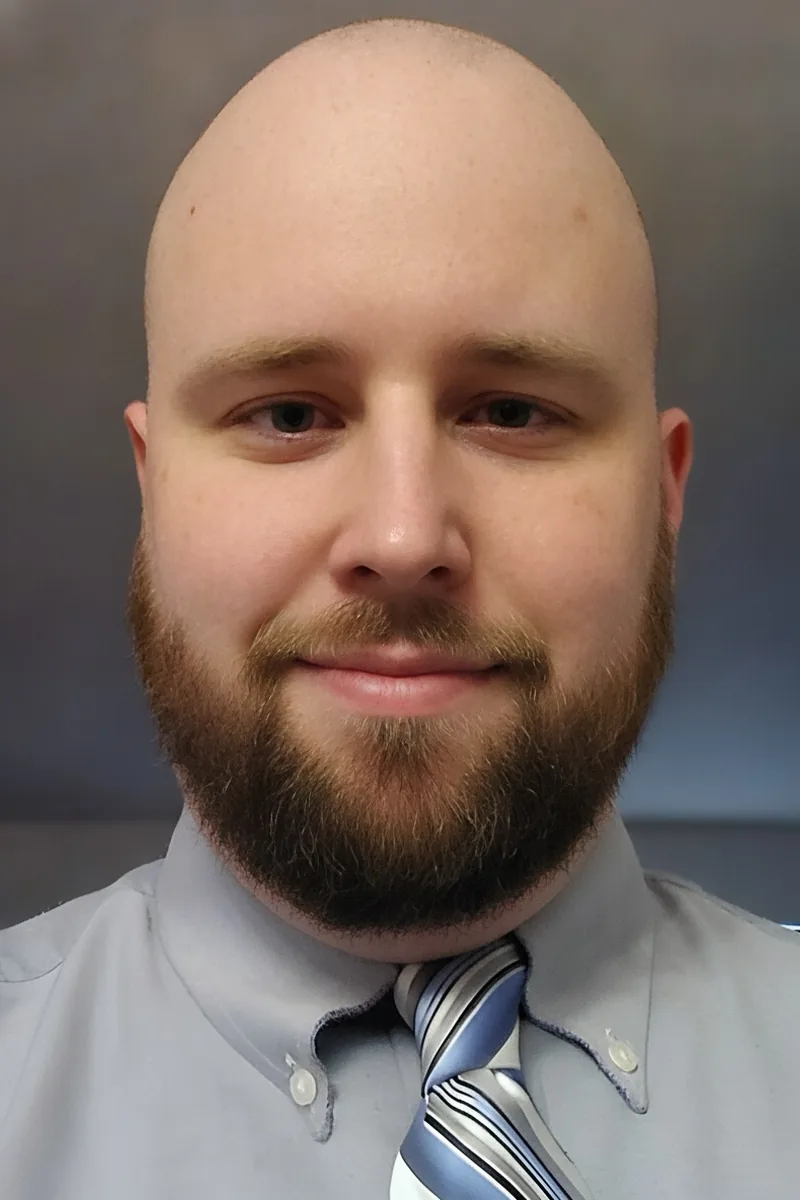
Kyle teaches BC Calculus with an emphasis on the topics that distinguish it from AB — Taylor and Maclaurin series, parametric and polar functions, and convergence tests that require more than rote memorization. His background spans algebra through multivariable calculus and differential equations, so he can show students how BC concepts connect to what comes next in college-level math.
Series convergence tests are where most BC students start losing confidence — ratio, root, comparison, and alternating series all blur together without a clear decision framework. Logan teaches a systematic approach to series analysis built on years of high school math instruction and his own applied math training at William & Mary. He also digs into parametric equations and polar curves with the same structured clarity.
I am currently a lead preschool teacher. I received my Bachelor's in Psychology from VCU and am looking to return to school to further my education. While in college, I worked as a Supplemental Instruction leader, teaching general biology and anatomy. I have also worked in an after school program with elementary age children, but I have my fondest memories volunteering as a counselor for Camp Kesem. In my own experience, I loved school and now I love teaching even more at all age levels! I especially enjoy the challenge of getting creative to discover what approach and mediums work best for each student. I am available for in person as well as online tutoring.
Hey, I'm Ryan, I specialize in micro and macro economics, math through Calc 3, Spanish, and SAT prep. I've been tutoring for years throughout middle school and high school, and I'm happy to help with whatever you might need!
As a current Computer Science student at Virginia Tech, I am passionate about making complex concepts accessible and engaging for my students. With over 2 years of tutoring experience in subjects like Algebra 2, AP Calculus, and Java, I prioritize creating a supportive learning environment where students feel confident to explore and ask questions. My teaching philosophy centers on individualized instruction, adapting my methods to each student's unique learning style, which fosters both understanding and enthusiasm for mathematics and programming. I am committed to helping students not just succeed academically but also develop a genuine interest in these subjects, and I find joy in witnessing their growth and confidence.
Princeton's electrical engineering program leans hard on series expansions and differential equations from day one — Sabrina uses them to analyze circuits and model signal behavior in her applied physics coursework, which means BC topics like Taylor polynomials and convergence tests aren't abstract exercises for her but tools she reaches for weekly. She's especially clear at breaking down the logic behind each convergence test so students can choose the right one on their own instead of guessing. Rated 5.0 by students.
Teaching discrete math at Penn while finishing a CS master's means Keenan lives in the world of rigorous mathematical argument — the same mindset that separates students who survive BC from those who actually understand it, especially when series convergence proofs and error bound reasoning demand more than mechanical computation. His philosophy undergraduate training adds an unusual edge: he treats each BC concept like a logical claim that needs justification, which makes topics like the Lagrange remainder or comparison tests feel structured rather than arbitrary. Rated 5.0 by students.
As a multivariable calculus teaching assistant at Harvard's Math Department, Kristi spent semesters watching exactly where students' BC foundations cracked under pressure — shaky series intuition, mechanical convergence testing, parametric reasoning that never quite solidified. Her astrophysics training means she learned these tools by necessity, using Taylor expansions to model orbital mechanics and integration techniques to analyze planetary data, so she teaches the logic driving each method rather than just the steps. Rated 5.0 by students.
Biomedical engineering at Yale means Jonathan lives in the calculus that comes after most students stop — modeling biological systems with differential equations, approximating nonlinear tissue behavior with series expansions, running convergence analysis on numerical simulations. That daily exposure makes him especially effective at teaching the logic behind the ratio and integral tests, because he's seen firsthand what happens when you pick the wrong one. Holds a 5.0 rating.
Series convergence tests, parametric equations, polar curves — BC Calculus piles on concepts fast, and falling behind on one unit can cascade through the rest of the course. Ethan breaks each new topic back to its AB foundation before building upward, so students see Taylor series and integration techniques as extensions of ideas they already own rather than entirely new material.
BC Calculus piles on convergence tests, parametric equations, and polar curves right when students think they've mastered AB material. Jake tackles series and sequences by teaching students to build a decision tree for which convergence test applies, turning one of the most overwhelming units into a systematic process.
Having worked as a teaching assistant for multiple engineering courses at Washington University in St. Louis, Ava spent hours breaking down the calculus that trips students up most — and BC's jump into series convergence, parametric derivatives, and advanced integration techniques is exactly the material she kept revisiting with struggling engineers. Her dual degree in mechanical and energy engineering means she's applied Taylor expansions and improper integrals to real thermodynamic and fluid systems, giving her a concrete vocabulary for explaining why these tools matter beyond the AP exam.
When students hit BC's convergence tests and feel like they're just memorizing a checklist of names — ratio, root, integral, comparison — Samuel reframes each test as a question about how a series behaves, turning rote steps into genuine reasoning. His applied mathematics coursework means he's actively using Taylor series and parametric models in contexts where getting the convergence wrong isn't just a lost point but a broken solution. That perspective, plus a 1590 SAT reflecting sharp quantitative instincts, keeps his teaching grounded in understanding rather than procedure-shuffling.
A year as a course assistant in Harvard's math department teaching introductory calculus gave Richard a close-up view of exactly where students' AB foundations crack under the weight of BC material — particularly when series convergence and parametric functions demand a more flexible kind of reasoning. He breaks down topics like interval of convergence arguments and integration techniques by rebuilding the underlying logic rather than layering on new formulas. His perfect 1600 SAT and 36 ACT suggest the kind of precision he brings to each explanation.
Tackling series convergence tests, parametric equations, and polar curves requires more than memorizing formulas — it demands knowing when and why each technique applies. Talia approaches BC-specific topics by building intuition around each concept before drilling the mechanics, so students can handle the free-response questions that reward deep understanding over rote calculation.
Scoring a perfect 1600 on the SAT while studying computer science at MIT suggests Brice isn't just comfortable with calculus — he's fluent in it, and BC's extension into series, parametric equations, and advanced integration techniques sits squarely in his daily coursework. He breaks down topics like convergence tests by tracing each one back to the limit reasoning students already built in AB, turning what feels like a grab bag of rules into a coherent decision-making process. Rated 4.9 by students.
Biomedical engineering at Johns Hopkins means Bidyut uses series approximations and differential equations to model biological systems — the same convergence tests and integration techniques that define the BC curriculum beyond AB. He's especially sharp at showing how a topic like Taylor polynomial error bounds connects back to the derivative reasoning students already trust, turning what feels like a wall of new material into a logical extension. Holds a 5.0 rating and a 36 ACT composite.
Testimonials
Because the right AP Calculus BC tutor makes all the difference.
Average Session Rating – Based on 3.4M Learner Ratings
Practice AP Calculus BC
Free practice tests, flashcards, and AI tutoring for AP Calculus BC
Other Virginia Beach Tutors
Related Math Tutors in Virginia Beach
Frequently Asked Questions
AP Calculus BC builds on Calculus AB and includes everything from AB plus additional topics like parametric equations, polar coordinates, vector-valued functions, and infinite series. The course emphasizes limits, derivatives, integrals, and differential equations, with BC-specific content focusing on more complex applications and theoretical understanding. For students in Virginia Beach preparing for the May exam, a strong grasp of both foundational and advanced concepts is essential for scoring well.
AP Calculus BC is more rigorous than AB, covering additional topics and requiring deeper conceptual understanding. Most students benefit from consistent study throughout the year, but if you're catching up or need targeted help, personalized 1-on-1 instruction can accelerate your progress. Varsity Tutors connects you with expert tutors who can identify your specific weak areas—whether that's series convergence, parametric differentiation, or integration techniques—and create a focused study plan.
Students often struggle with infinite series (convergence tests and power series), parametric and polar calculus, and the transition from computational to conceptual thinking. Time management on the exam is another frequent challenge—the multiple-choice section requires quick problem-solving, while free-response questions demand clear justification of work. Tutors can help you practice pacing strategies and build confidence in areas where you typically lose points.
Score improvement depends on your starting point and commitment level, but research on 1-on-1 instruction shows significant gains when students receive personalized feedback and targeted practice. Students who work with tutors typically see improvement in both conceptual understanding and exam performance within 4-8 weeks of consistent sessions. Varsity Tutors connects you with tutors who use practice tests and diagnostic assessments to track progress and adjust instruction based on your needs.
Key strategies include: on the multiple-choice section, skip difficult problems and return to them later; on free-response, show all work and explain your reasoning even if you're unsure of the final answer; and practice with released AP exams to get comfortable with question formats and time limits. Many students benefit from learning when to use calculators versus when to work by hand—this skill significantly impacts both speed and accuracy. Expert tutors can help you develop these strategies through practice and feedback.
Look for tutors with strong mathematics backgrounds, AP exam experience, and a track record helping students improve their scores. Ideally, they understand the specific format and expectations of the AP exam and can explain complex concepts clearly. When you connect with Varsity Tutors, you're matched with experienced tutors who know AP Calculus BC inside and out and can tailor instruction to your learning style and goals.
Your first session typically involves an assessment of your current understanding—identifying which topics you've mastered and where you need the most help. The tutor will ask about your goals (score target, timeline, specific weak areas) and discuss a personalized study plan. This foundation helps ensure that every subsequent session is focused and productive, addressing your priorities rather than generic review.
Ideally, preparation begins at the start of the school year, but many students benefit from intensive tutoring in the final 8-12 weeks before the May exam. If you're already in spring and feeling unprepared, personalized instruction can help you focus on high-impact topics and test strategies rather than trying to learn everything from scratch. Varsity Tutors connects you with tutors who can create an accelerated study plan tailored to your timeline and current level.
Let’s find your perfect tutor
Answer a few quick questions. We’ll recommend the right plan and match you with a top 5% tutor.