Award-Winning Organic Chemistry Tutors
serving Virginia Beach, VA
Organic Chemistry
Tutors in Virginia Beach
Private 1-on-1 tutoring, weekly live classes for academic support, test prep & enrichment, practice tests and diagnostics, and more to elevate grades and test scores.
Based on 3.4M Learner Ratings
UniversitiesSchools & Universities
DeliveredHours Delivered
ProficiencyGrowth in Proficiency
Who needs tutoring?
No obligation. Takes ~1 minute.
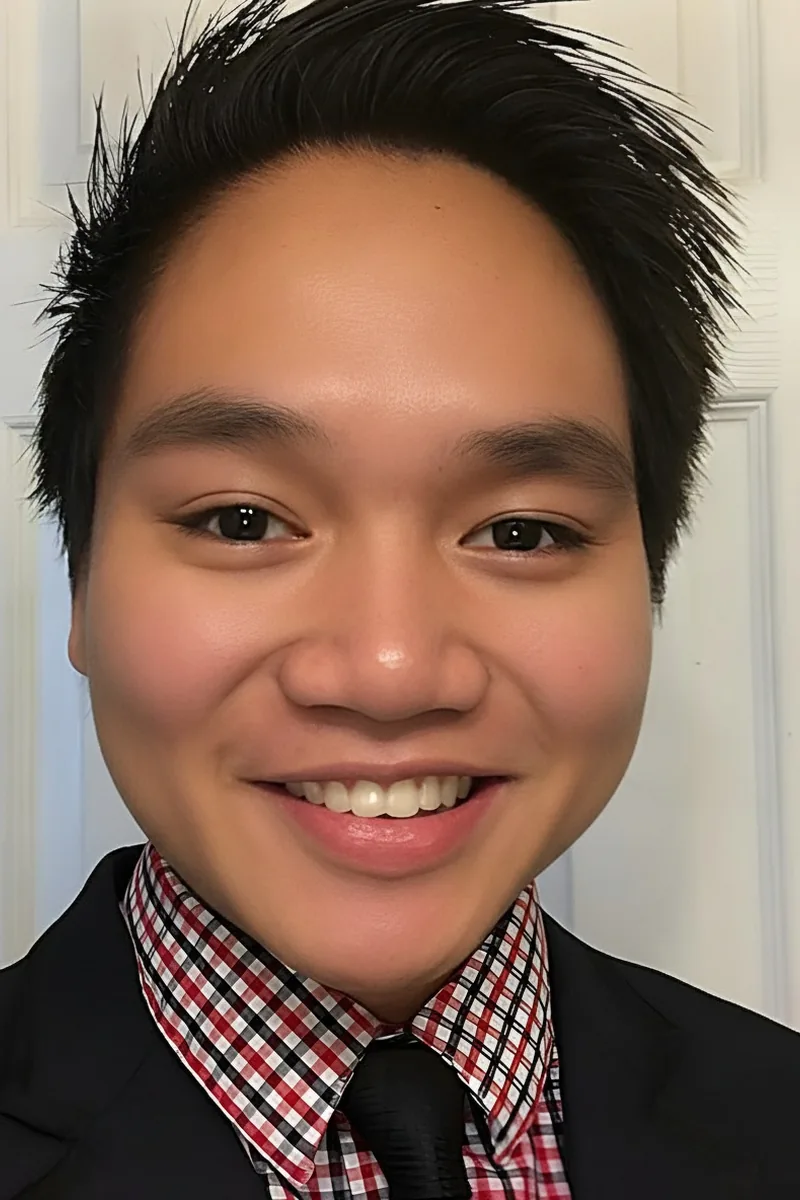
Between his biochemistry degree and his current pharmacy doctoral work at VCU, Joel has run through organic chemistry from both the academic and applied sides — understanding how functional group reactivity and stereochemistry translate into real drug design and pharmacological mechanisms. He's also taught university chemistry courses as adjunct faculty, so he knows how to break down multi-step synthesis problems and spectroscopy interpretation at the pace a student actually needs. Rated 5.0 by students.

The arrow-pushing in organic chemistry isn't arbitrary — every curved arrow represents real electron movement, and once that clicks, reactions stop feeling random. Ava tackles mechanisms by teaching students to recognize nucleophiles, electrophiles, and leaving groups as recurring characters across substitution, elimination, and addition reactions. Her chemistry background from James Madison University means she can trace those patterns from introductory orgo all the way through complex multi-step synthesis problems.
Reaction mechanisms are the language of organic chemistry, and Shahad's biology and chemistry coursework at VCU means she's spent serious time tracing electron movement through substitution, elimination, and addition pathways. She unpacks arrow-pushing notation step by step, connecting each mechanism to the functional group behavior that drives it. Her 4.9 rating speaks to how clearly she communicates notoriously difficult material.
Reaction mechanisms are the backbone of organic chemistry, and learning to predict products means recognizing electron-density patterns, not memorizing hundreds of individual reactions. Alec's approach — honed through years of TA work in Cornell's chemistry department — emphasizes arrow-pushing logic and functional group reactivity so that substitution, elimination, and addition reactions start to feel like variations on a theme rather than separate things to memorize.
Jacob lists organic chemistry among his favorite subjects to teach, and his economics-trained habit of tracing systems through chains of cause and effect gives him a structured way to walk through multi-step mechanisms — particularly carbonyl chemistry and aromatic substitution patterns. He approaches each reaction type by building the logic from scratch: what's electron-rich, what's electron-poor, and why that determines everything. Rated 5.0 by students.
Reaction mechanisms are the backbone of organic chemistry, and most exam mistakes trace back to shaky arrow-pushing fundamentals. Abhinav teaches students to classify reactions by nucleophile-electrophile interactions first, then layer on stereochemistry and regiochemistry — an approach that turns a seemingly infinite number of reactions into a manageable set of patterns.
Reaction mechanisms are the backbone of organic chemistry, and spotting nucleophilic attacks or predicting stereochemical outcomes requires genuine pattern recognition, not rote memorization. Lauren's chemistry minor at Duke and her hands-on lab research give her a practical fluency with functional group reactivity that she translates into clear, step-by-step reasoning for each mechanism type.
I am a freshman at Vanderbilt University studying biochemistry and involved in analytical chemistry research. Despite my studies being very science oriented, I also enjoy studying English and the humanities. I'd be happy to tutor you in any of these areas!
As an MD/PhD student at Northwestern doing doctoral research in organic synthesis, Austin lives in the world of reaction design — figuring out which bonds to form, which protecting groups to use, and why one retrosynthetic route beats another. That daily immersion means he teaches mechanisms and stereochemistry with the fluency of someone who actually builds molecules, not just someone who once passed the course.
David is earning his PhD in organic chemistry at Northwestern, where he teaches undergraduate orgo labs and recitations and has co-written exam questions for the department. That means he knows exactly which reaction mechanisms, stereochemistry problems, and retrosynthesis challenges professors test — and how to break them down so the logic clicks. Rated 5.0 by students, he ties each mechanism to real-world applications that make the material stick.
Reaction mechanisms are the heart of organic chemistry, and they only make sense when a student can track electron movement and predict how functional groups behave. Malcolm is studying biochemistry and cell biology at Rice, where organic chemistry is foundational — he knows which arrow-pushing patterns show up repeatedly and teaches students to recognize them instead of memorizing hundreds of individual reactions.
Having completed both semesters of organic chemistry at the University of Michigan — on top of AP Chemistry before that — Ajay knows exactly where students get stuck, whether it's arrow-pushing in reaction mechanisms or keeping substitution and elimination pathways straight. He teaches students to recognize electron behavior patterns so new reactions feel predictable instead of random.
Reaction mechanisms are the language of organic chemistry, and Troy spent two semesters teaching that language as an organic chemistry TA. He walks students through arrow-pushing, stereochemical outcomes, and retrosynthetic analysis by emphasizing the handful of recurring electronic patterns that make hundreds of reactions predictable rather than random.
Reaction mechanisms are the language of organic chemistry, and learning to read them — arrow pushing, stereochemistry, regiochemistry — requires a different kind of thinking than most science courses demand. Kevin studied organic chemistry as part of his biomedical engineering curriculum, where understanding molecular behavior was essential rather than optional. He walks students through each mechanism type until the logic behind substitution, elimination, and addition reactions becomes second nature.
Most organic chemistry struggles come down to not recognizing patterns — why a nucleophile attacks here and not there, or how electron-pushing arrows predict a product. Eric's graduate training in chemistry means he teaches reaction mechanisms as a connected framework of electronic and steric principles rather than a list of isolated reactions. Students rated him 5.0.
Testimonials
Because the right Organic Chemistry tutor makes all the difference.
Average Session Rating – Based on 3.4M Learner Ratings
Practice Organic Chemistry
Free practice tests, flashcards, and AI tutoring for Organic Chemistry
Other Virginia Beach Tutors
Related Science Tutors in Virginia Beach
Frequently Asked Questions
Organic Chemistry is challenging because it requires both memorization and deep conceptual understanding—students must learn reaction mechanisms, functional groups, and synthesis strategies while also visualizing 3D molecular structures. Many students struggle with understanding why reactions occur rather than just memorizing reaction sequences, and connecting abstract concepts like electron movement to real molecular behavior. Personalized tutoring helps bridge this gap by breaking down complex mechanisms into understandable steps and using visualization techniques to make abstract concepts concrete.
Yes, tutors can help you prepare for lab work by explaining experimental procedures, helping you understand the underlying chemistry behind each step, and reviewing lab reports and data analysis. They can also help you troubleshoot unexpected results and connect lab observations to the theoretical concepts you're learning in lecture. This support strengthens both your hands-on skills and your ability to think scientifically about experimental design.
Understanding mechanisms requires learning to track electron movement, recognize patterns in how functional groups behave, and predict products based on chemical principles rather than rote memorization. Tutors can teach you to think like a chemist by showing you how to analyze a reaction's conditions (temperature, solvent, catalyst) and use that information to predict the most likely pathway. With this conceptual foundation, you'll retain information longer and be able to tackle unfamiliar reactions on exams.
Organic Chemistry is fundamentally about understanding how atoms are arranged in 3D space and how that arrangement affects reactivity—you can't fully grasp stereochemistry, ring strain, or steric effects without being able to visualize molecules. Many students struggle with this spatial reasoning, which makes it harder to predict reaction outcomes or draw correct structures. Tutors can use molecular models, drawing techniques, and practice problems to help you develop strong visualization skills, which directly improves your ability to solve synthesis and mechanism problems.
In your first session, a tutor will assess your current understanding of foundational concepts (like bonding, Lewis structures, and acid-base chemistry), identify which topics are causing you the most difficulty, and learn about your learning style. They'll then create a personalized plan focused on your specific challenges—whether that's mastering mechanisms, improving problem-solving speed, or building confidence before exams. This tailored approach means you'll spend your time on what actually helps you, rather than reviewing material you already understand.
You don't need any special preparation—tutors will work with you wherever you are right now, whether you're just starting the course or preparing for an exam. If you're struggling with prerequisite concepts like general chemistry fundamentals, a tutor can help strengthen those foundations while you're learning Organic Chemistry material. The key is starting tutoring early enough to build understanding gradually rather than cramming before major exams.
Tutors can help you develop effective study strategies by working through practice problems, reviewing previous exams to identify patterns in question types, and teaching you to manage time during tests. They'll also help you distinguish between questions that test memorization versus conceptual understanding, so you know where to focus your studying. Regular practice with feedback from a tutor is more effective than studying alone, since you'll catch misconceptions early and build confidence in your problem-solving approach.
Look for tutors with strong chemistry backgrounds—ideally someone who has completed advanced chemistry courses, has teaching experience, and can explain concepts clearly at your level. The best tutors combine deep subject knowledge with the ability to break down complex ideas and adapt their teaching style to how you learn best. Varsity Tutors connects you with expert tutors who have been vetted for both their chemistry expertise and their ability to help students succeed.
Let’s find your perfect tutor
Answer a few quick questions. We’ll recommend the right plan and match you with a top 5% tutor.