Award-Winning AP Physics C: Electricity and Magnetism Tutors
serving Richmond, VA
AP Physics C: Electricity and Magnetism
Tutors in Richmond
Private 1-on-1 tutoring, weekly live classes for academic support, test prep & enrichment, practice tests and diagnostics, and more to elevate grades and test scores.
Based on 3.4M Learner Ratings
UniversitiesSchools & Universities
DeliveredHours Delivered
ProficiencyGrowth in Proficiency
Who needs tutoring?
No obligation. Takes ~1 minute.
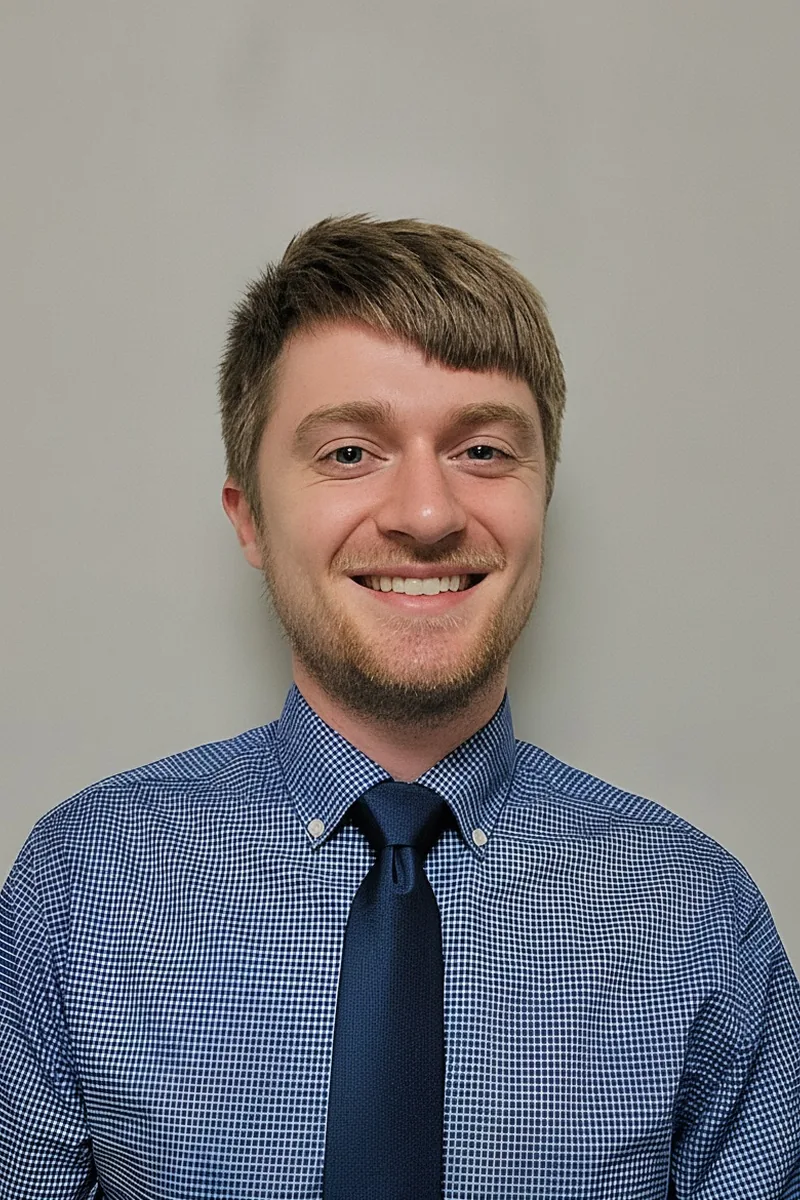
Gauss's law, Ampère's law, Faraday's law — E&M asks students to visualize invisible fields and then describe them with surface and line integrals. Bryan breaks each problem into two stages: building geometric intuition about what the field looks like, then choosing the right mathematical tool to exploit symmetry. His physics degree and 5.0 student rating back up that structured approach.

AP Physics C: E&M is one of the toughest AP exams because it layers calculus on top of already abstract concepts like Gauss's law, Faraday's law, and RC circuits. Ian's chemical engineering program at Cornell covers electromagnetism in depth, so he can unpack Maxwell's equations and walk through the calculus-heavy derivations the exam demands. He treats each problem as a chance to build physical intuition, not just grind through integrals.
Unlock your academic potential with a tutor who bridges the gap between elite performance and foundational mastery. As a National AP Scholar with advanced coursework in Multivariable Calculus and Data Structures, I bring high-level expertise to your studies. Whether you are tackling complex algorithms or advanced math, I provide the precise guidance you need to excel. My experience at Kumon and Mathnasium taught me that even the most complex goals start with strong basics. I believe in both individual learning as well learning through guided practice, so whatever your way to learn I can accomodate to help you do the very best.
Gauss's law, Ampère's law, Faraday's law — AP Physics C: E&M asks students to wield vector calculus in contexts that feel nothing like their math class. Cory breaks each problem into two layers: the physical picture (what are the charges and fields actually doing?) and the mathematical machinery (which symmetry makes the integral tractable?). That dual-track approach keeps students from drowning in formalism while still earning top scores.
Gauss's law, Faraday's law, Ampère's law — AP Physics C: E&M asks students to wield vector calculus in ways that feel like a massive leap from mechanics. Lindamulage tackles these topics regularly in his research at Brookhaven National Laboratory, so he can unpack concepts like electric flux, induced EMF, and RC circuits with the kind of physical intuition that turns intimidating math into clear reasoning.
Gauss's law, Ampère's law, RC circuits, electromagnetic induction — E&M demands that students think in vector fields and apply calculus to invisible phenomena. As a Stony Brook physics major who also codes simulations, Kiran unpacks these abstractions by walking through the physical setup before touching an integral, which turns intimidating problems into a sequence of logical steps.
Gauss's law and Ampère's law become far more manageable once a student can visualize the symmetry each problem is really asking about. Emily's physics coursework at Cornell covered electricity and magnetism at the calculus level, and she approaches each concept by connecting the integral setup to the physical scenario. Her 4.8 rating speaks to how clearly she translates abstract field equations into something students can actually work with.
I am working towards a Bachelor of Arts in Pure and Applied Mathematics as well as a Bachelor of Arts in Astronomy and Physics. I have enjoyed studying math and science since I was in elementary school. I would always help my friends out by answering their questions about the material. For about the last five years, I have had my own tutoring business where I have tutored a wide variety of math courses from elementary school math to pre-calculus and calculus. I like to make sure my students have a complete understanding of the core concepts before going into practice questions. I have also had experience helping my peers with physics and computer science courses.
Electricity and Magnetism trips students up because it layers vector calculus onto already-abstract concepts like electric flux, Gauss's law, and electromagnetic induction. Rachel's calculus expertise gives her a solid handle on the integral and differential equations that drive E&M problem-solving. She's upfront that this is one of the toughest AP courses offered, and she approaches it by making sure the math never becomes the bottleneck.
Gauss's law, Ampère's law, Faraday's law — AP Physics C: E&M asks students to choose the right tool for each field configuration and then execute the calculus cleanly. Sophia breaks each problem into two phases: identifying the symmetry that dictates the approach, then setting up and evaluating the integral. Her 5.0 rating speaks to how clearly she communicates concepts that most students find abstract.
Gauss's law, Ampère's law, Faraday's law — E&M demands that students think in three dimensions about invisible fields, which is a fundamentally different challenge than mechanics. Corrina tackles this by connecting each Maxwell equation to physical setups she encountered in her engineering coursework, making abstract flux integrals feel concrete. Rated 4.7 by students.
Gauss's law, Faraday's law, RC circuits — AP Physics C: E&M asks students to visualize invisible fields and then describe them with calculus, which is a genuinely difficult skill to develop. Satvik's aerospace engineering training at Georgia Tech keeps him immersed in electromagnetism, and his 800 on the Physics SAT Subject Test reflects a command of fundamentals that makes abstract field concepts concrete. He earned a 5.0 rating by meeting each problem at the exact point where a student gets stuck.
Gauss's law, Ampère's law, Faraday's law — AP Physics C: E&M asks students to wield vector calculus inside electromagnetic theory, which is a steep jump from most prior coursework. Steven approaches each topic by first explaining the physical picture, then showing the mathematical framework, then working through a practical example that ties both together. His PhD in chemical engineering required deep work with electromagnetic principles and multivariable calculus alike.
Testimonials
Because the right AP Physics C: Electricity and Magnetism tutor makes all the difference.
Average Session Rating – Based on 3.4M Learner Ratings
Practice AP Physics C: Electricity and Magnetism
Free practice tests, flashcards, and AI tutoring for AP Physics C: Electricity and Magnetism
Nearby AP Physics C: Electricity and Magnetism Tutors
Other Richmond Tutors
Related Science Tutors in Richmond
Frequently Asked Questions
The exam focuses on electrostatics, conductors and insulators, electric circuits, magnetic fields, and electromagnetic induction. It's a 90-minute test with 45 multiple-choice questions (50% of your score) and 3 free-response questions (50% of your score). The multiple-choice section tests conceptual understanding and problem-solving, while free-response questions require you to show detailed work and reasoning.
Score improvement depends on your starting point and commitment level, but students typically see 1-3 point gains (on the 1-5 scale) when they work consistently on weak areas. The key is identifying which topics—whether it's Gauss's law, circuit analysis, or magnetic force problems—are holding you back, then practicing those concepts systematically. Many students find that focused tutoring on problem-solving strategies and exam timing makes the biggest difference.
Students typically struggle most with Gauss's law (applying it to different geometries), understanding magnetic force and field directions, and circuit problems involving capacitors and inductors. Many also find the transition from conceptual questions to multi-step calculations challenging, especially under time pressure. Free-response questions often require you to integrate multiple concepts, which is where practice and strategic thinking really pay off.
Start by tackling multiple-choice questions you're confident about first, then return to harder ones—this builds momentum and ensures you don't run out of time. For free-response questions, read carefully, draw diagrams, and show all work even if you're not sure of the final answer (partial credit is valuable). Practice under timed conditions regularly so pacing feels natural on test day, and always double-check units and signs in your calculations.
Your first session focuses on understanding where you stand. A tutor will review your current coursework, discuss which topics feel strongest and weakest, and likely work through a practice problem or two to see your problem-solving approach. This helps identify gaps—whether it's conceptual misunderstandings, calculation errors, or test anxiety—so your tutoring plan targets what matters most for your goals.
Aim to take 1-2 full practice tests per week in the 4-6 weeks leading up to the exam, and start with untimed practice tests earlier in your prep to focus on accuracy. After each test, spend time reviewing every question you missed—not just the answer, but why you chose wrong and what concept you need to strengthen. This targeted review is more valuable than taking test after test without reflection.
Varsity Tutors connects you with expert tutors who work with your schedule and learning style. Sessions typically focus on reviewing difficult concepts, working through practice problems together, and building problem-solving strategies specific to the AP exam format. Whether you need help understanding electromagnetic induction or mastering free-response timing, tutoring is personalized to your goals and current level.
Richmond has 8 school districts with strong physics programs, and many local schools offer AP Physics C courses with dedicated prep time. Beyond your school, connecting with an expert tutor gives you personalized support tailored to your specific weak spots—something that's harder to get in a classroom setting. Many Richmond students find that combining school instruction with focused tutoring helps them reach their target scores.
Let’s find your perfect tutor
Answer a few quick questions. We’ll recommend the right plan and match you with a top 5% tutor.