Award-Winning Math Tutors
serving San Antonio, TX
Math
Tutors in San Antonio
Private 1-on-1 tutoring, weekly live classes for academic support, test prep & enrichment, practice tests and diagnostics, and more to elevate grades and test scores.
Based on 3.4M Learner Ratings
UniversitiesSchools & Universities
DeliveredHours Delivered
ProficiencyGrowth in Proficiency
Who needs tutoring?
No obligation. Takes ~1 minute.

From arithmetic fundamentals through pre-calculus and beyond, Thomas treats math as a connected language rather than isolated chapters. His approach zeroes in on the specific step where a student's understanding breaks down — whether that's fraction operations, order of operations, or translating word problems into equations — and rebuilds confidence from that exact point.
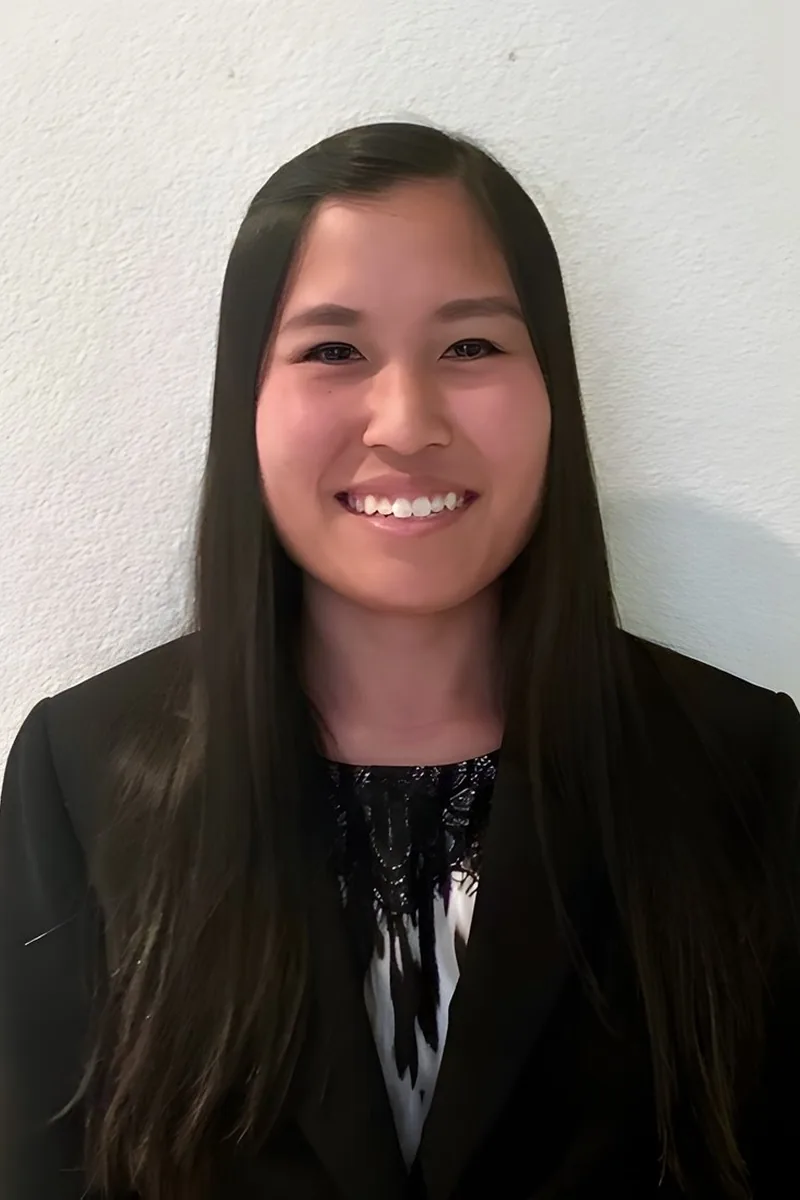
Scoring 1420 on the SAT and completing college-level coursework across multiple disciplines, Jasmine tackles math from pre-algebra through calculus with an emphasis on understanding the "why" behind each procedure. She's especially effective at translating word problems into equations — a skill that trips up students who can handle computation but freeze when math is embedded in context.
From basic fraction operations to calculus, Andrea's mathematics degree means she understands how each concept connects to the next — why mastering proportional reasoning now makes algebra easier later, or how algebraic thinking sets up everything in precalculus. She makes those connections explicit so that students aren't just solving tonight's homework but actually building toward what's coming next.
From basic arithmetic through calculus, Jett treats math as a connected story rather than isolated chapters. His engineering training at UT Austin keeps him immersed in applied mathematics daily, and a 1580 SAT score shows the fundamentals are rock-solid. He's especially sharp on the bridge between algebra and calculus where many students lose their footing.
Between his years at the Prefreshman Engineering Program and extensive private tutoring across San Antonio, Neil has taught math from basic operations through calculus — and he approaches every topic by asking 'why does this work?' before 'how do I solve it?' That habit of connecting procedures to concepts makes new material stick, whether a student is tackling fractions or factoring polynomials.
Lianna's political science coursework — interpreting polling data, analyzing demographic trends, working through policy cost projections — gave her more everyday math practice than most people realize a government degree requires. She's especially comfortable turning intimidating word problems into straightforward arithmetic and algebraic setups, since her entire academic training revolves around extracting numbers from dense, real-world contexts. Rated 4.8 by students.
From pre-algebra fundamentals through AP Calculus AB, Beau covers a wide range of math and knows where the common stumbling blocks sit — fractions and negative numbers early on, then function transformations and limit definitions later. His approach is to connect each new concept back to something the student already understands, so topics like slope or rate of change feel like extensions rather than brand-new ideas.
From fraction operations in elementary school to function notation in high school, Chamberlyn has taught across the full math spectrum and knows exactly where common misunderstandings take root. Her Vanderbilt degree in cognitive studies and child development means she doesn't just re-explain a problem — she identifies the specific conceptual gap causing the confusion. That diagnostic approach makes her especially effective for students who feel like they "just don't get math."
I enjoy helping others realize their potential and making the impossible possible. Everyone can reach their goals, and it is my goal to help you reach yours! Math is my favorite subject, and I have even participated in competitions for it. I hope to help others fall in love with math as well.
Whether it's simplifying fractions, solving systems of equations, or interpreting word problems, Natalie approaches math by making sure students understand the reasoning behind each step. Her 1520 SAT and 33 ACT reflect serious quantitative ability, and her finance background at BYU means she's used to applying math in practical, real-world contexts. She's especially good at untangling the spots where a student's understanding broke down.
From simplifying fractions in pre-algebra to tackling derivatives in calculus, Michelle covers the full math pipeline and knows where the common stumbling blocks are at each level. Her biochemistry training at Rice required heavy quantitative coursework, so she's comfortable connecting abstract math concepts — like logarithmic functions or rate-of-change problems — to real applications that make them click.
Medical school at Baylor forced Sugi to live inside quantitative reasoning — pharmacokinetics, biostatistics, interpreting dose-response curves — all built on the algebra and calculus fundamentals she mastered while earning a dual degree in Cognitive Science and Biochemistry at Rice. That science-heavy path means she teaches math as something with real stakes and real applications, connecting concepts like rates of change or exponential growth to problems students can actually visualize. She scored a 36 on the ACT and is rated 5.0 by students.
From fraction operations in pre-algebra through integration techniques in Calculus 2 and beyond, Bidyut covers the full math pipeline. His engineering background at Johns Hopkins means he connects abstract procedures — like solving systems of equations or manipulating logarithms — to tangible applications that give students a reason to care about the math they're doing.
From pre-algebra fundamentals through calculus, Maggie treats math as a connected chain rather than isolated chapters — so a student struggling with fractions today builds intuition that pays off when ratios reappear in geometry or rates of change show up in calc. Her perfect 1600 SAT speaks to the depth of her quantitative fluency, and she applies that same precision when diagnosing exactly where a concept breaks down for each student.
From arithmetic through calculus, Jonathan zeroes in on the specific step where a concept stops making sense — whether that's fraction operations, setting up equations from word problems, or interpreting what a derivative actually represents. His science background means he constantly ties math back to real situations where it matters, which tends to make abstract procedures click faster.
Studying Human Biology at Stanford means Jake uses math constantly — from statistical modeling in health policy to the quantitative reasoning behind game theory. He breaks down problems by connecting abstract steps to concrete logic, whether that's working through proportions, interpreting graphs, or building equation-solving fluency. Rated 5.0 by students.
From elementary arithmetic through AP Calculus BC, Mackenzie covers an unusually wide math range — which means she understands how early gaps in fractions or number sense snowball into struggles with algebra and beyond. She diagnoses exactly where a concept broke down and rebuilds understanding from that point. Her 35 ACT and 1510 SAT back up the depth of her own mathematical fluency.
Elena's 33 ACT composite included strong quantitative reasoning, and her tutoring with InspireSTL regularly put her in front of middle schoolers tackling geometry proofs and algebraic problem sets. She approaches math as a subject that rewards structured thinking — identifying what a problem is really asking before jumping to calculations — which makes her especially effective for students who understand concepts in class but freeze on homework.
An economics degree builds a particular kind of math fluency — working with functions, interpreting graphs, and modeling real-world problems with equations. Paul applies that quantitative training across topics from fractions and ratios to algebraic reasoning, making abstract concepts concrete by tying them to situations students can actually picture.
From fraction operations in pre-algebra to derivatives in calculus, Sajel has tutored math at every level for four years and knows where students tend to lose the thread. Her approach zeroes in on the reasoning behind each step — why you cross-multiply, why the chain rule works — so that new topics feel like extensions of what a student already understands.
From basic algebra through calculus and statistics, Carter covers a wide swath of math with the fluency you'd expect from someone who paired economics with applied math at Brown. He's particularly good at identifying the specific conceptual gap that's causing a student to struggle — whether that's fraction operations in middle school or function transformations in pre-calc — and addressing it directly. Rated 5.0 by his students.
Most math tutors hand over a formula and move on. Alexander, an Applied Mathematics major at Rice, treats each problem as a puzzle worth understanding — whether that's breaking down why the quadratic formula works or showing how a rate-of-change question connects to something tangible. His 1580 SAT score backs up the depth of his mathematical fluency.
Tegan's science-heavy coursework at Rice means she uses math daily — from algebraic manipulation in chemistry to data analysis in biology labs. She tackles everything from fractions and ratios through algebra and basic calculus, adapting her explanations to wherever a student is getting stuck. Her 4.9 rating and 1520 SAT score reflect genuine comfort across math topics.
Meagen's Computer Science coursework at Carleton College requires constant applied math — from discrete mathematics to algorithm analysis — so she understands how abstract concepts connect to real problem-solving. She breaks down arithmetic, fractions, ratios, and early algebraic thinking in ways that build genuine number sense rather than rote procedure.
From arithmetic fundamentals through algebra and geometry, Jessy adapts her math instruction to the specific concept causing trouble rather than re-teaching an entire chapter. A 34 ACT composite means she's fluent across the full range of K-12 math topics and knows which foundational gaps tend to cause cascading confusion later. She's especially good at translating word problems into equations students can actually solve step by step.
Patricia's math tutoring spans middle school arithmetic through calculus, so she understands how each concept feeds into the next — why fraction fluency matters for algebra, and why algebra matters for everything after. She's especially attentive to the moments where a student's confusion traces back to a gap from an earlier topic, and she'll backtrack to fill it before pushing forward. Her 1580 SAT score speaks to her own comfort across quantitative reasoning.
A lot of math concepts — fractions, proportions, order of operations — show up again and again from middle school through college, and Rishi's approach is to make sure students actually understand the underlying logic so each new topic clicks faster. Studying Mathematical Economic Analysis and Computer Science at Rice, he brings a quantitative mindset that connects arithmetic and pre-algebra skills to the bigger picture of where math is headed.
From simplifying fractions in pre-algebra to computing partial derivatives in multivariable calculus, William has tutored across nearly every level of math. He's a mathematics major at Rice who genuinely enjoys the subject, and that shows in how he explains concepts — connecting each new idea to something a student already understands rather than presenting it as an isolated formula to memorize.
Whether a student is working through fractions and decimals or pushing into pre-algebra territory with variables and expressions, Aditi adapts her explanations to the specific concept causing trouble. Her approach leans heavily on visual models and real-world examples — using pizza slices for fractions or budgeting scenarios for percentages — so that abstract ideas land concretely. A 1570 SAT score backs up her own math fluency.
Whether a student is stuck on fraction operations or working through pre-algebra word problems, Aadith connects each concept to the reasoning behind it so the next topic feels like a logical step rather than a new set of rules. His 1590 SAT speaks to the depth of his own mathematical fluency, and he uses that foundation to explain ideas multiple ways until one clicks.
From elementary arithmetic through calculus, Adam's math tutoring draws on a Rice education where quantitative reasoning was woven into his cognitive science coursework — probability models, statistical analysis, and formal logic. He's particularly good at identifying the exact conceptual gap that's causing a student to struggle, then rebuilding understanding from that specific point rather than re-teaching an entire chapter.
From arithmetic fundamentals through algebra and into early calculus concepts, Vy adjusts her explanations based on where a student's understanding actually breaks down — not just where the homework gets hard. Her years tutoring algebra in school settings taught her that most math confusion traces back to a handful of gaps in foundational reasoning, like how variables represent quantities or why order of operations exists. She pinpoints those gaps and rebuilds from there.
Chloe's background skews literary, but her 1540 SAT and GRE Quantitative tutoring show she's equally comfortable with numbers. She's particularly effective with students who think of themselves as "not math people" — breaking word problems and algebraic reasoning into logical steps that feel more like building an argument than crunching numbers.
Few tutors bring both a bachelor's in applied mathematics and active graduate-level math research to a session. Sakibul has served as a Teaching Assistant for Calculus I and II at Rice, so he knows exactly where students lose the thread — whether that's fraction operations in middle school or integration techniques in college. He adapts his explanations to match the level, building each concept from what a student already understands.
From arithmetic fundamentals through calculus and beyond, Zhengdong has the rare depth that comes from using math daily as a working physicist and engineer. He's especially effective at showing students why a technique works — not just how to execute it — so that concepts like proportional reasoning or algebraic manipulation become intuitive rather than mechanical.
Breaking math problems into smaller logical steps is Liz's go-to approach, whether a student is working through fractions, proportions, or introductory equations. Her background spans algebra through calculus, so she knows how to connect earlier concepts to what's coming next and keep students from falling behind.
From basic algebra through calculus and statistics, Vinson's computational mathematics degree at Rice means he sees the through-line connecting each level of math to the next. He's especially effective at showing students why a technique works — not just how to execute it — so that new topics feel like extensions of ideas they already understand.
Sanjay's biochemistry coursework at Rice required calculus, statistics, and the kind of quantitative reasoning that underpins both science and standardized testing. He tackles math by connecting procedures to the logic behind them — explaining why cross-multiplication works or what a slope actually represents — so students can adapt when problems look unfamiliar. His approach is especially useful for learners who understand concepts verbally but struggle to translate that understanding into equations.
From fraction operations and decimal placement through early algebra, Iselee approaches math by making sure students understand the reasoning behind each step before moving on. Her teaching spans elementary through college-level math, so she knows exactly which foundational gaps — like place value or order of operations — tend to cause trouble later and addresses them early. Rated 4.8 by students.
I am an Atlanta native. I hold an undergraduate degree in Business from Tennessee State University and graduated degree in Education from Cambridge College. I am a Georgia and Texas certified teacher. I have always enjoyed working with kids. I have taught kindergarten, first, second and fourth grade. I am a hard-worker, team player and passionate about my students succeeding in whatever they set their minds too. I currently hold endorsements in K-5 Mathematics, Teacher Support Specialist, and ESOL (English for Speakers of Other Languages). I am able to provide instruction that meets the needs of all students. I have the ability to differentiate instruction so that I cater to all learning styles and levels.
Testimonials
Because the right Math tutor makes all the difference.
Average Session Rating – Based on 3.4M Learner Ratings
Practice Math
Free practice tests, flashcards, and AI tutoring for Math
Nearby Math Tutors
Other San Antonio Tutors
Related Math Tutors in San Antonio
Frequently Asked Questions
The first session is about understanding where your student is starting from. Tutors will work through a few math problems to identify strengths, pinpoint specific challenges (like word problems or multi-step equations), and learn about any math anxiety or confidence issues. This helps create a personalized plan focused on the areas that matter most for your student's progress.
Many students rush through problems without explaining their thinking, which makes it hard to catch mistakes and build real understanding. Tutors teach students to break problems into clear steps, explain their reasoning, and check their work—skills that improve both accuracy and conceptual understanding. This approach also helps students prepare for tests where showing work is required.
Word problems require students to translate language into math, which is a skill separate from computation. Tutors teach strategies like identifying what's being asked, organizing information, and choosing the right approach before solving. With practice and personalized guidance, students build confidence in breaking down complex problems and seeing the math within the story.
Absolutely. Math anxiety often stems from past struggles or pressure, and personalized tutoring creates a low-pressure environment to rebuild confidence. Tutors work at your student's pace, celebrate small wins, and help them see that mistakes are part of learning. Many students discover they're more capable than they thought once they get one-on-one support.
Varsity Tutors connects you with tutors who understand different textbooks and teaching approaches used across San Antonio's school districts. During the first session, tutors learn about your student's specific curriculum and teaching style, then align their instruction to reinforce what's happening in the classroom while filling in gaps in understanding.
Moving from just memorizing procedures to understanding concepts is where real math learning happens. Tutors help students see why methods work, connect new topics to what they already know, and recognize patterns across different problem types. This deeper understanding makes math feel less like isolated rules and more like a connected system.
Both proofs and graphing require visual and logical thinking that many students find challenging. Tutors break these down into manageable steps, use multiple approaches to explain the reasoning, and provide targeted practice. Whether it's understanding why a proof works or mastering coordinate planes and transformations, personalized instruction makes these abstract concepts concrete.
Many students show increased confidence and understanding within a few weeks of consistent tutoring, though the timeline depends on the specific challenge and frequency of sessions. Regular tutoring combined with practice helps students build momentum, and you'll likely notice improvements in both grades and attitude toward math as foundational gaps close.
Let’s find your perfect tutor
Answer a few quick questions. We’ll recommend the right plan and match you with a top 5% tutor.