Award-Winning Math Tutors
serving Corpus Christi, TX
Math
Tutors in Corpus Christi
Private 1-on-1 tutoring, weekly live classes for academic support, test prep & enrichment, practice tests and diagnostics, and more to elevate grades and test scores.
Based on 3.4M Learner Ratings
UniversitiesSchools & Universities
DeliveredHours Delivered
ProficiencyGrowth in Proficiency
Who needs tutoring?
No obligation. Takes ~1 minute.

From simplifying fractions in pre-algebra to tackling derivatives in calculus, Michelle covers the full math pipeline and knows where the common stumbling blocks are at each level. Her biochemistry training at Rice required heavy quantitative coursework, so she's comfortable connecting abstract math concepts — like logarithmic functions or rate-of-change problems — to real applications that make them click.
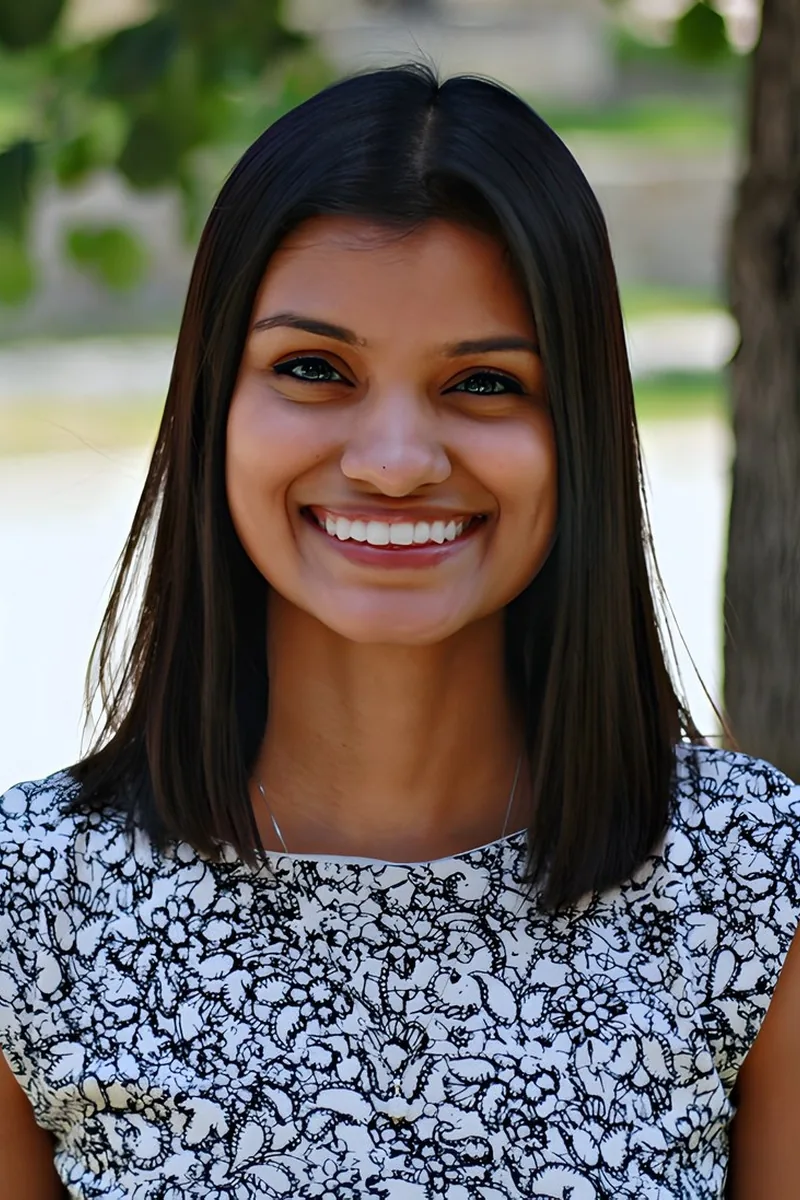
Medical school at Baylor forced Sugi to live inside quantitative reasoning — pharmacokinetics, biostatistics, interpreting dose-response curves — all built on the algebra and calculus fundamentals she mastered while earning a dual degree in Cognitive Science and Biochemistry at Rice. That science-heavy path means she teaches math as something with real stakes and real applications, connecting concepts like rates of change or exponential growth to problems students can actually visualize. She scored a 36 on the ACT and is rated 5.0 by students.
From pre-algebra fundamentals through calculus, Maggie treats math as a connected chain rather than isolated chapters — so a student struggling with fractions today builds intuition that pays off when ratios reappear in geometry or rates of change show up in calc. Her perfect 1600 SAT speaks to the depth of her quantitative fluency, and she applies that same precision when diagnosing exactly where a concept breaks down for each student.
From fraction operations in pre-algebra through integration techniques in Calculus 2 and beyond, Bidyut covers the full math pipeline. His engineering background at Johns Hopkins means he connects abstract procedures — like solving systems of equations or manipulating logarithms — to tangible applications that give students a reason to care about the math they're doing.
From arithmetic through calculus, Jonathan zeroes in on the specific step where a concept stops making sense — whether that's fraction operations, setting up equations from word problems, or interpreting what a derivative actually represents. His science background means he constantly ties math back to real situations where it matters, which tends to make abstract procedures click faster.
From elementary arithmetic through AP Calculus BC, Mackenzie covers an unusually wide math range — which means she understands how early gaps in fractions or number sense snowball into struggles with algebra and beyond. She diagnoses exactly where a concept broke down and rebuilds understanding from that point. Her 35 ACT and 1510 SAT back up the depth of her own mathematical fluency.
Studying Human Biology at Stanford means Jake uses math constantly — from statistical modeling in health policy to the quantitative reasoning behind game theory. He breaks down problems by connecting abstract steps to concrete logic, whether that's working through proportions, interpreting graphs, or building equation-solving fluency. Rated 5.0 by students.
Elena's 33 ACT composite included strong quantitative reasoning, and her tutoring with InspireSTL regularly put her in front of middle schoolers tackling geometry proofs and algebraic problem sets. She approaches math as a subject that rewards structured thinking — identifying what a problem is really asking before jumping to calculations — which makes her especially effective for students who understand concepts in class but freeze on homework.
From arithmetic fundamentals through algebra and into early calculus concepts, Vy adjusts her explanations based on where a student's understanding actually breaks down — not just where the homework gets hard. Her years tutoring algebra in school settings taught her that most math confusion traces back to a handful of gaps in foundational reasoning, like how variables represent quantities or why order of operations exists. She pinpoints those gaps and rebuilds from there.
From fraction operations in pre-algebra to derivatives in calculus, Sajel has tutored math at every level for four years and knows where students tend to lose the thread. Her approach zeroes in on the reasoning behind each step — why you cross-multiply, why the chain rule works — so that new topics feel like extensions of what a student already understands.
Patricia's math tutoring spans middle school arithmetic through calculus, so she understands how each concept feeds into the next — why fraction fluency matters for algebra, and why algebra matters for everything after. She's especially attentive to the moments where a student's confusion traces back to a gap from an earlier topic, and she'll backtrack to fill it before pushing forward. Her 1580 SAT score speaks to her own comfort across quantitative reasoning.
Most math tutors hand over a formula and move on. Alexander, an Applied Mathematics major at Rice, treats each problem as a puzzle worth understanding — whether that's breaking down why the quadratic formula works or showing how a rate-of-change question connects to something tangible. His 1580 SAT score backs up the depth of his mathematical fluency.
An economics degree builds a particular kind of math fluency — working with functions, interpreting graphs, and modeling real-world problems with equations. Paul applies that quantitative training across topics from fractions and ratios to algebraic reasoning, making abstract concepts concrete by tying them to situations students can actually picture.
Chloe's background skews literary, but her 1540 SAT and GRE Quantitative tutoring show she's equally comfortable with numbers. She's particularly effective with students who think of themselves as "not math people" — breaking word problems and algebraic reasoning into logical steps that feel more like building an argument than crunching numbers.
A lot of math concepts — fractions, proportions, order of operations — show up again and again from middle school through college, and Rishi's approach is to make sure students actually understand the underlying logic so each new topic clicks faster. Studying Mathematical Economic Analysis and Computer Science at Rice, he brings a quantitative mindset that connects arithmetic and pre-algebra skills to the bigger picture of where math is headed.
From elementary arithmetic through calculus, Adam's math tutoring draws on a Rice education where quantitative reasoning was woven into his cognitive science coursework — probability models, statistical analysis, and formal logic. He's particularly good at identifying the exact conceptual gap that's causing a student to struggle, then rebuilding understanding from that specific point rather than re-teaching an entire chapter.
Whether a student is working through fractions and decimals or pushing into pre-algebra territory with variables and expressions, Aditi adapts her explanations to the specific concept causing trouble. Her approach leans heavily on visual models and real-world examples — using pizza slices for fractions or budgeting scenarios for percentages — so that abstract ideas land concretely. A 1570 SAT score backs up her own math fluency.
From basic algebra through calculus and statistics, Carter covers a wide swath of math with the fluency you'd expect from someone who paired economics with applied math at Brown. He's particularly good at identifying the specific conceptual gap that's causing a student to struggle — whether that's fraction operations in middle school or function transformations in pre-calc — and addressing it directly. Rated 5.0 by his students.
Whether a student is stuck on fraction operations or working through pre-algebra word problems, Aadith connects each concept to the reasoning behind it so the next topic feels like a logical step rather than a new set of rules. His 1590 SAT speaks to the depth of his own mathematical fluency, and he uses that foundation to explain ideas multiple ways until one clicks.
Meagen's Computer Science coursework at Carleton College requires constant applied math — from discrete mathematics to algorithm analysis — so she understands how abstract concepts connect to real problem-solving. She breaks down arithmetic, fractions, ratios, and early algebraic thinking in ways that build genuine number sense rather than rote procedure.
From arithmetic fundamentals through algebra and geometry, Jessy adapts her math instruction to the specific concept causing trouble rather than re-teaching an entire chapter. A 34 ACT composite means she's fluent across the full range of K-12 math topics and knows which foundational gaps tend to cause cascading confusion later. She's especially good at translating word problems into equations students can actually solve step by step.
From simplifying fractions in pre-algebra to computing partial derivatives in multivariable calculus, William has tutored across nearly every level of math. He's a mathematics major at Rice who genuinely enjoys the subject, and that shows in how he explains concepts — connecting each new idea to something a student already understands rather than presenting it as an isolated formula to memorize.
Tegan's science-heavy coursework at Rice means she uses math daily — from algebraic manipulation in chemistry to data analysis in biology labs. She tackles everything from fractions and ratios through algebra and basic calculus, adapting her explanations to wherever a student is getting stuck. Her 4.9 rating and 1520 SAT score reflect genuine comfort across math topics.
From arithmetic fundamentals through calculus and beyond, Zhengdong has the rare depth that comes from using math daily as a working physicist and engineer. He's especially effective at showing students why a technique works — not just how to execute it — so that concepts like proportional reasoning or algebraic manipulation become intuitive rather than mechanical.
Few tutors bring both a bachelor's in applied mathematics and active graduate-level math research to a session. Sakibul has served as a Teaching Assistant for Calculus I and II at Rice, so he knows exactly where students lose the thread — whether that's fraction operations in middle school or integration techniques in college. He adapts his explanations to match the level, building each concept from what a student already understands.
From basic algebra through calculus and statistics, Vinson's computational mathematics degree at Rice means he sees the through-line connecting each level of math to the next. He's especially effective at showing students why a technique works — not just how to execute it — so that new topics feel like extensions of ideas they already understand.
I am an Atlanta native. I hold an undergraduate degree in Business from Tennessee State University and graduated degree in Education from Cambridge College. I am a Georgia and Texas certified teacher. I have always enjoyed working with kids. I have taught kindergarten, first, second and fourth grade. I am a hard-worker, team player and passionate about my students succeeding in whatever they set their minds too. I currently hold endorsements in K-5 Mathematics, Teacher Support Specialist, and ESOL (English for Speakers of Other Languages). I am able to provide instruction that meets the needs of all students. I have the ability to differentiate instruction so that I cater to all learning styles and levels.
Sanjay's biochemistry coursework at Rice required calculus, statistics, and the kind of quantitative reasoning that underpins both science and standardized testing. He tackles math by connecting procedures to the logic behind them — explaining why cross-multiplication works or what a slope actually represents — so students can adapt when problems look unfamiliar. His approach is especially useful for learners who understand concepts verbally but struggle to translate that understanding into equations.
From fraction operations and decimal placement through early algebra, Iselee approaches math by making sure students understand the reasoning behind each step before moving on. Her teaching spans elementary through college-level math, so she knows exactly which foundational gaps — like place value or order of operations — tend to cause trouble later and addresses them early. Rated 4.8 by students.
Breaking math problems into smaller logical steps is Liz's go-to approach, whether a student is working through fractions, proportions, or introductory equations. Her background spans algebra through calculus, so she knows how to connect earlier concepts to what's coming next and keep students from falling behind.
From long division to derivatives, Layla's engineering background means she uses math daily and understands how each concept builds on the last. She pinpoints exactly where a student's understanding breaks down — whether that's fraction operations, variable manipulation, or function notation — and rebuilds from that specific gap. Rated 5.0 by students.
From fraction operations in middle school to integration techniques in calculus, Jennifer covers a wide range of math and knows where the common stumbling blocks are at each level. Her approach is to make students explain their reasoning out loud during problem-solving, which quickly reveals whether they understand the concept or are just following memorized steps.
From pre-algebra through calculus, Kendall covers a wide math range — but what sets her apart is her ability to pinpoint exactly where a concept stopped making sense. A student struggling with quadratics, for instance, might actually have a gap in factoring or distributing that's been compounding for years. She traces the problem back to its root and rebuilds understanding from there.
Molly covers math from pre-algebra through pre-calculus and calculus, and she's especially good at translating word problems into equations — the step where most students get stuck. Her approach is to slow down and make sure the reasoning behind each operation is clear before moving on to tougher applications.
From arithmetic fundamentals through early algebra, the concepts students struggle with most are often ones that were rushed past in class — fractions, negative numbers, order of operations. Emily breaks these building blocks down visually and connects each skill to the next so students understand why the math works, not just which buttons to press on a calculator.
From simplifying fractions to solving systems of equations, Brett adapts his approach based on exactly where a student's understanding breaks down. His 35 ACT and 1550 SAT reflect sharp quantitative instincts, and his neuroscience background means he genuinely understands how the brain acquires and retains mathematical reasoning — not just how to get the right answer.
I am most passionate about biology and chemistry. I am a firm proponent of education, believing it to be absolutely necessary for an improved quality of life, and I try to impart this appreciation to all of my students.
From pre-algebra through multivariable calculus, Steven has tutored nearly every level of math on the ladder, and his chemical engineering PhD means he's used all of it in practice. He's particularly effective at showing students where abstract concepts — like derivatives or systems of equations — actually appear in the physical world, which turns "when will I ever use this" into a concrete answer. Rated 4.9 across his subjects.
Craig's primary expertise is in the humanities, but his teaching spans calculus and algebra, and his analytical training — parsing complex arguments, identifying logical structures — translates directly to mathematical problem-solving. He's especially useful for students who think verbally and need someone who can explain why a formula works in plain language before drilling the procedure.
From simplifying fractions to solving systems of equations, Eric builds each math concept on the logic behind it so students can tackle unfamiliar problems confidently. His 1520 SAT and 34 ACT reflect the kind of quantitative fluency he brings to every session, whether the topic is arithmetic, pre-algebra, or early geometry.
Testimonials
Because the right Math tutor makes all the difference.
Average Session Rating – Based on 3.4M Learner Ratings
Practice Math
Free practice tests, flashcards, and AI tutoring for Math
Nearby Math Tutors
Other Corpus Christi Tutors
Related Math Tutors in Corpus Christi
Frequently Asked Questions
Varsity Tutors matches Corpus Christi students with expert Math tutors for 1-on-1 instruction. We pair each student with a tutor based on their specific needs, learning style, and goals.
Whether you need homework help, exam prep, or want to get ahead, our Math tutors are ready to help.
Common challenges include gaps from earlier material, difficulty with specific concepts, and trouble applying learning to new problems. These issues can snowball quickly in Math.
A tutor identifies where you're stuck, fills in gaps, and provides targeted practice. The 1-on-1 format means you get help exactly where you need it.
Tutors work with your student's actual coursework—homework assignments, class notes, and upcoming tests. This keeps tutoring directly relevant to what's happening in the classroom.
When you share information about your student's school and curriculum, we can match you with a tutor who has relevant experience.
All tutors complete background checks, credential verification, and teaching evaluation. Many of our Math tutors hold advanced degrees or have years of teaching experience.
You can review tutor profiles to find someone with the right background for your student's level and needs.
Many students see improved grades within a few weeks, along with better understanding of Math concepts and more confidence tackling challenging material.
Tutors track progress and adjust their approach to ensure continued improvement.
Most students benefit from 1-2 sessions per week. More frequent sessions help if your student is significantly behind or has an important exam coming up.
Your tutor can recommend a schedule based on your student's specific situation and goals.
Tutoring is purchased in packages of hours, with rates varying by tutor experience. Varsity Tutors offers several options to fit different budgets and needs.
You can discuss pricing during your consultation to find what works best.
Your tutor will assess where your student is, discuss goals, and start working on priority areas. Most students bring current homework or upcoming test material to focus on.
By the end, you'll have a clear sense of how the tutor can help and a plan for moving forward.
Let’s find your perfect tutor
Answer a few quick questions. We’ll recommend the right plan and match you with a top 5% tutor.