Award-Winning Math Tutors
serving El Paso, TX
Math
Tutors in El Paso
Private 1-on-1 tutoring, weekly live classes for academic support, test prep & enrichment, practice tests and diagnostics, and more to elevate grades and test scores.
Based on 3.4M Learner Ratings
UniversitiesSchools & Universities
DeliveredHours Delivered
ProficiencyGrowth in Proficiency
Who needs tutoring?
No obligation. Takes ~1 minute.
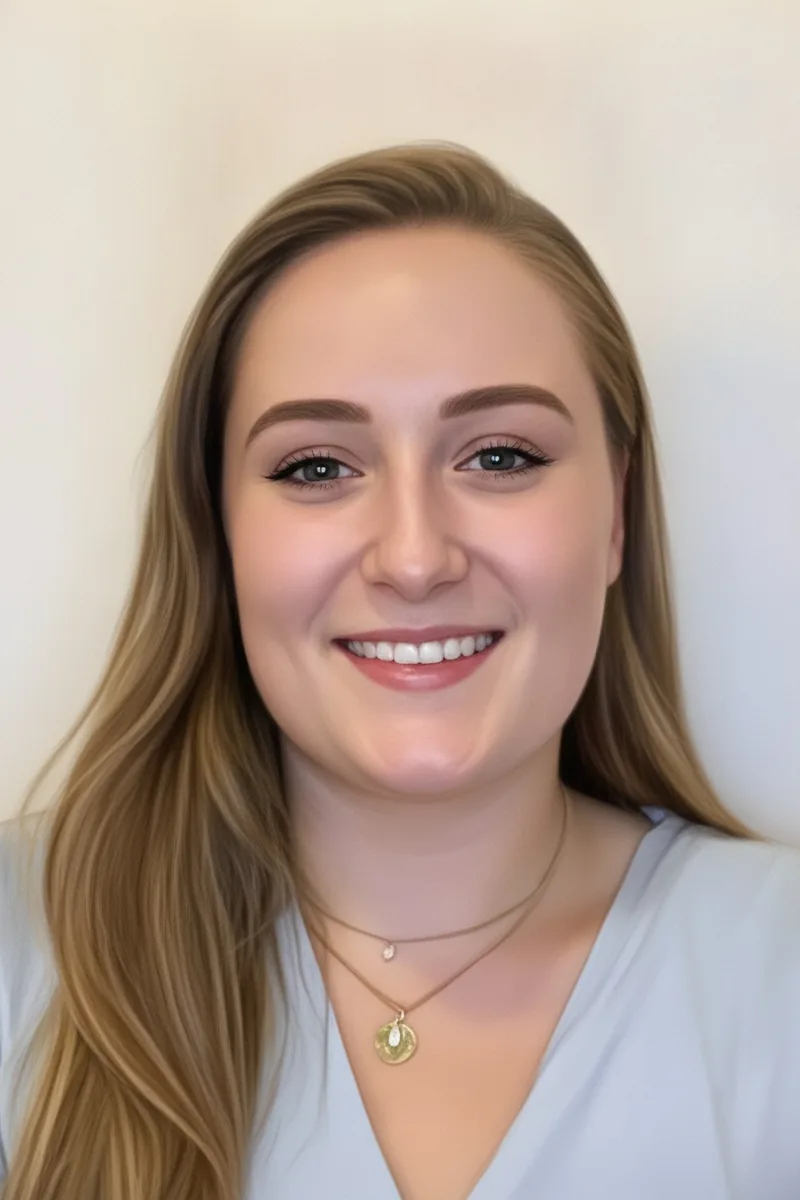
Mimi approaches math through an inquiry-based lens shaped by her Harvard Ed.M., asking students to reason through problems rather than memorize procedures. Whether the topic is fractions, proportional reasoning, or early algebra concepts, she designs each session around the specific gaps a student brings in. Her creative, learner-centered style is especially effective for students who've decided they're 'not math people.'
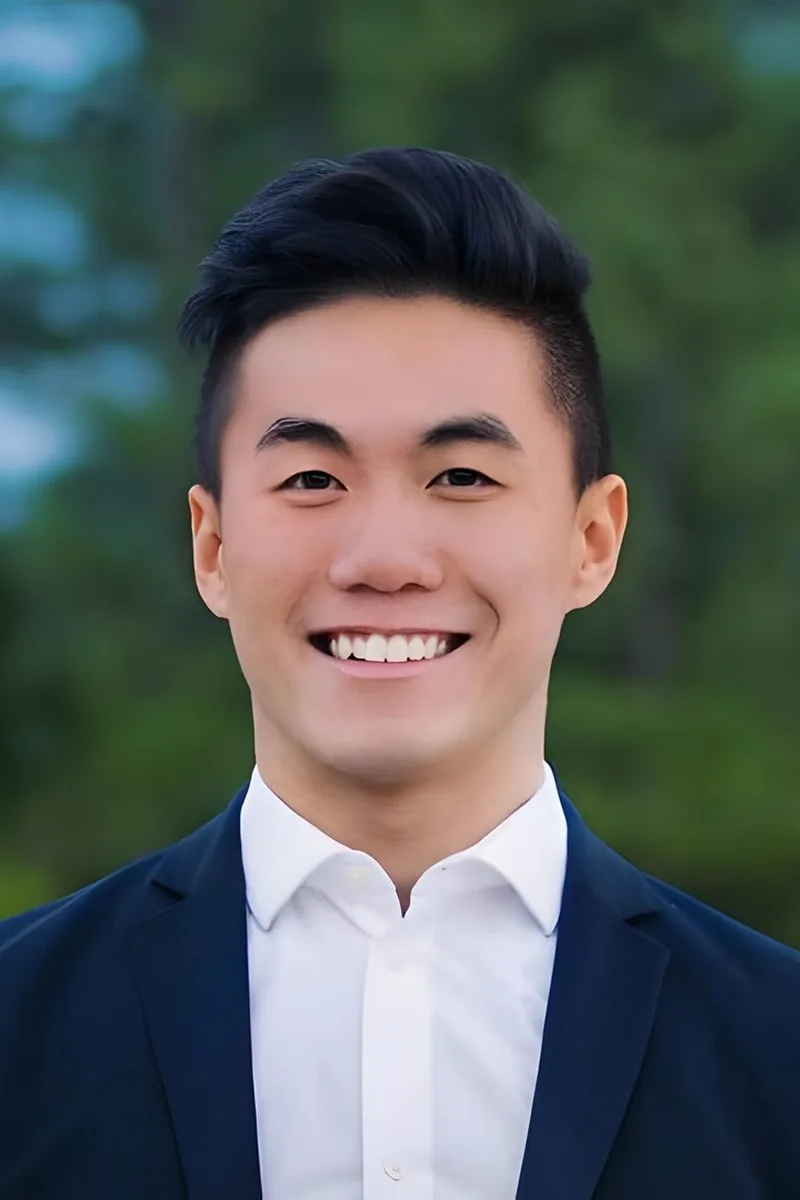
From pre-algebra fundamentals through Calculus 2, Aaron covers the full math pipeline and knows exactly where the common stumbling blocks sit — fractions-to-ratios in middle school, the abstraction jump in algebra, and the conceptual leap into limits and integration. His mechanical engineering grad work keeps him using this math daily, so he explains it as a living toolset rather than isolated procedures. Rated 5.0 by students.
From arithmetic through calculus and into graduate-level statistics, Nina has taught math at nearly every level as both a Columbia TA and a private tutor. She's especially effective at pinpointing the exact conceptual gap — whether it's fraction operations, proportional reasoning, or function notation — that's creating downstream confusion, then rebuilding understanding from that specific point.
Plenty of students decide early that they're "not math people" — Reid specializes in dismantling that belief. His approach connects abstract procedures to concrete reasoning, whether that means visualizing fractions on a number line or tracing why order of operations works the way it does, so that confidence builds alongside competence.
From simplifying fractions in pre-algebra to tackling derivatives in calculus, Michelle covers the full math pipeline and knows where the common stumbling blocks are at each level. Her biochemistry training at Rice required heavy quantitative coursework, so she's comfortable connecting abstract math concepts — like logarithmic functions or rate-of-change problems — to real applications that make them click.
From pre-algebra fundamentals to multivariable calculus, Charles covers a wide range of math and genuinely prefers teaching it through real-world application problems — figuring out rates of change in a physical system or modeling a trajectory rather than grinding through decontextualized drills. His mechanical engineering studies at Yale keep him immersed in applied mathematics daily, so he can show students why a concept matters, not just how to execute it.
Years of teaching middle school math at a Boston charter school gave Liz a toolbox of ways to break down fractions, ratios, proportions, and early algebraic thinking so they actually click. She's especially skilled at identifying where a student's understanding breaks down and rebuilding from that exact point — a strength sharpened by her special education training. Rated 4.7 by students and families.
Solange approaches math as a subject that rewards structured thinking over speed, breaking problems into logical steps students can follow and eventually internalize. Her 34 ACT composite reflects sharp quantitative reasoning, and she applies that same methodical approach to arithmetic, pre-algebra, and foundational concepts that younger or struggling students need to build confidence.
Mechanical engineering at Harvard means Christopher lives in math daily — calculus, trigonometry, and algebra aren't abstract exercises for him but tools he uses to model physical systems and solve design problems. That applied perspective lets him show students exactly where a concept like derivatives or trig identities actually goes, which tends to unlock motivation alongside understanding. He scored a 35 on the ACT and is rated 4.8 by students.
Few tutors can teach pre-algebra and multivariable calculus with equal clarity, but Justin's math background runs from a double bachelor's in physics and mathematics through a PhD in Computational Mathematics at the University of Chicago. He pinpoints exactly where a concept breaks down for a student — whether that's fraction operations, quadratic factoring, or function transformations — and rebuilds understanding from that specific gap.
Logic is the backbone of both philosophy and mathematics, and Justin leans on that connection when tackling everything from algebraic manipulation to introductory calculus concepts. He's especially effective at translating word problems into mathematical expressions — a skill sharpened by years of breaking down complex arguments into formal structures at the University of Chicago.
Elena's approach to math leans on her test-prep background, where she learned that most students don't struggle with the concepts themselves — they struggle with translating word problems into equations or recognizing which technique a question is really asking for. She teaches pattern recognition and strategic problem-solving across arithmetic, pre-algebra, and foundational algebra, turning vague confusion into a clear decision tree. Her style is quirky and joke-filled, which tends to lower the anxiety that makes math feel harder than it is.
From basic operations through pre-algebra and into calculus, Daniel covers a wide math range and adjusts his explanations to wherever a student currently stands. He emphasizes translating word problems into equations — a skill that trips up students at every level — because once that click happens, the mechanics become far less intimidating.
From pre-algebra through multivariable calculus, Andrew has taught nearly every level of math and understands exactly where common stumbling blocks appear — whether that's fractions in middle school or chain rule applications in calculus. His physics and engineering training means he can always show students why a concept matters beyond the textbook. Rated 4.9 across his tutoring sessions.
From algebra through calculus, James has spent years teaching college and high school students to see math as a connected set of ideas rather than isolated procedures. His chemistry background means he constantly ties abstract concepts — like derivatives or systems of equations — back to tangible problems where the math actually does something. That context tends to make tricky topics click faster.
Not every math tutor comes from a pure math background, and that's sometimes an advantage — Henry explains concepts like proportional reasoning, basic algebraic manipulation, and word problem setup the way a fellow student would, without skipping the intuitive steps that textbooks leave out. His 1530 SAT score speaks to his quantitative fluency, and he's especially effective at bridging gaps for students who think they're 'not math people.'
An MIT math graduate now pursuing a PhD in Operations Research at Georgia Tech, Isabella has spent years inside the subject from every angle — teaching it, studying it, and applying it. Whether a student is wrestling with fraction operations in sixth grade or limits in early calculus, she connects each concept to the bigger mathematical picture so the next topic feels like a natural extension, not a surprise.
Biomedical engineering at Northwestern means Ingrid lives in math daily — calculus for modeling drug delivery kinetics, statistics for analyzing lab data, trigonometry for signal processing — so she teaches these topics as interconnected tools rather than isolated chapters. Her research experience in the John Rogers Lab grounded abstract equations in physical problems, giving her a knack for showing students what a derivative or a system of equations actually represents. She covers everything from pre-algebra through calculus 2 and brings particular clarity to the quantitative reasoning that bridges middle school math and college-level work.
Some students need to see a concept drawn out visually; others need to work backward from the answer to understand the steps. Sabira's applied mathematics degree at Johns Hopkins trained her to approach problems from multiple angles, whether that means arithmetic fundamentals, fraction operations, or early algebraic thinking. She adapts her explanations on the fly until the reasoning genuinely clicks.
A University of Chicago graduate with a 1530 SAT and 35 ACT, Asta brings sharp quantitative instincts to math topics from fractions and ratios through functions and graphing. She breaks problems into logical steps so students see the reasoning behind each procedure, not just the answer.
A strong math tutor spots exactly where a student's reasoning breaks down — whether it's fraction operations, variable manipulation, or translating word problems into equations. Matt teaches across algebra and calculus, so he understands how earlier skills feed into later ones and can pinpoint gaps that hold students back. His 1530 SAT score speaks to his own quantitative fluency.
Keith teaches math at the elementary and middle school level, where the goal is building number sense and confidence with operations, fractions, and early algebraic thinking. He's patient with students who feel stuck and good at finding the specific conceptual gap — whether it's place value, proportional reasoning, or translating word problems into equations — that's holding them back.
A triple Bachelor of Science holder, Sung has spent years working through math at every level — from proportional reasoning and equation-solving in middle school to the limit definitions and derivative rules of calculus. He breaks problems into smaller logical steps so students can see the reasoning behind each move, not just follow a memorized procedure.
A math degree from Penn and six-plus years of tutoring across everything from basic algebra to multivariable calculus give Ben an unusually wide view of how mathematical thinking develops from grade school through college. He zeroes in on the specific conceptual gap holding a student back — whether that's fraction reasoning, function notation, or proof logic — and builds from there. Rated 5.0 by students.
From pre-algebra through linear algebra and calculus, Sam covers the full math pipeline with the structural understanding that comes from a biomedical engineering degree and a statistics PhD. He's especially effective at showing how earlier concepts — like fraction operations or function behavior — connect to the harder material students will face later. That big-picture wiring makes individual topics click faster.
A biology major at Penn, Shayan brings a scientist's precision to math — breaking down word problems into variables, teaching proportional reasoning through real-world dosage calculations, and making algebra feel like a tool rather than an abstract exercise. His tutoring spans everything from fractions and ratios up through calculus, and he's rated 5.0 by students.
From fraction operations in middle school to derivatives in calculus, Sherry covers a wide math range and zeroes in on the conceptual gaps that cause recurring mistakes. Her psychology training at UChicago also means she's attuned to math anxiety — she knows how to rebuild a student's confidence around word problems or multi-step equations without glossing over the rigor.
Four years of volunteer SAT tutoring for high schoolers gave Renee a sharp sense of where students lose the thread in multi-step problems — and her own 1530 SAT score confirms she knows the math cold. Her PhD training in literary analysis might seem unrelated, but it built the kind of careful, systematic reasoning that makes untangling a tricky word problem or setting up an equation from scratch feel methodical rather than chaotic.
Not every math tutor comes from a pure math background, and that's actually Lauren's advantage — she learned to break down concepts like linear equations and function behavior through persistence and structured problem-solving rather than intuition. Her approach zeroes in on where a student's reasoning goes off track, then rebuilds that specific step until the logic clicks.
While Brittney's primary expertise is in English and literature, she also tutors math and brings the same structured, step-by-step reasoning she applies to literary analysis. Her SAT composite of 1440 reflects strong quantitative skills, and she's particularly effective at translating word problems into mathematical language for students who think more verbally.
A perfect 36 on the ACT means Emily is comfortable across the full math spectrum, from fraction operations and proportional reasoning up through functions and basic trigonometry. She connects each concept to the reasoning behind it so students can solve unfamiliar problems, not just repeat practiced ones.
Doctoral work in clinical psychology at Duke means Shelley spends her days immersed in statistics, data analysis, and quantitative reasoning — skills she brings directly into tutoring everything from arithmetic through calculus. Her specialty in executive functioning also gives her a practical edge: she teaches students how to organize multi-step problems, manage their scratch work, and catch their own errors before they snowball. Rated 5.0 by students.
Sydny's math tutoring zeroes in on translating word problems into equations and building the algebraic reasoning that trips students up before they ever reach calculus. Her science-heavy background means she naturally connects math concepts to real applications — rates of change in biology, proportional reasoning in chemistry — which tends to make abstract procedures feel less arbitrary.
While Victoria's primary training is in the humanities, her SAT composite of 1520 required strong quantitative performance, and she tutors foundational math concepts like proportional reasoning, basic algebra, and arithmetic fluency. She approaches math the way an anthropologist approaches fieldwork — methodically, with attention to why each step matters before moving to the next one.
Law school at the University of Chicago sharpened Elena's ability to dissect complex arguments into logical steps — a habit she now applies to walking through multi-step math problems where students need to see exactly where their reasoning breaks down. Her approach is Socratic: she listens to a student talk through a problem, then asks the precise question that exposes the gap, rather than jumping straight to the correct method. She scored a 1600 on the SAT and is rated 4.9 by students.
Growing up with two university math professors as parents, Matthew absorbed how to teach concepts like proportional reasoning, integer operations, and basic functions long before he started tutoring. He breaks problems into visual, step-by-step logic so students understand the 'why' behind each procedure — not just the shortcut to an answer. Rated 4.9 by students.
Jessica's path through a Penn history degree and medical school required constant fluency in math — from college algebra and calculus to the quantitative reasoning embedded in scientific coursework. She breaks down arithmetic, fractions, ratios, and word problems by connecting them to practical scenarios students can visualize. Rated 4.8 by her students.
From pre-algebra fundamentals through calculus and linear algebra, Jai's engineering background means he's used every branch of math students typically encounter — and used it under pressure. He's especially sharp at showing why a technique works, not just demonstrating the steps, so that students can adapt when a problem looks slightly different from the textbook example. Rated on both his 1590 SAT and 35 ACT, his quantitative instincts run deep.
Frances graduated magna cum laude from Duke with a psychology degree, which means she spent years working with statistics, research design, and data analysis — the kind of applied math that makes abstract concepts feel grounded in something real. Her 35 ACT score confirms she's sharp across the full range of math content, and her background as a full-time educator means she knows how to spot exactly where a student's reasoning goes off track and rework the explanation until it lands.
A Cornell biology graduate, Josef regularly applies quantitative reasoning to scientific problems — from calculating reaction rates to modeling population dynamics — which keeps his math sharp and grounded in real applications. He breaks down concepts like proportional reasoning, unit conversions, and algebraic manipulation by tying them to tangible scenarios students can visualize. Rated 5.0 by students.
Testimonials
Because the right Math tutor makes all the difference.
Average Session Rating – Based on 3.4M Learner Ratings
Practice Math
Free practice tests, flashcards, and AI tutoring for Math
Nearby Math Tutors
Other El Paso Tutors
Related Math Tutors in El Paso
Frequently Asked Questions
Math anxiety is common, and personalized 1-on-1 instruction can help by building confidence through mastery at a comfortable pace. A tutor can break down concepts into smaller, manageable steps, celebrate progress, and help students see that mistakes are part of learning—not failures. This supportive environment often transforms how students feel about math and their own abilities.
Procedural understanding means knowing *how* to solve a problem (like the steps for long division), while conceptual understanding means knowing *why* those steps work. Conceptual understanding is crucial because it helps students apply math to new situations and solve word problems. Varsity Tutors connects you with tutors who focus on building both—so students don't just memorize formulas, they truly understand the math behind them.
Word problems require students to translate real-world language into mathematical equations—a skill that takes practice and strategy. Tutors help by teaching problem-solving approaches like identifying key information, drawing diagrams, and breaking multi-step problems into smaller parts. With personalized instruction, students learn to recognize patterns in different problem types and build the confidence to tackle unfamiliar questions.
Showing work reveals a student's thinking process, making it easier to spot where misconceptions happen and provide targeted help. It also helps students organize their thoughts and catch their own errors. Tutors emphasize clear work not just for grades, but because the process of writing out steps reinforces understanding and builds stronger problem-solving skills.
Yes. Varsity Tutors connects you with tutors experienced in working with El Paso students across the 13 school districts in the area. Whether your student is using a specific textbook or curriculum approach, tutors can align their instruction to match what's being taught in class while filling gaps and deepening understanding. This alignment ensures tutoring reinforces classroom learning.
Many students learn math as isolated topics—algebra, geometry, functions—without seeing how they connect. Personalized instruction allows tutors to highlight patterns across topics, show how concepts build on each other, and help students develop mathematical intuition. When students see these connections, math becomes less about memorization and more about recognizing relationships they can apply everywhere.
The first session is typically a chance for the tutor to understand your student's current level, learning style, and specific challenges—whether that's graphing, multi-step equations, proofs, or general confidence. The tutor will ask questions, review recent classwork, and identify gaps so they can create a personalized plan. This foundation helps ensure every future session is focused and effective.
Frequency depends on your student's needs and goals. Some students benefit from weekly sessions to stay on track with their class, while others might need intensive help before a test or to catch up on foundational skills. Varsity Tutors can help you find a schedule that works for your family and your student's learning pace—consistency matters more than frequency.
Let’s find your perfect tutor
Answer a few quick questions. We’ll recommend the right plan and match you with a top 5% tutor.