Award-Winning Math Tutors
serving Dallas, TX
Award-Winning
Math
Tutors in Dallas
Private 1-on-1 tutoring, weekly live classes for academic support, test prep & enrichment, practice tests and diagnostics, and more to elevate grades and test scores.
Based on 3.4M Learner Ratings
UniversitiesSchools & Universities
DeliveredHours Delivered
ProficiencyGrowth in Proficiency
Who needs tutoring?
No obligation. Takes ~1 minute.

Studying Human Biology at Stanford means Jake uses math constantly — from statistical modeling in health policy to the quantitative reasoning behind game theory. He breaks down problems by connecting abstract steps to concrete logic, whether that's working through proportions, interpreting graphs, or building equation-solving fluency. Rated 5.0 by students.
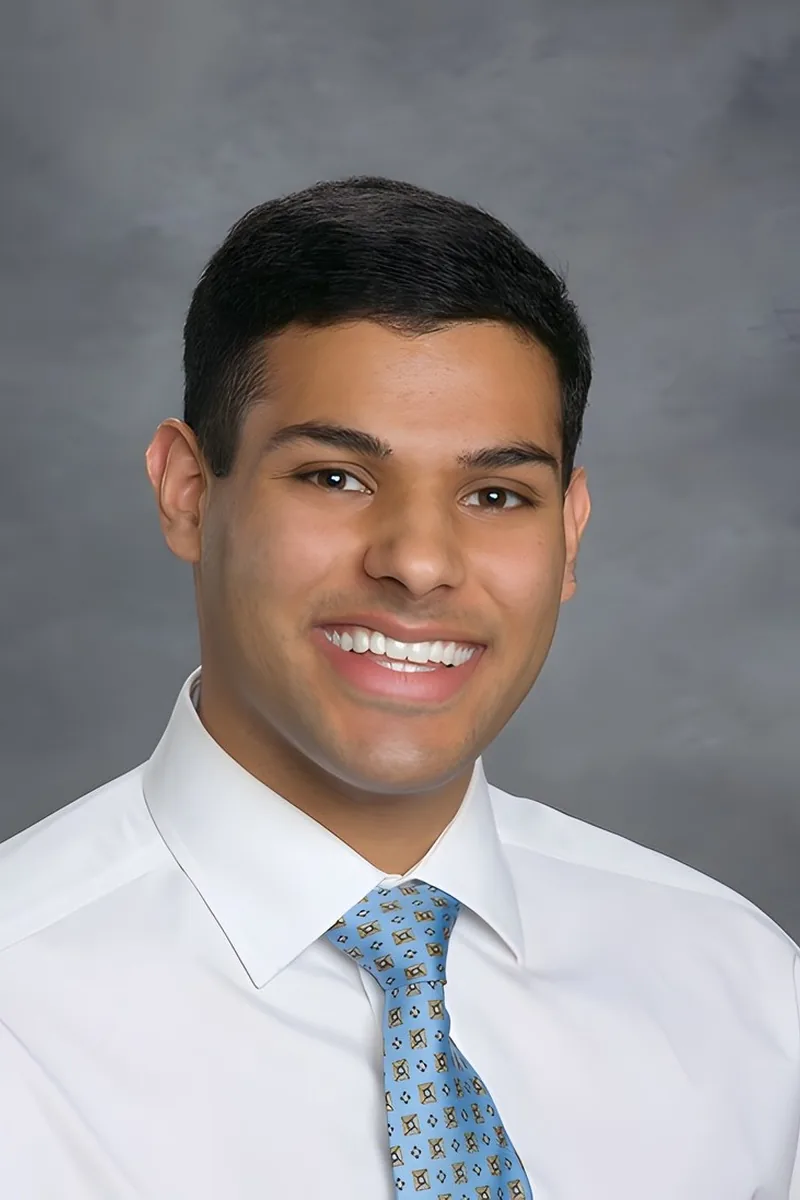
Sanjay's biochemistry coursework at Rice required calculus, statistics, and the kind of quantitative reasoning that underpins both science and standardized testing. He tackles math by connecting procedures to the logic behind them — explaining why cross-multiplication works or what a slope actually represents — so students can adapt when problems look unfamiliar. His approach is especially useful for learners who understand concepts verbally but struggle to translate that understanding into equations.
I am an Atlanta native. I hold an undergraduate degree in Business from Tennessee State University and graduated degree in Education from Cambridge College. I am a Georgia and Texas certified teacher. I have always enjoyed working with kids. I have taught kindergarten, first, second and fourth grade. I am a hard-worker, team player and passionate about my students succeeding in whatever they set their minds too. I currently hold endorsements in K-5 Mathematics, Teacher Support Specialist, and ESOL (English for Speakers of Other Languages). I am able to provide instruction that meets the needs of all students. I have the ability to differentiate instruction so that I cater to all learning styles and levels.
From pre-algebra fundamentals like fractions and order of operations through calculus concepts like derivatives and integrals, Misael covers a wide span of math. His 1420 SAT score reflects strong quantitative reasoning, and he emphasizes understanding the logic behind each step so students can adapt their skills to unfamiliar problems.
A Rice University graduate now in medical school, Si tackles math by writing out every step of a problem — from setting up proportions to simplifying complex expressions — so students can see exactly where each move comes from. His 1570 SAT and 35 ACT scores back up the depth of number sense he brings to topics ranging from fractions and percentages to functions and data analysis. Rated 5.0 by students.
Toni's primary expertise is English, but her 1520 SAT — which includes the math section — and her experience tutoring algebra and calculus show she's comfortable with quantitative reasoning. She's especially effective with students who think of themselves as "English people" and need someone who can translate math concepts into logical, step-by-step language they actually follow.
Brian's quantitative background spans from algebra through calculus, grounded in the applied math he uses daily in scientific research — statistical analysis, modeling growth curves, and interpreting data sets. He approaches math by connecting abstract procedures to concrete problems, making concepts like functions and rates of change click for students who wonder when they'll ever use this stuff.
From pre-algebra fundamentals through calculus, Alyssa adapts her math instruction to wherever a student's understanding breaks down — whether that's fraction operations, solving systems of equations, or grasping what a derivative actually represents. Her 35 ACT composite reflects the kind of quantitative fluency she brings to every session.
Not every math tutor comes from an engineering background, and that's sometimes an advantage. John's linguistics training sharpened his ability to recognize abstract patterns and logical structures, which he applies to breaking down arithmetic, pre-algebra concepts, and word problems in ways that make the underlying reasoning visible rather than mysterious.
From simplifying fractions in pre-algebra to tackling derivatives in calculus, Kevin covers the full arc of secondary math and spots the gaps that hold students back at each level. He's particularly sharp at translating word problems into equations — the skill that trips up most students when math shifts from computation to applied reasoning. Rated 5.0 by students.
From arithmetic fundamentals to early algebra, Angela zeroes in on the reasoning behind each operation so students understand why a method works, not just how to follow the steps. Her science background means she's comfortable connecting math to practical contexts — unit conversions, data interpretation, and proportional reasoning all come naturally.
A dual major in Biology and Medieval Cultures at Brown, Shreya spent semesters tutoring statistics — translating word problems into equations and walking students through the logic behind formulas rather than just the steps. She brings that same clarity to arithmetic, fractions, ratios, and pre-algebra concepts, breaking each problem into pieces a student can actually reason through.
Whether a student is working through fractions, tackling linear equations, or building up to pre-algebra concepts, Kari zeroes in on the specific step where confusion starts and rebuilds understanding from that point. She teaches math as a chain of connected ideas rather than isolated procedures, so each new topic feels like a logical next step instead of a surprise.
I am a graduate of UC San Diego with a Bachelors in Neuroscience through the Psychology department. After graduating, I went to Michigan Technological University and did some graduate work, before moving to Texas to be closer to my parents. I did my alternative certification program through Texas Teachers and am highly qualified to teach Science for grades 7-12. I have been a teacher in public and charter schools for the last four years, and have tutoring experience extending over ten years behind me as well.
Julia's business administration coursework at Vanderbilt required heavy quantitative analysis — statistics, financial modeling, and applied algebra — which keeps her sharp across the math concepts middle and high school students encounter. She's especially effective at connecting abstract problems to real-world logic, like translating a word problem into an equation students can actually set up and solve.
From basic multiplication tables through fractions, decimals, and early equation-solving, Sarah connects each new math concept to something a student already understands. Her psychology training at Duke sharpens her ability to spot exactly where a student's reasoning breaks down — whether it's a procedural gap or a misunderstanding of what the numbers actually represent.
I am a graduate of Georgetown University where I earned my Bachelor of Science degree in International Politics with a concentration on Foreign Policy. I also earned a Certificate in Latin American Studies and am a member of Pi Sigma Alpha, The National Political Science Honor Society. I have experience tutoring students in both the SAT and the SSAT. Additionally, my time as an 8th Grade Science teacher here in Dallas has prepared me for the curriculum and challenges facing students in the area. While I offer tutoring in a broad range of subjects from foreign languages to grammar and writing to math and science, I find Physics to be the most enjoyable subject to teach. I see Physics as the science that allows all the other sciences to occur, and I find it helpful to use Physics demonstrations when studying the subject. When it comes to tutoring, I believe that whoever is doing the talking is doing the learning, so my students will be doing the leg work when it comes to their learning. I believe that every student can achieve success in school; each student just learns at their own pace and in their own way. When I have free time, I enjoy reading a good book, playing a game of tennis, or participating in or watching theatrical events.
Covering everything from pre-algebra fundamentals to calculus, Scott adapts his approach based on exactly where a student's understanding breaks down. He's particularly effective at bridging the gap between arithmetic confidence and algebraic thinking — translating word problems into equations, interpreting graphs, and building number sense. His style is conversational, so students are actively reasoning through problems rather than silently watching someone else solve them.
Cameron teaches math across a wide range — from fraction operations and order of operations up through derivatives and integrals — which means he's unusually good at spotting exactly where a gap in understanding started. His geology degree required heavy quantitative coursework, so he approaches math as a tool for solving real problems, not just an abstract exercise.
Drama school doesn't hand you a math degree, but earning a National Merit Scholarship means Del had to master the quantitative reasoning that most arts students sidestep — and his SAT score of 1490 backs that up. He approaches math problems the way he'd approach a scene: break it into beats, figure out what each piece is doing, and build toward the solution one logical step at a time. That actor's instinct for reading people also means he picks up fast on where a student's thinking goes sideways.
A molecular and cell biology degree demands constant math fluency, from logarithmic pH calculations to statistical analysis of experimental data. Daniel draws on that applied background to show students how algebra, geometry, and trigonometry actually function as tools — making abstract procedures click by tying them to real quantitative reasoning.
Whether a student is working through fraction operations or early algebraic thinking, Erin approaches math as a set of patterns to discover rather than rules to memorize. She uses interactive problem-solving — visual models, real-world word problems, step-by-step walkthroughs — to make each concept stick before moving on.
A computer science and cognitive science background creates an unusual advantage in math tutoring: Snipta understands both the logic underlying mathematical structures and how the brain actually processes abstract concepts. From fraction operations in middle school to function transformations in precalculus, lessons zero in on the specific reasoning step where a student gets stuck rather than re-explaining the whole procedure.
While Mary's primary expertise lies in the humanities, she teaches math with the same logical rigor she applies to constructing academic arguments. She's particularly effective at walking through word problems and applied math concepts, translating abstract operations into concrete steps that make sense.
From fraction operations in elementary school to integrals in college calculus, Shyon has tutored math at nearly every level — including time at a dedicated math tutoring center. He unpacks each concept by connecting it to what a student already understands, so that new ideas like variables, slope, or function behavior feel like natural extensions rather than random rules.
While math isn't Binny's primary area — her graduate work is in English — she teaches algebra and calculus concepts and understands that many math struggles are actually reading struggles: decoding word problems, interpreting what a question is really asking, and translating verbal descriptions into equations. She brings that literacy-focused lens to math tutoring, which is especially useful for students who understand procedures but freeze when problems are wrapped in language.
Zach's math comfort runs from foundational arithmetic through calculus, and his 1540 SAT score reflects sharp quantitative reasoning under pressure. He tackles the concepts students most commonly get stuck on — fractions and ratios, word problem translation, or early algebraic thinking — by connecting abstract steps to concrete examples that make the logic visible.
From long division to derivatives, Muhammad covers the full math spectrum and zeroes in on wherever a student's understanding breaks down. His approach is to rebuild a shaky concept from its simplest form — if fractions are the real issue behind a struggle with algebra, that's where he starts. An SAT score of 1440 and coursework through advanced calculus back up his comfort across every level.
Having tutored math from elementary arithmetic through calculus, Alexandra knows exactly where the common stumbling blocks appear — fractions in fourth grade, negative numbers in sixth, variables in eighth. She adapts her explanations to each student's level, often using real-world scenarios from her own broad academic background to make abstract operations feel tangible. Her 4.9 rating speaks to how well that flexibility works across age groups.
From simplifying fractions to solving systems of equations, Maria adapts her math instruction to wherever a student's understanding breaks down. Her science training means she's comfortable connecting abstract math concepts to real-world applications — showing why proportional reasoning matters in a recipe or how graphing a line actually describes something tangible.
From basic arithmetic through calculus, Brianna has tutored math at every level since high school and continued through college. She's especially effective at identifying the specific step where a concept breaks down — whether that's setting up word problems, manipulating fractions, or graphing functions — and rebuilding understanding from that exact point.
From pre-algebra fundamentals through early calculus, Clairemarie covers a wide range of math topics and zeroes in on the specific step where a concept stops making sense. Her 1550 SAT score reflects comfort with quantitative reasoning at a high level, and she applies that same precision to explaining things like fraction operations, linear equations, or function behavior in ways that click.
A chemistry degree from Brigham Young means Maleah spent four years doing math in context — stoichiometry, rate equations, thermodynamic calculations — which gives her a practical fluency with algebra and arithmetic that pure math coursework doesn't always build. She's especially good at showing students how to set up a problem before solving it, breaking down what a question is really asking so the computation becomes the easy part.
From simplifying fractions to solving multi-step equations, Devon tackles the specific spots where students lose confidence in math. She connects each new concept back to what a student already knows, so skills build on each other instead of feeling like disconnected procedures.
I am a seasoned educator and tutor with a Ph.D. in Literature, an M.A. in Literature, and an M.B.A. in international business. I have taught many, many students to write, read, speak, and think academically. Since 2005, I have worked taught in universities in China, Bosnia, the UAE, Afghanistan and Bahrain (teaching our troops!) and Cambodia. I recently returned to the USA. If you are feeling uncertain about your writing assignments, your English or Literature courses, public speaking, or standardized testing, I believe I can help! No one is born with the ability to read, think critically, and write an essay that will get people to stand up and take notice. These are skills that everyone must be taught to become successful, and they can be learned. Students often think they 'just aren't capable' of improving their skills, but as a professional who specializes in English and Writing, I know they are wrong. Every student, with the right motivation, systems, and tools can improve their skills. I have been teaching and tutoring students for over 20 years. As a professor, I know what steps students need to take to become better in writing, reading, literature, critical thinking, and public speaking. As a faculty member at universities and colleges for over 20 years, I know what will be expected of students both in educational settings, and in the professional world after they graduate. I love to work with students, and I have had a great deal of success in helping them to improve. I have developed proven methods to give students the help they need to write better essays, read with greater comprehension, and test more effectively. Most students tell me that I am funny, and that my lessons are far less 'painful than they expect them to be! I look forward to working with you-
Linguistics trains you to see systems — phonological rules, syntactic trees, morphological patterns — and Gabriele applies that same structural thinking to math, treating equations and functions as rule-governed systems where each piece has a predictable role. Her 1480 SAT and 31 ACT confirm she's comfortable with quantitative reasoning, and her pre-med coursework keeps those skills sharp through applied problem-solving in the sciences. Rated 5.0 by students.
A biochemistry major uses math as a daily tool — stoichiometry is algebra, pharmacokinetics is calculus, and data analysis is statistics. Bryan brings that applied perspective to general math tutoring, whether a student needs to sharpen arithmetic fundamentals or push through more advanced problem-solving. He unpacks each problem by asking students to explain their reasoning, which quickly reveals where confusion hides.
From pre-algebra fundamentals through calculus, Samantha covers a wide range of math and knows where students tend to lose the thread — often it's the jump from arithmetic thinking to algebraic reasoning. Her science background means she constantly ties math concepts like slope, rate of change, and proportional relationships back to tangible problems, which makes abstract ideas click faster.
From fraction operations and proportional reasoning up through calculus, Adeyemi approaches math by identifying exactly where a student's understanding breaks down and rebuilding from that point. His background in statistics and applied mathematics for the sciences means he can show how abstract procedures — like solving systems of equations or interpreting rates of change — connect to problems worth solving.
Maruka's research analyst work demands daily fluency with quantitative reasoning — building models, interpreting data sets, and spotting patterns in numbers. She brings that same structured, step-by-step thinking to math tutoring, whether a student is working through fractions and ratios or tackling word problems that require translating real situations into equations.
Testimonials
Because the right Math tutor makes all the difference.
Average Session Rating – Based on 3.4M Learner Ratings
Practice Math
Free practice tests, flashcards, and AI tutoring for Math
Nearby Math Tutors
Other Dallas Tutors
Related Math Tutors in Dallas
Frequently Asked Questions
Math instruction across Dallas's 22 school districts can vary significantly in approach and pacing. Tutors connected through Varsity Tutors work with students using their school's specific curriculum—whether that's traditional textbook-based instruction, problem-based learning, or a hybrid approach. During your first session, tutors learn which textbook and teaching methods your school uses, then tailor explanations and practice problems to match your classroom experience.
Procedural fluency (knowing how to do steps) is important, but conceptual understanding (knowing why those steps work) is what helps you solve new problems and retain skills long-term. Many students memorize formulas without grasping the underlying logic, which makes word problems and multi-step equations feel impossible. Personalized tutoring focuses on building both—tutors help you see the patterns and connections behind the math, so you're not just following steps but actually understanding what's happening.
Word problems require you to translate language into mathematical operations, identify relevant information, and plan a solution strategy—skills that aren't always taught explicitly in classrooms. With personalized instruction, tutors break down the problem-solving process step-by-step, teaching you how to annotate problems, organize information, and choose the right approach. Over time, you'll develop a toolkit of strategies that makes word problems feel manageable rather than overwhelming.
Showing work isn't just about getting credit—it helps you catch your own mistakes, makes your thinking visible to teachers and tutors, and builds the problem-solving skills you'll need in higher math and STEM fields. Good mathematical communication means writing clear steps, explaining your reasoning, and using proper notation. Tutors help you develop this habit by modeling clear work, asking you to explain your steps aloud, and giving feedback on how to organize your solutions so they're easy to follow.
Math anxiety is real and common, but it's often rooted in past negative experiences or gaps in foundational skills rather than actual ability. Personalized tutoring creates a low-pressure environment where you can ask questions without judgment, work at your own pace, and experience small wins that rebuild confidence. As you understand concepts more deeply and see your skills improve, the anxiety typically decreases—you start to see yourself as capable of doing math.
Multi-step equations trip up many students because they require holding multiple operations in mind and reversing them in the correct order. The key is developing a systematic approach: isolate variable terms, simplify each side, use inverse operations strategically, and always check your answer. Tutors teach you to slow down, write out each step clearly, and verify your work—turning equations from a confusing jumble into a predictable process you can apply consistently.
Graphing and proofs are conceptual hurdles because they require visualizing abstract relationships and thinking logically about why statements must be true. Tutors use multiple strategies—drawing diagrams, using technology to visualize graphs, working through proof examples together, and having you explain the logic in your own words. With personalized instruction, you move from memorizing steps to understanding the reasoning behind them, which makes these topics far less intimidating.
Your first session is about building a foundation for success. The tutor will assess your current skills, understand your specific challenges (whether that's word problems, proofs, or test anxiety), and learn about your learning style and goals. You'll likely work through a few problems together to see how the tutor explains concepts and gives feedback. This session helps the tutor design a personalized plan that targets your needs and matches your school's curriculum.
Let’s find your perfect tutor
Answer a few quick questions. We’ll recommend the right plan and match you with a top 5% tutor.