Award-Winning Chemistry Tutors
serving Dallas, TX
Chemistry
Tutors in Dallas
Private 1-on-1 tutoring, weekly live classes for academic support, test prep & enrichment, practice tests and diagnostics, and more to elevate grades and test scores.
Based on 3.4M Learner Ratings
UniversitiesSchools & Universities
DeliveredHours Delivered
ProficiencyGrowth in Proficiency
Who needs tutoring?
No obligation. Takes ~1 minute.
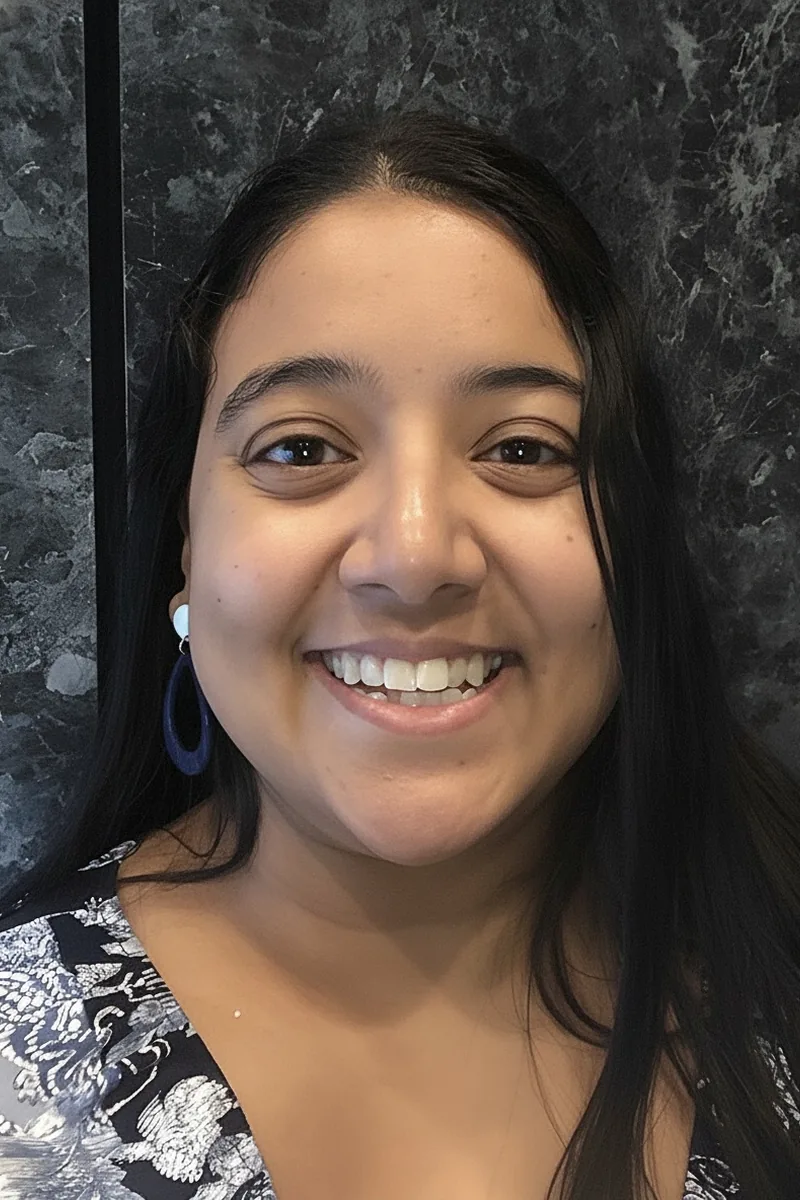
I am a graduate of UC San Diego with a Bachelors in Neuroscience through the Psychology department. After graduating, I went to Michigan Technological University and did some graduate work, before moving to Texas to be closer to my parents. I did my alternative certification program through Texas Teachers and am highly qualified to teach Science for grades 7-12. I have been a teacher in public and charter schools for the last four years, and have tutoring experience extending over ten years behind me as well.

A solid grasp of the mole concept, dimensional analysis, and periodic trends unlocks nearly every topic that follows in a general chemistry course. Snipta tackles these foundational ideas with clear, structured explanations — an approach shaped by her computer science training, where breaking big problems into smaller logical steps is second nature. She holds a 5.0 rating from students who value that clarity.
Balancing equations and predicting products are mechanical skills, but understanding why a reaction happens — electron behavior, intermolecular forces, energy changes — is what separates students who memorize from students who actually get chemistry. Brianna's science training through medical school keeps her sharp on everything from mole conversions to acid-base equilibria. She holds a 4.9 rating from past students.
Balancing equations, understanding molarity, predicting reaction products — chemistry demands both conceptual reasoning and precise calculation, often in the same problem. Samantha's molecular biology degree required heavy chemistry coursework, from general through organic and biochemistry, so she unpacks these topics from deep familiarity rather than a formula sheet. She's especially strong at connecting atomic-level theory to the lab-bench reality of why reactions actually behave the way they do.
I am passionate about students learning the wonderful Spanish language! I teach all levels of Spanish, including Conversational Spanish and SAT Subject Tests. While I am not Hispanic, I took Spanish classes every year from the second grade through high school. I then went to Rice University for college, where I took a Spanish class every semester, including a medical Spanish interpreting internship. After that I went to medical school, where I worked as a Spanish medical interpreter for doctors and launched a Medical Spanish curriculum. I also love movies, music, and books in Spanish. I know what it's like approaching this language from the outside, and I have a lot of helpful tricks to break down and simplify the language. I will not only help you ace your tests but also develop a fluency and love for the language! I love what I do so I am a fun, patient, and effective learning partner.
I am currently a student at the University of Texas-Austin, and in the Honors Biomedical Engineering Program. Throughout high school and into college, I have tutored students of all ages; anywhere from my employment at a mathematics tutoring center to private lessons for students my age. Other parts of my life include playing sports (tennis, soccer, ping pong, basketball), jamming on the piano, and doing extracurriculars at school.
I am a graduate of the University of Florida with a B.S. in Microbiology and Cell Science. I have tutored students for over a year in test prep, math, and science. I love working with individuals and watching them flourish and succeed. I have experience with students from high school through college, and am always ready to help!
I am not teaching, I like to train animals, have adventures, run trails, and write short stories. My vices include baked chips and sour punch straws. I can make a mean lasagna and my mother thinks that I am very funny. Let's get together, talk about how we can help you to achieve your academic goals and enjoy the journey as well!
I hold a Bachelor's degree in Chemistry and both a Master's and PhD in Biochemistry, and I currently serve as an Instructor in the Department of Neuroscience at UT Southwestern Medical Center in Dallas, Texas. With over fifteen years of combined research and teaching experience across cell and developmental biology, biochemistry, neuroscience, genetics, and molecular biology, I bring both depth and breadth to science education. I have held multiple adjunct teaching positions, most recently at Southern Methodist University, where I taught Biology of the Brain and Metabolism, and at the University of Dallas, where I taught Anatomy and Physiology. I also have extensive experience tutoring Biochemistry, Cell and Molecular Biology, Neuroscience, AP Biology, and MCAT preparation, consistently earning strong student evaluations. These roles have sharpened my ability to adapt instruction to diverse learners and learning environments.
I am a Harvard University law student, professional composer, and dedicated mentor with a strong academic background. I completed 20+ AP courses, earned multiple AP scores of 5, graduated with a 4.0 GPA, and participated in an Honors College program. I focus on helping students build confidence, master concepts, and develop effective study skills through personalized and engaging instruction.
Stoichiometry, electron configurations, thermodynamics — Chemistry asks students to think at the atomic level while solving problems that feel like math puzzles. Michelle spent four years at Rice immersed in chemistry coursework as a biochemistry major and now applies that knowledge daily in medical school, so she can explain not just how to balance equations but why the underlying principles matter.
A summa cum laude biochemistry degree from Rice plus years of medical school coursework gave Sugi deep fluency across general chemistry — from stoichiometry and equilibrium through electrochemistry and coordination compounds. She teaches the reasoning behind each concept so students can tackle unfamiliar problems, not just reproduce memorized steps. Rated 5.0 by students.
Balancing equations is mechanical; understanding why copper sulfate is soluble while barium sulfate isn't requires a different kind of thinking. Maggie's dual degree in economics and molecular biology means she learned chemistry from both the quantitative and the conceptual side, and she uses that range to tackle everything from mole conversions to acid-base equilibria. She's especially effective at connecting lab observations to the underlying theory.
Stoichiometry, equilibrium, and thermodynamics all share one thing in common: they reward students who understand the "why" behind each calculation. Bidyut's biomedical engineering training at Johns Hopkins required deep chemistry coursework, and he draws on that background to explain concepts like reaction kinetics and molecular bonding with precision. He's especially good at walking through dimensional analysis and unit conversions until they become second nature.
Balancing equations and memorizing the periodic table are just the entry point — chemistry gets interesting when students start predicting what happens during a reaction and why. Jonathan digs into stoichiometry, acid-base equilibria, and bonding theory by connecting each concept to observable phenomena, an approach shaped by his extensive lab experience in Cornell's science program.
Whether it's balancing redox reactions or figuring out why gases behave the way they do, chemistry clicks once students stop treating it as memorization and start seeing the patterns. Aditi unpacks topics like mole conversions, periodic trends, and acid-base chemistry by tying each one back to a few core principles. Her premed track at Rice means she's working through advanced chemistry herself right now.
Cognitive Studies at Vanderbilt covers a surprising amount of chemistry — neurotransmitter pathways, pharmacological mechanisms, and the molecular basis of perception all require solid command of bonding, functional groups, and reaction behavior. Vy draws on that foundation when teaching topics like molecular polarity and intermolecular forces, making the abstract feel grounded by connecting it to how chemicals actually interact in the brain. Holds a 5.0 rating.
A lot of chemistry confusion comes from trying to memorize trends without understanding the 'why' — why electronegativity increases across a period, or why certain reactions are spontaneous. Kinjal's biology degree required a full chemistry sequence including organic and biochemistry, so she's comfortable moving from stoichiometry and equilibrium through thermodynamics and acid-base chemistry. She builds each concept from the atomic level up, which makes later topics far less overwhelming.
A biochemistry and cell biology degree means Emily didn't just pass chemistry — she built an entire scientific career on top of it. She's especially strong on the topics that trip students up most: stoichiometry, equilibrium expressions, and acid-base calculations. Every problem gets broken into clear, logical steps so students can replicate the reasoning independently on exams.
Strong chemistry fundamentals unlock every science course that follows, and Emmanuel knows exactly which concepts — stoichiometry, equilibrium, acid-base reactions, thermodynamics — trip students up most often. His preparation for both the MCAT and his biology coursework at Johns Hopkins required deep comfort with general chemistry principles, and he teaches them by emphasizing the 'why' behind each equation so students can solve problems they haven't seen before.
I am most passionate about biology and chemistry. I am a firm proponent of education, believing it to be absolutely necessary for an improved quality of life, and I try to impart this appreciation to all of my students.
Balancing equations and memorizing periodic trends only gets a student so far — the real challenge in chemistry is understanding *why* atoms behave the way they do. Steven spent an entire career applying chemical principles as a PhD chemical engineer, which means he can connect abstract ideas like orbital hybridization or reaction equilibria to tangible, practical examples that make them click.
Balancing equations and stoichiometry are where most chemistry students first feel lost, and the confusion only compounds once molarity, gas laws, and thermochemistry pile on. Raj unpacks each topic by tying it back to the mole concept as a unifying thread, showing how one core idea connects seemingly unrelated chapters. His biochemistry training at Rice means general chemistry is ground he knows inside and out.
A lot of chemistry confusion traces back to one thing: students try to memorize procedures without understanding what's actually happening at the molecular level. Kendall digs into the "why" behind balancing equations, naming compounds, and predicting reaction products so that each new topic builds logically on the last. Her background across both math and science means she's comfortable walking through the quantitative side — dimensional analysis, molarity calculations — without skipping steps.
Stoichiometry, equilibrium, and thermodynamics each require a different kind of thinking, and most chemistry struggles come from not knowing which framework to apply when. Malcolm digs into the logic behind each problem type, connecting mole calculations and reaction energetics back to the molecular-level picture his Rice biochemistry training keeps front and center.
Teaching physics across AP, IB, and college levels means John constantly relies on chemistry's core ideas — gas behavior, energy conservation, and atomic structure all sit at the boundary between the two disciplines. That crossover sharpens how he explains topics like thermochemistry and intermolecular forces, since he can show students the physical reasoning driving each chemical concept. Rated 4.9 by students.
Kelsey's undergraduate work in cellular and molecular biology required heavy coursework in general and organic chemistry, and her environmental science graduate program added analytical chemistry into the mix. She's especially sharp on stoichiometry, equilibrium, and acid-base reactions — the topics that tend to decide whether a student sinks or swims in a chemistry course.
Jonathan's entire degree was built on chemistry — reaction kinetics, stoichiometry, equilibrium, and thermodynamic properties were the foundation of nearly every engineering course he took. He explains these concepts by connecting molecular-level behavior to the macroscopic results students see in problems, which makes balancing equations and predicting reaction outcomes feel less like guesswork.
A triple-degree holder in the sciences with a bioengineering specialization, Casey tackles chemistry from the ground up — stoichiometry, equilibrium, thermodynamics, and bonding theory all connect to real applications she encountered in her own training. She's the kind of tutor who will create extra practice problems that push slightly beyond what's assigned, because that's where the actual understanding happens.
Stoichiometry, equilibrium, and electron configurations each demand a different kind of thinking — quantitative precision, conceptual reasoning, and spatial visualization, respectively. Michael's math-heavy background at Rice makes the quantitative side second nature, while his experience across both college chemistry and biology gives him a practical sense of how chemical concepts connect to larger scientific questions. He explains the logic behind each reaction type rather than asking students to memorize outcomes.
Stoichiometry, electron configurations, acid-base reactions — chemistry is full of concepts that feel arbitrary until someone shows you the underlying logic. Jordan spent years applying chemistry in medical and neuroscience contexts, so she explains topics like bonding and equilibrium through real examples of how molecules actually behave in biological and pharmaceutical systems.
Enoch's approach to chemistry starts at the atomic level and builds outward — electron configurations explain periodic trends, which explain bonding, which explain why reactions happen the way they do. That kind of layered understanding, developed through his premed science training at Texas A&M, turns topics like stoichiometry and acid-base equilibria from rote procedures into something students can actually reason through.
Stoichiometry, equilibrium, acid-base reactions — chemistry demands that students think in moles and molecular interactions, which is a fundamentally different way of seeing the world. Anna's undergraduate science coursework and her current public health research give her a practical lens for explaining why these concepts matter beyond the textbook.
A PhD in Inorganic Chemistry means Andrew doesn't just teach stoichiometry, electron configurations, or molecular orbital theory — he's spent years doing research that depends on understanding these concepts at a deep level. He walks students through each topic by tying it back to observable phenomena, whether that's why transition metals produce vivid colors or how electronegativity drives chemical bonding.
A strong intuition for stoichiometry, equilibrium, and molecular interactions doesn't come from reading a textbook once — it comes from working problems until the logic feels natural. Hanna's premedical coursework at NYU included the full general chemistry sequence, and her quantitative finance training reinforced the kind of precise, unit-driven problem-solving that chemistry demands. She tackles tricky topics like limiting reagents and acid-base titrations by emphasizing the reasoning behind each calculation step.
Balancing equations, understanding molarity, and predicting reaction outcomes all require a kind of systematic thinking that comes naturally to an engineer. Daniel earned his BS in Mechanical Engineering — a program steeped in chemistry fundamentals — and he connects abstract concepts like electron orbitals and periodic trends to concrete, visual explanations. He's especially effective at walking through stoichiometry problems step by step until the logic clicks.
Luu spent nearly four years in medical school before immigrating to the US, which means he didn't just study chemistry — he applied it daily in biochemistry, pharmacology, and lab work. He tackles topics like reaction stoichiometry, equilibrium, and acid-base chemistry by connecting abstract formulas to what's actually happening at the molecular level. That real-world grounding makes concepts like Le Chatelier's principle and redox reactions far easier to retain.
Studying Biochemistry and Cell Biology at Rice means Natalie lives inside chemistry every day — from thermodynamics and equilibrium to organic reaction mechanisms and molecular orbital theory. She approaches general chemistry by anchoring each new topic to a concrete example, so concepts like stoichiometry or acid-base titrations feel purposeful instead of abstract. Students get a tutor who genuinely uses this material in her own coursework and can explain it from firsthand understanding.
Stoichiometry, equilibrium, acid-base reactions — these aren't just textbook chapters for Nathaniel; they're concepts he used daily throughout his biochemistry training. He teaches chemistry by connecting each topic to a bigger picture, so students understand why a reaction behaves the way it does instead of just balancing equations on autopilot.
Tutoring student-athletes in chemistry at Rice — where the coursework moves fast and the time to study is limited — taught Asad how to distill topics like equilibrium, stoichiometry, and acid-base reactions into their clearest possible form. His chemistry degree and upcoming medical school training at UT Houston mean he understands these concepts at both the theoretical and applied level, especially where chemistry meets biological systems. Rated 4.7 by students.
Testimonials
Because the right Chemistry tutor makes all the difference.
Average Session Rating – Based on 3.4M Learner Ratings
Practice Chemistry
Free practice tests, flashcards, and AI tutoring for Chemistry
Nearby Chemistry Tutors
Other Dallas Tutors
Related Science Tutors in Dallas
Frequently Asked Questions
Chemistry students often struggle with visualizing abstract concepts like molecular structures and bonding, balancing chemical equations, and understanding stoichiometry. Many also find it challenging to connect theoretical concepts to real-world applications—knowing that a reaction happens is different from understanding *why* it happens at the molecular level. Personalized tutoring helps students build conceptual understanding rather than relying on memorization, which is essential for success in chemistry.
During an initial session, a tutor will assess your current understanding of chemistry concepts, identify specific areas where you're struggling, and learn about your learning style and goals. Whether you're working on balancing equations, preparing for the AP Chemistry exam, or building foundational understanding, the tutor will create a personalized plan tailored to your needs. This collaborative approach ensures every session builds on your strengths and addresses your weaknesses.
Yes—tutors can help you understand experimental procedures, develop scientific reasoning skills, and connect lab observations to the chemistry concepts you're learning in class. They can guide you through the scientific method, help you analyze data, and explain how hands-on experiments demonstrate theoretical principles. This bridges the gap between classroom learning and practical application, deepening your overall chemistry comprehension.
Varsity Tutors connects students with tutors experienced in general chemistry, honors chemistry, AP Chemistry, IB Chemistry, and chemistry courses at Dallas-area universities. Whether you're in middle school, high school, or college, tutors can support your specific curriculum and help you master the concepts and skills required for your course level. They're familiar with the expectations across Dallas's 22 school districts and can tailor instruction accordingly.
Balancing equations and stoichiometry require both systematic thinking and practice—tutors break down the process step-by-step so you understand the logic, not just the mechanics. They use targeted practice problems, real-world examples, and visual aids to help you recognize patterns and build confidence. With personalized feedback and repetition, these typically challenging topics become manageable and even intuitive.
Chemistry requires both knowledge and reasoning—tutors help you build deep understanding of *why* reactions occur, how molecular structure affects properties, and how to apply concepts to new problems. Rather than drilling facts, they ask guiding questions, work through examples together, and connect abstract concepts to tangible models and real-world applications. This approach not only improves test performance but also develops the scientific thinking skills you'll need in advanced courses and beyond.
Absolutely—tutors can help you prepare for unit exams, final exams, AP Chemistry, IB Chemistry, SAT Subject Tests, and college placement exams. They identify knowledge gaps, focus practice on high-value topics, teach test-taking strategies, and build your confidence through targeted review. With personalized preparation, you'll approach exam day with a solid understanding of concepts and the skills to apply them under pressure.
Varsity Tutors connects you with tutors who have strong backgrounds in chemistry—many hold degrees in chemistry, chemical engineering, or related sciences, and many have teaching experience or advanced certifications. All tutors are vetted for expertise and are skilled at explaining complex concepts in ways that make sense to individual learners. You can discuss a tutor's background and teaching approach before your first session to ensure a great fit.
Let’s find your perfect tutor
Answer a few quick questions. We’ll recommend the right plan and match you with a top 5% tutor.