Award-Winning AP Calculus AB Tutors
serving Dallas, TX
AP Calculus AB
Tutors in Dallas
Private 1-on-1 tutoring, weekly live classes for academic support, test prep & enrichment, practice tests and diagnostics, and more to elevate grades and test scores.
Based on 3.4M Learner Ratings
UniversitiesSchools & Universities
DeliveredHours Delivered
ProficiencyGrowth in Proficiency
Who needs tutoring?
No obligation. Takes ~1 minute.

The leap from memorizing derivative rules to actually applying them — related rates, optimization, interpreting the meaning of an integral in context — is where most AB students stall. Daniel breaks these multi-step problems into decision points, teaching students to identify what the question is really asking before jumping into computation. His engineering training makes him especially sharp on the applied side of the curriculum.
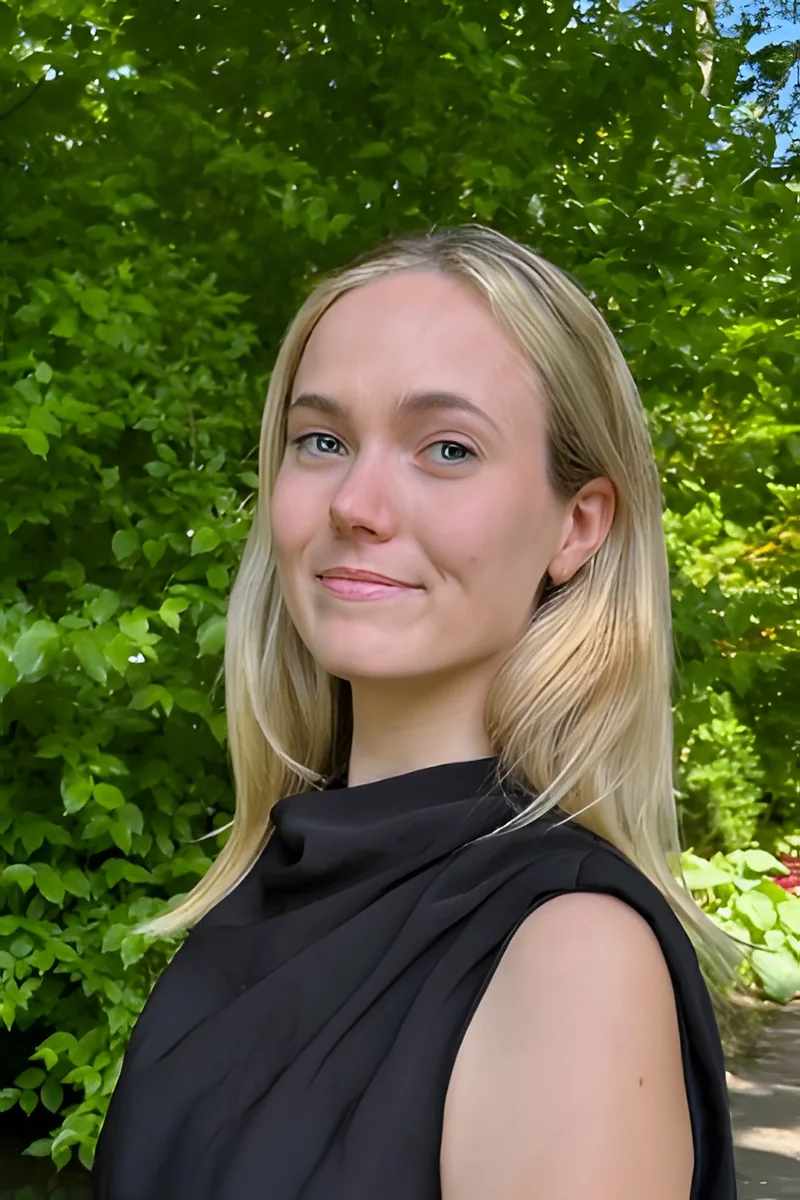
Engineering training at Northwestern means Katherine spent years where calculus wasn't a course but a daily tool — using derivatives to analyze system behavior and integrals to quantify everything from material stress to signal processing. That hands-on fluency shows up most when she teaches students to tackle the AB exam's optimization and accumulation problems, where building the mathematical model from a word problem is the real challenge. She breaks multi-step setups into deliberate, logical pieces so students learn to frame the problem themselves instead of pattern-matching to examples.
Between a 35 ACT and a computer science track at Rice, Rishi's calculus foundation is built on the kind of mathematical rigor that treats limits, derivatives, and integrals as interconnected ideas rather than isolated chapters. He's especially sharp at showing students how recurring patterns — like the relationship between a function and its rate of change — thread through the entire AB curriculum, making each new topic feel like an extension of something they already know. His schedule as a Division I golfer also means he values efficiency, so sessions stay focused and waste nothing.
The jump from memorizing derivative rules to actually applying them — related rates, optimization, the Fundamental Theorem — is where most AB students start to struggle. William teaches these connections by building intuition for what a derivative or integral actually means, not just how to compute one. He's studying mathematics at Rice and has continued through multivariable calculus and beyond, giving him a clear view of where AB concepts are headed.
The jump from memorizing derivative rules to applying them on AP free-response questions is where most Calc AB students lose points. Adam breaks down each problem type — related rates, accumulation functions, slope fields — by teaching the reasoning behind setups so students can handle unfamiliar prompts on exam day.
The moment AB Calculus shifts from "find the derivative" to "interpret what the derivative means in context," many students lose their footing. Vinson tackles that gap head-on — connecting limits, Riemann sums, and the Fundamental Theorem to their graphical and real-world meanings. His applied math studies at Rice keep him immersed in exactly this kind of conceptual reasoning every day.
Two physics doctorates mean Zhengdong has spent years where calculus isn't a course — it's the language, used daily to describe everything from quantum wavefunctions to classical motion equations. That deep fluency shows up most when teaching limits and the Fundamental Theorem, where he can explain the ideas from multiple angles until the underlying logic genuinely connects. Rated 4.8 by students.
Having TA'd Calculus I and II at Rice, Sakibul knows the specific moments in AB where students stall — related rates problems that require translating words into derivatives, or the conceptual leap from Riemann sums to definite integrals. He teaches the underlying logic behind each rule so that applying it to unfamiliar free-response prompts feels natural, not like guesswork.
Limits, derivatives, and integrals each build on the one before — so when a student gets shaky on one, everything downstream wobbles. Kenan teaches AB Calculus by anchoring each new concept to its graphical meaning first, then layering in the algebra. His economics-oriented math background means real-world rate-of-change problems are second nature to him.
Decades of chemical engineering work gave Steven a relationship with calculus that most tutors simply don't have — he's used derivatives to model heat transfer rates and integrals to design real reactor systems, which means he teaches the AB curriculum with the fluency of someone who's applied it professionally for years. His approach to tricky topics like implicit differentiation and the Fundamental Theorem leans on explaining the same idea multiple ways until the version that clicks for a particular student surfaces. Rated 4.9 by students.
Dartmouth's economics curriculum leans heavily on calculus to model everything from supply curves to consumer surplus, so Eric works with derivatives and integrals as everyday tools — not just exam topics. That gives him a practical edge when teaching AB concepts like optimization and definite integral applications, where setting up the problem correctly is the real challenge. His 1520 SAT, 34 ACT, and 5.0 rating back up the quantitative chops behind his teaching.
When AP Calculus AB students can recite the power rule but can't explain what a derivative actually tells them, that's exactly the gap John closes — he teaches the conceptual reasoning behind limits, continuity, and rates of change so that free-response setups feel logical rather than mysterious. His English and drama training might seem unrelated, but it gave him a knack for breaking down complex ideas into clear, structured narratives, which turns out to be exactly what students need when walking through multi-step integration problems. A 36 ACT and 4.9 rating back up an approach built on genuine clarity.
Limits, derivatives, and integrals each have a moment where the notation stops making sense and the concept underneath needs to click — that transition is exactly what Samantha has spent two years coaching students through at Princeton's McGraw Tutoring center. She's particularly sharp on related rates and accumulation problems, where translating a word problem into calculus is half the battle.
The jump from memorizing derivative rules to actually applying them — related rates, optimization, the Fundamental Theorem — is where most AB students struggle. As a math PhD student at Boston College, Jacob breaks down each problem type by identifying the conceptual step students are missing, not just drilling more practice problems.
Pursuing a master's in Mechanical Engineering in Robotics at Penn, Mohamed uses calculus every day to model how robotic systems move, accelerate, and respond to forces — which means he teaches derivatives and integrals as tools with immediate physical meaning. He's especially sharp on differential equation setups and optimization problems, the kinds of multi-step reasoning that separate strong AB scores from average ones. Rated 5.0 by students.
Daniel's approach to AP Calculus AB centers on building intuition for what derivatives and integrals actually represent before diving into computation. Related rates and optimization problems — the sections that trip up most students — become more manageable when he walks through the physical reasoning behind them, something his engineering background makes second nature.
Scoring a 1590 SAT and 36 ACT requires the kind of mathematical fluency that doesn't stop at computation — Aurnab brings that same precision to teaching limits, continuity, and the chain rule in the AB curriculum. His biomedical engineering coursework at Rice means he's constantly using derivatives and integrals to model biological systems, so he can show students exactly where these tools show up beyond the exam. Rated 4.9 by students.
Chemical engineering at UT Austin means Howard uses derivatives, integrals, and differential equations daily — AP Calculus AB concepts like related rates and accumulation functions are tools he applies in thermodynamics and reactor design, not just textbook exercises. He breaks down the logic behind each problem type so students build intuition for the free-response section, not just calculator shortcuts. Rated 5.0 by students.
Limits, derivatives, and integrals each require a different kind of thinking, and the AP exam tests all three under serious time pressure. Alisa breaks down each concept visually and algebraically, drawing on her experience tutoring calculus one-on-one through UT Dallas' Peer Tutoring Program. Her engineering background means she can also show students what these ideas actually do in the real world.
The jump from derivatives to integrals trips up a lot of AP Calc AB students, especially when related rates and accumulation functions enter the picture. Christina breaks these problems into physical intuitions — velocity becoming displacement, force becoming work — drawing on her applied physics training to make abstract calculus tangible.
Most AP Calculus AB students can compute a derivative mechanically but stall when asked to explain what it means or set up a problem from a verbal description — Alex targets that exact gap. His CS and data science training at Rice means he thinks about functions algorithmically, breaking multi-step processes like related rates into logical sequences where each piece follows clearly from the last. He also brings the kind of patience honed from mentoring younger students through the Ready for College Leadership club, where making intimidating material approachable was the whole point.
Limits, derivatives, and the Fundamental Theorem of Calculus each build on the one before, so a shaky understanding early on compounds fast. Tim breaks the chain-rule and related-rates problems down into repeatable steps, drawing on the rigorous math training from his honors engineering degree to make sure each concept actually clicks before moving forward.
Earning a 35 ACT while loading up on AP exams — including enough to earn two-time National AP Scholar — means Whitney built her calculus instincts early and under pressure, exactly the conditions the AB exam recreates. Her biomedical engineering program at Texas A&M then deepened those instincts by requiring her to apply derivatives and integrals to model biological systems, so she teaches concepts like differential equations and accumulation with the fluency of someone who uses them daily. Rated 5.0 by students.
A certified math teacher with an engineering degree, Yuanxin approaches AB Calculus the way it's actually tested: heavy on conceptual reasoning about limits, derivatives, and the relationship between a function and its accumulation. She breaks down free-response questions so students learn to construct the kind of justified, multi-step arguments that earn full credit on the AP exam.
Data science coursework at Rice means Sage regularly uses derivatives to fit models and integrals to measure distributions — skills that map directly onto the AB curriculum's emphasis on rates of change and accumulation. She's especially good at teaching students how to read a free-response prompt and decide which calculus tool it's actually asking for, a translation step that trips up even strong math students. Her 1440 SAT and 4.8 rating back up an approach built on making the reasoning visible, not just the algebra.
The jump from pre-calc to AP Calculus AB trips up students who memorized formulas without understanding rates of change conceptually. Ellyn teaches limits, derivatives, and integrals by connecting them to motion and accumulation problems — the kind of physical reasoning her biomedical and mechanical engineering training made second nature.
Limits, derivatives, and integrals each build directly on the last, so one shaky concept can snowball into a semester of confusion. Huan breaks the chain by making sure students can explain *why* the chain rule or fundamental theorem works before moving on to applications. His engineering coursework keeps these ideas fresh and grounded in real problem-solving.
Three degrees in mathematics plus a law degree means Andrea has spent years building rigorous logical arguments — a skill that translates directly to writing clean, justified solutions on AP Calculus AB free-response questions, where showing your reasoning matters as much as getting the answer. She's particularly strong at teaching limits and continuity, breaking down the epsilon-delta logic so students understand why a function behaves a certain way before moving on to differentiation. Her breadth across the full calculus sequence gives her a clear sense of exactly how deep to go on each AB topic without overcomplicating it.
The jump from pre-calc to AP Calculus AB trips up most students around the chain rule and related rates, where problems suddenly require layering multiple concepts at once. Omar's engineering coursework at Rice means he's been applying derivatives and integrals to real systems for years, so he can break down each step with concrete examples rather than abstract definitions. He holds a 5.0 rating from students.
The jump from memorizing derivative rules to actually understanding what a limit represents is where most AP Calc AB students stall. Atharva tackles that gap head-on, connecting ideas like the chain rule and Riemann sums back to their geometric meaning so the FRQs start making sense. His 5.0 client rating speaks to how well that approach lands.
Ria has been teaching calculus concepts for years, and she zeros in on the places where AB students most often stall — related rates, the chain rule applied to implicit differentiation, and interpreting the meaning of a definite integral in context. Her chemical engineering background at UT Austin keeps her sharp on the application side, so she connects derivatives and integrals to real problems rather than leaving them as abstract procedures.
I am both a native English and Spanish speaker. Thanks to living all around, I've found it important to adapt to every individual and find the most comfortable way of teaching and helping, whether that means translating English, Spanish, or math. My B.S. is in Mathematics and I am a current Economics PhD student.
The leap from derivatives to integrals trips up a lot of AB students, especially when related rates and accumulation functions demand both conceptual reasoning and careful setup. Shroothi breaks these problems into physical intuitions — rates of change, areas under curves — drawing on the applied math she does as a mechanical engineering major at UT Austin.
I am qualified to tutor many subjects, my favorite subject by far is math, specifically calculus. Math is a subject almost universally hated, and I believe that is mainly due to the narrow way in which it is taught. I have ADHD, and I often don't understand things the first time they are explained to me, meaning over the years I have had to figure out different ways of looking at information. Oftentimes, all a student needs is for something to be explained in a different way, and I love watching people finally understand a concept. Everyone learns differently, but everyone can learn.
Pursuing a physics degree at Texas A&M means Sabrina uses calculus as her daily language — derivatives describe motion, integrals quantify energy and flux — so she teaches AB concepts with the fluency of someone who depends on them rather than just studies them. She's particularly strong at helping students bridge the gap between understanding derivative rules mechanically and knowing when to apply them in context, like setting up a related rates problem from a physical scenario. Her experience with both the SAT and ACT math sections also sharpens her instinct for working efficiently under timed conditions.
Rakhi's applied math degree means she didn't just pass through calculus — she built an entire undergraduate curriculum on top of it, from differential equations to statistics. That depth shows when she teaches Riemann sums and the Fundamental Theorem, because she can explain not just the mechanics but where those ideas lead and why the AP exam cares about conceptual justification. Her 1550 SAT and 4.8 rating back up the precision she brings to free-response prep.
Computational science at UC Berkeley means Wendy writes code that runs on calculus — numerical integration, optimization algorithms, modeling rates of change in simulated systems — so she teaches AB concepts like Riemann sums and the Fundamental Theorem with an intuitive sense of what the math is actually computing. Her 1560 SAT and 35 ACT reflect the kind of precise, fast-thinking problem solving that translates directly to AP free-response pacing. She's especially good at breaking down limit definitions and continuity arguments, the early-course concepts that quietly determine whether the rest of the curriculum clicks.
The moment related rates or optimization problems show up, AB students often freeze because they can't translate a word problem into a function to differentiate. Miguel leans on his English training here — he teaches students to read the problem like a paragraph, identify what's changing, and set up equations before touching any calculus. That structured reading-then-solving approach tends to unlock the entire second half of the AB curriculum.
Limits, derivatives, and integrals each introduce a fundamentally new way of thinking about functions — and that conceptual leap is where most AB students get stuck. Austin approaches each unit by grounding abstract definitions in concrete, visual problems before moving to computation. His Purdue engineering background means he's applied every AB topic extensively and can show students why these ideas matter beyond the exam.
Limits, derivatives, and integrals each build on the one before, so a shaky understanding of early concepts can quietly derail everything that follows. Hamza catches those gaps early — whether it's a misunderstanding of the chain rule or confusion about when to apply the Fundamental Theorem of Calculus. His background in calculus-heavy bioinformatics coursework means he can connect abstract rules to concrete problem-solving.
Testimonials
Because the right AP Calculus AB tutor makes all the difference.
Average Session Rating – Based on 3.4M Learner Ratings
Practice AP Calculus AB
Free practice tests, flashcards, and AI tutoring for AP Calculus AB
Nearby AP Calculus AB Tutors
Other Dallas Tutors
Related Math Tutors in Dallas
Frequently Asked Questions
AP Calculus AB focuses on limits, continuity, derivatives, and integrals—the foundational concepts of calculus. The course emphasizes understanding rates of change, optimization problems, and accumulation, with applications to real-world scenarios. Most students spend the year building from basic limit concepts through differentiation and integration techniques, culminating in the AP exam in May.
AP Calculus AB requires a significant conceptual shift from algebra and precalculus—students must move beyond memorizing procedures to understanding *why* the math works. Common struggles include grasping the limit concept, mastering derivative and integral rules, and applying calculus to word problems. Many students also find the pace demanding, as new topics build quickly on previous material.
Successful preparation involves consistent practice with multiple-choice and free-response questions, timed practice tests to build test-taking stamina, and targeted review of weak areas. Working through released AP exams and understanding the scoring rubric for free-response questions helps you know exactly what graders expect. Starting review 4-6 weeks before the May exam gives you time to identify gaps and strengthen problem-solving speed.
Personalized 1-on-1 instruction allows a tutor to identify exactly where your understanding breaks down—whether it's conceptual gaps or procedural mistakes—and address those specific issues. Tutors can also teach you test-taking strategies, help you practice under timed conditions, and build confidence by working through problems at your pace. This targeted approach is especially valuable for calculus, where small misunderstandings compound quickly.
Score improvement depends on your starting point and how consistently you work with a tutor. Students who begin tutoring early in the year and actively practice between sessions typically see meaningful gains by exam day. The AP Calculus AB exam is scored 1-5, and many students improve from a 2 or 3 to a 4 or 5 with focused preparation and expert guidance on both content and test strategy.
Ideally, tutoring is most effective when started early in the school year, giving you time to build a strong foundation and address gaps before they compound. However, even starting in January or February can help you focus your final months of preparation on practice tests and weak areas. If you're struggling with specific topics, starting as soon as you notice the difficulty prevents you from falling further behind.
Your first session focuses on understanding your current level, learning goals, and specific challenges in calculus. A tutor will likely work through a few problems with you to identify where your understanding is solid and where you need support. From there, you'll develop a personalized plan that targets your weak areas while keeping pace with your school's curriculum.
Varsity Tutors connects you with expert tutors who have deep knowledge of AP Calculus AB and experience helping students succeed on the exam. When you get matched with a tutor, you'll work with someone who understands the specific challenges of the curriculum and can teach both content mastery and test-taking strategies. You can start with a single session to see if the fit is right, then build an ongoing tutoring plan that works for your schedule.
Let’s find your perfect tutor
Answer a few quick questions. We’ll recommend the right plan and match you with a top 5% tutor.