Award-Winning Chemistry Tutors
serving Houston, TX
Award-Winning
Chemistry
Tutors in Houston
Private 1-on-1 tutoring, weekly live classes for academic support, test prep & enrichment, practice tests and diagnostics, and more to elevate grades and test scores.
Based on 3.4M Learner Ratings
UniversitiesSchools & Universities
DeliveredHours Delivered
ProficiencyGrowth in Proficiency
Who needs tutoring?
No obligation. Takes ~1 minute.
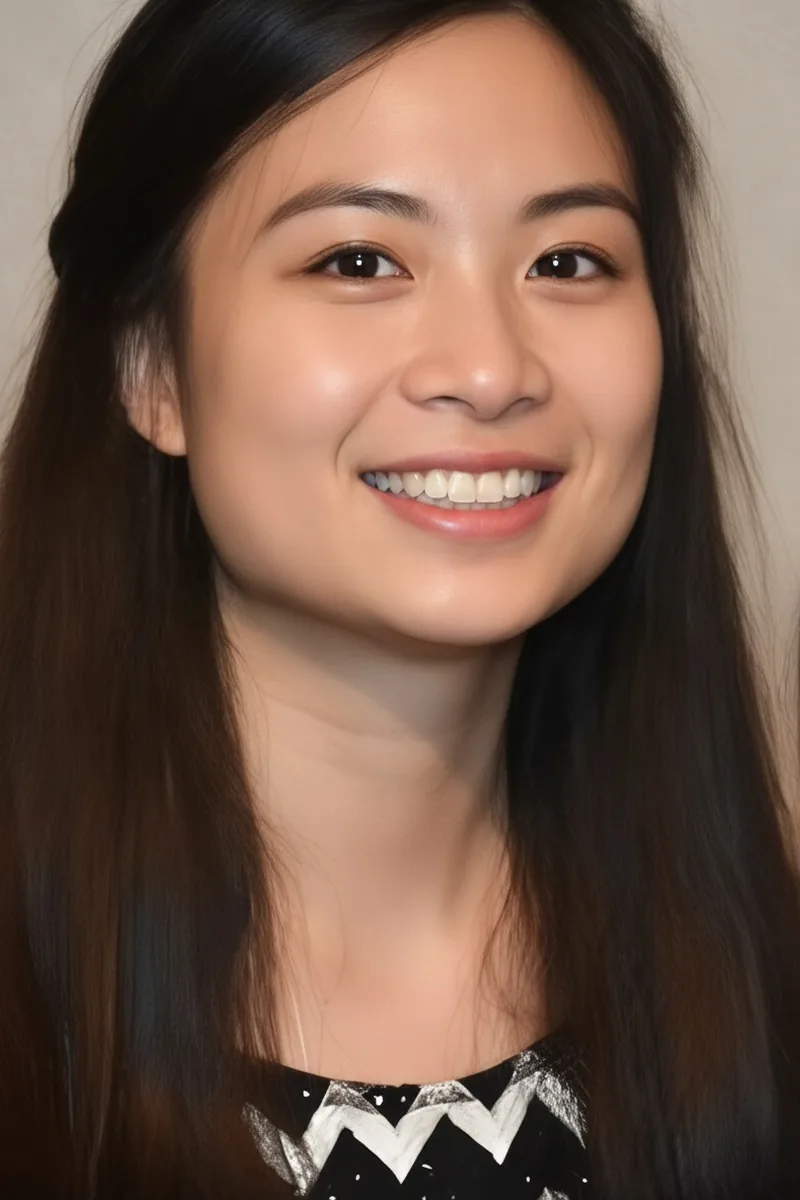
Stoichiometry, electron configurations, thermodynamics — Chemistry asks students to think at the atomic level while solving problems that feel like math puzzles. Michelle spent four years at Rice immersed in chemistry coursework as a biochemistry major and now applies that knowledge daily in medical school, so she can explain not just how to balance equations but why the underlying principles matter.

A summa cum laude biochemistry degree from Rice plus years of medical school coursework gave Sugi deep fluency across general chemistry — from stoichiometry and equilibrium through electrochemistry and coordination compounds. She teaches the reasoning behind each concept so students can tackle unfamiliar problems, not just reproduce memorized steps. Rated 5.0 by students.
Balancing equations and stoichiometry are where most chemistry students first feel lost, and the confusion only compounds once molarity, gas laws, and thermochemistry pile on. Raj unpacks each topic by tying it back to the mole concept as a unifying thread, showing how one core idea connects seemingly unrelated chapters. His biochemistry training at Rice means general chemistry is ground he knows inside and out.
A lot of chemistry confusion traces back to one thing: students try to memorize procedures without understanding what's actually happening at the molecular level. Kendall digs into the "why" behind balancing equations, naming compounds, and predicting reaction products so that each new topic builds logically on the last. Her background across both math and science means she's comfortable walking through the quantitative side — dimensional analysis, molarity calculations — without skipping steps.
A biochemistry and cell biology degree means Emily didn't just pass chemistry — she built an entire scientific career on top of it. She's especially strong on the topics that trip students up most: stoichiometry, equilibrium expressions, and acid-base calculations. Every problem gets broken into clear, logical steps so students can replicate the reasoning independently on exams.
Strong chemistry fundamentals unlock every science course that follows, and Emmanuel knows exactly which concepts — stoichiometry, equilibrium, acid-base reactions, thermodynamics — trip students up most often. His preparation for both the MCAT and his biology coursework at Johns Hopkins required deep comfort with general chemistry principles, and he teaches them by emphasizing the 'why' behind each equation so students can solve problems they haven't seen before.
Stoichiometry, equilibrium, and thermodynamics each require a different kind of thinking, and most chemistry struggles come from not knowing which framework to apply when. Malcolm digs into the logic behind each problem type, connecting mole calculations and reaction energetics back to the molecular-level picture his Rice biochemistry training keeps front and center.
Jonathan's entire degree was built on chemistry — reaction kinetics, stoichiometry, equilibrium, and thermodynamic properties were the foundation of nearly every engineering course he took. He explains these concepts by connecting molecular-level behavior to the macroscopic results students see in problems, which makes balancing equations and predicting reaction outcomes feel less like guesswork.
A triple-degree holder in the sciences with a bioengineering specialization, Casey tackles chemistry from the ground up — stoichiometry, equilibrium, thermodynamics, and bonding theory all connect to real applications she encountered in her own training. She's the kind of tutor who will create extra practice problems that push slightly beyond what's assigned, because that's where the actual understanding happens.
A strong intuition for stoichiometry, equilibrium, and molecular interactions doesn't come from reading a textbook once — it comes from working problems until the logic feels natural. Hanna's premedical coursework at NYU included the full general chemistry sequence, and her quantitative finance training reinforced the kind of precise, unit-driven problem-solving that chemistry demands. She tackles tricky topics like limiting reagents and acid-base titrations by emphasizing the reasoning behind each calculation step.
Tutoring student-athletes in chemistry at Rice — where the coursework moves fast and the time to study is limited — taught Asad how to distill topics like equilibrium, stoichiometry, and acid-base reactions into their clearest possible form. His chemistry degree and upcoming medical school training at UT Houston mean he understands these concepts at both the theoretical and applied level, especially where chemistry meets biological systems. Rated 4.7 by students.
Understanding stoichiometry or balancing redox reactions often comes down to whether someone explains the 'why' behind each step or just hands you a formula sheet. Brody approaches chemistry problems by connecting atomic-level behavior — electron configurations, intermolecular forces, thermodynamic principles — to what's actually happening in a reaction flask. His extensive science background keeps explanations grounded in real chemical intuition.
From balancing redox reactions to predicting molecular geometry, chemistry rewards students who think systematically about what's happening at the atomic level. Omar breaks down problem-solving into clear steps, drawing on both his Rice engineering background and his experience grading technical coursework to pinpoint exactly where confusion starts.
Between a Bachelor's in Chemistry and a Master's in Epidemiology, Naushaba has spent years thinking in moles, equilibria, and thermodynamic principles. She unpacks general chemistry topics — stoichiometry, acid-base reactions, electron configurations, kinetics — by connecting the math to what's physically happening at the molecular level. That dual perspective makes abstract concepts like Gibbs free energy or Le Chatelier's principle click faster.
From stoichiometry to acid-base equilibria, chemistry rewards students who can think in proportions and relationships rather than isolated formulas. Alex's statistics-heavy master's program at Rice trained him to see quantitative patterns quickly, and he applies that same structured reasoning when walking through mole calculations, redox balancing, or solution chemistry.
Stoichiometry, electron configurations, acid-base equilibria — introductory chemistry throws a lot of conceptual frameworks at students in rapid succession. Aleksey breaks each topic down to its core logic, connecting ideas like mole ratios and limiting reagents back to simple arithmetic so nothing feels like magic. His 5.0 rating speaks to how clearly he communicates even the trickiest material.
Ali minored in Chemistry, Biology, and Microbiology alongside his Applied Math major, so he's comfortable moving between stoichiometry calculations, equilibrium expressions, and the conceptual reasoning behind reaction mechanisms. That math-science crossover is especially useful for topics like thermochemistry and gas laws, where students often struggle with unit conversions and algebraic rearrangements more than the chemistry itself.
Effie approaches chemistry by anchoring abstract ideas — electron configurations, periodic trends, equilibrium — to tangible examples from her biochemistry and medical coursework. She breaks down stoichiometry and thermodynamics problems step by step, building the quantitative reasoning that makes later chemistry courses far more manageable.
Stoichiometry, electron configurations, acid-base equilibria — chemistry is full of topics that each require a slightly different way of thinking. Micaela switches between those modes naturally because her pre-med and zoology coursework demanded constant application of chemical principles to biological systems. She walks students through problem-solving step by step, building the kind of chemical intuition that turns a confusing equation into a logical story.
Between his environmental sciences degree and his lab technician role at Rice, Daniel has spent years doing chemistry — balancing reactions, running titrations, and interpreting spectroscopic data. He teaches general chemistry concepts like stoichiometry, equilibrium, and periodic trends by anchoring each one in a concrete example from the lab bench. That hands-on familiarity makes abstract ideas like mole ratios and electron configurations much easier to internalize.
Balancing equations and stoichiometry are mechanical once you understand them, but topics like equilibrium, thermodynamics, and molecular orbital theory require genuine conceptual thinking. Jeremy digs into the 'why' behind each reaction—why Le Chatelier's principle works, what entropy actually means—rather than just drilling procedures. His science background at Columbia keeps him sharp across general, organic, and physical chemistry topics.
Balancing equations, stoichiometry, and periodic trends all require a different kind of thinking than most students are used to — part math, part spatial reasoning, part memorization. Christopher's neuroscience degree demanded extensive chemistry coursework, from general through organic, so he explains bonding, equilibrium, and reaction mechanisms with the fluency of someone who's applied them in advanced contexts.
Mole conversions, balancing redox reactions, electron configurations — chemistry has a way of feeling like a dozen disconnected topics until someone shows you the thread connecting them. William earned his biology degree at UT while taking heavy chemistry coursework for his pre-med track, so he explains concepts like bonding and periodicity with the fluency of someone who's used them daily. His 5.0 student rating backs up his problem-first teaching style.
Earning a Biochemistry degree at Baylor meant living inside chemistry — from balancing redox equations to predicting molecular geometry to running spectroscopy in the lab. Tiffany unpacks tough concepts like stoichiometry and equilibrium by tying them back to tangible reactions students can visualize, rather than leaving them buried in formulas.
Balancing equations and predicting products gets much easier when you understand what's actually happening at the molecular level — why electrons move, how bonds break, and what drives a reaction forward. Megan connects these concepts back to real biological and medical applications, drawing on her neuroscience coursework where chemistry underpins everything from drug design to cellular signaling.
Balancing equations, understanding molarity, and predicting reaction products all require a kind of bookkeeping that frustrates students who never learned to visualize what's happening at the molecular level. Christopher's molecular biology training at UC Berkeley gives him a strong handle on chemical principles, and he explains concepts like stoichiometry and equilibrium by grounding them in tangible molecular behavior.
A biochemistry degree means Chase spent years applying stoichiometry, equilibrium, and thermodynamics to real laboratory problems before ever stepping into a tutoring session. He explains concepts like mole ratios and reaction kinetics by grounding them in tangible examples — what's actually happening at the molecular level when a solution changes color or a precipitate forms. That approach turns chemistry from a set of abstract formulas into something students can reason through.
Stoichiometry, molarity, gas laws, periodic trends — chemistry asks students to toggle constantly between conceptual understanding and precise calculation. Megan's comfort with both math and science means she can explain why an equation works and then walk through the algebra to solve it, without skipping steps. Her 4.9 rating speaks to how well that dual approach lands with students.
Balancing equations and stoichiometry are where many students first feel lost in chemistry, but they're also where Birinder is most comfortable — his biochemistry major demands fluency in everything from mole conversions to thermodynamics. He walks through problems step by step, emphasizing dimensional analysis as a reliable tool students can apply across nearly every chemistry topic they'll encounter.
Balancing redox equations or predicting reaction products can feel like guesswork until someone shows you the underlying logic. Carolyn's biochemistry minor at Rice keeps her immersed in chemical principles daily, from stoichiometry and thermodynamics to molecular bonding and equilibrium. She breaks each concept into visual, manageable steps that build real understanding.
As a chemistry major, Crystal lives inside this subject — from balancing redox reactions to interpreting molecular orbital diagrams. She tackles the concepts that most commonly trip people up, like stoichiometry and equilibrium, by connecting the math to what's physically happening at the molecular level. Having passed every AP exam she took in high school, she knows how to distill dense material into something that actually makes sense.
Two years of tutoring undergraduates in chemistry at the University of Texas gave Joshua a detailed map of where students get stuck — stoichiometry conversions, equilibrium expressions, electron configurations, acid-base titrations. His own chemistry degree means he doesn't just know the procedures; he can explain the atomic-level reasoning behind them when a concept isn't landing.
I am originally from Lawrenceville, Georgia and graduated from Gwinnett School of Mathematics, Science, and Technology in 2016. With a full ride scholarship, I am currently a sophomore at Rice University in Houston, Texas. I am studying for a Bachelor of Arts in Cognitive Science while also pursuing the pre-medical track. Since beginning college, I have been given the opportunity to tutor a variety of students. I began volunteering in my freshman year with the Partnership for the Advancement and Immersion of Refugees in which I tutor refugee high school students with their coursework assessments, and English skills. I have also volunteered with the International Rescue Committee to tutor refugee adults in improving their English. In addition, I have worked with the Rice University Athletic Department to tutor athletic students in areas such as chemistry and mathematics. While I can tutor a broad range of subjects, I am most passionate about Algebra, Calculus, Chemistry, Biology, and Psychology. Because I believe the education is an important tool to empower students to reach their future goals, I hope to help students reach their academic potential by tailoring my tutoring sessions to them. Besides school work and tutoring, I enjoy running, reading, and Netflix shows such as Parks and Rec.
Hello! My name is Connor, and I am a Bioengineering student at Rice University with a strong background in physics, mathematics, chemistry, and standardized test preparation. I scored a 1550 on the SAT and earned a 7 in IB Higher Level Physics. I enjoy helping students build a deep understanding of concepts rather than simply memorizing formulas. My goal is to make challenging topics approachable, improve problem-solving skills, and help students gain confidence in their academic abilities. Whether you're preparing for an exam, improving class performance, or tackling difficult homework assignments, I will tailor lessons to your specific goals and learning style.
I'm Aurnab. I'm a Bioengineering student at Rice University. I've been tutoring since high school. Due to my wide background in a variety of subjects that I've studied, I have a very interdisciplinary approach to tutoring that can be tailored to any student to achieve results.
I am currently a 3rd-year Nutrition major at the University of Texas at Austin with a certificate in Pre-Health Professions. Upon graduating, I am planning on attending medical school to become a physician. Prior to college, I held a job as a primary school instructor at Kumon, where I tutored students aged 5-13 in fundamental mathematics and English. I believe that education is one of the most important proponents of a successful future career, and especially, the foundations of any educational work are imperative to understand and grasp. Growing up, I have had extensive tutoring myself in SAT and ACT, so I am able to bring multiple perspectives on topics other than elementary and middle school math and English. I believe that the student is only as good as the teacher teaches, so I perform my absolute best to be a catalyst for the future generation.
I am available for tutoring in Algebra 1 and 2, General Biology, Math, and Science in the Houston Area. Please contact me to discuss any possible questions or interest.
I'm Deepika, a physics and chemistry teacher at a college-level preparatory school, a computer science engineer, and a Master's in Science Education from Johns Hopkins University. I teach both advanced and regular courses, including ESL/ELL students, using project-based and inquiry-led approaches. I make science clear, hands-on, and fun, helping students understand the why behind the concepts. Every session is tailored to your pace and goals, so you can build confidence, problem-solving skills, and a love for learning.
Balancing equations, stoichiometry, and electron configurations all demand a different kind of thinking than most students expect from a science class. Yucheng approaches chemistry problems the way an engineer would: identify what you know, map the units, and let dimensional analysis do the heavy lifting. His 4.9 rating speaks to how well that structured method clicks.
I am now living in Houston enjoying Texas hospitality and hope to give back by passing on some knowledge of my own.
Testimonials
Because the right Chemistry tutor makes all the difference.
Average Session Rating – Based on 3.4M Learner Ratings
Practice Chemistry
Free practice tests, flashcards, and AI tutoring for Chemistry
Nearby Chemistry Tutors
Other Houston Tutors
Related Science Tutors in Houston
Frequently Asked Questions
Many Houston students struggle with balancing chemical equations, understanding mole concepts, and visualizing molecular structures at the atomic level. Additionally, connecting theoretical concepts like stoichiometry and equilibrium to real-world applications can feel abstract without proper guidance. Personalized tutoring helps students move beyond memorization to develop genuine understanding of how these concepts work together.
Your first session focuses on understanding your current level, learning goals, and specific pain points—whether that's lab report writing, exam preparation, or grasping difficult concepts like thermodynamics. The tutor will assess your chemistry background and identify which topics need the most attention. From there, you'll develop a personalized plan that fits your schedule and learning style.
Yes. Tutors can help you understand lab procedures, analyze experimental data, write lab reports, and develop stronger scientific reasoning skills. They can also help you prepare for lab practicals and explain the theory behind experiments you're conducting in class. This support strengthens both your hands-on skills and your ability to think like a scientist.
Absolutely not. While chemistry does require some memorization, true success comes from understanding *why* reactions happen and *how* to apply concepts to new problems. Expert tutors focus on building conceptual understanding through visualization, real-world examples, and guided problem-solving rather than rote memorization. This approach not only improves grades but also makes chemistry more interesting and easier to retain.
These skills improve through structured practice and clear explanations of the underlying logic. Tutors break down dimensional analysis step-by-step, help you recognize patterns in stoichiometry problems, and provide targeted practice with immediate feedback. With personalized instruction, you'll develop confidence in these foundational skills that unlock success in more advanced chemistry topics.
Varsity Tutors connects you with tutors who have strong backgrounds in chemistry—many hold degrees in chemistry, biochemistry, chemical engineering, or related fields, and bring real classroom or lab experience. All tutors are vetted for expertise and teaching ability. You can discuss a tutor's specific background and experience before your first session to ensure they're the right fit for your needs.
Yes. AP Chemistry requires mastery of complex topics like thermodynamics, kinetics, equilibrium, and acid-base chemistry, along with strong problem-solving skills. Tutors can help you build conceptual understanding of these topics, practice free-response questions, review exam strategies, and identify weak areas before test day. Personalized instruction is especially valuable for AP-level work since the exam emphasizes deep understanding over memorization.
Very flexible. Tutors work with your schedule to find times that work—whether you need sessions before an exam, ongoing support throughout the semester, or help preparing for a specific lab practical. You can adjust frequency and timing based on your needs, making it easy to fit tutoring around your classes, extracurriculars, and other commitments in the Houston area.
Let’s find your perfect tutor
Answer a few quick questions. We’ll recommend the right plan and match you with a top 5% tutor.