Award-Winning SAT Tutors
serving Eugene, OR
SAT
Tutors in Eugene
Private 1-on-1 tutoring, weekly live classes for academic support, test prep & enrichment, practice tests and diagnostics, and more to elevate grades and test scores.
Based on 3.4M Learner Ratings
UniversitiesSchools & Universities
DeliveredHours Delivered
ProficiencyGrowth in Proficiency
Who will be getting tutoring?
No obligation. Takes ~1 minute.

What sets Sarah apart for SAT prep is her command of both sides of the exam — her English degree sharpens her approach to evidence-based reading and grammar questions, while her 1500 SAT score confirms she can deliver on the math sections too. She teaches students to spot the Writing and Language section's recurring punctuation and transition traps, then builds that same pattern-recognition habit into timed practice across the full test.
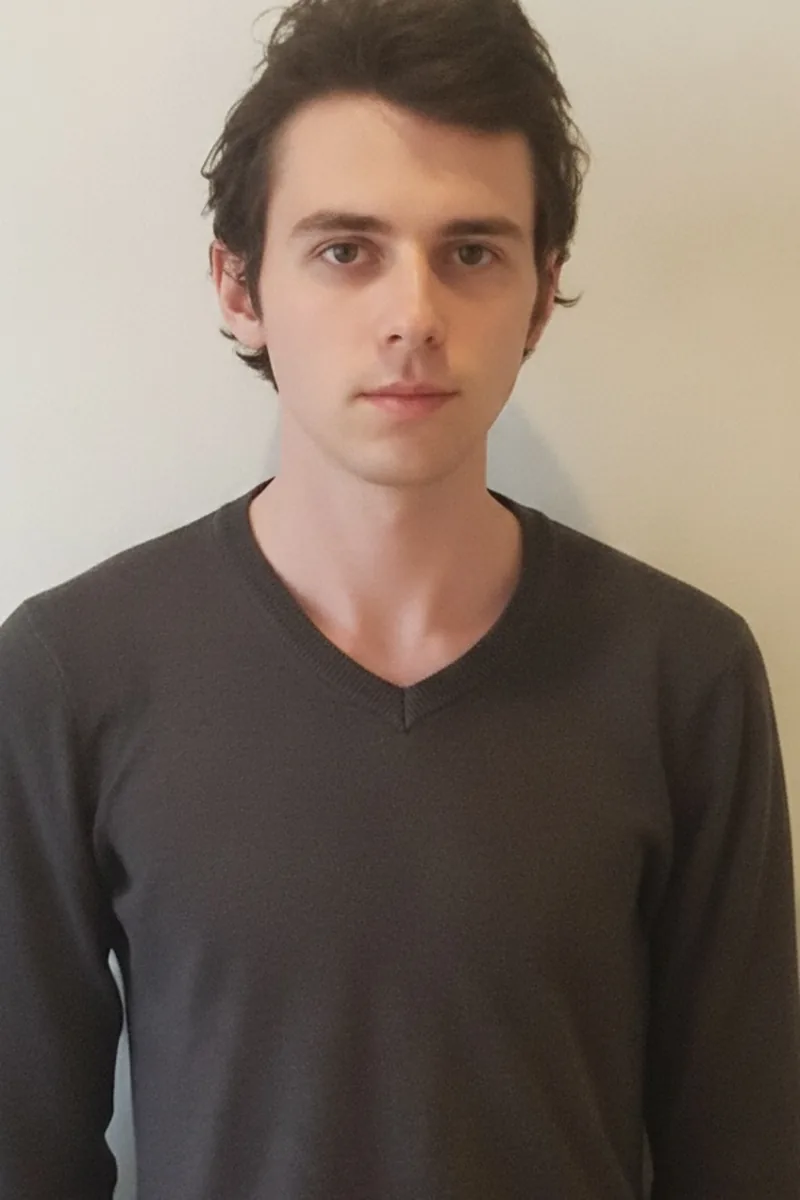
Philosophy majors learn to tear arguments apart sentence by sentence — a skill Ezra applies directly to the SAT's evidence-based reading questions, where identifying an author's reasoning is worth more than speed-reading. His perfect 1600 SAT score backs up an approach that treats the entire exam as a logic exercise, from grammar rules on the Writing section to algebraic word problems that reward careful translation over rote calculation. Rated 4.8 by students.
Comparative literature training at Columbia and a German M.A. from UC Berkeley gave Jacob the kind of deep, cross-language reading fluency that maps directly onto the SAT's evidence-based passages — he teaches students to trace an author's argument structure and match claims to supporting citations with precision. His 1550 SAT score backs up a verbal-section strategy built on literary analysis techniques most prep courses never touch, and he rounds out full-test prep with solid coverage of the math fundamentals.
UCLA's computer science program drilled Michael in the kind of precise, logical reasoning that maps directly onto SAT Math — translating word problems into equations, working through multi-step algebra, and catching the subtle traps in data analysis questions. He scored a 1560 on the SAT and uses that experience to teach students concrete pacing and elimination strategies across both the Math and Evidence-Based Reading sections. His broad tutoring range in math, science, and writing means he can address weak spots on either side of the exam without skipping a beat.
Philosophy training sharpens exactly the skills the SAT's verbal sections demand — breaking apart arguments, spotting logical structure in dense passages, and choosing precise language under pressure. Moya applies that analytical rigor across the full exam, including the math sections where her calculus and algebra background keeps strategy grounded in actual number sense. She scored a 1550 and holds a 5.0 tutoring rating.
Gray's 1590 SAT score came from treating the test as a set of learnable patterns rather than a measure of raw ability — and that's exactly the mindset he passes along during prep sessions. His government studies sharpened the close-reading and argument-analysis skills that dominate the Evidence-Based Reading section, while his coding background (JavaScript, Python, Ruby) built the logical, systematic thinking that keeps the Math section efficient under time pressure. Rated 5.0 by students.
Dylan's puzzle-solver instinct — honed through years of math tutoring from pre-algebra through calculus — gives him a natural edge on the SAT Math section, where he teaches students to spot the shortcut hidden inside multi-step word problems. On the verbal side, his experience with Spanish and close reading translates into concrete strategies for vocabulary-in-context and evidence-based passage questions. He scored a 1470 on the SAT and holds a 5.0 rating.
A 1530 SAT scorer, Caitlyn breaks the test into manageable patterns — from evidence-based reading questions that hinge on finding the one supported answer to the no-calculator math section where algebraic fluency saves critical minutes. Her biology background gives her an edge on science-heavy passages, and she adapts her prep strategy based on which sections need the most attention. Rated 5.0 by students.
Biomedical engineering coursework at Purdue means Sam lives in the kind of quantitative reasoning and data analysis the SAT Math section demands — she tackles everything from systems of equations to passport-to-advanced-math problems with an engineer's precision. Her 1550 SAT score backs up a full-test approach that extends to the verbal side, where she teaches students to trace argument structure in reading passages and catch the grammar traps that cost easy points on Writing and Language.
Scoring a 1530 on the SAT while juggling a pre-med course load gave June firsthand experience with the time-management and strategic guessing skills that separate good scores from great ones. Now a fourth-year medical student at Georgetown, she breaks the exam into its component skills — evidence-based reading, grammar rule application, and no-calculator math fluency — so students know exactly what to practice. Rated 5.0 by her students.
Teaching 3rd–6th graders in math, Latin, and English composition every day means Rosanne constantly translates complex material into clear, digestible steps — exactly the skill that pays off when prepping students for the SAT's mix of algebra, data analysis, and evidence-based reading. She scored a 1510 on the SAT herself and uses that familiarity with the test's structure to build section-specific strategies, particularly around grammar and passage-analysis questions where her English composition background runs deepest.
Tashina's PhD in Psychological and Brain Sciences means she knows the cognitive science behind test-taking — how anxiety affects pacing, how working memory limits interact with reading comprehension, and how to build study routines that actually transfer to test day. She scored a 1450 on the SAT herself and applies that firsthand experience to coaching both the Reading section's evidence-based questions and the math section's data interpretation problems. Rated 4.7 by students.
An occupational therapy background might seem unusual for SAT prep, but Emily's training in breaking complex tasks into manageable steps translates directly to test strategy — especially for pacing, process of elimination, and tackling the evidence-based reading questions systematically. She scored a 1450 on the SAT herself and knows how to coach students through both the math and verbal sections with structured, repeatable techniques.
A published novelist with work in The Kenyon Review and Poets & Writers, Thea brings unusual depth to SAT prep — particularly the Evidence-Based Reading and Writing sections, where identifying an author's argument structure and supporting textual claims can make or break a score. She scored a 1410 and knows how to translate strong reading instincts into the specific, strategic moves the test rewards.
What separates a 1400 from a 1530 on the SAT often comes down to knowing which mistakes you're prone to under time pressure — and Rei, who earned that 1530, builds prep around identifying and eliminating those specific patterns. His business coursework at Northeastern sharpened the data-interpretation and quantitative reasoning skills that show up heavily in the Math section, while his native-level Japanese fluency reflects the kind of close language analysis that transfers well to Reading and Writing strategy. Rated 4.7 by students.
Hi, I'm Nic :) I have a Masters in philosophy and a Bachelors in computer science. I've worked as an educator for over a decade, thoroughly enjoy tutoring high school students, and can't wait to start working with you (or your student) towards persistent academic success! Feel free to reach out with any questions, https://linktr.ee/nickhh
Scoring a 1550 on the SAT means Shannon knows exactly where points hide — the evidence-based reading questions that trip students up with plausible-but-wrong answer choices, the grammar rules that repeat across every test, and the algebra and data analysis problems that reward strategic setup over brute-force calculation. She breaks the exam into learnable patterns so students stop second-guessing themselves and start trusting a repeatable process. Her background in both English and math-heavy subjects means she covers the full test without handing students off to a second tutor.
Rice University's biomedical engineering program demands the same blend of quantitative precision and dense reading comprehension that the SAT tests — and Daniel, who scored a 1530, applies that daily. He teaches the math sections by connecting algebra and data analysis to the problem-solving frameworks he uses in engineering coursework, while his pre-med reading load built the kind of passage-dissection speed that makes the Reading section manageable under time pressure.
Philosophy majors spend four years doing exactly what the SAT rewards — picking apart arguments, spotting logical gaps, and choosing the most precisely supported answer from a set of options. Andrew's training at Haverford built those instincts, and his 1550 SAT score shows they translate directly to test day. He teaches the verbal sections through argument structure and the math sections through careful problem translation, rated 5.0 by students.
Graduating summa cum laude from a liberal arts program meant Heather spent four years doing exactly what the SAT rewards — close reading across disciplines, constructing written arguments under pressure, and applying quantitative reasoning to real-world problems. She scored a 1500 on the SAT herself and uses that experience to teach students how to spot the grammar and rhetoric patterns the Writing section recycles and how to work backward from answer choices on the trickiest Math questions. Rated 5.0 by students.
Architecture school at its core is about defending design decisions under pressure — a skill Luke channels directly into SAT prep, where he teaches students to build airtight reasoning on Evidence-Based Reading questions and catch grammar traps in the Writing section. His 1580 SAT score backs up an approach that treats the test as a structured argument rather than a marathon of memorization. Rated 4.9 by students, he also covers the math sections with the spatial and quantitative thinking his architecture training sharpened.
Philosophy students learn to pick apart arguments sentence by sentence — a habit Daniel applies directly to the SAT's evidence-based reading questions, where identifying an author's reasoning is more reliable than hunting for keywords. His 1550 SAT score backs up an approach that treats the entire exam, math included, as a series of logical puzzles rather than content to memorize. He uses Socratic questioning to get students generating their own strategies for each question type instead of relying on borrowed shortcuts.
Notre Dame's Program of Liberal Studies — a Great Books curriculum heavy on close reading, argument construction, and cross-disciplinary analysis — turns out to be surprisingly good SAT prep, especially for the Evidence-Based Reading and Writing sections where students need to trace how an author builds a case. Madeleine applies that same analytical framework to passage questions and grammar rules, while her 1500 SAT score confirms she knows the test's specific rhythms and traps firsthand.
Having taught college-level math courses at the University of Oregon, Rohan knows exactly which algebra and data-analysis patterns show up repeatedly on the SAT Math section — and how to solve them quickly under time pressure. His biology and chemistry training also built the kind of precise graph-reading and evidence-evaluation skills that pay off on the Reading and Writing side. He scored a 1510 on the SAT and holds a 5.0 tutoring rating.
What separates a good SAT score from a great one is often the Writing and Language section, where most students rely on instinct instead of learning the actual grammar rules being tested. Adam's Fine Arts degree in History means he spent years constructing and editing analytical essays — skills that translate directly into spotting rhetorical structure questions and evidence-based traps on test day. He scored a 1500 on the SAT and brings particular depth to the verbal sections, while also covering the algebra and data analysis fundamentals on the math side.
CJ's politics degree built exactly the kind of close-reading and argument-analysis skills that show up constantly in SAT Evidence-Based Reading — identifying how authors use evidence, tracking rhetorical shifts across paired passages, and spotting the subtle distinction between a tempting answer and the correct one. He scored a 1480 on the SAT himself and pairs that firsthand experience with strong grammar and writing chops to cover the Writing and Language section with equal depth. Rated 5.0 by students.
Classics majors spend years doing exactly what the SAT rewards — close reading of dense texts, parsing sentence structure, and building arguments from evidence. Marilyn's training at Reed College in Latin and literary analysis translates directly into the evidence-based reading and grammar questions that make up the verbal sections, and her 1510 SAT score shows she can execute on the math side too. Rated 4.8 by students, she teaches a full-test approach rooted in careful reading rather than shortcut tricks.
Philosophy majors learn to pick apart arguments sentence by sentence — a habit Henry applies directly to the SAT's evidence-based reading questions, where identifying an author's claim and finding the passage line that supports it is the whole game. His 1470 SAT score and dual focus on philosophy and German mean he's comfortable shifting between the verbal reasoning of the Reading and Writing sections and the logical problem-solving the Math section demands. Rated 5.0 by students.
Having guided hundreds of students through SAT prep, Gabby treats the exam as a unified challenge rather than isolated sections. Her background in journalism and strategic communication gives her a sharp eye for the Evidence-Based Reading and Writing portions, where she teaches students to identify argument structure and eliminate answer choices methodically. She pairs that with targeted practice on pacing and test-day strategy across the full exam.
Karl's molecular biology training built the kind of precise, data-driven reading habits that pay off across the entire SAT — from interpreting graphs and tables in the math sections to breaking down dense science passages on the reading side. He scored a 1500 and uses that experience to teach students how to manage pacing and identify the specific question patterns where they're leaving points on the table.
Years of teaching English overseas — from phonics with young learners in Thailand to business communication with professionals in Laos — gave Gabriel a granular understanding of how language works at every level, which he now applies to the SAT's Reading and Writing sections. He teaches students to spot the grammar and rhetoric patterns the test recycles, turning questions about sentence structure and word choice into systematic decisions rather than gut calls. He scored a 1430 on the SAT and holds a 4.9 rating.
Cognitive science training at Vassar gave Ben an unusual lens for the SAT — he understands how students actually process reading passages under time pressure and where attention breaks down during long math sections. He scored a 1530 and uses that experience to teach specific pacing and elimination strategies, particularly on evidence-based reading pairs where overthinking costs more points than underpreparing.
Two mechanical engineering degrees mean Tammy spent years translating complex word problems into equations under pressure — exactly what the SAT Math section demands, from systems of equations to quadratic modeling and data analysis. She scored a 1490 on the SAT herself and uses that experience to teach pacing and process-of-elimination strategies across both the math and verbal sections.
Working in a cognitive neuroscience lab at Reed College has trained Joel to read dense, evidence-heavy texts quickly and extract key claims — exactly the skill that drives the SAT's Reading section. He scored a 1480 on the SAT and applies that same analytical precision to the Writing and Language questions, where his background tutoring college-level writing through Reed's Academic Support Center means grammar and rhetoric rules are second nature rather than abstract formulas.
Having struggled with tough academic concepts herself before finding the right approach, Nikita knows how to pinpoint exactly where an SAT strategy is breaking down — whether it's timing on the Reading section or second-guessing grammar rules on Writing and Language. Her pre-med coursework at USC keeps her math and data skills sharp for the quantitative side, while her Spanish minor reinforces the close-reading habits that pay off on evidence-based passage questions. She scored a 1470 on the SAT and holds a 5.0 rating from students.
Seven years of teaching across four different school districts gave Claire an unusually clear picture of where students' prep gaps actually are — the comma rules no one formally taught, the algebra shortcuts that save two minutes per section, the reading strategies that keep focus sharp on passage four. She scored a 1450 on the SAT herself and holds a master's in education from Johns Hopkins, so she knows both the content and the pedagogy behind effective test prep. Her approach zeroes in on the specific section patterns each student struggles with rather than running through generic practice tests.
Amy scored a 1440 on the SAT and brings particular strength to the Evidence-Based Reading and Writing sections, where her MA in English and years of close reading translate directly into the passage analysis and command-of-evidence questions that trip students up. She teaches a deliberate approach to eliminating answer choices — especially on the grammar-heavy Writing section, where recognizing sentence structure patterns can recover easy points fast.
Science communication requires translating complex ideas for a general audience — the same skill Allyson applies to SAT prep, where she teaches students to decode dense reading passages and identify exactly what each question is really asking. Her dual background in English and biology means she's equally comfortable coaching the verbal sections' rhetoric and grammar questions and walking through the data interpretation and algebra that drive the Math section. She scored a 1490 on the SAT herself.
To laugh is to learn. I want to teach people to love to learn, and the best way to do that is to make them laugh. I have over twenty years of experience tutoring people in every subject from ABC to Algebra. Let's learn together.
Studying environmental science at Harvard means Maya spends her coursework interpreting data sets, building evidence-based arguments, and reading dense research — exactly the skill set the SAT rewards across both its math and verbal sections. She scored a 1490 and uses that recent test-taking experience to walk students through pacing decisions, especially on the data interpretation and evidence-based reading questions where knowing what to skip matters as much as knowing the content.
Testimonials
Because the right SAT tutor makes all the difference.
Average Session Rating – Based on 3.4M Learner Ratings
Practice SAT
Free practice tests, flashcards, and AI tutoring for SAT
Nearby SAT Tutors
Other Eugene Tutors
Related Test Prep Tutors in Eugene
Frequently Asked Questions
Varsity Tutors matches Eugene students with expert SAT tutors for 1-on-1 instruction. We pair each student with a tutor based on their specific needs, learning style, and goals.
Whether you need homework help, exam prep, or want to get ahead, our SAT tutors are ready to help.
Common challenges include gaps from earlier material, difficulty with specific concepts, and trouble applying learning to new problems. These issues can snowball quickly in SAT.
A tutor identifies where you're stuck, fills in gaps, and provides targeted practice. The 1-on-1 format means you get help exactly where you need it.
Tutors work with your student's actual coursework—homework assignments, class notes, and upcoming tests. This keeps tutoring directly relevant to what's happening in the classroom.
When you share information about your student's school and curriculum, we can match you with a tutor who has relevant experience.
All tutors complete background checks, credential verification, and teaching evaluation. Many of our SAT tutors hold advanced degrees or have years of teaching experience.
You can review tutor profiles to find someone with the right background for your student's level and needs.
Many students see improved grades within a few weeks, along with better understanding of SAT concepts and more confidence tackling challenging material.
Tutors track progress and adjust their approach to ensure continued improvement.
Most students benefit from 1-2 sessions per week. More frequent sessions help if your student is significantly behind or has an important exam coming up.
Your tutor can recommend a schedule based on your student's specific situation and goals.
Tutoring is purchased in packages of hours, with rates varying by tutor experience. Varsity Tutors offers several options to fit different budgets and needs.
You can discuss pricing during your consultation to find what works best.
Your tutor will assess where your student is, discuss goals, and start working on priority areas. Most students bring current homework or upcoming test material to focus on.
By the end, you'll have a clear sense of how the tutor can help and a plan for moving forward.
Let’s find your perfect tutor
Answer a few quick questions. We’ll recommend the right plan and match you with a top 5% tutor.