Award-Winning Calculus Tutors
serving Eugene, OR
Calculus
Tutors in Eugene
Private 1-on-1 tutoring, weekly live classes for academic support, test prep & enrichment, practice tests and diagnostics, and more to elevate grades and test scores.
Based on 3.4M Learner Ratings
UniversitiesSchools & Universities
DeliveredHours Delivered
ProficiencyGrowth in Proficiency
Who needs tutoring?
No obligation. Takes ~1 minute.
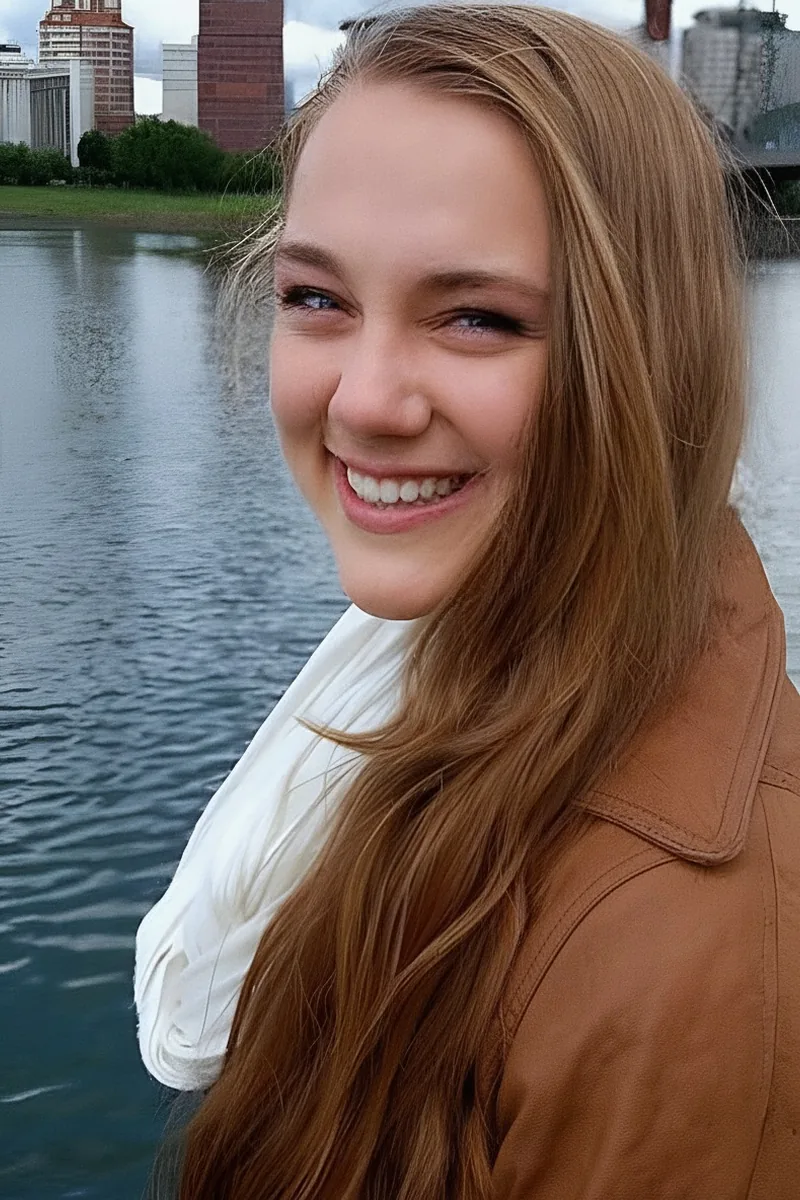
An English major isn't the typical calculus background, but Sarah's 1500 SAT shows she can handle rigorous quantitative work, and her analytical training — close reading, logical argumentation, structural breakdown — maps surprisingly well onto parsing calculus notation and understanding what a problem is actually asking. She tackles early concepts like limits and derivative rules by treating them the way she'd treat a dense passage: slowing down, identifying each moving part, and making sure the reasoning holds before moving forward.
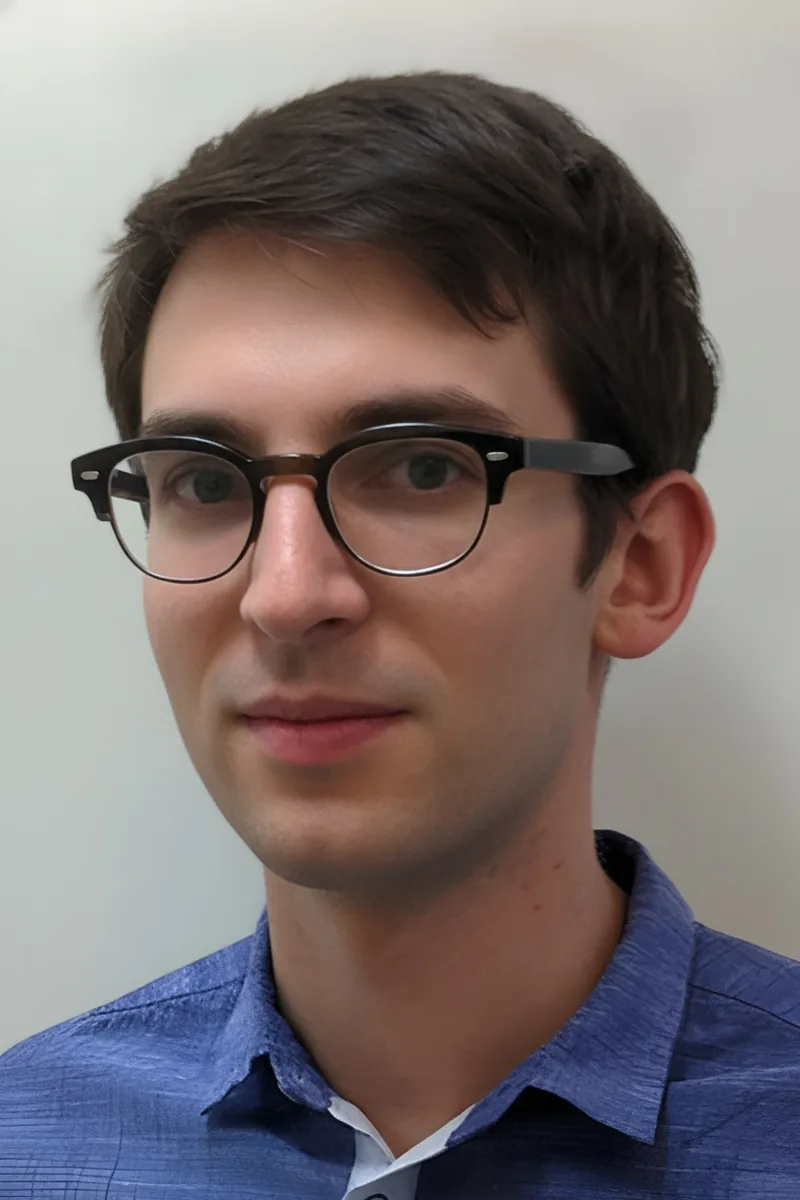
Comparative literature trains you to hold multiple complex systems in your head simultaneously and trace how they interact — a skill that maps surprisingly well onto the conceptual side of early calculus, where understanding what a limit *means* matters more than grinding through computation. Jacob's 1550 SAT confirms strong quantitative chops, and his teaching background at UC Berkeley means he knows how to break down intimidating new notation for students encountering it for the first time.
Running statistical analyses in a PhD program for Psychological and Brain Sciences means Tashina has worked through the calculus that underpins concepts like probability distributions, regression curves, and hypothesis testing — places where derivatives and integrals do real analytical work. That quantitative backbone, combined with her knack for teaching study strategies and breaking down complex material, makes her especially effective at connecting calculus procedures to the reasoning behind them.
Derivatives and integrals each have their own logic, but most calculus struggles come from shaky algebra underneath — not from the calculus itself. Michael diagnoses exactly where the gap is, whether it's chain rule mechanics or setting up a related-rates problem, and attacks that specific weak point. His UCLA computer science degree required heavy calculus coursework, so he knows the material from both the pure math and applied sides.
Studying biomedical engineering at Rice means Daniel solves calculus problems almost every day — integration techniques, differential equations, optimization — in contexts like fluid dynamics and biological modeling. That constant practice gives him an intuitive sense for where students get stuck, especially on chain rule applications and setting up definite integrals for area and volume problems.
Philosophy trains you to follow an argument step by step, holding each logical move up to scrutiny before accepting the conclusion — which turns out to be exactly what early calculus demands when you're reasoning through why a limit exists or how a derivative captures instantaneous change. Moya's philosophy background and 1550 SAT give her both the analytical rigor and the quantitative fluency to walk through those foundational concepts carefully. Rated 5.0 by students.
Having tutored the full algebra-through-precalculus pipeline, Dylan knows exactly which gaps trip students up when they hit calculus — a shaky grasp of function behavior, weak trig identities, or confusion about what "approaching" really means in the context of limits. His 34 ACT and 5.0 tutoring rating back up a teaching style built on making sure every prerequisite concept is rock-solid before tackling derivatives and integration head-on.
Studying neuroscience at Brown means Owen applies calculus constantly — modeling neural firing rates with derivatives, using integrals to analyze area under response curves, and working through differential equations that describe biological systems. He breaks down topics like the chain rule, related rates, and Riemann sums by connecting each one to a concrete problem so the reasoning clicks, not just the procedure.
Folklore and mythology research is built on tracing how stories transform over time — tracking patterns of change across versions, identifying what shifts and what stays constant. Cynthia applies that same analytical habit to early calculus concepts like limits and rates of change, where the core question is identical: how does something behave as conditions shift? It's an unconventional angle, but it gives students a narrative logic for material that often feels purely mechanical.
Biology coursework in botany means Caitlyn has applied calculus to real problems — modeling plant growth rates, nutrient uptake curves, and the differential equations that describe how organisms respond to changing environments. That hands-on experience with derivatives and integrals in living systems gives her a way to make the math tangible instead of purely abstract. Her 1530 SAT and 5.0 tutoring rating back up the quantitative chops.
Every engineering course Andrew took at Portland and Stanford — fluid mechanics, thermodynamics, structural analysis — was applied calculus. That means when he walks through integration techniques, series convergence, or multivariable problems, he can immediately show what the math is doing in a physical system. Students get both the rigor needed for exams and the deeper understanding that makes advanced topics feel less arbitrary.
While Thea's primary expertise is in writing and literature, her analytical mindset carries over into breaking down calculus concepts like limits, derivatives, and integration. She approaches math the same way she approaches a complex text — step by step, making sure each piece makes sense before moving to the next.
Notre Dame's Program of Liberal Studies isn't a math degree, but its emphasis on rigorous logical argumentation — building a claim step by step, justifying each move — maps surprisingly well onto how early calculus actually works. Madeleine treats a limit definition or derivative proof the way she'd treat a philosophical argument: breaking it into pieces, making sure each piece holds, then connecting them into something coherent. Her 1500 SAT confirms she has the quantitative chops to back up that analytical approach.
Danny has taught the full calculus sequence — from limits and derivatives through multivariable and differential equations — since 2013 at PCC. That depth means he can explain a concept like the chain rule not just as a procedure but as something students will rely on again in Calc 2, Calc 3, and beyond, giving each topic real context.
An English honors degree doesn't scream calculus, and Luke is honest about that — but his broader math tutoring experience means he can walk students through the early conceptual hurdles like limits and continuity where precise language actually matters as much as computation. His instinct as a writer to break complex ideas into clear, sequential logic maps surprisingly well onto explaining what a derivative is really saying.
An English PhD might not scream calculus, but Henry's analytical rigor — the same close-reading instinct that dissects a poem's structure — turns out to be surprisingly useful for unpacking why a limit behaves the way it does or what a derivative is actually measuring. He slows the material down to its logical skeleton, making sure each step makes sense before moving to the next. Rated 5.0 by students.
Architecture demands fluency with derivatives, integrals, and rate-of-change problems long before most students encounter them in a classroom. Luke uses that applied perspective to teach calculus concepts like optimization and area under a curve in ways that feel grounded rather than abstract. His 4.9 rating speaks to how well that approach translates.
While math isn't Meghana's primary discipline, her Yale English background trained her in the kind of precise logical reasoning that makes calculus concepts like limits and related rates click. She's especially effective at translating word problems into mathematical language — a skill that trips up many students who understand the mechanics but struggle with application.
Biology at Harvard means Maya isn't just taking calculus as a requirement — she's using it, modeling everything from enzyme reaction rates to population dynamics in her science coursework. That hands-on context lets her explain derivatives and integrals as tools that describe how real systems change, which tends to make the abstract notation far less intimidating. Her 1490 SAT confirms the quantitative chops to back it up.
Derivatives and integrals clicked for Tammy when she saw them applied to real physical systems — velocity, acceleration, fluid flow — during her mechanical engineering studies. She brings that same applied lens to calculus tutoring, walking through problems like related rates or area-under-a-curve with concrete examples that give the math a purpose. Two engineering degrees mean she's solved thousands of these problems in contexts that go well beyond the textbook.
Amy's degrees are both in English, so she's straightforward that calculus is far from her academic home — but her 1440 SAT shows she can handle quantitative reasoning, and she's taught math at multiple levels from elementary through algebra. Her approach leans on patience and careful listening, skills she built in writing instruction, to pinpoint exactly where a student's understanding of a concept like limits or differentiation breaks down and rebuild from that specific gap.
Sophia's degrees are in education and literature rather than mathematics, so calculus is honestly not her strongest area. That said, her Masters in Education trained her to break down complex, unfamiliar material into digestible steps — a skill that applies directly to unpacking early concepts like limits and continuity, where the notation often intimidates more than the ideas themselves.
I am a graduate from UCLA and currently working as a CPA; however, I have been enjoying time to teach the Korean language and culture when I have extra time.
I am applying to medical schools to attend Fall 2016 and I like to play basketball, go backpacking and volunteer with youth in my free time.
I am a full time college professor teaching Mathematics and engineering courses.
Understanding calculus means seeing derivatives and integrals as ideas with real meaning — instantaneous rate of change, accumulated quantity — not just as rules for manipulating expressions. Ezra builds that understanding from the ground up, connecting limit definitions to the shortcuts students actually use on homework and exams. A perfect SAT scorer who studied philosophy, he brings unusual clarity to the 'why' behind techniques like implicit differentiation and integration by parts.
Robin's background is rooted in liberal arts and English rather than pure mathematics, but her MA-level analytical training gives her a sharp eye for the logical structure underneath calculus problems. She breaks down concepts like related rates and optimization by walking through each step as a careful argument, making sure the reasoning is clear before any formula gets applied.
Seven years of teaching math across grade levels — from elementary arithmetic through pre-algebra and algebra — means Claire has spent her career building the conceptual scaffolding that calculus sits on top of. Her education master's degree sharpened her ability to diagnose exactly where a student's understanding breaks down, which matters most in early calculus when a shaky grasp of functions or slope can make limits and derivatives feel impossible.
Botany PhD work is quietly calculus-heavy — modeling photosynthesis rates, analyzing growth curves, and quantifying how nutrient uptake changes over time all require fluency with derivatives and integrals. Alison has worked through that math in real research contexts, which means she can anchor abstract rules like the chain rule or integration by substitution in systems where the numbers actually describe something alive and changing.
Geophysics is applied calculus — Mariela's master's work meant computing wave propagation models, gravity anomaly integrals, and seismic velocity derivatives as daily tools, not textbook exercises. That hands-on fluency lets her teach concepts like integration techniques and multivariable differentiation through the physical problems they were built to solve, giving students a reason to care about each rule before drilling it.
Whether it's integration techniques, series convergence, or multivariable applications, Calculus demands both conceptual understanding and procedural fluency. June uses calculus regularly in her medical studies — modeling pharmacokinetics, interpreting rate-of-change problems in physiology — and brings that applied perspective to every session. She unpacks each problem type so students see the strategy, not just the steps.
Having earned a mathematics degree from Michigan State, Jordan has worked through the full calculus sequence — limits, differentiation techniques, integration strategies, and the theory connecting them — as core coursework rather than a side requirement. That depth means he can unpack something like the fundamental theorem of calculus or a tricky related-rates problem by tracing the reasoning instead of just demonstrating the steps.
Emily's psychology and occupational therapy training may not scream calculus, but both fields required her to work through quantitative reasoning — interpreting rate-of-change data in research methods and applying statistical models that lean on the same derivative logic calculus students encounter. Her 1450 SAT confirms solid math ability, and her OT background gives her a unique angle on learning itself, so she's especially effective at diagnosing where a student's understanding breaks down in a chain of reasoning.
Gabriel's background is firmly in language teaching and the humanities, so he's honest that calculus isn't his deepest subject. His 1430 SAT shows solid quantitative reasoning, though, and his experience breaking down complex grammar systems for ESL learners — where rules layer on top of rules in ways that feel arbitrary until the logic is exposed — gives him a useful framework for walking through early derivative and limit concepts step by step.
Studying membrane fusion at the PhD level means Beth lives in the math that describes biological change — rate equations governing how proteins interact, integration across concentration gradients, and the differential models underlying cell signaling kinetics. That daily fluency with applied calculus lets her teach derivatives and integrals as tools with real meaning, not just symbolic manipulation on a worksheet. Rated 5.0 by students.
Saz's degree is in Humanities Applied Science with a Spanish minor, so advanced calculus isn't her wheelhouse — but her broad math tutoring experience means she can walk students through the conceptual groundwork that makes early calculus accessible, particularly the shift from algebraic slope to instantaneous rate of change. She treats new notation as a language problem, breaking unfamiliar symbols into plain terms the same way she'd approach an ESL lesson.
Earning a degree in Aeronautics and Astronautics meant living inside calculus — derivatives for velocity, integrals for force distributions, differential equations for flight dynamics. Mike brings that applied fluency to limits, Riemann sums, and the chain rule, showing students not just how to execute techniques but why each one matters. He's especially effective at untangling the conceptual gaps that make integration techniques and related rates problems feel impossible.
Business administration at Northeastern means Rei has tackled the calculus that underpins marginal analysis, cost optimization, and revenue modeling — the quantitative backbone of any serious management program. An 800 on the Math II subject test and a 1530 SAT back up that fluency, and he teaches derivatives and integrals by connecting each concept to the decision-making frameworks where they actually get used.
Anthropology PhD work involves more quantitative analysis than most people expect — demographic modeling, statistical analysis of field data, and the kind of rate-of-change reasoning that underpins derivatives. Hallie draws on that research experience to ground early calculus concepts like limits and integration in tangible, real-world patterns rather than abstract symbol manipulation. Rated 5.0 by students.
Eight years of tutoring math at various levels means Gray has walked students from foundational algebra all the way up through the conceptual shift that calculus demands — understanding what a derivative actually represents, not just how to compute one. His 1590 SAT confirms serious quantitative chops, and his government background gives him an unexpected edge: he treats proofs and theorems like policy arguments, where every step needs to logically justify the next. Rated 5.0 by students.
Testimonials
Because the right Calculus tutor makes all the difference.
Average Session Rating – Based on 3.4M Learner Ratings
Nearby Calculus Tutors
Other Eugene Tutors
Related Math Tutors in Eugene
Frequently Asked Questions
Varsity Tutors matches Eugene students with expert Calculus tutors for 1-on-1 instruction. We pair each student with a tutor based on their specific needs, learning style, and goals.
Whether you need homework help, exam prep, or want to get ahead, our Calculus tutors are ready to help.
Common challenges include gaps from earlier material, difficulty with specific concepts, and trouble applying learning to new problems. These issues can snowball quickly in Calculus.
A tutor identifies where you're stuck, fills in gaps, and provides targeted practice. The 1-on-1 format means you get help exactly where you need it.
Tutors work with your student's actual coursework—homework assignments, class notes, and upcoming tests. This keeps tutoring directly relevant to what's happening in the classroom.
When you share information about your student's school and curriculum, we can match you with a tutor who has relevant experience.
All tutors complete background checks, credential verification, and teaching evaluation. Many of our Calculus tutors hold advanced degrees or have years of teaching experience.
You can review tutor profiles to find someone with the right background for your student's level and needs.
Many students see improved grades within a few weeks, along with better understanding of Calculus concepts and more confidence tackling challenging material.
Tutors track progress and adjust their approach to ensure continued improvement.
Most students benefit from 1-2 sessions per week. More frequent sessions help if your student is significantly behind or has an important exam coming up.
Your tutor can recommend a schedule based on your student's specific situation and goals.
Tutoring is purchased in packages of hours, with rates varying by tutor experience. Varsity Tutors offers several options to fit different budgets and needs.
You can discuss pricing during your consultation to find what works best.
Your tutor will assess where your student is, discuss goals, and start working on priority areas. Most students bring current homework or upcoming test material to focus on.
By the end, you'll have a clear sense of how the tutor can help and a plan for moving forward.
Let’s find your perfect tutor
Answer a few quick questions. We’ll recommend the right plan and match you with a top 5% tutor.