Award-Winning AP Chemistry Tutors
serving Akron, OH
AP Chemistry
Tutors in Akron
Private 1-on-1 tutoring, weekly live classes for academic support, test prep & enrichment, practice tests and diagnostics, and more to elevate grades and test scores.
Based on 3.4M Learner Ratings
UniversitiesSchools & Universities
DeliveredHours Delivered
ProficiencyGrowth in Proficiency
Who needs tutoring?
No obligation. Takes ~1 minute.

As a Chemistry and Neuroscience double at Emory, Maria lives in the material AP Chem covers — thermodynamics, equilibrium, electrochemistry, and intermolecular forces all show up in her coursework and lab work. She knows which free-response question styles the exam favors and teaches students to connect conceptual reasoning with the quantitative problem-solving the AP graders reward.
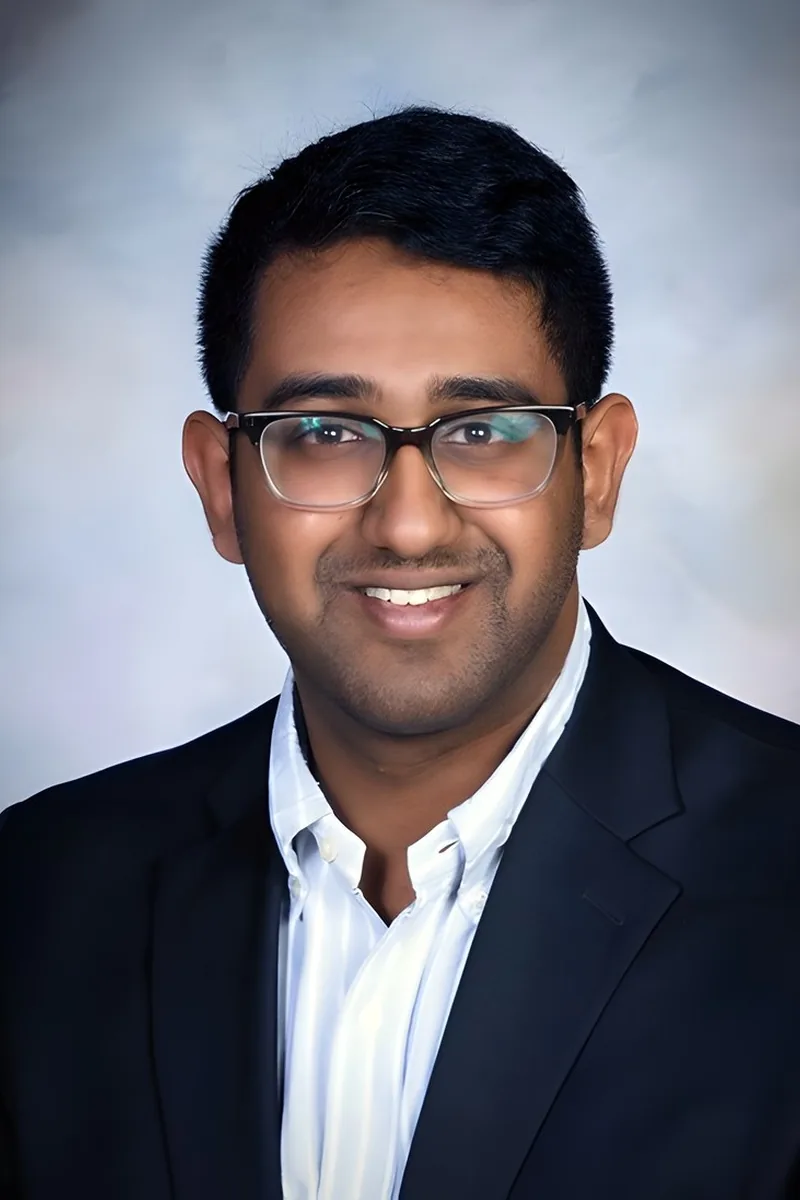
Cornell's chemical engineering program put Rahul through physical chemistry, thermodynamics, and reaction engineering courses where AP Chemistry concepts like enthalpy, equilibrium, and kinetics were just the starting point — so he can teach those topics with the depth that makes free-response questions feel manageable. He's especially sharp on thermochemistry, his self-described favorite, and connects energy diagrams and Hess's law to the industrial-scale processes he studied as an engineer. Rated 4.9 by students.
Forty-plus AP and general chemistry students have worked through thermodynamics, electrochemistry, and equilibrium calculations with Amy, and her 5.0 rating speaks to the results. Her master's in environmental toxicology keeps her deeply connected to the material — she teaches AP concepts like Gibbs free energy and kinetics as tools scientists actually use, not just formulas to memorize for the exam.
AP Chemistry's free-response questions demand more than memorizing reactions — they require students to connect equilibrium, thermodynamics, and kinetics into coherent explanations under time pressure. Vishank's data analytics background at Ohio State sharpens how he breaks down multi-step problems, teaching students to identify what the question is really testing before diving into calculations. Rated 4.9 by students.
A biochemistry degree means Lyndsey has been through the full gauntlet of college-level chemistry — organic mechanisms, physical chemistry, analytical techniques — giving her a depth that makes AP Chemistry's trickiest topics, like electrochemistry and kinetics, feel like familiar territory rather than abstract puzzles. She's especially sharp at teaching students how to read and interpret lab data, a skill the AP exam's free-response section rewards heavily. Rated 5.0 by students.
AP Chemistry's free-response questions demand more than memorized formulas — they require students to explain WHY a reaction proceeds, connect particulate diagrams to macroscopic observations, and reason through multi-step equilibrium problems. Ricardo tackles these skills head-on, drawing from his chemistry coursework at Ohio State and years of university-level tutoring. Rated 4.6 by students, he's especially sharp on electrochemistry and thermodynamic calculations.
Chemistry is Lillian's home turf — her prepharmacy program demanded mastery of everything from thermodynamics and equilibrium to electrochemistry and molecular orbital theory. She teaches AP Chemistry by tracing each problem back to the underlying principle, so students learn to predict reaction behavior instead of memorizing isolated equations. That approach shows in her 4.9 client rating.
AP Chemistry's jump from stoichiometry and bonding to thermodynamics and equilibrium catches a lot of students off guard. William tackles each unit by anchoring the math to the underlying chemical logic — explaining why Le Chatelier's principle predicts a specific shift, not just that it does. His experience across both chemistry and biology lets him show how these ideas connect to real systems.
A PhD in chemical engineering means Alexander has spent years working with thermodynamics, reaction kinetics, and equilibrium at a depth that makes AP Chemistry's toughest topics — like Hess's law, Le Chatelier's principle, and galvanic cells — feel like familiar territory. His biosystems engineering background adds a practical dimension, connecting abstract chemical concepts to real processes like fermentation or membrane transport. Rated 4.9 by students.
AP Chemistry's toughest sections — equilibrium, thermodynamics, electrochemistry — require students to think quantitatively and conceptually at the same time. Susie earned her biochemistry degree at Swarthmore, where the chemistry curriculum is notoriously rigorous, and she's since tutored AP and standardized-test chemistry both domestically and abroad. She unpacks each problem type so students understand the reasoning behind the math, not just the formula.
Between an economics degree heavy on quantitative modeling and a bioethics master's that required deep engagement with biochemistry and pharmacology, Hyerin has encountered chemistry from multiple angles — which is exactly the kind of cross-disciplinary fluency that AP Chemistry's application-heavy free-response questions reward. She unpacks topics like Le Chatelier's principle and solution chemistry by tying the math to real molecular behavior, making the logic stick long after the exam. Rated 4.9 by students.
As a dedicated Biology major at The Ohio State University, I am passionate about guiding students through the intricacies of science and mathematics. With over 2 years of tutoring experience, I specialize in AP Biology, AP Chemistry, and various levels of calculus, fostering a deep understanding of these subjects. My teaching philosophy emphasizes interactive learning and effective study habits, ensuring students not only grasp concepts but can also apply them to solve problems independently. I believe in the potential of every student to succeed, and I strive to create a supportive environment where they can thrive. Outside of academics, I enjoy sports, solving Rubik's cubes, and immersing myself in music, which keeps my approach to tutoring dynamic and engaging. I am committed to helping the next generation of learners achieve their fullest potential.
Neuroscience coursework doesn't let you skip the hard chemistry — John's degree required grappling with electrochemistry, molecular bonding, and reaction thermodynamics to understand how ions cross membranes and how neurotransmitters interact at the receptor level. That gives him a practical angle on AP Chemistry's trickiest conceptual territory, especially when students need to connect what's happening in an equation to what's actually occurring between molecules.
Currently enrolled in Biochemistry alongside his medical school applications, Robert is actively working through the college-level chemistry — reaction mechanisms, thermodynamics, acid-base systems — that AP Chemistry students encounter in condensed form. His Classical Studies background gives him an unusual edge: he's practiced at close reading and structured argumentation, skills that translate directly to parsing AP Chemistry's notoriously tricky free-response prompts where explaining reasoning matters as much as getting the number right.
I am always willing to help and I will try my best to help students who desire further understanding of the subject at hand.
AP Chemistry's free-response questions punish students who memorize without understanding — especially on equilibrium, thermodynamics, and kinetics. As a college general chemistry instructor, Jennifer teaches this exact material at the university level and knows precisely which conceptual gaps the AP exam is designed to expose. She drills both the quantitative problem-solving and the written justifications the exam demands.
Heather's physics teaching degree and master's in technology and engineering education mean she's spent years explaining the physical chemistry concepts — energy transfer, gas behavior, atomic structure — that sit at the heart of AP Chemistry's most demanding units. She teaches lab-based and free-response questions by connecting the math to real physical systems, so students understand what's driving a reaction rather than just balancing it. Rated 5.0 by students.
As a tutor for 20+ years, I bring ample experience and knowledge. I specialize in standardized testing (MCAT, SAT, ACT, GRE, & more), medical school and pre-med courses, and undergraduate STEM subjects. A former medical school student and Master of Public Health, I opted for what truly brings me joy: tutoring, teaching, and guiding students to lifelong academic success.
Thermodynamics, equilibrium, and electrochemistry each demand a different kind of thinking, and AP Chemistry punishes students who treat them as separate chapters instead of interconnected ideas. Jonathan's background spans both biology and chemistry at Cornell, so he unpacks concepts like Gibbs free energy and Le Chatelier's principle by showing how they govern real chemical and biological systems. Rated 4.9 by students.
Equilibrium expressions, thermodynamics, and electrochemistry all demand comfort with both conceptual reasoning and quantitative precision. JF's math and computational science background at Stanford makes the mathematical side of AP Chem — ICE tables, rate law calculations, stoichiometric conversions — second nature, freeing up mental energy for the deeper conceptual understanding the exam rewards. Rated 5.0 by students.
Three semesters as a college chemistry TA gave Joshua deep familiarity with the exact concepts that stump AP students: equilibrium calculations, thermodynamics, and electrochemistry. He knows how free-response questions are structured and teaches students to connect mathematical problem-solving with the conceptual reasoning the AP exam rewards.
I am most passionate about biology and chemistry. I am a firm proponent of education, believing it to be absolutely necessary for an improved quality of life, and I try to impart this appreciation to all of my students.
I am a graduate from the University of Florida, University of Pennsylvania, and University of Illinois Urbana-Champaign. I have graduated with scholarship honors in Chemical Engineering with a Bachelor of Sciences from University of Florida, Masters of Computer and Information Technology from UPenn, and a degree in Master of Business Administration from University of Illinois Urbana-Champaign. I have been a private tutor and also a Teaching Assistant for my four years of study at the University of Florida. I teach various subjects ranging from math and the sciences to test prep such as the ACT. My favorite subject to teach is Chemistry because of my overall background in the field. I enjoy working with students of all ages from grade school to college. It makes me really happy when a student is finally able to comprehend a subject they found difficult before. I am very patient with my students and I will do everything in my power to give them the best education possible.
Cornell's biology curriculum required Viraj to work through college-level chemistry — from reaction energetics to molecular interactions — in courses where chemical reasoning underpins everything from cellular metabolism to pharmacology. He applies that cross-disciplinary perspective to AP Chemistry topics like intermolecular forces and solution chemistry, teaching students to predict behavior at the molecular level instead of memorizing isolated rules. Rated 5.0 by students.
Thermodynamics, equilibrium, and electrochemistry are where most AP Chemistry students start losing their footing. Sharon tackles these topics by connecting abstract concepts to biological systems she knows inside out from medical school — like why buffer systems matter in blood pH regulation. That cross-disciplinary lens makes the toughest AP Chem material more intuitive.
Five semesters as a chemistry teaching assistant — three in general chemistry and two in organic — gave Troy a front-row seat to exactly where AP Chemistry students get stuck: equilibrium calculations, thermodynamics sign conventions, and electron configuration exceptions. He tackles these pain points by tying abstract rules back to the periodic trends and mathematical logic that govern them.
Stoichiometry, equilibrium, and thermodynamics each demand a different kind of thinking, and AP Chemistry throws all of them at students in one year. Nova's strong science background at Brown — spanning both biology and chemistry — means she can unpack reaction mechanisms and dimensional analysis with the precision this exam requires.
As an Academic Fellow at Rice, Maddie tutors college-level chemistry and biochemistry, so she's deeply familiar with the rigor AP Chemistry demands — from equilibrium calculations to thermodynamics and electrochemistry. She tackles the toughest free-response questions by teaching students to connect conceptual reasoning with precise mathematical setups, the combination the exam rewards most.
Georgia Tech's chemical engineering curriculum threw Aimee into college-level thermodynamics, kinetics, and reaction engineering years before most students encounter those ideas — which means she can teach AP Chemistry's toughest conceptual leaps, like connecting enthalpy diagrams to spontaneity or interpreting rate law data, from genuine fluency rather than textbook familiarity. Her 4.9 rating and experience as a teaching assistant show she can translate that depth into clear, patient explanations when a student is stuck on a free-response problem at 9 p.m. the night before the exam.
Running an immunology lab at Columbia University Medical Center means Matthew deals with chemical assays, buffer systems, and reaction protocols daily — the kind of hands-on chemistry that makes AP topics like acid-base equilibria and reaction energetics feel concrete rather than abstract. His physics degree also sharpens how he teaches the thermodynamics and kinetics portions of the exam, where understanding energy relationships mathematically is just as important as knowing the chemistry. A 35 ACT and 1540 SAT reflect the analytical precision he brings to exam preparation.
Testimonials
Because the right AP Chemistry tutor makes all the difference.
Average Session Rating – Based on 3.4M Learner Ratings
Practice AP Chemistry
Free practice tests, flashcards, and AI tutoring for AP Chemistry
Other Akron Tutors
Related Science Tutors in Akron
Frequently Asked Questions
Score improvement depends on your starting point and commitment level, but students typically see meaningful gains within 8-12 weeks of consistent tutoring. A tutor can help you identify which topics (like equilibrium, thermodynamics, or organic chemistry) are holding you back, then focus practice on those weak areas. Many students jump from a 2 or 3 to a 4 or 5 by mastering test-taking strategies and working through released AP exams under timed conditions.
Students in Akron often struggle most with equilibrium calculations, thermodynamics (entropy and Gibbs free energy), and kinetics—topics that require both conceptual understanding and strong math skills. Organic chemistry reactions and mechanisms also trip up many students because they demand pattern recognition and memorization. A tutor can break these down step-by-step, use visual explanations, and connect abstract concepts to real lab examples you might have seen in class.
Your first session focuses on assessment and goal-setting. A tutor will review your current chemistry understanding, ask about your target AP score, and identify which units (atomic structure, bonding, kinetics, etc.) need the most work. You'll also discuss your test date and create a personalized study plan that fits your schedule before May's exam.
The AP Chemistry exam gives you 225 minutes total—roughly 90 minutes for 60 multiple-choice questions and 105 minutes for 3 free-response questions. A tutor can teach you pacing strategies like spending 1-1.5 minutes per MC question and allocating time based on point value for FRQs. Practice with released exams under real time pressure is crucial; tutors can review your timed attempts and help you identify whether you're rushing through calculations or getting stuck on conceptual questions.
Most students benefit from taking 4-6 full-length practice tests starting 6-8 weeks before the exam. Each practice test should be completed under timed conditions, then reviewed carefully to understand every mistake. A tutor can help you track which question types and topics you're missing, so you spend your remaining study time efficiently rather than re-learning material you already know.
Look for tutors with strong chemistry backgrounds—ideally a degree in chemistry, biochemistry, or a related field, plus proven experience teaching AP-level content. It's also valuable if they've scored well on the AP Chemistry exam themselves or have tutored multiple students to 4s and 5s. Varsity Tutors connects you with expert tutors in Akron who understand the AP curriculum inside and out and can explain tricky concepts clearly.
Test anxiety often stems from feeling unprepared or uncertain about your approach. Regular tutoring builds confidence by ensuring you truly understand the material and have practiced test-taking strategies repeatedly. A tutor can also teach you specific techniques like working through harder questions first, checking your math on calculations, and managing time so you're not rushing at the end—all of which reduce exam-day stress.
Yes. While the AP exam itself doesn't directly test lab skills, understanding experimental design, data analysis, and how labs connect to theory is important for FRQs and MC questions. A tutor can help you interpret experimental results, explain what happens in common AP labs (like titrations or calorimetry), and practice writing clear explanations of lab procedures and conclusions—skills that appear throughout the exam.
Let’s find your perfect tutor
Answer a few quick questions. We’ll recommend the right plan and match you with a top 5% tutor.