Award-Winning AP Calculus AB Tutors
serving Winston-Salem, NC
AP Calculus AB
Tutors in Winston-Salem
Private 1-on-1 tutoring, weekly live classes for academic support, test prep & enrichment, practice tests and diagnostics, and more to elevate grades and test scores.
Based on 3.4M Learner Ratings
UniversitiesSchools & Universities
DeliveredHours Delivered
ProficiencyGrowth in Proficiency
Who needs tutoring?
No obligation. Takes ~1 minute.
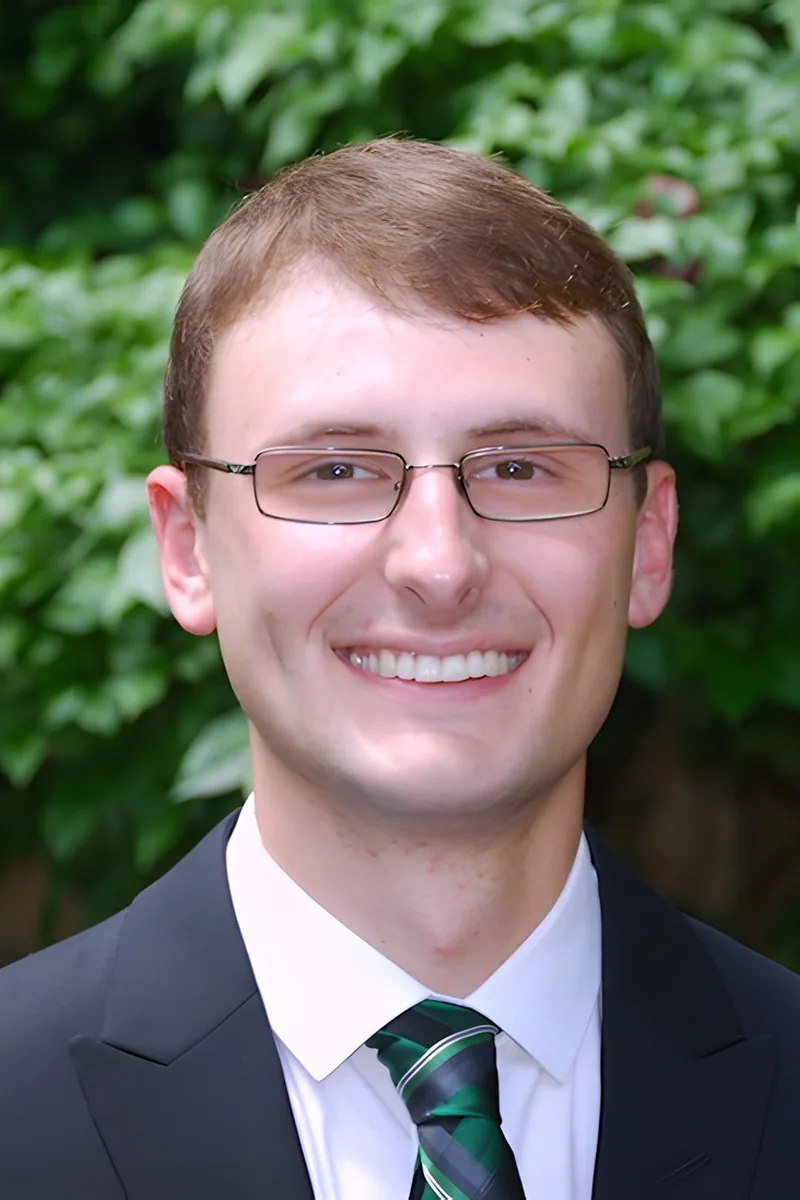
A math degree holder now studying quantitative policy analysis at Duke, Matt treats AB as more than a set of derivative rules and integral formulas — he teaches the reasoning behind the Fundamental Theorem so students can tackle free-response questions with genuine understanding. His approach to related rates and accumulation problems emphasizes translating word problems into mathematical setups, which is where most AP points are won or lost.
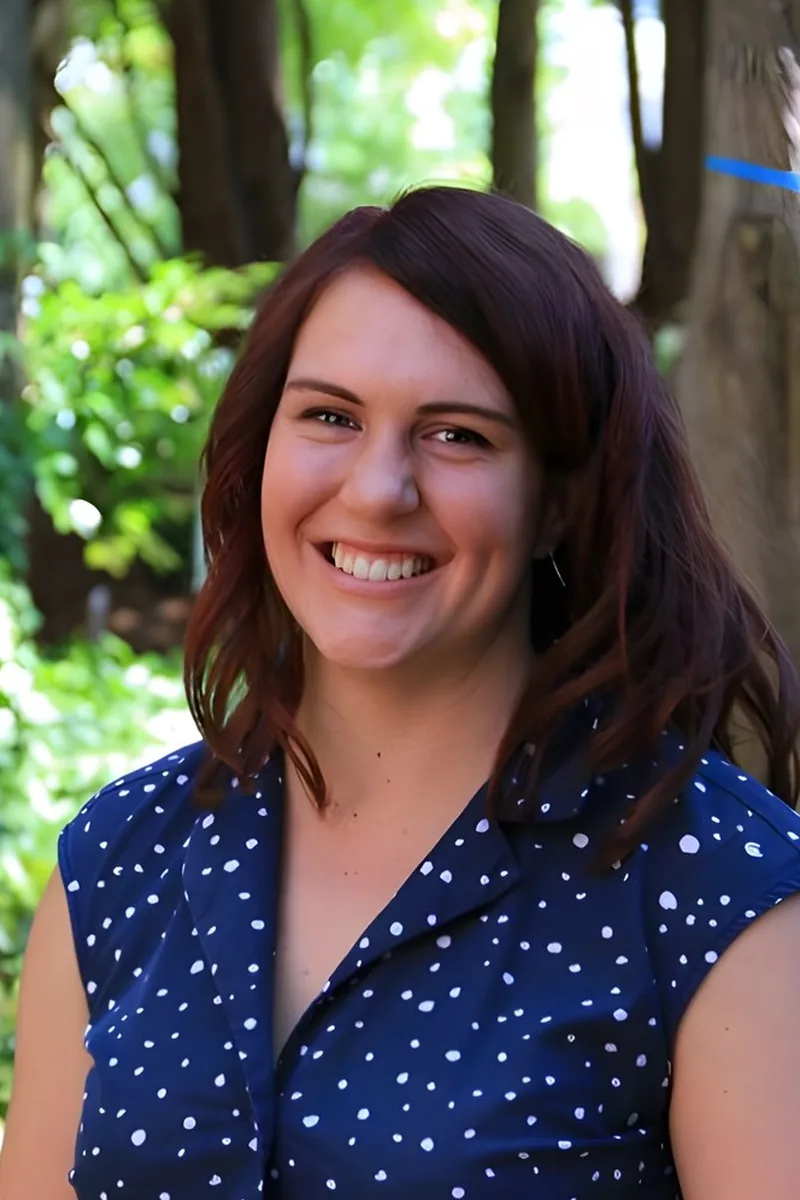
The jump from "find the derivative" to "explain what the derivative means here" is where most AP Calc AB students struggle, especially on free-response questions. Jordan's engineering background at Harvey Mudd and Georgia Tech means he's spent years applying limits, integrals, and rates of change to physical systems — and he unpacks those connections in ways that make the conceptual questions click.
Chemical engineering coursework throws calculus at you daily — from modeling heat transfer to optimizing reaction rates — so Devin knows AB concepts like limits, derivatives, and integrals inside and out. He breaks down the chain rule and related rates problems by connecting them to real physical scenarios, which makes the logic behind each step click. Rated 5.0 by students.
The jump from Pre-Calculus to AP Calculus AB is where many students first encounter limits, derivatives, and the formal language of rates of change. Tanay breaks these concepts down visually and algebraically, drawing on his UNC Chapel Hill math training to make ideas like the chain rule or related rates feel logical rather than formulaic.
Limits, derivatives, and the Fundamental Theorem of Calculus each represent a genuine shift in mathematical thinking — not just a new set of formulas. Elisa breaks down each concept by connecting it to tangible engineering scenarios, like how a rate of change describes real forces acting on a bridge. Her civil engineering background means she can answer the inevitable "when will I ever use this?" with actual examples.
Limits, derivatives, and the fundamental theorem of calculus all click faster when a student understands *why* each concept matters, not just how to execute the steps. Rebecca studied economics and data science at UC Berkeley, where calculus was the backbone of nearly every course she took. She connects AB topics to real applications — optimization problems, rate-of-change modeling — that make the material stick.
Biology majors often encounter calculus in unexpected places — population growth models are differential equations, enzyme kinetics hinge on rates of change — and Daiven's coursework at Wofford gave him hands-on experience with those connections. He's especially useful for students who can follow derivative rules mechanically but struggle when the AB exam asks them to interpret what a rate of change means in a word problem. His 32 ACT reflects the quantitative reasoning he brings to breaking down limits, integration techniques, and the free-response setups that trip students up most.
The jump from memorizing derivative rules to actually applying them — related rates, optimization, the Fundamental Theorem — is where most AB students stall. Shourya approaches each of these as a problem-solving framework, teaching students to diagram situations and identify which calculus tool fits before diving into computation. His 4.9 rating speaks to how well that structured approach lands.
The jump from pre-calc to AP Calculus AB trips up students who can follow procedures but haven't internalized what a derivative actually represents. Corey breaks down limits, related rates, and the Fundamental Theorem by connecting each idea to the physical and economic models he studied at Duke. His 5.0 rating speaks to how well that approach clicks.
When limits and continuity stop being intuitive — usually right around the epsilon-delta definitions — that's where Nicole's biology-trained precision with logical reasoning kicks in. She approaches AB topics like differential equations and accumulation functions the way a scientist reads data: methodically, always asking what the numbers actually mean before jumping to computation. Rated 5.0 by students, with a 1450 SAT backing up her quantitative chops.
Teaching multivariable calculus, biostatistics, and neuroscience means Kathleen regularly circles back to the AB fundamentals — limits, differentiation, integration — from angles most high school curricula never touch. She's particularly sharp at helping students see how the chain rule and integration techniques connect to the statistical modeling and life science applications she teaches at higher levels, which makes abstract procedures feel purposeful. Her 35 ACT and 4.9 rating back up the depth behind that cross-disciplinary perspective.
The jump from Pre-Calc to AP Calculus AB trips up a lot of students right around limits and the formal definition of the derivative. Akshay's dual background in statistics and chemistry at UNC means he can connect abstract calculus concepts — Riemann sums, the Fundamental Theorem, related rates — to concrete applications that make them easier to internalize.
When AB students can compute a derivative but can't explain what it means on a graph — or set up an integral from a word problem — that's the gap Joseph targets. His biomedical engineering background at the University of Minnesota means he learned calculus by modeling real biological systems, so he teaches concepts like accumulation and rate of change through concrete scenarios rather than disconnected procedures. Rated 5.0 by students.
The jump from memorizing derivative rules to applying them — related rates, optimization, accumulation functions — is where most AP Calculus AB students get stuck. Artem breaks those multi-step problems into smaller logical pieces, drawing on the same problem-solving approach he uses in his electrical engineering program at NC State.
Limits, derivatives, and integrals each build on the last — so a shaky understanding of one concept tends to snowball through the entire AP Calculus AB curriculum. Sarah approaches each topic by tying it to concrete problems first, then layering in the formal notation and rules once the intuition clicks. Her math-statistics coursework keeps her sharp on exactly the kinds of applied problems the AP exam loves to test.
The jump from memorizing derivative rules to actually applying them — related rates, optimization, the Fundamental Theorem — is where most AP Calculus AB students stall out. Amanda breaks each problem type into a reasoning sequence: what's changing, what's fixed, and what the question is really asking. Her chemistry background means she's constantly using calculus in applied contexts, which keeps her explanations grounded.
Chemical engineering coursework drills calculus into you through a different lens — Kelly spent her undergraduate years using derivatives to track reaction kinetics and integrals to size equipment, so the AB curriculum's application problems map naturally onto skills she's already internalized. She's particularly strong at teaching students how to set up problems from scratch, especially optimization and definite integral applications where the hardest part isn't the math but knowing what to model. Rated 5.0 by students.
Between a 35 ACT and a computer science track at Rice, Rishi's calculus foundation is built on the kind of mathematical rigor that treats limits, derivatives, and integrals as interconnected ideas rather than isolated chapters. He's especially sharp at showing students how recurring patterns — like the relationship between a function and its rate of change — thread through the entire AB curriculum, making each new topic feel like an extension of something they already know. His schedule as a Division I golfer also means he values efficiency, so sessions stay focused and waste nothing.
Limits, derivatives, and the fundamental theorem of calculus click faster when a student sees how they connect — not just how to compute them in isolation. Nicholas approaches AP Calculus AB by building intuition around rates of change and accumulation, drawing on the applied math side of his Johns Hopkins engineering program. His 4.8 rating speaks to how well that conceptual clarity translates for students prepping for the AP exam.
Limits, derivatives, and integrals become far more intuitive when a student sees why they matter, not just how to compute them. Dennis's physics background means he can ground every AB Calculus concept — from the chain rule to Riemann sums — in tangible problems involving motion, area, and rates of change.
When students can compute a derivative but can't explain what it means at a specific point — or can evaluate a definite integral but not set one up from a word problem — that's the gap Mariya zeroes in on. Her math degree gives her the formal grounding to teach limits, continuity, and the Fundamental Theorem as a connected story rather than isolated chapters. She holds a 5.0 rating and a perfect 1600 SAT, which speaks to the precision she brings to exam preparation.
The jump from Pre-Calculus to AP Calculus AB is where many students first encounter limits, derivatives, and the chain rule as genuinely new ideas rather than extensions of old ones. Viktor's UChicago math degree means he can explain the reasoning behind each rule so that related rates and accumulation problems start to feel logical rather than formulaic. His 1600 SAT speaks to the precision he brings to every concept.
Limits, derivatives, and integrals each build on the last, so one shaky concept can snowball through the entire AP Calculus AB curriculum. Annie breaks down each idea with concrete visual intuition — what a derivative actually means on a graph, why the chain rule works the way it does — drawing on the rigorous calculus sequence she completed as a biomedical engineering major at Cornell. Rated 4.9 by students.
Scoring a 1570 SAT and 35 ACT takes the kind of disciplined problem-solving that translates directly into teaching limits, derivatives, and integration techniques at the AB level. Amber zeroes in on the moment students go from mechanically applying the power rule to actually understanding why the Fundamental Theorem ties differentiation and integration together — a shift that unlocks the entire second half of the course. Rated 5.0 by students.
IB Diploma graduates know what it's like to hit calculus from multiple directions at once — Dalton's experience completing that program means he learned early how to manage the conceptual load of limits, derivatives, and integrals alongside heavy coursework in other subjects. He's especially good at teaching students how to pace themselves through the AB curriculum and build the kind of problem-setup instincts that free-response graders reward. His 35 ACT and 4.9 rating back up an approach built on disciplined preparation rather than shortcuts.
Limits, derivatives, and integrals each build on the last, so a shaky grasp of one topic can quietly undermine everything that follows. Brooke tackles AP Calculus AB by connecting each concept back to its graphical and physical meaning — something her engineering training at Duke reinforces every day. She scored a 1550 on the SAT and carries that same precision into calculus.
The jump from memorizing derivative rules to actually applying them — related rates, optimization, accumulation functions — is where most AP Calc AB students stall. Joshitha teaches problem-solving frameworks that make it clear which technique fits which scenario, so students aren't guessing on free-response questions. Rated 5.0 by her students.
Mechanical and aerospace engineering at Princeton means Matthew builds on calculus daily — computing trajectories, analyzing forces, optimizing structural loads — so the AB curriculum's core techniques are second nature to him. He teaches each new concept by working through a few problems step by step, then hands students progressively harder variations, asking targeted questions that expose gaps before they become exam-day surprises. His 34 ACT underscores the quantitative precision behind that approach.
Testimonials
Because the right AP Calculus AB tutor makes all the difference.
Average Session Rating – Based on 3.4M Learner Ratings
Practice AP Calculus AB
Free practice tests, flashcards, and AI tutoring for AP Calculus AB
Nearby AP Calculus AB Tutors
Other Winston-Salem Tutors
Related Math Tutors in Winston-Salem
Frequently Asked Questions
Varsity Tutors matches Winston-Salem students with expert AP Calculus AB tutors for 1-on-1 instruction. We pair each student with a tutor based on their specific needs, learning style, and goals.
Whether you need homework help, exam prep, or want to get ahead, our AP Calculus AB tutors are ready to help.
Common challenges include gaps from earlier material, difficulty with specific concepts, and trouble applying learning to new problems. These issues can snowball quickly in AP Calculus AB.
A tutor identifies where you're stuck, fills in gaps, and provides targeted practice. The 1-on-1 format means you get help exactly where you need it.
Tutors work with your student's actual coursework—homework assignments, class notes, and upcoming tests. This keeps tutoring directly relevant to what's happening in the classroom.
When you share information about your student's school and curriculum, we can match you with a tutor who has relevant experience.
All tutors complete background checks, credential verification, and teaching evaluation. Many of our AP Calculus AB tutors hold advanced degrees or have years of teaching experience.
You can review tutor profiles to find someone with the right background for your student's level and needs.
Many students see improved grades within a few weeks, along with better understanding of AP Calculus AB concepts and more confidence tackling challenging material.
Tutors track progress and adjust their approach to ensure continued improvement.
Most students benefit from 1-2 sessions per week. More frequent sessions help if your student is significantly behind or has an important exam coming up.
Your tutor can recommend a schedule based on your student's specific situation and goals.
Tutoring is purchased in packages of hours, with rates varying by tutor experience. Varsity Tutors offers several options to fit different budgets and needs.
You can discuss pricing during your consultation to find what works best.
Your tutor will assess where your student is, discuss goals, and start working on priority areas. Most students bring current homework or upcoming test material to focus on.
By the end, you'll have a clear sense of how the tutor can help and a plan for moving forward.
Let’s find your perfect tutor
Answer a few quick questions. We’ll recommend the right plan and match you with a top 5% tutor.