Award-Winning AP Calculus BC Tutors
serving Charlotte, NC
AP Calculus BC
Tutors in Charlotte
Private 1-on-1 tutoring, weekly live classes for academic support, test prep & enrichment, practice tests and diagnostics, and more to elevate grades and test scores.
Based on 3.4M Learner Ratings
UniversitiesSchools & Universities
DeliveredHours Delivered
ProficiencyGrowth in Proficiency
Who needs tutoring?
No obligation. Takes ~1 minute.
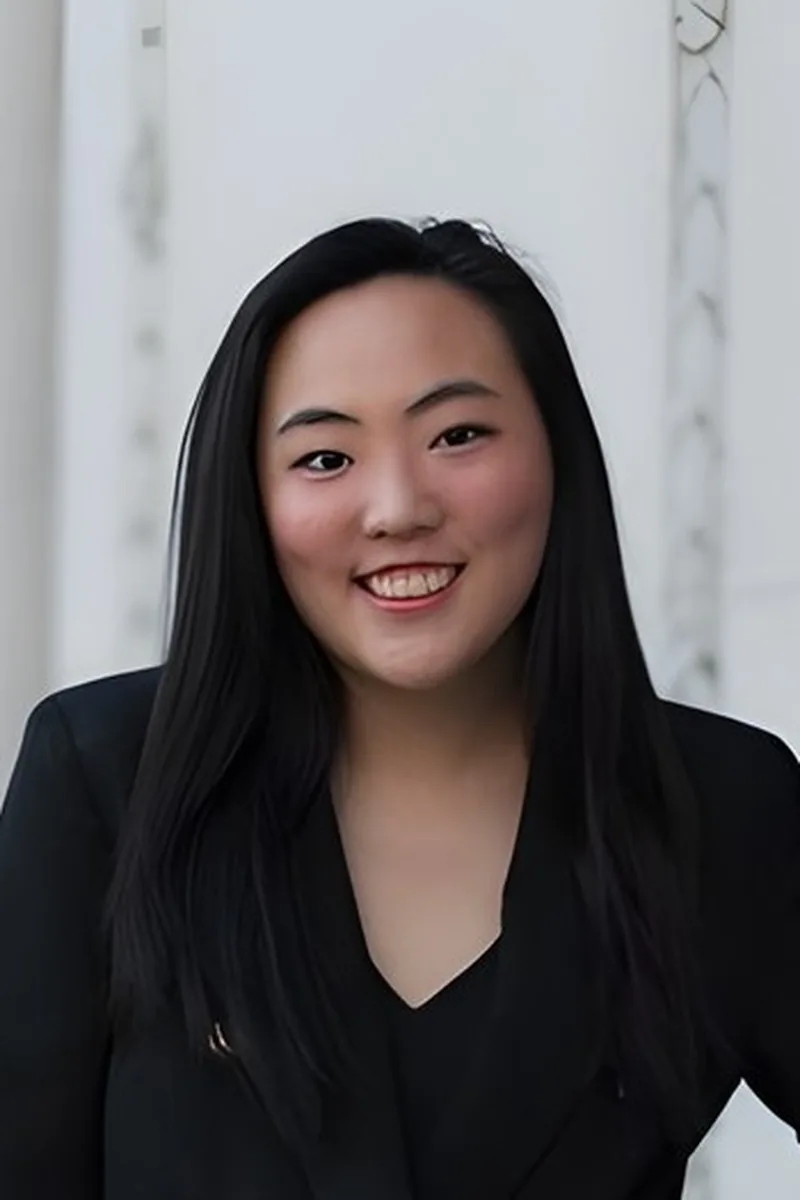
Economics and data science at UC Berkeley meant Rebecca spent semesters immersed in the calculus that powers econometric modeling — series approximations, integration techniques, and the kind of rigorous limit reasoning that BC piles on top of AB. She now works as an economic researcher, so tools like convergence criteria and polynomial approximations stay active in her day-to-day quantitative work rather than gathering dust. Rated 5.0 by students.

BC Calculus layers on convergence tests, parametric equations, and polar coordinates right when students think they've mastered integration. Shourya breaks these topics into visual, intuitive pieces — connecting Taylor series to function behavior, for instance, so the formulas feel like natural extensions rather than arbitrary rules. His physics background at UNC Chapel Hill gives him a constant supply of real applications to make the math click.
Winning Duke's DT Stallings Award for sustained tutoring of local school students means Taariq has logged serious hours watching where calculus understanding actually breaks down — and BC's leap into series, parametric curves, and advanced integration is where breakdowns happen fastest. His math degree from Duke gives him the theoretical grounding to trace a student's confusion with, say, a ratio test or a polar area integral back to the specific AB concept that isn't solid yet. Rated 4.9 by students.
Series convergence, parametric equations, and polar coordinates can feel like a firehose of disconnected topics — but they're not. Jordan connects BC-specific material back to the core calculus intuitions students already have, drawing on the advanced math he used daily through a PhD in bioengineering at Georgia Tech.
Matt's math degree gives him the formal grounding to teach BC's trickiest material — convergence criteria, polar area integrals, parametric derivatives — while his quantitative policy work at Duke means he regularly uses series approximations and integration techniques to model real decisions. That combination keeps his explanations precise without feeling purely theoretical, because he can show students exactly where a Taylor expansion or an improper integral does actual work outside the classroom. Rated 5.0 by students.
Most BC students can follow a Taylor series procedure on the board but freeze when asked to choose between convergence tests on their own — Tanay, a math major at UNC Chapel Hill, zeroes in on that decision-making gap by teaching the underlying logic of each test rather than just the mechanical steps. His 35 ACT and 5.0 tutoring rating back up an approach that builds BC's toughest topics directly from the AB concepts students already trust.
Civil engineering coursework is where BC Calculus stops being theoretical — Elisa used series approximations for structural load analysis and integration techniques for modeling stress distributions throughout her degree, so topics like Taylor polynomials and improper integrals carry practical weight when she teaches them. She's particularly sharp at tracing a student's confusion with convergence tests back to shaky AB-level reasoning about limits, then rebuilding from there. Rated 4.8 by students.
Series convergence is where most AP Calculus BC students start to feel lost — Taylor polynomials, ratio tests, and interval-of-convergence problems demand a different kind of mathematical intuition than AB material. James tackles these topics by building each series concept visually and algebraically, connecting new ideas back to the limit foundations students already know. His 1550 SAT and 35 ACT speak to the depth of his math fluency.
Teaching BC Calculus for an international test prep company — alongside SAT Subject Tests and high school physics — gave Corey a detailed map of where students stall: usually the transition from AB techniques into series convergence, Taylor polynomial error analysis, and parametric integration. His Duke biomedical engineering degree meant applying those same tools to model biological systems, so he explains convergence tests and approximation methods as practical reasoning rather than formula lists. Rated 5.0 by students.
When BC students hit the wall of series convergence tests — ratio, root, integral, comparison — the real problem is usually that they're memorizing a checklist instead of understanding what each test actually checks. Artem, an electrical and computer engineering undergrad who uses these tools in circuit and signal analysis, teaches the reasoning behind each test so students can identify which one applies and why. Rated 5.0 by students.
Most BC students can follow a convergence test step by step but freeze when they have to choose which test to apply — that decision-making is where Sarah, a mathematics-statistics major, zeroes in. Her statistical training sharpens the way she teaches series and approximation topics, since stats coursework demands comfort with summation behavior and error analysis that maps directly onto Taylor polynomials and remainder bounds. A 1450 SAT and 34 ACT reflect the kind of precise, methodical thinking she brings to each session.
Physical chemistry coursework is where BC Calculus stops being theoretical — Amanda uses series approximations and integration techniques daily in her chemistry program, which means she teaches topics like Taylor polynomials and convergence tests as tools she actually relies on, not abstract procedures. She's especially sharp at tracing a stuck moment on, say, an interval of convergence problem back to the specific limit or comparison reasoning that needs reinforcing.
BC Calculus piles on topics like Taylor series, parametric equations, and convergence tests at a pace that leaves little room for falling behind. As a Penn math major who also tutors multivariable calculus and linear algebra, Ben understands these concepts at a depth that lets him explain not just the how but the why behind each technique. That deeper perspective makes integration methods and series analysis click faster.
As a multivariable calculus teaching assistant at Harvard's Math Department, Kristi spent semesters watching exactly where students' BC foundations cracked under pressure — shaky series intuition, mechanical convergence testing, parametric reasoning that never quite solidified. Her astrophysics training means she learned these tools by necessity, using Taylor expansions to model orbital mechanics and integration techniques to analyze planetary data, so she teaches the logic driving each method rather than just the steps. Rated 5.0 by students.
A year as a course assistant in Harvard's math department teaching introductory calculus gave Richard a close-up view of exactly where students' AB foundations crack under the weight of BC material — particularly when series convergence and parametric functions demand a more flexible kind of reasoning. He breaks down topics like interval of convergence arguments and integration techniques by rebuilding the underlying logic rather than layering on new formulas. His perfect 1600 SAT and 36 ACT suggest the kind of precision he brings to each explanation.
Sanjana doesn't just know AP Calculus BC — she teaches it, serving as a Course Assistant for Harvard's introductory calculus sequence. That means she's seen exactly where students stumble on Taylor series, parametric equations, and convergence tests, and she knows how to untangle those concepts in real time. Rated 5.0 by students.
Studying both biomedical engineering and applied mathematics at Johns Hopkins, Nicholas lives in the world where BC Calculus concepts — series approximations, parametric modeling, advanced integration — are daily requirements rather than abstract exercises. He's especially good at breaking down the transition from AB to BC, showing how something like a convergence test or polar area calculation grows directly out of derivative and integral logic students already trust. His 35 ACT and 4.8 rating speak to the clarity he brings to those explanations.
Justin's PhD work in Computational and Applied Mathematics at the University of Chicago means he doesn't just teach Taylor series and convergence — he builds on them daily in research involving image processing and climate modeling, where approximation methods have to actually hold up under real conditions. That perspective sharpens how he explains error bounds and series manipulation, grounding each technique in why it matters rather than just how to execute it on an exam. Rated 5.0 by students.
Having TA'd Calculus I and II at Rice while pursuing a graduate degree in computational and applied mathematics, Sakibul knows exactly where the AB-to-BC transition trips students up — particularly when series convergence and parametric differentiation demand a sharper kind of reasoning than anything before. He breaks down topics like interval of convergence arguments and integration techniques by rebuilding the logic from scratch rather than handing over shortcuts. His applied math background means he treats Taylor approximations and error bounds as precision tools, not abstract busywork.
BC Calculus layers convergence tests, parametric equations, and polar curves on top of an already demanding AB foundation, and the pacing leaves little room to fall behind. Vinson earned a 36 ACT and National AP Scholar distinction while building the kind of deep mathematical fluency that makes series analysis and integration techniques click. He breaks each new BC topic into the AB concept it extends, so the jump never feels arbitrary.
Series convergence is where most BC students start to feel lost — ratio tests, Taylor expansions, error bounds all hit at once. Matthew's Harvard math coursework goes well beyond the AP curriculum, which means he can explain not just how to apply these tools but why they work. He connects BC-specific topics like parametric equations and polar curves back to the core calculus intuitions students already have.
Managing an immunology research lab at Columbia means Matthew lives in the quantitative deep end — modeling biological systems, analyzing experimental data — and his physics degree built the calculus fluency that makes that possible. He's especially sharp on the BC topics that trip students up after AB: constructing Taylor series from scratch, navigating convergence tests systematically, and connecting parametric or polar problems back to the derivative logic underneath them.
Biomedical engineering at Yale means Jonathan lives in the calculus that comes after most students stop — modeling biological systems with differential equations, approximating nonlinear tissue behavior with series expansions, running convergence analysis on numerical simulations. That daily exposure makes him especially effective at teaching the logic behind the ratio and integral tests, because he's seen firsthand what happens when you pick the wrong one. Holds a 5.0 rating.
Scoring a 36 on the ACT while studying economics at Vanderbilt means Kerr lives comfortably in the quantitative reasoning that BC Calculus demands — and his computer science focus sharpens the algorithmic thinking behind recursive sequences and series convergence. He teaches BC's trickiest leaps, like moving from basic integration to constructing Taylor polynomials, by grounding each new idea in the conceptual logic rather than just the procedural steps. Rated 4.9 by students.
Testimonials
Because the right AP Calculus BC tutor makes all the difference.
Average Session Rating – Based on 3.4M Learner Ratings
Practice AP Calculus BC
Free practice tests, flashcards, and AI tutoring for AP Calculus BC
Nearby AP Calculus BC Tutors
Other Charlotte Tutors
Related Math Tutors in Charlotte
Frequently Asked Questions
AP Calculus BC covers all AB topics plus additional material including parametric equations, polar coordinates, and series/sequences. The course focuses on limits, derivatives, integrals, differential equations, and applications of calculus. For students in Charlotte, understanding this broader scope is important since BC is the more advanced exam and requires mastery of both AB content and these supplementary topics.
Score improvement depends on your starting point and consistency with practice. Students who work with tutors typically see gains by identifying specific weak areas—whether that's derivative applications, integration techniques, or series convergence—and targeting those gaps systematically. Many students improve by 1-2 score points (on the 1-5 scale) over several months of focused preparation, though results vary based on your baseline and effort.
Students often struggle with pacing during the exam—calculus problems require careful setup and multiple steps, so time management is critical. Other common challenges include mastering integration by parts and substitution, understanding series convergence tests, and applying calculus concepts to unfamiliar problem contexts. Tutors can help you develop strategies for each of these areas and build confidence in your problem-solving approach.
Your first session focuses on assessment and planning. A tutor will review your current understanding of calculus fundamentals, identify which topics need the most work, and learn about your exam timeline and goals. This conversation helps create a personalized study plan that targets your specific challenges, whether that's derivatives, integrals, or the series material unique to BC.
Practice tests are essential—they help you understand the exam format, pacing requirements, and question types while revealing which concepts need more review. Taking full-length practice tests under timed conditions is particularly valuable for calculus, where managing time across multiple multi-step problems is crucial. Tutors can review your practice test results to pinpoint patterns in your mistakes and adjust your study focus accordingly.
Starting 3-4 months before the exam allows time to cover content gaps, practice problem-solving strategies, and take multiple practice tests. However, even 6-8 weeks of focused tutoring can be effective if you're already familiar with most material and need help with specific topics or exam strategy. The key is consistent practice between sessions—tutors can guide your independent work to maximize progress.
Confidence comes from preparation and familiarity. By working through problems repeatedly, understanding the reasoning behind each step, and practicing under timed conditions, you build competence that naturally reduces anxiety. Tutors also help you develop problem-solving strategies and mental approaches—like breaking complex problems into manageable steps—that keep you calm and focused during the actual exam.
Varsity Tutors connects you with tutors in Charlotte who have strong backgrounds in calculus and AP exam preparation. When you get matched with a tutor, you can discuss their experience with AP Calculus BC specifically, their approach to test prep, and how they've helped other students succeed. This personalized connection ensures you're working with someone who understands both the material and the exam demands.
Let’s find your perfect tutor
Answer a few quick questions. We’ll recommend the right plan and match you with a top 5% tutor.