Award-Winning SAT Tutors
serving Charlotte, NC
SAT
Tutors in Charlotte
Private 1-on-1 tutoring, weekly live classes for academic support, test prep & enrichment, practice tests and diagnostics, and more to elevate grades and test scores.
Based on 3.4M Learner Ratings
UniversitiesSchools & Universities
DeliveredHours Delivered
ProficiencyGrowth in Proficiency
Who will be getting tutoring?
No obligation. Takes ~1 minute.
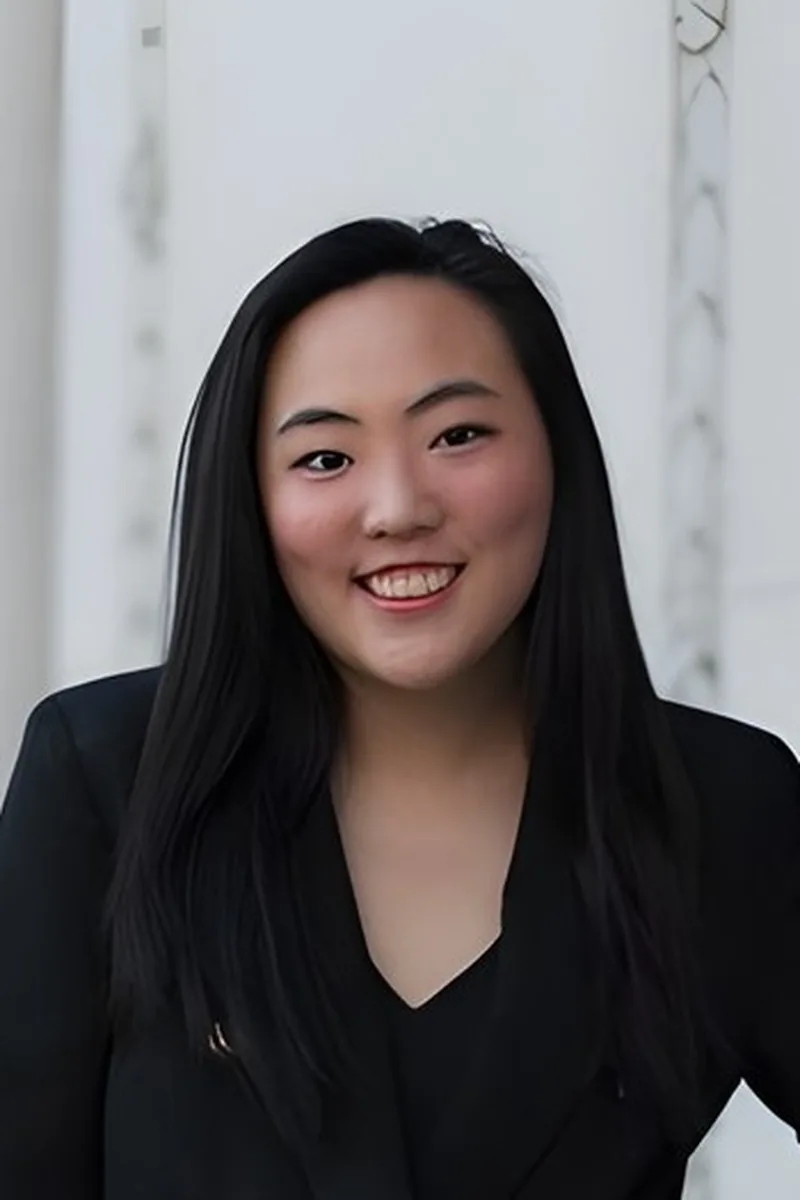
Rebecca's economics and data science training at UC Berkeley built exactly the kind of quantitative reasoning and analytical reading the SAT demands — interpreting graphs, translating word problems into algebra, and pulling evidence from dense passages. She scored a 1520 on the SAT herself and uses that experience to teach students how to manage pacing across sections and spot the statistical reasoning questions that often get overlooked in prep. Rated 5.0 by students.
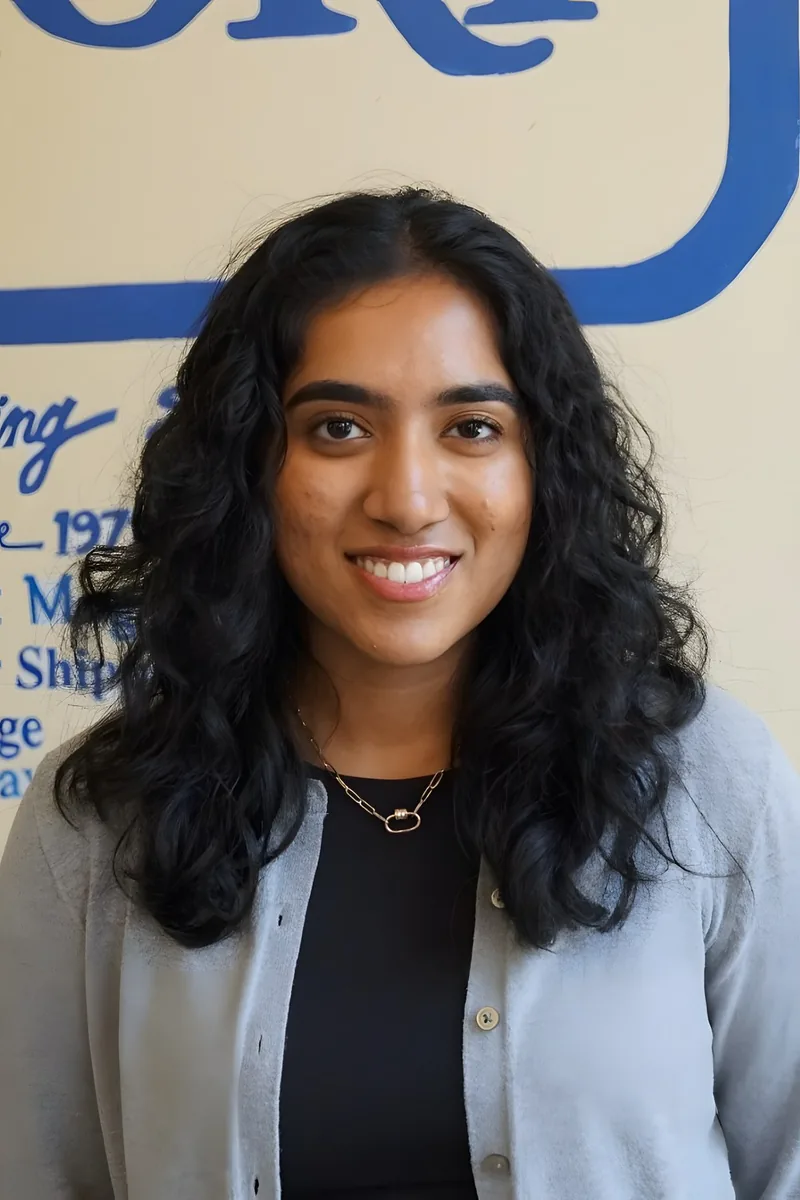
My name is Ananya, and I am a recent graduate of Georgetown University, where I obtained a B.S. in Mathematics and a B.A. in Government, graduating with Honors. In college, my favorite areas of math were calculus, linear algebra, and data science, which led me to conduct math statistics research for two years. I am an incoming Master's student at Cambridge University, where I will be studying and researching Digital Policy. My interdisciplinary educational experience informs my creative and engaging approach to education. I have many years of teaching experience throughout high school, I tutored elementary and middle school math and English in both paid and volunteer positions, and served as a TA for Precalculus and AP US History. In college, I served as a leader for multiple mentorship programs for high schoolers and incoming college students. These experiences taught me patience and the ability to adapt learning experiences to individual students' strengths. I take a reflective and iterative approach to tutoring, with practice, feedback, and application of material in various contexts. As your tutor, I am passionate about fostering a deeper understanding of material that will lead to your success, while embedding fun into the process. Please consider booking a lesson, and I look forward to getting started!
Scoring a 1540 on the SAT gave Jack a sharp sense of where the test tries to trip students up — especially the evidence-based reading questions that pair a passage with a follow-up asking you to justify your answer. As a computer science major at UNC Chapel Hill, he brings a logical, systematic approach to both the math sections and the grammar rules tested in Writing and Language. Rated 4.7 by students, he's particularly effective at teaching time-management strategies that keep pacing tight across all four sections.
Having scored a 1400 on the SAT while balancing a demanding UNC Chapel Hill courseload, Isabel knows which strategies actually move the needle on test day — from pacing techniques on the reading section to catching tricky grammar patterns in the writing questions. She breaks down each section's logic so students stop second-guessing answers and start recognizing what the test is really asking.
Having navigated both the SAT (1550) and ACT (32) herself as a recent test-taker, Ify knows which strategies actually work under pressure versus which ones only sound good in a prep book. She teaches students to spot the recurring algebra and data-analysis patterns on the Math section while building a systematic approach to evidence-based reading questions that cuts through confusing answer choices. Rated 5.0 by students, her economics training also sharpens the quantitative reasoning and graph-interpretation skills the SAT increasingly demands.
A 1500 SAT scorer with a biology background, Madison brings a methodical, science-minded approach to test strategy — breaking each section into discrete skills like evidence-based reading, grammar rule identification, and no-calculator problem solving. She's especially effective at teaching students to diagram word problems and translate visual information into correct answers, a technique that pays off across both the Math and Evidence-Based Reading sections. Rated 5.0 by students.
Most SAT prep treats the Math and Verbal sections as completely separate animals, but Earnest's chemical engineering training — both undergrad and master's level — taught him that careful reading and quantitative reasoning are the same skill applied differently. He scored a 1530 on the SAT and uses that dual-lens approach to teach students how to parse dense Reading passages with the same precision they'd apply to setting up a no-calculator algebra problem. That engineering mindset turns multi-step questions into systematic processes rather than guessing games.
I am at the University of North Carolina at Chapel Hill. Currently, I am a Political Science major and a Data Science minor. Before working with Varsity Tutors, I have worked as a volunteer math tutor virtually for around 3 years at Peer2Peer and have since had a strong passion for helping students learn and enjoy the subjects they encounter. I have also assisted with SAT prep during the summer prior to my senior year as a part of a fundraiser for an pre-health organization I was a part of. Being a part of someone's learning process and helping them achieve their goals is one of the most rewarding experiences I took part in. The feeling when a particular concept clicks with a student is incomparable to anything else. It's a hard earned testament to the work of the student, and I want to help in the achievement of that goal. I am a tutor who values compassionate practice- making sure the student feels comfortable around me and helping them gain the confidence to approach harder topics. The thing that I stress the most is that everyone, regardless of skill level, makes mistakes, and that isn't a bad thing. Mistakes help us grow instead of stagnate. I hope to help every student I teach remember that.
A Georgetown physiology master's student and fourth-year med student, Morgan scored a 1410 on the SAT and knows how to break the test into manageable pieces — from pacing strategies on the Reading section to tackling evidence-based questions in Writing. She brings particular strength to the math portion's data analysis and problem-solving questions, where her science background makes graph interpretation second nature. Rated 5.0 by students.
Physics majors learn to read problems carefully, extract the relevant information, and solve under pressure — which is essentially what the SAT asks students to do across both the Math and Reading sections. Gatlin applies that same disciplined, analytical approach to SAT prep, with particular strength in the algebra, data analysis, and problem-solving questions where his math and science training gives him a natural edge. He scored a 1440 on the SAT himself and holds a 4.8 rating from students.
Scoring a 1430 on the SAT herself, Srikavya knows the test's rhythm — where the math section tries to disguise straightforward algebra as complex word problems, and where the reading passages bury the correct answer in subtle paraphrases. She breaks down each section's question types so students learn to spot traps before they fall into them, building both speed and accuracy across practice tests.
Philosophy and economics at UVA have given Emma a useful combination for the SAT — the close-reading and argument-evaluation skills that dominate the Reading section, plus the quantitative fluency needed for algebra and data interpretation on the Math side. She scored a 1430 on the SAT herself and knows where the exam rewards careful reasoning over speed, especially on evidence-based question pairs where rushing leads to trap answers. Rated 5.0 by students.
A 1530 SAT scorer who tinkers with cars and old electronics for fun, Aaron brings that same diagnostic mindset to test prep — isolating exactly where points are being lost and building targeted strategies for each section. He's particularly sharp on the math side, where his mechanical engineering background makes even the trickiest word problems and data interpretation questions feel routine. Rated 5.0 by students.
Economics and Computer Science at UNC Chapel Hill means Rashmi lives in data interpretation and logical reasoning daily — exactly the skills that drive the SAT Math section's trickiest multi-step and word-problem questions. She scored a 1580 on the SAT and uses that experience to teach students how to spot the patterns behind both the quantitative and evidence-based reading questions rather than grinding through every problem cold. Rated 5.0 by students.
A 1590 SAT scorer, Jeremy breaks the test down into repeatable processes — identifying trap answers in Evidence-Based Reading, applying grammar rules systematically in Writing, and recognizing which math concepts the College Board recycles across tests. His background spans both STEM and humanities subjects, which means he can coach every section with equal depth rather than leaning on just one skill set.
Three semesters as a lead TA in anatomy and physiology built Dimitry's habit of explaining dense material in structured, digestible steps — a skill that translates directly to coaching students through the SAT's trickiest multi-step math problems and data-interpretation questions. His pre-med coursework in chemistry and biology at UNC Chapel Hill also sharpened the close-reading and evidence-evaluation instincts that drive scores on the Reading and Writing sections. He scored a 1520 on the SAT and holds a 4.9 rating from students.
Claude's UNC Chapel Hill coursework and substitute teaching experience gave him a practical sense of where students actually get stuck on the SAT — particularly the pacing traps in the Math section and the evidence-pairing questions in Reading that punish students who rely on intuition over method. He teaches specific test-taking techniques for each section type, building repeatable strategies rather than vague advice. His 1570 SAT score and 5.0 tutoring rating back up the approach.
A 1510 SAT scorer with a PhD in Biomedical Engineering from Georgia Tech, Jordan brings serious analytical firepower to every section of the test — from dissecting Reading passage arguments to optimizing Math pacing on no-calculator questions. His engineering training means he teaches students to approach tricky problems systematically, identifying what the question is actually asking before jumping into answer choices. Rated 5.0 by students.
Duke medical school sharpened Tammy's ability to process dense, technical reading under pressure — exactly the skill that drives scores up on the SAT's Evidence-Based Reading section. She pairs that with a biochemistry background that keeps the math side tight, especially on data analysis and multi-step algebra problems. Her own 1550 SAT score and 5.0 tutoring rating back up the approach.
Simon's 1590 SAT sits in the 99th percentile, but what makes him effective as a prep tutor is the breadth behind it — dual degrees in International Relations and Environmental Studies mean he genuinely engages with both the quantitative and evidence-based reading sides of the exam. He teaches students to treat the Writing and Language section as a set of grammar rules with predictable patterns, and approaches the Math section through the kind of data-reasoning skills his interdisciplinary background demanded daily. Rated 5.0 by students.
Scoring a 1550 on the SAT herself, Sonja knows the test inside and out — from pacing strategies on the reading passages to catching the grammar traps the College Board loves to recycle in the Writing section. Her special education training gives her a unique edge: she builds individualized prep plans that account for how each student actually processes information, not just what content they need to review. Rated 5.0 by students.
Scoring a 1550 on the SAT gave Sophia a detailed map of how the test actually works — from the evidence-based reading passages that trip up strong readers to the no-calculator math questions that reward algebraic fluency over brute computation. As a National Merit Scholar and UNC Chapel Hill pre-med student, she breaks down each section's timing and question patterns so students stop losing points to avoidable mistakes. Rated 4.8 by her students, she's particularly effective at closing the gap between a good score and a great one.
Studying linguistics at William & Mary means Tristan doesn't just know the SAT's grammar and rhetoric rules — he understands *why* English works the way it does, which makes the Writing and Language section's trickiest questions feel predictable. His 1590 SAT score and dual focus on French and linguistics give him unusual fluency with the passage-analysis and vocabulary-in-context questions that dominate the Reading section. Rated 5.0 by students.
Having just navigated the SAT as a recent test-taker, Abir knows exactly which question types eat up time and which algebra and data-analysis patterns repeat across every math section — knowledge that's still fresh from his own 1560 composite. His biochemistry coursework reinforces the analytical reading skills needed for the Evidence-Based Reading section, where he teaches students to trace an author's argument before touching the answer choices. Rated 5.0 by students.
Zhong's 1590 SAT score came out of a sociology major's toolkit — close reading of dense research, argument analysis, and comfort with data — which means he teaches the exam as an integrated reasoning test rather than a collection of disconnected sections. He walks students through how to read SAT passages the way a social scientist reads a study: tracking claims, weighing evidence, and spotting where the text actually supports an answer versus where it just sounds right. That same analytical precision carries over to the math sections, where he emphasizes translating word problems into clean setups before solving.
Jonathan scored a 1500 on the SAT while still deep in AP coursework, so the strategies he teaches reflect what actually works under real test-day pressure — especially on the math section, where translating word problems into algebra quickly is half the battle. He breaks down the Reading and Writing sections by question type, teaching students to spot evidence-based answer patterns instead of re-reading entire passages.
Doing brain tumor research at Duke Medical Center before heading to medical school, Callie brings the same analytical precision to SAT prep that she applies to scientific data — particularly on the math sections, where she teaches students to translate word problems into solvable equations quickly and accurately. Her 1560 SAT score and biology training also sharpen her approach to evidence-based reading questions, where she shows students how to treat passages like data sets and extract exactly what each question demands. Rated 4.7 by students.
Neuroscience training builds a specific kind of discipline — parsing dense research passages, interpreting data sets, and reasoning through complex arguments — that maps directly onto what the SAT demands across both sections. Anameeka scored a 1510 and uses that same analytical approach to teach students how to spot grammar patterns in the Writing module and work through algebra and data interpretation efficiently on the Math side. Rated 5.0 by students.
Working in a university writing center — editing papers across disciplines and helping students sharpen their arguments — gave Wallis exactly the kind of grammar and close-reading instincts that the SAT's Reading and Writing sections reward. She scored a 1470 on the SAT herself and approaches prep by teaching students to spot the structural and rhetorical patterns that repeat across passages, turning unfamiliar texts into familiar territory. Her Russian and Art History studies at Sewanee built the analytical reading habits she now applies to both verbal sections and the data-interpretation questions on the Math side.
School psychology graduate training means Alyssa understands how test anxiety, pacing habits, and cognitive load actually affect SAT performance — and she builds prep strategies around those factors, not just content review. She scored a 1550 on the SAT herself and uses that experience to walk students through the specific reading evidence traps and algebra-heavy math patterns where points slip away quietly. Rated 5.0 by students.
Fifteen years of SAT prep tutoring means Paul has watched the exam evolve through multiple redesigns — and he's adapted his strategies each time, keeping what works and ditching what doesn't. His English degree from Emory anchors his approach to the Reading and Writing sections, where he teaches students to trace argument structure through dense passages, while his 1540 score confirms he can walk them through the math side with equal confidence.
As a dedicated tutor who is currently a Political Science and Public Policy student at the University of North Carolina at Chapel Hill, I am passionate about fostering a love for learning in my students. I specialize in ACT and SAT preparation, AP Literature and Language courses, and any other English or writing related subjects! My teaching philosophy centers on creating a supportive environment where students feel encouraged to express themselves and engage with the material. I strive to tailor my approach to each individual learner, ensuring that they not only grasp the concepts but also gain confidence in their abilities. Outside of tutoring, I enjoy reading literature and exploring new ideas, which I believe enriches my teaching and inspires my students.
Teaching freshman honors writing at VCU sharpened Alisha's ability to spot the exact grammar and rhetoric patterns that show up repeatedly in the SAT's Writing and Language section — she walks students through each question type as a logical decision rather than a gut call. Her 1530 SAT score backs up her strength on the math side too, where she teaches students to translate word problems into clean algebraic setups and manage pacing across both calculator and no-calculator sections.
Kailee scored a 1510 on the SAT and brings a systematic approach to both the Evidence-Based Reading and Math sections. Her neuroscience background gives her real insight into how memory and attention work during a four-hour exam — she teaches pacing strategies and question-triage techniques that keep students sharp through the final section. She's especially effective at breaking down the grammar and data-interpretation questions that trip up otherwise strong test-takers.
A 1560 SAT scorer who double-majors in Computer Science and Physics, David brings an analytical edge to every section of the exam — from dissecting evidence-based reading passages to optimizing pacing on the math no-calculator portion. He zeroes in on the specific question patterns the SAT reuses, teaching students to recognize trap answers and eliminate efficiently rather than second-guess. His structured, concept-first approach is especially effective for students aiming to break past the 1400 plateau.
Rishi scored a 1520 on the SAT and breaks the exam into learnable patterns — from evidence-based reading questions that hinge on a single word choice to the algebra and data analysis problems that repeat in predictable ways. His background in public policy at UNC Chapel Hill means he's equally sharp on the verbal and quantitative sides, which is rare for a test that punishes lopsided preparation. Rated 5.0 by students.
At Boston Latin, Lexy noticed that most students already have stronger ideas than they realize — they just need a method for pulling those ideas out under timed conditions, which is exactly what the SAT's reading and writing sections demand. She uses a Socratic approach to teach students how to identify passage structure and eliminate trap answers, then applies the same process-over-memorization philosophy to the math section's word problems and algebra. Her 1570 SAT score backs up a strategy that covers the full exam without needing to switch tutors between sections.
Students who need to move fluidly between SAT Math and the verbal sections benefit from Kathleen's unusually wide range — she teaches everything from college-level statistics and calculus down to grammar and essay writing, so nothing on the exam falls outside her comfort zone. Her own 1470 SAT score backs up a prep style built around diagnosing which question types cost the most points, then drilling the underlying skills rather than generic test tricks. Rated 4.9 by students.
Students who freeze on SAT Reading passages often just need a different way in — Wai teaches them to treat each passage like a structured argument, identifying the author's claim and evidence before touching the questions. Her graduate work at UNC, which involves breaking down dense scientific material for adult learners, sharpened exactly the kind of analytical reading and clear explanation skills that translate to both SAT verbal and math sections. She scored a 1490 on the SAT and holds a 5.0 tutoring rating.
Studying both Economics and Biostatistics at UNC Chapel Hill means Alex lives in the quantitative reasoning and data interpretation that dominate the SAT Math section — and his 1590 score shows he's mastered the verbal side just as thoroughly. He teaches students to spot the SAT's recurring grammar patterns in the Writing section and build a process-of-elimination approach for evidence-based reading questions that turns ambiguous answer choices into clear decisions.
Testimonials
Because the right SAT tutor makes all the difference.
Average Session Rating – Based on 3.4M Learner Ratings
Practice SAT
Free practice tests, flashcards, and AI tutoring for SAT
Other Charlotte Tutors
Related Test Prep Tutors in Charlotte
Frequently Asked Questions
For UNC Chapel Hill, the middle 50% of admitted students score between 1340-1500, while Duke's admitted students typically score 1510-1570. To be competitive for UNC, aim for at least 1350+, which puts you in the top 10% nationally. For Duke, you'll want to target 1500+ (top 1%) to strengthen your application. Keep in mind these are middle-range scores—some admitted students score lower, but having a strong SAT score significantly improves your chances at these selective institutions.
NC State's admitted students typically score between 1280-1420, so aiming for 1300+ puts you in a competitive range. For most other North Carolina public universities, a score of 1200+ (top 25% nationally) is generally strong and can qualify you for merit scholarships. Remember that SAT scores are just one part of your application—GPA, essays, and extracurriculars matter too, but a solid score opens doors to better scholarship opportunities.
Most students see improvements of 100-200 points with focused preparation, though the amount depends on your starting score and how much you practice. Students starting around 1000 often see larger gains (150-200+ points), while those already scoring 1300+ typically improve by 50-100 points since there's less room at the top. The key is consistent practice on weak areas—whether that's time management on Reading, grammar rules in Writing, or problem-solving strategies in Math—combined with personalized instruction that targets your specific challenges.
Most Charlotte juniors benefit from starting SAT prep in the spring of junior year, giving you 4-6 months before fall senior year test dates. This timeline allows you to take the SAT in fall (September or October), get results, and retake in November or December if needed—all before college application deadlines. If you're already in fall junior year, starting now still gives you enough time for solid preparation before spring test dates. Starting earlier (freshman or sophomore year) is fine if you want to get ahead, but junior year is the standard sweet spot.
Both tests are widely accepted at North Carolina universities, though the SAT has become slightly more common nationally in recent years. The best choice depends on your strengths: the SAT emphasizes reading comprehension and data analysis, while the ACT tests faster pacing and science reasoning. Many Charlotte students take a practice test in each format to see which plays to their strengths. Since most colleges accept both equally, focus on the test where you're likely to score higher rather than worrying about which is "better" in North Carolina.
The Reading section gives you 65 minutes for 52 questions, which means time pressure is real. Most students improve by reading the questions first, then skimming the passage for relevant evidence rather than reading every word carefully. Practice with a timer is essential—aim to spend 8-9 minutes per passage so you have time to answer all questions without rushing. Many Charlotte students also benefit from learning to identify question types (vocabulary-in-context, main idea, evidence-based) so they know exactly what to look for in each passage.
The SAT Math section tests algebra, advanced math (functions, polynomials), problem-solving, data analysis, and geometry—with about 60% of questions on algebra and advanced math. If you're weak in math overall, focus on mastering linear equations, systems of equations, and quadratic functions first, since these appear frequently. Data interpretation and graph reading are also common trouble spots for Charlotte students. Working through practice problems by topic, then taking timed full sections, helps you build speed while strengthening weak areas.
Most students take the SAT 1-2 times, with the first attempt in fall senior year and a retake in November or December if they want to improve. Colleges don't penalize you for retaking—they simply use your highest score. However, taking it more than twice rarely yields significant improvements unless you've done substantial additional prep between attempts. If you score 1200+ on your first try, consider whether the time investment in retaking is worth a potential 50-100 point gain, especially if you're already in range for your target schools.
Let’s find your perfect tutor
Answer a few quick questions. We’ll recommend the right plan and match you with a top 5% tutor.