Award-Winning AP Calculus BC Tutors
serving Raleigh, NC
AP Calculus BC
Tutors in Raleigh
Private 1-on-1 tutoring, weekly live classes for academic support, test prep & enrichment, practice tests and diagnostics, and more to elevate grades and test scores.
Based on 3.4M Learner Ratings
UniversitiesSchools & Universities
DeliveredHours Delivered
ProficiencyGrowth in Proficiency
Who needs tutoring?
No obligation. Takes ~1 minute.

When BC students hit the wall of series convergence tests — ratio, root, integral, comparison — the real problem is usually that they're memorizing a checklist instead of understanding what each test actually checks. Artem, an electrical and computer engineering undergrad who uses these tools in circuit and signal analysis, teaches the reasoning behind each test so students can identify which one applies and why. Rated 5.0 by students.
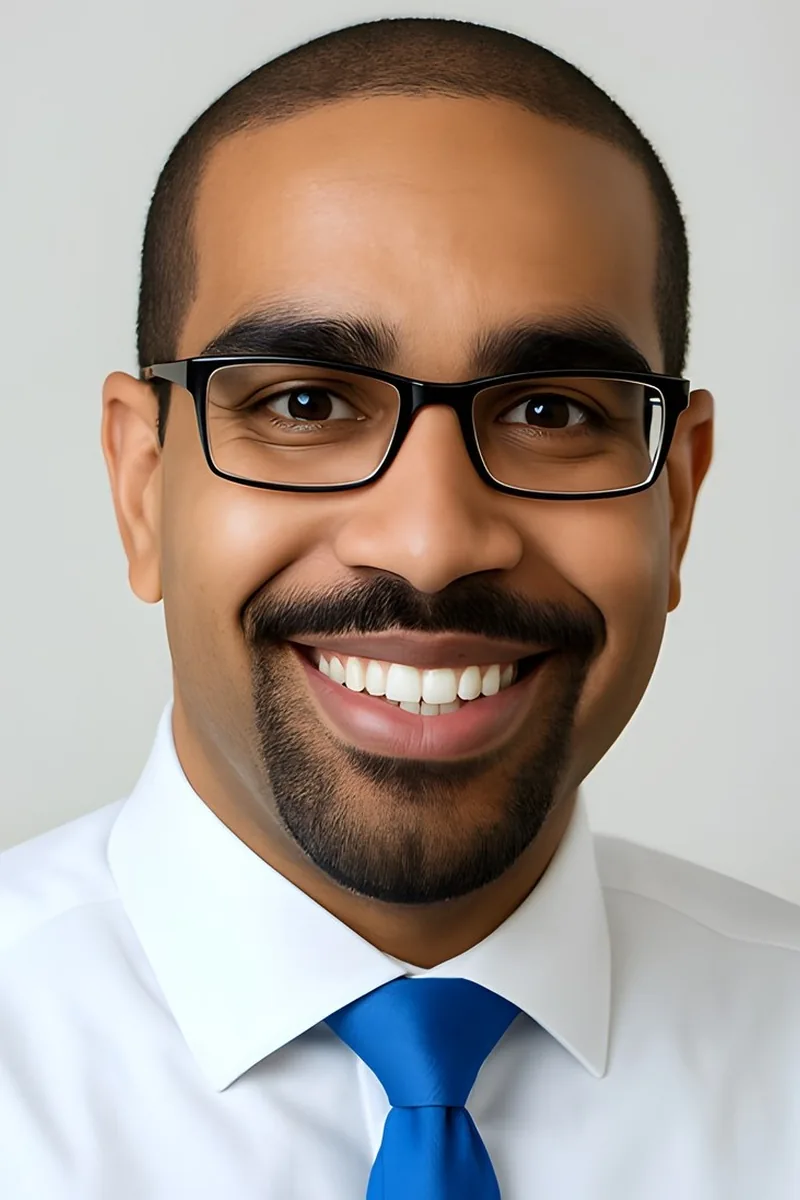
Winning Duke's DT Stallings Award for sustained tutoring of local school students means Taariq has logged serious hours watching where calculus understanding actually breaks down — and BC's leap into series, parametric curves, and advanced integration is where breakdowns happen fastest. His math degree from Duke gives him the theoretical grounding to trace a student's confusion with, say, a ratio test or a polar area integral back to the specific AB concept that isn't solid yet. Rated 4.9 by students.
Matt's math degree gives him the formal grounding to teach BC's trickiest material — convergence criteria, polar area integrals, parametric derivatives — while his quantitative policy work at Duke means he regularly uses series approximations and integration techniques to model real decisions. That combination keeps his explanations precise without feeling purely theoretical, because he can show students exactly where a Taylor expansion or an improper integral does actual work outside the classroom. Rated 5.0 by students.
Series convergence, parametric equations, and polar coordinates can feel like a firehose of disconnected topics — but they're not. Jordan connects BC-specific material back to the core calculus intuitions students already have, drawing on the advanced math he used daily through a PhD in bioengineering at Georgia Tech.
Civil engineering coursework is where BC Calculus stops being theoretical — Elisa used series approximations for structural load analysis and integration techniques for modeling stress distributions throughout her degree, so topics like Taylor polynomials and improper integrals carry practical weight when she teaches them. She's particularly sharp at tracing a student's confusion with convergence tests back to shaky AB-level reasoning about limits, then rebuilding from there. Rated 4.8 by students.
Economics and data science at UC Berkeley meant Rebecca spent semesters immersed in the calculus that powers econometric modeling — series approximations, integration techniques, and the kind of rigorous limit reasoning that BC piles on top of AB. She now works as an economic researcher, so tools like convergence criteria and polynomial approximations stay active in her day-to-day quantitative work rather than gathering dust. Rated 5.0 by students.
Most BC students can follow a Taylor series procedure on the board but freeze when asked to choose between convergence tests on their own — Tanay, a math major at UNC Chapel Hill, zeroes in on that decision-making gap by teaching the underlying logic of each test rather than just the mechanical steps. His 35 ACT and 5.0 tutoring rating back up an approach that builds BC's toughest topics directly from the AB concepts students already trust.
Series convergence is where most AP Calculus BC students start to feel lost — Taylor polynomials, ratio tests, and interval-of-convergence problems demand a different kind of mathematical intuition than AB material. James tackles these topics by building each series concept visually and algebraically, connecting new ideas back to the limit foundations students already know. His 1550 SAT and 35 ACT speak to the depth of his math fluency.
Teaching BC Calculus for an international test prep company — alongside SAT Subject Tests and high school physics — gave Corey a detailed map of where students stall: usually the transition from AB techniques into series convergence, Taylor polynomial error analysis, and parametric integration. His Duke biomedical engineering degree meant applying those same tools to model biological systems, so he explains convergence tests and approximation methods as practical reasoning rather than formula lists. Rated 5.0 by students.
BC Calculus layers on convergence tests, parametric equations, and polar coordinates right when students think they've mastered integration. Shourya breaks these topics into visual, intuitive pieces — connecting Taylor series to function behavior, for instance, so the formulas feel like natural extensions rather than arbitrary rules. His physics background at UNC Chapel Hill gives him a constant supply of real applications to make the math click.
Most BC students can follow a convergence test step by step but freeze when they have to choose which test to apply — that decision-making is where Sarah, a mathematics-statistics major, zeroes in. Her statistical training sharpens the way she teaches series and approximation topics, since stats coursework demands comfort with summation behavior and error analysis that maps directly onto Taylor polynomials and remainder bounds. A 1450 SAT and 34 ACT reflect the kind of precise, methodical thinking she brings to each session.
Physical chemistry coursework is where BC Calculus stops being theoretical — Amanda uses series approximations and integration techniques daily in her chemistry program, which means she teaches topics like Taylor polynomials and convergence tests as tools she actually relies on, not abstract procedures. She's especially sharp at tracing a stuck moment on, say, an interval of convergence problem back to the specific limit or comparison reasoning that needs reinforcing.
Molecular biology at Yale means Maxwell lives in calculus-heavy territory — modeling gene expression rates, quantifying cell growth curves, analyzing reaction kinetics — so BC topics like differential equations and series approximations aren't abstract exercises for him but tools he actually reaches for in research. He's especially good at walking through the logic of integration techniques and parametric problems by grounding them in the AB concepts students already trust. Holds a 5.0 rating.
Scoring a perfect 1600 on the SAT while studying computer science at MIT suggests Brice isn't just comfortable with calculus — he's fluent in it, and BC's extension into series, parametric equations, and advanced integration techniques sits squarely in his daily coursework. He breaks down topics like convergence tests by tracing each one back to the limit reasoning students already built in AB, turning what feels like a grab bag of rules into a coherent decision-making process. Rated 4.9 by students.
BC Calculus throws students into series convergence tests, parametric equations, and polar coordinates — topics that feel disconnected unless someone ties them back to the core ideas of AB. Dylan's physics major at Vanderbilt means he uses calculus daily and can show exactly how Taylor series or integration by parts behave visually, not just symbolically. He turns abstract series into something students can sketch, interpret, and reason through on exam day.
Most BC students can follow a convergence test step by step but freeze when asked to choose which test to apply — that decision-making is where Nima, a physics major heading to Duke on a full merit scholarship, spends most of his teaching energy. His physics training means he treats series and parametric equations as descriptions of real motion and real forces, which gives students an intuitive anchor when the abstraction piles up. A 1580 SAT and 4.7 rating back up his ability to make that AB-to-BC jump feel manageable.
Environmental engineering graduate work is essentially applied calculus — Kate's thesis work required series approximations for modeling fluid dynamics and integration techniques for analyzing pollutant transport, so BC topics like Taylor polynomials and improper integrals are tools she's used professionally, not just academically. She's particularly good at showing how convergence tests follow a logical decision tree rather than feeling like a random grab bag of techniques. Rated 4.9 by students.
Justin's PhD work in Computational and Applied Mathematics at the University of Chicago means he doesn't just teach Taylor series and convergence — he builds on them daily in research involving image processing and climate modeling, where approximation methods have to actually hold up under real conditions. That perspective sharpens how he explains error bounds and series manipulation, grounding each technique in why it matters rather than just how to execute it on an exam. Rated 5.0 by students.
Electrical engineering at Duke means Brooke is actively using series expansions to analyze circuits and integration techniques to model signal behavior — so when she teaches convergence tests or Taylor polynomial construction, she knows exactly which conceptual gaps trip students up because she's recently closed those gaps herself. Her 1550 SAT and 5.0 tutoring rating back up what her coursework suggests: she can break down the leap from AB to BC in precise, concrete terms that make parametric curves and polar integrals feel like logical next steps rather than foreign territory.
Having worked as a teaching assistant for multiple engineering courses at Washington University in St. Louis, Ava spent hours breaking down the calculus that trips students up most — and BC's jump into series convergence, parametric derivatives, and advanced integration techniques is exactly the material she kept revisiting with struggling engineers. Her dual degree in mechanical and energy engineering means she's applied Taylor expansions and improper integrals to real thermodynamic and fluid systems, giving her a concrete vocabulary for explaining why these tools matter beyond the AP exam.
Molecular biophysics at Brown means Srini is constantly using series approximations and integration techniques to model protein folding dynamics and molecular interactions — BC Calculus isn't a prerequisite he passed, it's a toolkit he reaches for weekly. That active use sharpens how he teaches convergence tests and parametric problems, grounding each in the kind of quantitative reasoning his 1600 SAT and 35 ACT reflect. Rated 4.8 by students.
Georgetown's math program gave Peter a rigorous grounding in the theoretical side of calculus — the kind where you prove convergence rather than just test for it — which translates directly into how he teaches BC topics like series, Taylor polynomials, and the Lagrange error bound. He's tutored every level of calculus since high school, and that range means he quickly spots when a BC struggle is actually an AB gap in disguise. Holds a 5.0 rating.
Scoring a 36 on the ACT while studying economics at Vanderbilt means Kerr lives comfortably in the quantitative reasoning that BC Calculus demands — and his computer science focus sharpens the algorithmic thinking behind recursive sequences and series convergence. He teaches BC's trickiest leaps, like moving from basic integration to constructing Taylor polynomials, by grounding each new idea in the conceptual logic rather than just the procedural steps. Rated 4.9 by students.
Most BC students can mechanically apply a ratio test or crank out a Taylor expansion — where they get stuck is understanding *when* each tool is the right one and *why* it works. Alexander, an applied math major at Rice with a 1580 SAT, approaches BC as a problem-solving course rather than a formula catalog, building each new concept from the reasoning students already developed in AB. That mindset is especially useful for the trickier BC territory — convergence arguments, error bounds, and parametric integration — where intuition matters more than memorization.
Testimonials
Because the right AP Calculus BC tutor makes all the difference.
Average Session Rating – Based on 3.4M Learner Ratings
Practice AP Calculus BC
Free practice tests, flashcards, and AI tutoring for AP Calculus BC
Nearby AP Calculus BC Tutors
Other Raleigh Tutors
Related Math Tutors in Raleigh
Frequently Asked Questions
AP Calculus AB covers limits, derivatives, and basic integration, while AP Calculus BC includes everything in AB plus additional topics like series, parametric equations, polar coordinates, and more advanced integration techniques. BC is considered the more rigorous course and is typically taken by students with stronger math backgrounds. If you're deciding between the two, a tutor can assess your current skills and help you choose the right fit.
Score improvement depends on your starting point and how consistently you engage with tutoring, but students typically see meaningful gains—often 1-2 points on the AP scale—when they work with a tutor on weak areas and practice test-taking strategies regularly. Many students struggle most with the free-response section and time management, which are directly addressable through personalized instruction. Varsity Tutors connects you with tutors who specialize in identifying your specific gaps and building confidence before test day.
Students often struggle with series convergence tests, parametric and polar curve problems, and the transition from computational skills to conceptual understanding required by the AP exam. Time management during the exam is another frequent challenge—the multiple-choice section requires quick problem-solving, while the free-response section demands clear written explanations. Tutors can help you build both speed and accuracy through targeted practice and test-taking strategies specific to the BC exam format.
Your first session typically focuses on understanding where you stand—a tutor will review your current coursework, identify which topics feel solid and which need work, and discuss your AP exam timeline and goals. This diagnostic approach helps create a personalized study plan rather than generic review. You'll leave with clarity on priorities and a concrete roadmap for the weeks ahead.
Practice tests are essential—they help you understand the exam format, identify weak topics, and build the stamina and time management skills you'll need on test day. The AP Calculus BC exam has a specific structure (45 minutes of multiple-choice, then 1 hour 30 minutes of free-response), and practicing under timed conditions reveals where you lose points. Tutors typically use full-length practice tests to diagnose problems, then target instruction on those specific areas before your next attempt.
Raleigh's strong academic community means many students have access to school-based resources, but personalized 1-on-1 tutoring fills the gap when you need focused help on challenging topics or test strategy. Varsity Tutors connects students in Raleigh with expert tutors who understand the AP Calculus BC curriculum and can work around your school schedule. Whether you're at one of Raleigh's 136 schools or homeschooled, you can get matched with a tutor who fits your learning style and timeline.
The multiple-choice section (45 minutes for 30 questions) requires about 1.5 minutes per question, so practicing quick problem-solving is key—skip difficult questions and return to them if time allows. The free-response section (1 hour 30 minutes for 6 questions) gives you roughly 15 minutes per question, which is enough if you understand the concepts but tight if you're unsure. A tutor can help you develop a pacing strategy during practice tests and teach you which question types to tackle first based on your strengths.
Series convergence requires understanding multiple tests (ratio, root, integral, comparison, alternating series) and knowing when to apply each one—it's conceptually dense and easy to confuse. Many students memorize the tests without understanding the underlying logic, which leads to mistakes on the AP exam. Tutors help you build conceptual understanding of why each test works and develop a decision tree for choosing the right test quickly, turning a major pain point into a strength.
Let’s find your perfect tutor
Answer a few quick questions. We’ll recommend the right plan and match you with a top 5% tutor.