Award-Winning AP Calculus BC Tutors
serving Asheville, NC
AP Calculus BC
Tutors in Asheville
Private 1-on-1 tutoring, weekly live classes for academic support, test prep & enrichment, practice tests and diagnostics, and more to elevate grades and test scores.
Based on 3.4M Learner Ratings
UniversitiesSchools & Universities
DeliveredHours Delivered
ProficiencyGrowth in Proficiency
Who needs tutoring?
No obligation. Takes ~1 minute.
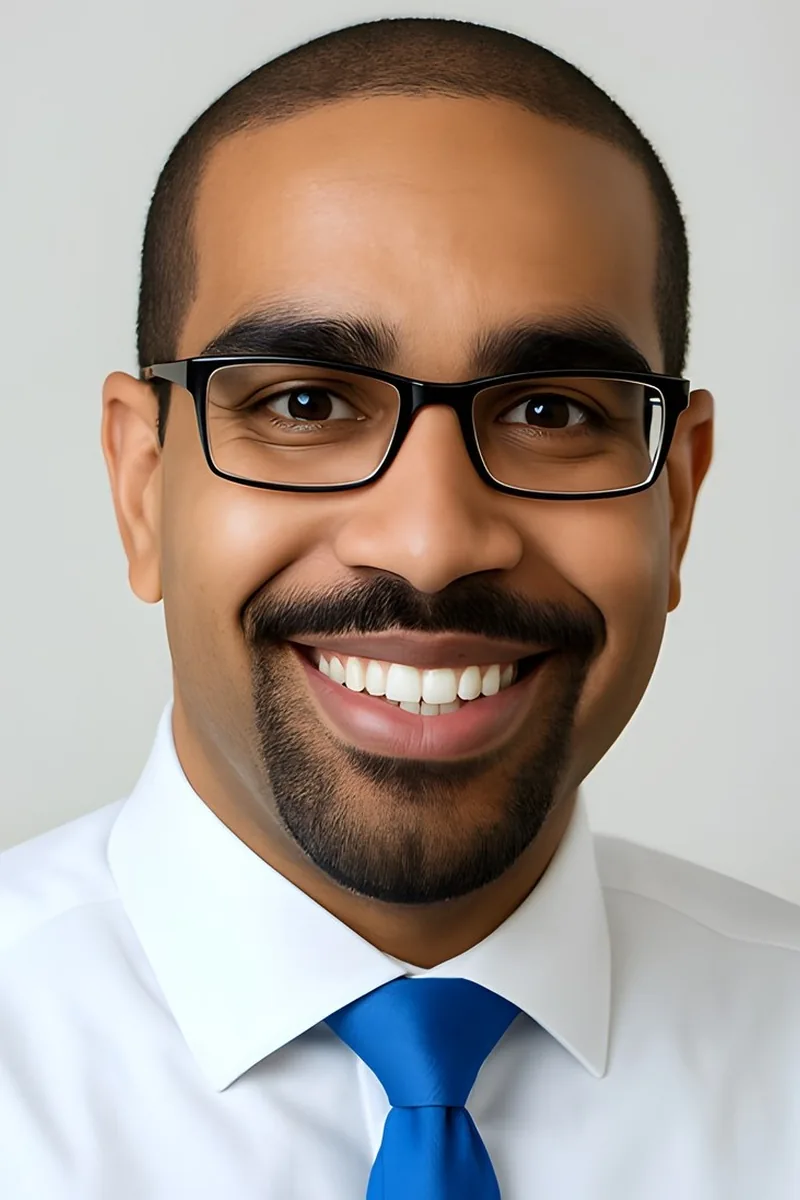
Winning Duke's DT Stallings Award for sustained tutoring of local school students means Taariq has logged serious hours watching where calculus understanding actually breaks down — and BC's leap into series, parametric curves, and advanced integration is where breakdowns happen fastest. His math degree from Duke gives him the theoretical grounding to trace a student's confusion with, say, a ratio test or a polar area integral back to the specific AB concept that isn't solid yet. Rated 4.9 by students.
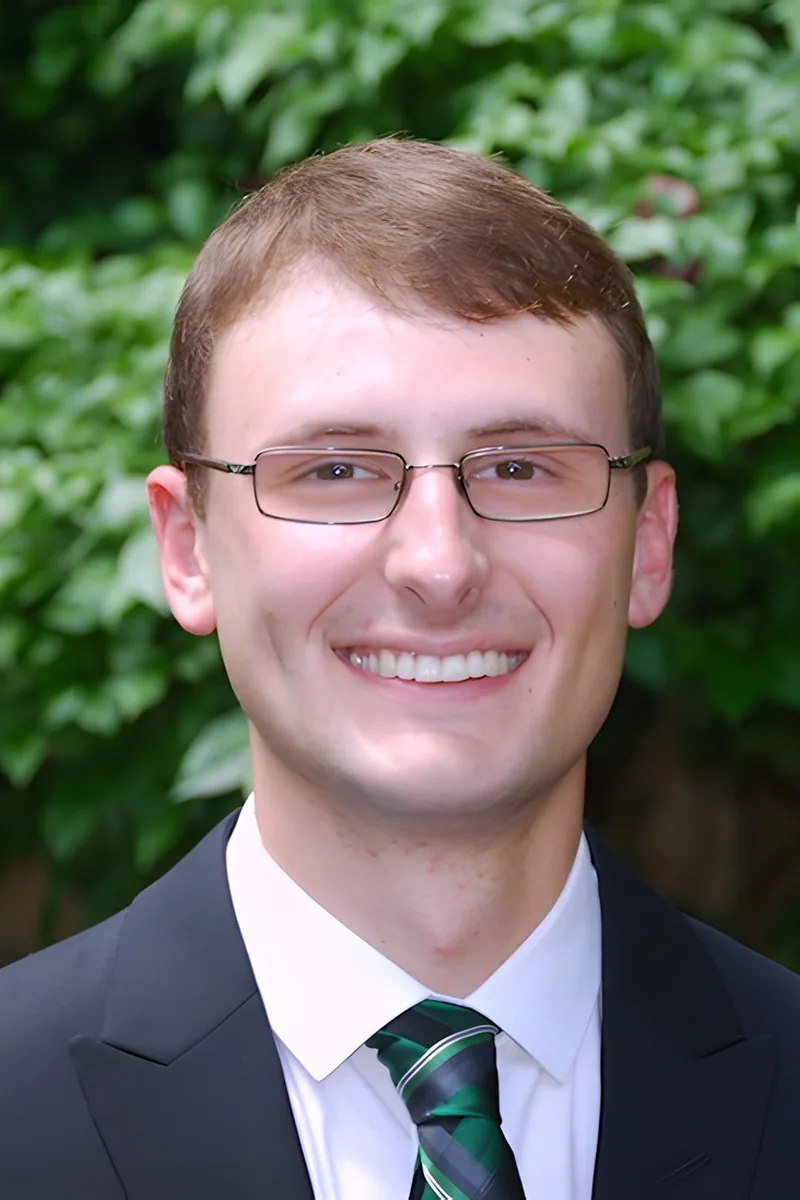
Matt's math degree gives him the formal grounding to teach BC's trickiest material — convergence criteria, polar area integrals, parametric derivatives — while his quantitative policy work at Duke means he regularly uses series approximations and integration techniques to model real decisions. That combination keeps his explanations precise without feeling purely theoretical, because he can show students exactly where a Taylor expansion or an improper integral does actual work outside the classroom. Rated 5.0 by students.
Series convergence, parametric equations, and polar coordinates can feel like a firehose of disconnected topics — but they're not. Jordan connects BC-specific material back to the core calculus intuitions students already have, drawing on the advanced math he used daily through a PhD in bioengineering at Georgia Tech.
Economics and data science at UC Berkeley meant Rebecca spent semesters immersed in the calculus that powers econometric modeling — series approximations, integration techniques, and the kind of rigorous limit reasoning that BC piles on top of AB. She now works as an economic researcher, so tools like convergence criteria and polynomial approximations stay active in her day-to-day quantitative work rather than gathering dust. Rated 5.0 by students.
Civil engineering coursework is where BC Calculus stops being theoretical — Elisa used series approximations for structural load analysis and integration techniques for modeling stress distributions throughout her degree, so topics like Taylor polynomials and improper integrals carry practical weight when she teaches them. She's particularly sharp at tracing a student's confusion with convergence tests back to shaky AB-level reasoning about limits, then rebuilding from there. Rated 4.8 by students.
Most BC students can follow a Taylor series procedure on the board but freeze when asked to choose between convergence tests on their own — Tanay, a math major at UNC Chapel Hill, zeroes in on that decision-making gap by teaching the underlying logic of each test rather than just the mechanical steps. His 35 ACT and 5.0 tutoring rating back up an approach that builds BC's toughest topics directly from the AB concepts students already trust.
Series convergence is where most AP Calculus BC students start to feel lost — Taylor polynomials, ratio tests, and interval-of-convergence problems demand a different kind of mathematical intuition than AB material. James tackles these topics by building each series concept visually and algebraically, connecting new ideas back to the limit foundations students already know. His 1550 SAT and 35 ACT speak to the depth of his math fluency.
BC Calculus layers on convergence tests, parametric equations, and polar coordinates right when students think they've mastered integration. Shourya breaks these topics into visual, intuitive pieces — connecting Taylor series to function behavior, for instance, so the formulas feel like natural extensions rather than arbitrary rules. His physics background at UNC Chapel Hill gives him a constant supply of real applications to make the math click.
Teaching BC Calculus for an international test prep company — alongside SAT Subject Tests and high school physics — gave Corey a detailed map of where students stall: usually the transition from AB techniques into series convergence, Taylor polynomial error analysis, and parametric integration. His Duke biomedical engineering degree meant applying those same tools to model biological systems, so he explains convergence tests and approximation methods as practical reasoning rather than formula lists. Rated 5.0 by students.
When BC students hit the wall of series convergence tests — ratio, root, integral, comparison — the real problem is usually that they're memorizing a checklist instead of understanding what each test actually checks. Artem, an electrical and computer engineering undergrad who uses these tools in circuit and signal analysis, teaches the reasoning behind each test so students can identify which one applies and why. Rated 5.0 by students.
Most BC students can follow a convergence test step by step but freeze when they have to choose which test to apply — that decision-making is where Sarah, a mathematics-statistics major, zeroes in. Her statistical training sharpens the way she teaches series and approximation topics, since stats coursework demands comfort with summation behavior and error analysis that maps directly onto Taylor polynomials and remainder bounds. A 1450 SAT and 34 ACT reflect the kind of precise, methodical thinking she brings to each session.
Physical chemistry coursework is where BC Calculus stops being theoretical — Amanda uses series approximations and integration techniques daily in her chemistry program, which means she teaches topics like Taylor polynomials and convergence tests as tools she actually relies on, not abstract procedures. She's especially sharp at tracing a stuck moment on, say, an interval of convergence problem back to the specific limit or comparison reasoning that needs reinforcing.
Kenan's mathematical economics training means he's comfortable with the kinds of series, parametric equations, and integration techniques that make BC a step up from AB. He walks through convergence tests and Taylor polynomials by connecting each tool to the problem it was invented to solve, which keeps the logic clear even when the notation gets dense.
Teaching discrete math at Penn while finishing a CS master's means Keenan lives in the world of rigorous mathematical argument — the same mindset that separates students who survive BC from those who actually understand it, especially when series convergence proofs and error bound reasoning demand more than mechanical computation. His philosophy undergraduate training adds an unusual edge: he treats each BC concept like a logical claim that needs justification, which makes topics like the Lagrange remainder or comparison tests feel structured rather than arbitrary. Rated 5.0 by students.
As a multivariable calculus teaching assistant at Harvard's Math Department, Kristi spent semesters watching exactly where students' BC foundations cracked under pressure — shaky series intuition, mechanical convergence testing, parametric reasoning that never quite solidified. Her astrophysics training means she learned these tools by necessity, using Taylor expansions to model orbital mechanics and integration techniques to analyze planetary data, so she teaches the logic driving each method rather than just the steps. Rated 5.0 by students.
Biomedical engineering at Johns Hopkins means Bidyut uses series approximations and differential equations to model biological systems — the same convergence tests and integration techniques that define the BC curriculum beyond AB. He's especially sharp at showing how a topic like Taylor polynomial error bounds connects back to the derivative reasoning students already trust, turning what feels like a wall of new material into a logical extension. Holds a 5.0 rating and a 36 ACT composite.
Scoring a 36 on the ACT while majoring in chemistry at MIT means Nicholas lives in the overlap where rigorous math meets scientific application — and BC Calculus sits right at that intersection. He's especially good at breaking down series convergence and integration techniques by grounding them in the kind of approximation problems he encounters in physical chemistry coursework, so the logic behind a ratio test or a Taylor expansion feels earned rather than arbitrary. Rated 5.0 by students.
Series convergence, parametric equations, and polar curves make BC the course where strong calculus students finally have to slow down and think carefully. Anthony earned his BS in physics and math from Yale, where these concepts weren't just exercises — they were the language of electromagnetism and classical mechanics. He teaches BC topics by connecting each technique to why it exists and when it matters.
Until age 16, Viktor saw math as blind formula memorization — then a series of teachers at the right moment revealed the deeper logic underneath, and he ended up majoring in math at UChicago, where rigorous proof-based coursework made concepts like convergence and infinite series feel inevitable rather than arbitrary. That shift from "memorize the ratio test" to "understand why it works" is exactly what he brings to BC Calculus, especially when students hit the wall where AB intuition stops and formal reasoning about Taylor polynomials and error bounds needs to take over. His 1600 SAT and current CS master's work at NYU keep that analytical edge sharp.
BC Calculus piles on convergence tests, parametric equations, and polar curves right when students think they've mastered AB material. Jake tackles series and sequences by teaching students to build a decision tree for which convergence test applies, turning one of the most overwhelming units into a systematic process.
Coming out of Thomas Jefferson High School for Science and Technology — one of the most rigorous STEM pipelines in the country — Rhamy had BC Calculus concepts like series convergence and parametric integration locked down before most students even encounter them. His computer engineering program at Vanderbilt keeps those tools sharp daily, since signal analysis and circuit design lean heavily on the same Taylor expansions and differential equations that define the BC curriculum. Rated 5.0 by students.
Studying applied physics at Cornell, Ritesh encounters BC-level calculus constantly — parametric motion in mechanics, series approximations in wave theory, integration techniques in electromagnetism — so he teaches these topics as interconnected tools rather than isolated chapters. He's especially sharp at walking through the logic of convergence tests, where students often memorize steps without understanding which test to reach for and why. His 1440 SAT and 4.6 rating speak to that clarity.
Molecular biology might seem distant from BC Calculus, but Agustin's 1560 SAT and deep comfort with competition math mean he's built the kind of rigorous problem-solving instincts that make topics like convergence tests and parametric derivatives tractable rather than terrifying. He breaks down the logic behind each technique — why the ratio test actually tells you something, how polar area integrals connect back to Riemann sums — so the BC extension from AB feels like a natural next step. Rated 4.5 by students.
Molecular biology at Yale means Maxwell lives in calculus-heavy territory — modeling gene expression rates, quantifying cell growth curves, analyzing reaction kinetics — so BC topics like differential equations and series approximations aren't abstract exercises for him but tools he actually reaches for in research. He's especially good at walking through the logic of integration techniques and parametric problems by grounding them in the AB concepts students already trust. Holds a 5.0 rating.
Testimonials
Because the right AP Calculus BC tutor makes all the difference.
Average Session Rating – Based on 3.4M Learner Ratings
Practice AP Calculus BC
Free practice tests, flashcards, and AI tutoring for AP Calculus BC
Nearby AP Calculus BC Tutors
Other Asheville Tutors
Related Math Tutors in Asheville
Frequently Asked Questions
Varsity Tutors matches Asheville students with expert AP Calculus BC tutors for 1-on-1 instruction. We pair each student with a tutor based on their specific needs, learning style, and goals.
Whether you need homework help, exam prep, or want to get ahead, our AP Calculus BC tutors are ready to help.
Common challenges include gaps from earlier material, difficulty with specific concepts, and trouble applying learning to new problems. These issues can snowball quickly in AP Calculus BC.
A tutor identifies where you're stuck, fills in gaps, and provides targeted practice. The 1-on-1 format means you get help exactly where you need it.
Tutors work with your student's actual coursework—homework assignments, class notes, and upcoming tests. This keeps tutoring directly relevant to what's happening in the classroom.
When you share information about your student's school and curriculum, we can match you with a tutor who has relevant experience.
All tutors complete background checks, credential verification, and teaching evaluation. Many of our AP Calculus BC tutors hold advanced degrees or have years of teaching experience.
You can review tutor profiles to find someone with the right background for your student's level and needs.
Many students see improved grades within a few weeks, along with better understanding of AP Calculus BC concepts and more confidence tackling challenging material.
Tutors track progress and adjust their approach to ensure continued improvement.
Most students benefit from 1-2 sessions per week. More frequent sessions help if your student is significantly behind or has an important exam coming up.
Your tutor can recommend a schedule based on your student's specific situation and goals.
Tutoring is purchased in packages of hours, with rates varying by tutor experience. Varsity Tutors offers several options to fit different budgets and needs.
You can discuss pricing during your consultation to find what works best.
Your tutor will assess where your student is, discuss goals, and start working on priority areas. Most students bring current homework or upcoming test material to focus on.
By the end, you'll have a clear sense of how the tutor can help and a plan for moving forward.
Let’s find your perfect tutor
Answer a few quick questions. We’ll recommend the right plan and match you with a top 5% tutor.