Award-Winning Mechanical Engineering Tutors
serving Bronx, NY
Mechanical Engineering
Tutors in Bronx
Private 1-on-1 tutoring, weekly live classes for academic support, test prep & enrichment, practice tests and diagnostics, and more to elevate grades and test scores.
Based on 3.4M Learner Ratings
UniversitiesSchools & Universities
DeliveredHours Delivered
ProficiencyGrowth in Proficiency
Who needs tutoring?
No obligation. Takes ~1 minute.
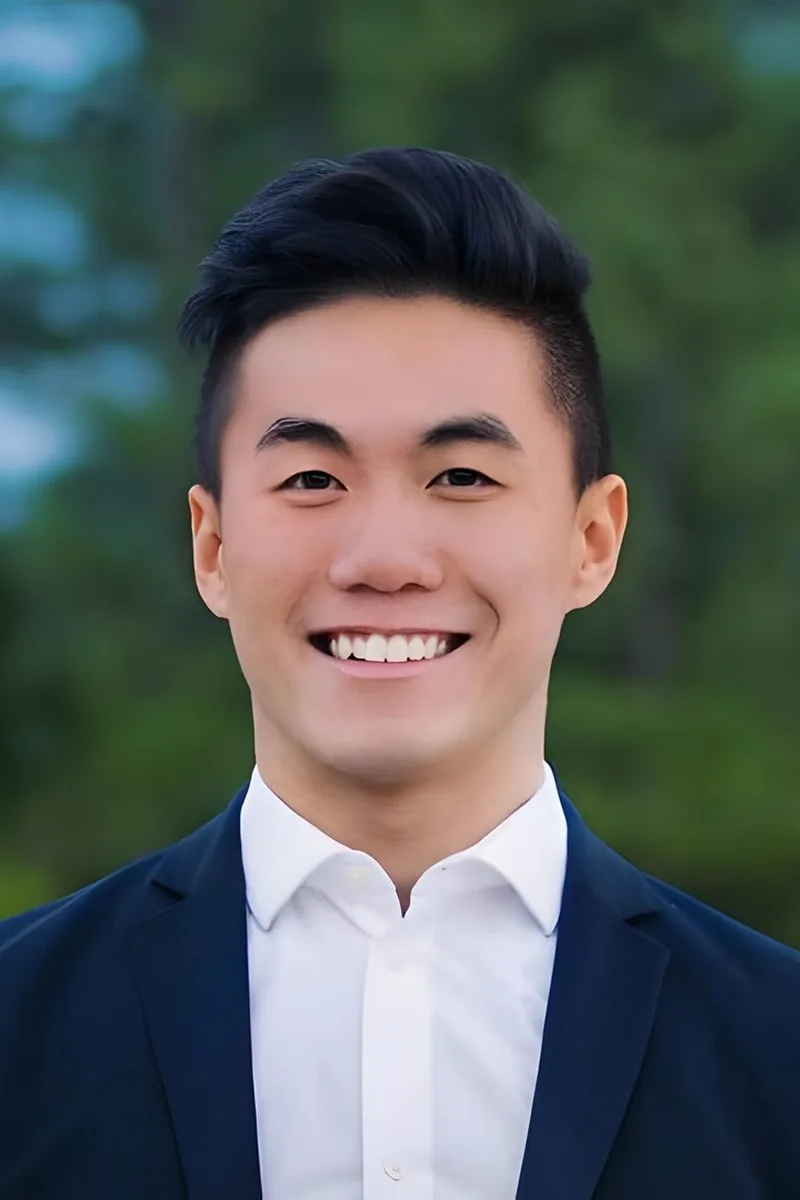
As a current mechanical engineering grad student, Aaron is immersed daily in thermodynamics, fluid mechanics, and solid mechanics — the exact coursework his students are navigating. He tackles problem sets by connecting governing equations to physical intuition, whether that's a free-body diagram for statics or a control volume analysis for fluids. That proximity to the material means he knows which concepts professors emphasize and where students commonly lose points.

Caltech's engineering curriculum gave Brian a rigorous grounding in the physics and math that underpin mechanical engineering — thermodynamics, statics, and the differential equations that govern dynamic systems. His dual background in economics and computer science also means he can approach optimization and modeling problems from an analytical angle that pure ME tutors sometimes skip. He's strongest on the quantitative setup side, helping students translate physical scenarios into solvable equations.
Jeffrey is pursuing his PhD in mechanical engineering at Rice University after completing his undergraduate ME degree at Notre Dame, so he's deeply embedded in the discipline. He tackles core topics like thermodynamics, fluid mechanics, materials science, and machine design with the perspective of someone actively doing research in the field. Students get a tutor who can bridge textbook theory and real engineering analysis.
Ava's dual bachelor's in mechanical engineering and energy engineering from Washington University in St. Louis means she didn't just take the standard ME sequence — she extended it into thermodynamic systems, energy conversion, and sustainability applications. She also served as a teaching assistant for multiple engineering courses, giving her practice at unpacking topics like heat transfer and machine design for students who are hitting walls in their own coursework.
Having earned his bachelor's in mechanical engineering and now working as a practicing engineer, Steve teaches ME coursework from the inside out — thermodynamics cycles, material stress-strain behavior, fluid dynamics, machine design. He unpacks the theory behind each topic while showing how it applies to actual design decisions, which is the leap most textbooks skip.
Fred earned his Mechanical and Aerospace Engineering degree from Princeton, where he tackled thermodynamics, fluid mechanics, materials science, and control systems firsthand. He now applies that training professionally as a consultant, which means he can connect textbook derivations to how engineers actually use them in practice. Students working through statics problems, heat transfer calculations, or machine design get someone who's both studied and lived the material.
Currently pursuing his Master of Science in Mechanical Engineering at Penn, Larkin is deep in the coursework — thermodynamics, fluid mechanics, materials science, and dynamics — that defines this field. He tackles problem sets alongside his own students, which means his explanations reflect how these concepts are actually tested and applied right now.
Studying Mechanical Engineering at MIT with a concentration in Biomedical Devices, Vania is immersed in the subject daily — from thermodynamics and fluid mechanics to materials science and CAD modeling. She brings that hands-on perspective to tutoring, connecting textbook derivations to real design problems like stress analysis in prosthetics or heat transfer in 3D-printed components. Her engineering coursework gives her a practical fluency that makes abstract concepts click.
Solid mechanics, fluid dynamics, and mechanical design are Ashley's self-described sweet spots — and her PhD gives her the depth to unpack everything from Mohr's circle to Navier-Stokes simplifications at whatever level a student needs. She tackles the full undergraduate ME curriculum, connecting theoretical derivations to real design problems so the math feels purposeful.
I am a recent graduate of Princeton University's Mechanical and Aerospace Engineering Department. I am passionate about teaching and mentoring and have done so in multiple capacities over the last four years, including a fellowship during which I taught pre-algebraic math to a group of middle school students from traditionally underserved backgrounds in Saint Paul, MN. I love interacting with students and seeing them grow over the course of their studies. I'm ecstatic at the opportunity to learn alongside them as we venture into educational rabbit holes and uncover key concepts about math, science, and everything else.
Caroline earned her B.S. in Mechanical Engineering and applies that training directly when covering topics like thermodynamics, fluid mechanics, and material properties. She breaks down complex problem sets by connecting theoretical equations to the physical systems they describe, making it easier to see why a formula applies — not just when to use it.
Xiang holds both a bachelor's and master's degree in engineering, which means he's been through the full gauntlet — statics, dynamics, thermodynamics, materials science, and machine design. He digs into free-body diagrams, stress-strain analysis, and energy methods with the kind of detail that turns a confusing problem set into a systematic process.
Before starting his master's at Stanford with a concentration in design and manufacturing, Andrew spent a year at Nike as a Test and Validation Engineer on products like the FuelBand and SportWatch — real product development work involving prototyping, tolerance analysis, and iterative design cycles. That industry experience means he can teach manufacturing processes, CAD-driven design, and material selection with concrete examples from a product that actually shipped.
Notre Dame's Natural Sciences program gave Mark a solid handle on the physics and calculus that mechanical engineering students run into constantly — force analysis, energy systems, and the math connecting them. He approaches engineering problems by grounding them in the underlying science, which is especially useful for students struggling to see why the equations work rather than just how to use them. Rated 4.8 by students.
As a mechanical engineering student at Yale, Andrew is immersed in the discipline right now — thermodynamics problem sets, statics analyses, and CAD projects are his weekly routine. That proximity to the material means he knows which concepts trip students up first (free-body diagrams, stress-strain relationships, energy balances) and can walk through them with recent, firsthand clarity.
Few tutors in mechanical engineering have actually completed a PhD in the field — Bettina has. She digs into thermodynamics, fluid mechanics, materials science, and machine design with the depth of someone who's done original research, and she knows how to translate dense derivations into clear, step-by-step reasoning. Whether it's a statics problem or a heat transfer analysis, she connects theory to the engineering judgment students need to develop.
Currently completing his master's in Mechanical Engineering with a robotics focus at Penn, Mohamed is immersed in statics, dynamics, thermodynamics, and control systems on a daily basis. He tackles coursework-level problems in areas like stress analysis, fluid mechanics, and kinematics with the perspective of someone actively doing the work, not just remembering it. Students get a tutor who can connect textbook theory to real design and research challenges.
Roni is studying mechanical engineering at Brown right now, which means he's actively working through the same statics, dynamics, thermodynamics, and materials science problems his students are facing. That firsthand experience lets him explain tricky concepts — like free-body diagrams or stress-strain relationships — using the shortcuts and intuitions he's built from his own coursework and his interest in aerospace design.
Fadzai earned her B.S. in Mechanical Engineering from Yale with a concentration in 3D mechanical design, working extensively with Onshape and Autodesk Inventor. She teaches everything from statics and material selection to CAD modeling, bridging the gap between theoretical coursework and the hands-on design thinking that actual engineering demands. Rated 5.0 by students.
Benjamin holds a B.S. in Mechanical Engineering and brings that training directly into sessions on statics, dynamics, thermodynamics, and materials science. He approaches problem sets the way working engineers do — sketching free-body diagrams, checking units at every step, and building physical intuition before diving into equations. Students preparing for exams or tackling senior design projects get someone who's lived the curriculum.
Having earned a master's in Mechanical Engineering and a PhD in Bioengineering, both from Georgia Tech, Jordan has deep fluency in thermodynamics, fluid mechanics, materials science, and machine design. He tackles problem sets by connecting theoretical derivations to physical intuition — explaining not just how to apply Mohr's circle or Bernoulli's equation, but why those tools capture what's actually happening in a system.
Currently pursuing his B.S. in Mechanical Engineering at Texas A&M, Irfan tackles coursework in thermodynamics, fluid mechanics, statics, and materials science on a daily basis. He's especially strong at teaching students to set up free-body diagrams and apply conservation laws — the foundational skills that make or break upper-level engineering courses.
Eric doesn't just teach mechanical engineering — he practices it. His master's degree and professional engineering career mean he can dig into statics, dynamics, thermodynamics, fluid mechanics, and materials science with the perspective of someone who applies these principles to real design problems. Students preparing for exams or struggling with specific coursework get explanations grounded in how these concepts actually behave outside the textbook.
Douglas earned his bachelor's in mechanical engineering, so the core curriculum — statics, dynamics, thermodynamics, fluid mechanics — is material he solved under exam conditions himself. As a recent graduate, he brings sharp recall of how to set up control volume problems and work through energy balance equations, connecting the underlying calculus to each engineering concept. Rated 5.0 by students.
Currently pursuing a Master's in Mechanical Engineering after completing his bachelor's in the same field, Daniel brings both academic depth and hands-on problem-solving to topics like thermodynamics, fluid mechanics, statics, and material strength analysis. He breaks down complex derivations into the underlying physical intuition, making it easier to see why equations take the form they do. His approach emphasizes pattern recognition across problem types so students can tackle unfamiliar scenarios on exams.
Studying mechanical engineering at Yale right now, Yossi is immersed in the exact coursework — statics, dynamics, materials science, CAD modeling — that other ME students are navigating. That proximity means he knows which professors' problem sets trip people up and which textbook derivations actually matter. His 5.0 student rating speaks to how effectively he translates that firsthand experience into clearer understanding.
Having started his college career in aerospace engineering before pivoting to biotechnology, Drew spent semesters immersed in statics, dynamics, thermodynamics, and materials science. He walks through free-body diagrams and stress-strain problems with the kind of detail that comes from working through them firsthand, not just reading about them.
As a mechanical engineering major at Case Western Reserve, Kevin is actively working through the core curriculum — thermodynamics, machine design, fluid mechanics, and manufacturing processes. That means he remembers exactly where concepts like stress-strain analysis or free-body diagrams get confusing, and he can explain them with the specificity of someone who just wrestled with the same problem sets.
Statics, dynamics, thermodynamics, fluid mechanics — Sabry's PhD in chemical and biomolecular engineering means he's solved the same problem sets mechanical engineering students are grinding through right now. He teaches the underlying physics and math simultaneously, so students don't just memorize free-body diagram procedures but actually understand why equilibrium equations work and how energy balances connect across systems.
Ziad is a certified EIT currently working in the biomedical industry, with both a bachelor's and master's in mechanical engineering and a specialization in fluid mechanics and heat transfer. He tackles everything from statics and dynamics to thermodynamic cycles and CFD concepts, drawing on firsthand experience with FE exam preparation and professional engineering practice. Students preparing for exams or stuck on design projects get someone who's recently navigated the same material at an advanced level.
Currently pursuing his mechanical engineering degree at Carnegie Mellon, Vincent is immersed in statics, dynamics, thermodynamics, and materials science right now — not years ago. He walks through free-body diagrams, stress-strain relationships, and energy balances with the perspective of someone actively solving these problems in one of the country's top-ranked programs.
Ellyn holds a PhD in mechanical engineering, which means she doesn't just tutor statics, dynamics, and thermodynamics — she's published research that required mastering them. She walks students through free-body diagrams, stress analysis, and fluid mechanics problems with the precision of someone who's applied these tools professionally.
As a practicing engineer with a B.S. in Engineering Sciences, Nate brings real-world project context to topics like statics, dynamics, thermodynamics, and materials science. He approaches each concept through problem-solving rather than lecture, walking through free-body diagrams or stress-strain analyses the way they actually come up in professional work. That blend of academic training and industry experience makes complex coursework feel grounded and purposeful.
As a fourth-year mechanical engineering student at UC Irvine, Alok has completed the full core sequence — statics, dynamics, thermodynamics, fluid mechanics, and machine design. He explains derivations and free-body diagrams the way a classmate who just aced the course would: clearly, with real exam pitfalls called out, and without skipping the steps professors gloss over in lecture.
Adel earned his PhD in Mechanical Engineering and brings deep technical knowledge to topics like stress analysis, fluid mechanics, machine design, and control systems. He breaks down complex derivations into manageable steps, connecting theoretical principles to real engineering applications so students understand not just the math but the physical intuition behind it. Rated 4.8 by students.
As a senior in WPI's Mechanical and Robotics Engineering program, Matthew is currently immersed in the exact coursework his students are navigating — stress analysis, machine design, fluid mechanics, and CAD modeling. That proximity matters: he knows which textbook chapters professors emphasize and where students typically lose the thread. He walks through derivations step by step, making sure the physics behind each equation is clear before applying it to problem sets.
Hallie holds a Master of Science in Engineering and a bachelor's in Mechanical Engineering, so she's tackled the full gauntlet — thermodynamics, fluid mechanics, machine design, materials science. She digs into the specific problem sets and design projects students are working on, connecting theoretical equations to the physical systems they describe. That firsthand experience with the curriculum makes her especially effective for students navigating upper-division coursework.
Having earned a PhD in chemical engineering while also teaching across statics, dynamics, fluid mechanics, and heat transfer, Alexander understands the mechanical engineering curriculum from multiple angles. He breaks down topics like stress analysis, free-body diagrams, and energy balances by tying them back to the underlying physics — making problem sets feel less like guesswork and more like logical steps.
Studying mechanical engineering himself, Matthew is close enough to the coursework to remember exactly where statics problems get confusing, why thermodynamics cycles feel abstract, and how to read a free-body diagram that seems to have too many forces. He approaches each topic with the perspective of someone who recently wrestled with the same problem sets. That firsthand experience shows in his 5.0 student rating.
Dr's PhD in Applied Mathematics gives him a particular edge on the analytical side of mechanical engineering — the differential equations governing heat transfer, the linear algebra behind finite element analysis, and the calculus underpinning fluid dynamics. Where many ME tutors focus on physical intuition first, he builds from the math outward, making sure students can actually set up and solve the governing equations before worrying about interpretation. Rated 4.9 by students, he's especially effective for courses where the mathematics is the bottleneck.
Testimonials
Because the right Mechanical Engineering tutor makes all the difference.
Average Session Rating – Based on 3.4M Learner Ratings
Nearby Mechanical Engineering Tutors
Other Bronx Tutors
Related Science Tutors in Bronx
Frequently Asked Questions
Mechanical Engineering tutoring covers foundational and advanced topics including thermodynamics, fluid mechanics, statics and dynamics, materials science, machine design, and CAD (Computer-Aided Design). Tutors work with students on problem-solving techniques, mathematical applications, and real-world engineering principles. The specific focus depends on whether you're preparing for introductory coursework, upper-level engineering classes, or professional certification exams.
In a typical classroom with an 11.8:1 student-teacher ratio, it's challenging for instructors to address individual learning gaps in complex subjects like Mechanical Engineering. Personalized 1-on-1 instruction allows tutors to focus on your specific weak areas—whether that's mastering force diagrams, understanding energy conservation, or applying calculus to engineering problems. This targeted approach helps you build confidence and develop problem-solving strategies at your own pace.
Students often struggle with the mathematical foundations required for engineering—particularly calculus, physics, and vector analysis. Many also find it difficult to visualize 3D concepts and spatial relationships, or to translate real-world problems into mathematical models. Additionally, applying multiple concepts simultaneously (like combining thermodynamics with fluid mechanics) can feel overwhelming without targeted support and practice.
During your first session, a tutor will assess your current understanding of Mechanical Engineering fundamentals, identify specific areas where you need support, and learn about your academic goals. Whether you're strengthening foundational concepts, preparing for exams, or working through challenging coursework, the tutor will create a personalized plan tailored to your needs and learning style.
Varsity Tutors connects you with tutors who have strong backgrounds in Mechanical Engineering, including those with degrees in engineering disciplines, professional engineering experience, or extensive teaching backgrounds in STEM subjects. Tutors are selected based on their expertise in specific topics and their ability to explain complex concepts clearly to students at various levels.
Yes, many tutors offer support with CAD programs and other engineering software commonly used in coursework and professional practice. Whether you're learning SolidWorks, AutoCAD, or other design tools, tutors can help you understand design principles, improve your modeling skills, and troubleshoot technical challenges as part of your overall engineering education.
Tutors help you master key concepts, practice problem-solving under timed conditions, and develop test-taking strategies specific to engineering exams. Whether you're preparing for midterms, finals, or the Fundamentals of Engineering (FE) exam, personalized instruction focuses on your weak areas and builds the confidence and speed needed to perform well on standardized assessments.
Simply tell us about your specific needs—your current level, the topics you need help with, and your schedule preferences. Varsity Tutors will connect you with an expert tutor who matches your requirements and can provide personalized 1-on-1 instruction. You can start working together quickly to tackle your Mechanical Engineering challenges and achieve your academic goals.
Let’s find your perfect tutor
Answer a few quick questions. We’ll recommend the right plan and match you with a top 5% tutor.