Award-Winning Mechanical Engineering Tutors
serving Syracuse, NY
Mechanical Engineering
Tutors in Syracuse
Private 1-on-1 tutoring, weekly live classes for academic support, test prep & enrichment, practice tests and diagnostics, and more to elevate grades and test scores.
Based on 3.4M Learner Ratings
UniversitiesSchools & Universities
DeliveredHours Delivered
ProficiencyGrowth in Proficiency
Who needs tutoring?
No obligation. Takes ~1 minute.
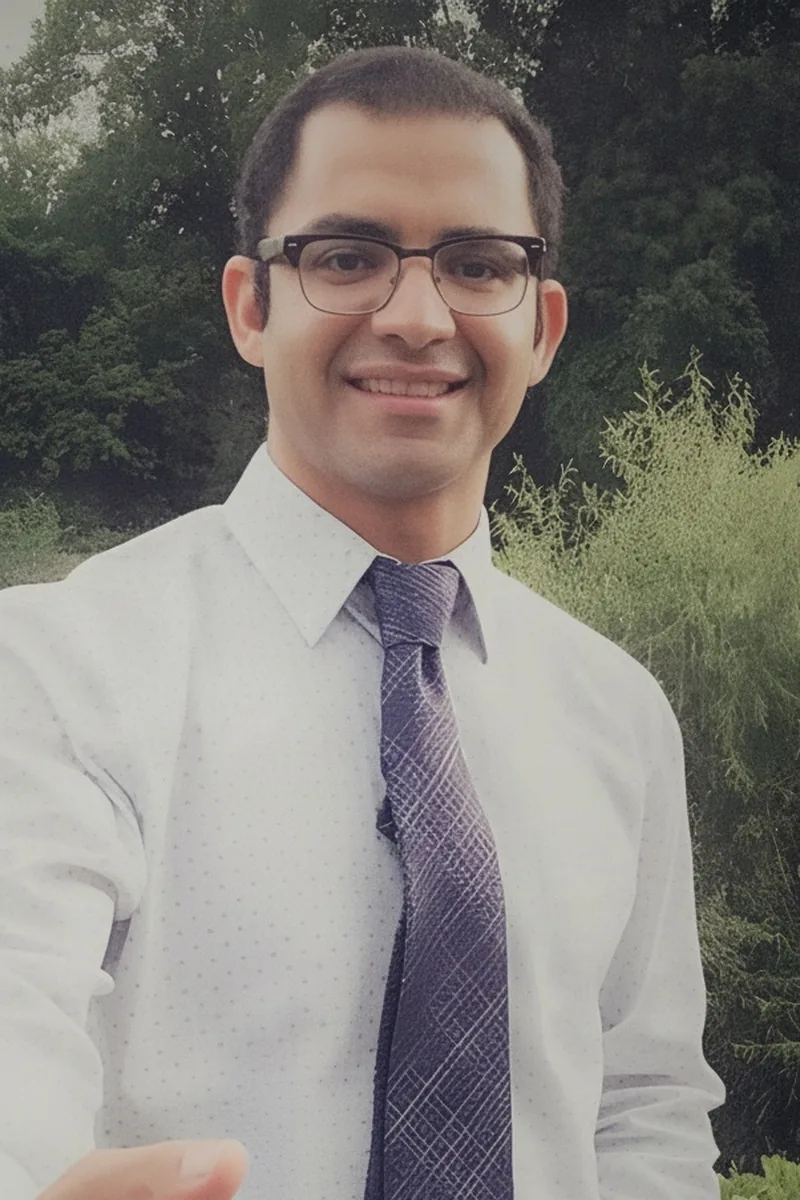
Statics, dynamics, thermodynamics, fluid mechanics — Sabry's PhD in chemical and biomolecular engineering means he's solved the same problem sets mechanical engineering students are grinding through right now. He teaches the underlying physics and math simultaneously, so students don't just memorize free-body diagram procedures but actually understand why equilibrium equations work and how energy balances connect across systems.

John earned his B.S. in Earth and Environmental Engineering from Columbia, where coursework in thermodynamics, materials science, and structural analysis overlapped heavily with mechanical engineering fundamentals. He's particularly strong at walking students through free-body diagrams and stress-strain relationships, connecting the math to the physical intuition behind each problem.
Trevor earned his B.S. in Mechanical Engineering from Northeastern with hands-on experience in 3D printing, aerospace concepts, and mechanical design. He digs into the coursework students actually struggle with — free-body diagrams in statics, stress-strain analysis, and CAD modeling in SolidWorks — because he's recently completed those same problem sets himself. That proximity to the material means he knows exactly where confusion tends to build.
Currently pursuing his B.S. in Mechanical Engineering at Worcester Polytechnic Institute, David is immersed in the coursework he tutors — statics, dynamics, thermodynamics, and materials science aren't abstract topics for him but active weekly problem sets. He approaches tutoring by walking through free-body diagrams, energy balances, and stress-strain analyses the same way he learned them: one clearly defined step at a time. That proximity to the material means he knows exactly where students tend to get stuck.
Devin's Master of Mechanical Engineering means he's gone deep on the design, analysis, and manufacturing sides of the discipline — not just the intro courses but the advanced material that trips up upperclassmen. He approaches problems in dynamics, machine design, and heat transfer by grounding them in the physical intuition engineers actually use on the job, connecting equations back to what's physically happening in a system.
As a mechanical engineering student at RIT, Martin is neck-deep in the coursework he tutors — statics, thermodynamics, materials science, and CAD modeling in tools like Autodesk Fusion 360. He's especially strong at translating free-body diagrams and stress analysis problems into step-by-step solutions that make the physics intuitive rather than formula-heavy. Students working through sophomore- and junior-level ME courses get someone who just solved these same problem sets.
I am a Sophomore college student currently studying Mechanical Engineering at Stony Brook University. I strongly encourage and aims to motivate high school students to become leaders in their careers as engineers, expand the idea of engineering as a means of improving the quality of life, and increase the diversity of the engineering profession.
Douglas earned his bachelor's in mechanical engineering, so the core curriculum — statics, dynamics, thermodynamics, fluid mechanics — is material he solved under exam conditions himself. As a recent graduate, he brings sharp recall of how to set up control volume problems and work through energy balance equations, connecting the underlying calculus to each engineering concept. Rated 5.0 by students.
Steven earned his B.S. in Mechanical Engineering with mechanics as his strongest area — thermodynamic cycles, material stress analysis, and fluid dynamics are concepts he's worked through extensively. He breaks down complex system problems into free-body diagrams and energy balances that make the engineering intuition behind the math visible.
Having started his college career in aerospace engineering before pivoting to biotechnology, Drew spent semesters immersed in statics, dynamics, thermodynamics, and materials science. He walks through free-body diagrams and stress-strain problems with the kind of detail that comes from working through them firsthand, not just reading about them.
Dr's PhD in Applied Mathematics gives him a particular edge on the analytical side of mechanical engineering — the differential equations governing heat transfer, the linear algebra behind finite element analysis, and the calculus underpinning fluid dynamics. Where many ME tutors focus on physical intuition first, he builds from the math outward, making sure students can actually set up and solve the governing equations before worrying about interpretation. Rated 4.9 by students, he's especially effective for courses where the mathematics is the bottleneck.
Having earned his bachelor's in mechanical engineering and now working as a practicing engineer, Steve teaches ME coursework from the inside out — thermodynamics cycles, material stress-strain behavior, fluid dynamics, machine design. He unpacks the theory behind each topic while showing how it applies to actual design decisions, which is the leap most textbooks skip.
Having earned a master's in Mechanical Engineering and a PhD in Bioengineering, both from Georgia Tech, Jordan has deep fluency in thermodynamics, fluid mechanics, materials science, and machine design. He tackles problem sets by connecting theoretical derivations to physical intuition — explaining not just how to apply Mohr's circle or Bernoulli's equation, but why those tools capture what's actually happening in a system.
As a current mechanical engineering grad student, Aaron is immersed daily in thermodynamics, fluid mechanics, and solid mechanics — the exact coursework his students are navigating. He tackles problem sets by connecting governing equations to physical intuition, whether that's a free-body diagram for statics or a control volume analysis for fluids. That proximity to the material means he knows which concepts professors emphasize and where students commonly lose points.
Having earned his bachelor's in aerospace engineering, Matthew shares deep overlap with mechanical engineering coursework — statics, dynamics, thermodynamics, and materials behavior were core to his own degree. He walks through free-body diagrams, stress-strain analysis, and energy balance problems with the fluency of someone who solved them under exam pressure not long ago.
Jeffrey is pursuing his PhD in mechanical engineering at Rice University after completing his undergraduate ME degree at Notre Dame, so he's deeply embedded in the discipline. He tackles core topics like thermodynamics, fluid mechanics, materials science, and machine design with the perspective of someone actively doing research in the field. Students get a tutor who can bridge textbook theory and real engineering analysis.
As a practicing engineer with a B.S. in Engineering Sciences, Nate brings real-world project context to topics like statics, dynamics, thermodynamics, and materials science. He approaches each concept through problem-solving rather than lecture, walking through free-body diagrams or stress-strain analyses the way they actually come up in professional work. That blend of academic training and industry experience makes complex coursework feel grounded and purposeful.
Caroline earned her B.S. in Mechanical Engineering and applies that training directly when covering topics like thermodynamics, fluid mechanics, and material properties. She breaks down complex problem sets by connecting theoretical equations to the physical systems they describe, making it easier to see why a formula applies — not just when to use it.
Brian holds a Master's in Mechanical Engineering, which means he's worked through the full gauntlet: statics, dynamics, materials science, machine design, and manufacturing processes. He breaks down complex system analyses — like free-body diagrams with multiple load paths or stress-strain relationships in different materials — into structured problem-solving steps that build real engineering intuition.
Testimonials
Because the right Mechanical Engineering tutor makes all the difference.
Average Session Rating – Based on 3.4M Learner Ratings
Nearby Mechanical Engineering Tutors
Other Syracuse Tutors
Related Science Tutors in Syracuse
Frequently Asked Questions
Varsity Tutors matches Syracuse students with expert Mechanical Engineering tutors for 1-on-1 instruction. We pair each student with a tutor based on their specific needs, learning style, and goals.
Whether you need homework help, exam prep, or want to get ahead, our Mechanical Engineering tutors are ready to help.
Common challenges include gaps from earlier material, difficulty with specific concepts, and trouble applying learning to new problems. These issues can snowball quickly in Mechanical Engineering.
A tutor identifies where you're stuck, fills in gaps, and provides targeted practice. The 1-on-1 format means you get help exactly where you need it.
Tutors work with your student's actual coursework—homework assignments, class notes, and upcoming tests. This keeps tutoring directly relevant to what's happening in the classroom.
When you share information about your student's school and curriculum, we can match you with a tutor who has relevant experience.
All tutors complete background checks, credential verification, and teaching evaluation. Many of our Mechanical Engineering tutors hold advanced degrees or have years of teaching experience.
You can review tutor profiles to find someone with the right background for your student's level and needs.
Many students see improved grades within a few weeks, along with better understanding of Mechanical Engineering concepts and more confidence tackling challenging material.
Tutors track progress and adjust their approach to ensure continued improvement.
Most students benefit from 1-2 sessions per week. More frequent sessions help if your student is significantly behind or has an important exam coming up.
Your tutor can recommend a schedule based on your student's specific situation and goals.
Tutoring is purchased in packages of hours, with rates varying by tutor experience. Varsity Tutors offers several options to fit different budgets and needs.
You can discuss pricing during your consultation to find what works best.
Your tutor will assess where your student is, discuss goals, and start working on priority areas. Most students bring current homework or upcoming test material to focus on.
By the end, you'll have a clear sense of how the tutor can help and a plan for moving forward.
Let’s find your perfect tutor
Answer a few quick questions. We’ll recommend the right plan and match you with a top 5% tutor.