Award-Winning Middle School Math Tutors
serving Trenton, NJ
Middle School Math
Tutors in Trenton
Private 1-on-1 tutoring, weekly live classes for academic support, test prep & enrichment, practice tests and diagnostics, and more to elevate grades and test scores.
Based on 3.4M Learner Ratings
UniversitiesSchools & Universities
DeliveredHours Delivered
ProficiencyGrowth in Proficiency
Who needs tutoring?
No obligation. Takes ~1 minute.
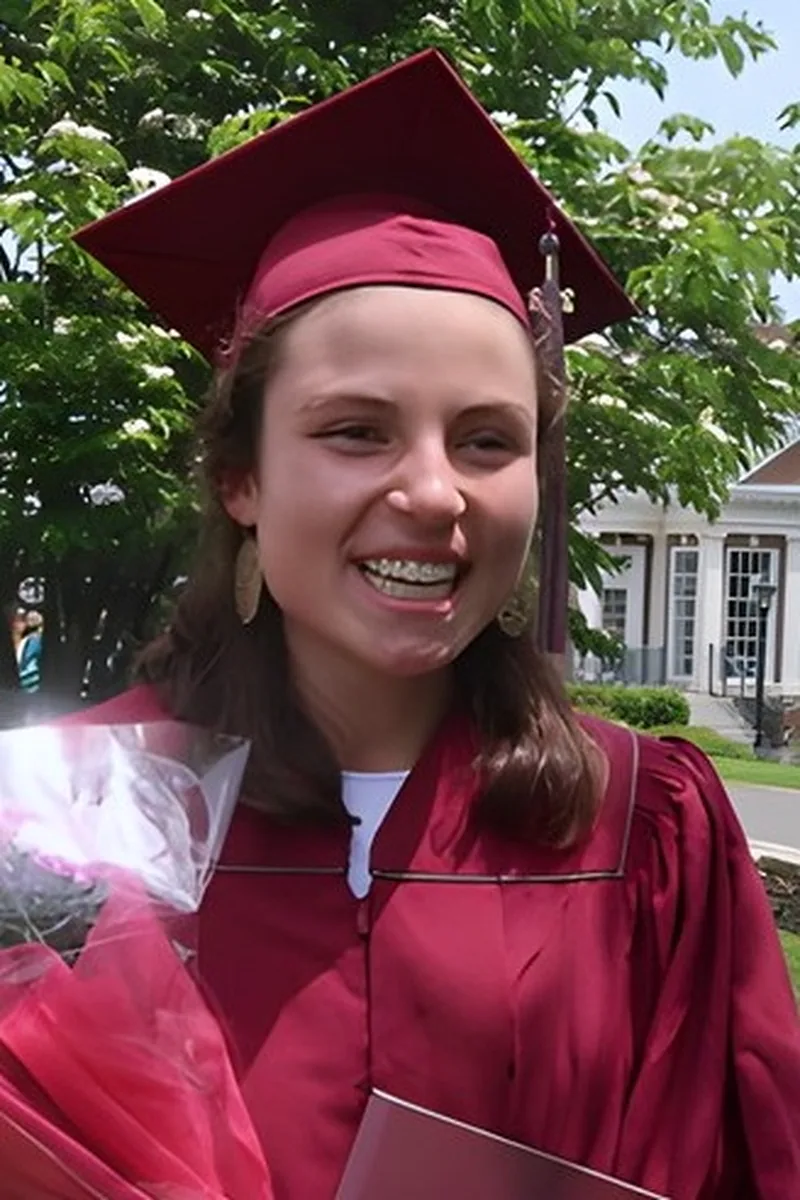
Fractions, ratios, and pre-algebra concepts click faster when a student understands the reasoning behind each step — not just the procedure. Grace spent two years as a middle school TA, which means she knows exactly where sixth and seventh graders tend to get stuck and how to reframe a problem so it makes sense.
Having taught in public school and tutored eighth-graders preparing for private school entrance exams, Grant knows the specific places where middle schoolers get stuck — fractions turning into decimals turning into percents, or the leap from arithmetic into pre-algebraic reasoning. His math degree gives him the depth to explain *why* a method works, which makes it far easier for students to retain.
I am pursuing a career in dentistry/oral surgery and will be beginning dental school at Boston University this fall. For this reason I recently took the DAT, which I am capable of assisting you with as well. During my undergraduate education, which I completed this past December, I worked in my school's tutoring center, helping my peers succeed in mathematics and science courses. Outside of my academic life, I am a big sports fan and I mostly follow the New York sports teams. For fun, I like to play basketball and golf with my friends. I am looking forward towards getting to know you and helping you with your academic needs.
The jump from arithmetic to middle school math trips students up when ratios, proportions, and early algebraic thinking all land at once. Maryanne has tutored math at this level for years, and her approach zeroes in on the specific concept causing the bottleneck — whether that's fraction operations, decimal conversions, or interpreting word problems — before moving forward.
Akarsh's cellular and molecular biology training — both undergrad and master's level — means he's been doing math in the service of science for years, from calculating dilution ratios to interpreting growth curves. That gives him a practical vocabulary for showing middle schoolers how decimals, fractions, and basic equations actually function outside a textbook. His 1560 SAT score speaks to the fundamentals being rock-solid underneath the advanced science.
From ratios and proportions to basic geometry and early equation-solving, middle school math covers a huge range of skills in a short time. Erika's approach is to identify exactly where a student's understanding breaks down — whether it's fractions, decimals, or translating word problems into expressions — and rebuild confidence from that specific point. Rated 5.0 by students.
Acting training in New York City has made Marc unusually good at one thing most math tutors overlook: reading the room. He picks up on the exact moment a middle schooler checks out during a fraction or ratio problem and shifts his explanation on the fly — sometimes reframing it as a real scenario, sometimes slowing down to rebuild a single step. His 1550 SAT speaks to genuine math fluency, but it's that performer's instinct for connection that keeps students engaged through the trickier pre-algebraic concepts.
At the middle school level, math starts asking students to think abstractly for the first time — ratios, proportional reasoning, and early equation work can feel like a completely different subject than what came before. Alex has tutored students across a wide range of ages and adjusts his language and pacing to match each learner. His knack is making concepts like fractions, decimals, and basic geometry feel concrete and logical rather than arbitrary.
Scott approaches middle school math by connecting each new topic — proportions, basic geometry, or introductory statistics — back to ideas students already understand. His background in anthropology actually sharpens this skill: he's trained to find patterns and explain complex systems in accessible terms. Rated 4.8 by students.
The concepts students encounter in middle school math — ratios, proportions, negative numbers, intro to linear equations — set the trajectory for everything that comes after. Calleigh takes each of these seriously, connecting them to real situations so they feel less abstract. Her experience across multiple math levels means she knows exactly which gaps to look for and how to close them.
Scoring a 1590 on the SAT means Isaiah has the kind of fluency with arithmetic, fractions, and proportional reasoning that lets him spot exactly where a middle schooler's logic goes sideways — and explain the fix in plain language rather than textbook steps. His three arts degrees also make him unusually good at reframing a tough concept from a different angle when the first explanation doesn't land. Rated 4.8 by students.
Whether it's ratios, proportions, or early equation-solving, Sharon tailors her approach to match how each middle schooler actually thinks about numbers. Years of working with students as young as six gave her a knack for explaining abstract math concepts in concrete, visual ways that click.
Lauren's Education and Social Policy degree from Northwestern included quantitative coursework in data analysis and research methods, so she's comfortable breaking down the proportional reasoning and basic equation work that middle schoolers encounter — and she knows how to scaffold it for different learners. Her 34 ACT and experience tutoring at a college prep school mean she can spot exactly which foundational gaps in fractions or decimals are tripping a student up before pre-algebra accelerates. Rated 4.9 by families.
The jump from arithmetic to proportional reasoning, integer operations, and basic equation-solving is one of the biggest shifts a student faces in middle school. Joyce tackles these concepts by connecting them to real-world scenarios — rates, percentages, simple data analysis — so the math feels purposeful rather than arbitrary. Her own path from high school valedictorian to Brown gives her a clear sense of what foundational skills matter most.
Fractions, ratios, and proportions come up constantly in Victoria's nutrition science background — calculating dosages, converting units, interpreting data tables. She brings that real-world context into middle school math, showing students why operations with decimals and percentages actually matter outside the classroom.
The jump from elementary math to middle school math trips students up because suddenly they're juggling fractions, decimals, percentages, and negative numbers all in the same problem. Raaga's dual engineering background from Carnegie Mellon means she sees how each of these topics feeds into the next, and she teaches them that way — connecting ratio tables to proportional reasoning to early linear thinking so nothing feels random.
Fractions, decimals, ratios, and early equation-solving can either build real mathematical confidence or quietly create gaps that haunt a student for years. Emily has extensive experience with junior high students and knows how to spot exactly where understanding breaks down. She turns each stumbling block into a concrete, step-by-step explanation.
Having studied biology at Reed College and biostatistics during her MPH at Columbia, Edna has spent years working with the quantitative tools — ratios, data interpretation, basic modeling — that middle school math is quietly laying the groundwork for. She's particularly effective at geometry and measurement topics, where her science background lets her pull in tangible examples from lab work and public health fieldwork that make abstract formulas feel grounded.
The jump from arithmetic to algebraic thinking is one of the biggest shifts in a student's math life, and it usually happens in middle school. Jeff tackles that transition head-on — introducing variables through patterns, teaching proportional reasoning with real scenarios, and making sure integer operations are rock-solid before anything else gets layered on.
The jump from arithmetic to algebraic thinking is one of the biggest leaps in a student's math education, and it happens in middle school. Albina tackles concepts like proportional reasoning, integer operations, and basic equation-solving by building genuine number sense — so students aren't just following steps they'll forget next semester.
Ratios, proportions, and the jump into negative numbers can feel like a different language in middle school. Shalin's approach connects each new concept back to something concrete — using data examples from his bioinformatics work at NYU to show students why these building blocks actually matter outside the classroom.
Teaching middle school Language Arts and Social Studies full-time means Jonathan sees the same students struggling with math across the hall — he knows exactly which concepts like fractions, decimals, and basic equation-solving trip up this age group because he watches it happen daily. His two education degrees and state teaching certification give him formal training in how to break down and sequence lessons for adolescent learners, not just familiarity with the content.
Economics training is essentially applied math — Michael spent his degree building models, interpreting graphs, and manipulating equations, which means topics like ratios, percentages, and basic algebraic expressions are deeply familiar territory. He's particularly effective at showing middle schoolers how to translate a word problem into a clear mathematical setup before touching any arithmetic. Rated 5.0 by students.
Between fractions, decimals, percentages, and early geometry, middle school math covers a huge range of concepts in a short time. Ronit creates structured lesson plans that keep each topic organized, so students aren't juggling five ideas at once. His 5.0 rating speaks to an approach that's thorough without being stressful.
Belinda's neuroscience training at the college level means she spent years working with data, graphs, and quantitative models — but it also taught her how the brain actually encodes new information, which she applies directly when teaching middle schoolers concepts like decimal operations and basic geometry. She breaks each problem into deliberate steps that build on what a student already knows, so new material feels like an extension rather than a leap. Rated 5.0 by students.
I am looking to tutor in the areas of: Math, English, and for test prep. I was an honors student in High School, scored very well on all my tests, and have now earned a scholarship to go to Rutgers University for the Honors Program.
Fractions, ratios, and early algebraic thinking can feel like a sudden jump from the arithmetic students are used to — Noah breaks those transitions down so the logic behind each step is clear. His patient, structured approach to problem-solving builds the kind of number sense that carries into high school math and beyond.
The jump from arithmetic to pre-algebraic thinking is where many middle schoolers lose confidence — fractions become ratios, numbers become variables, and word problems suddenly require multi-step reasoning. Min breaks these transitions down into concrete steps, connecting each new concept to something a student already understands so the abstraction feels earned rather than imposed.
Fractions, ratios, and proportional reasoning can feel abstract until someone shows you how they connect to real problems — that's exactly what Toni does, drawing on her finance background to make number sense click. She tutored elementary and middle school students near her university and knows how to adjust explanations for younger learners who are still building confidence with multi-step problems. Rated 4.9 by students.
The jump from arithmetic to algebraic thinking is one of the biggest conceptual leaps in a student's math education, and it happens right in middle school. Ruby eases that transition by teaching students to translate word problems into expressions and equations step by step, turning intimidating variables into something intuitive. Her 1540 SAT score speaks to the kind of mathematical fluency she brings to every session.
I am currently working towards a doctorate in medicine from New Jersey Medical School. Throughout high school, college, and graduate school, I have tutored students ranging in age from elementary school to college freshmen in a variety of subjects particularly math and science. My favorite subject to tutor is math because it is very methodical and visual. Having a passion to help others, I am drawn to tutoring for the opportunity to share my knowledge with others. My family and friends have described me as being patient, compassionate, and personableall of the qualities that I believe I bring to my students. Outside of tutoring, I like Notre Dame football, dogs (especially my family's German Shepherd!), yoga, cooking, and reading.
The jump from elementary math to middle school math often means juggling ratios, proportions, and negative numbers for the first time. Jeremiah's approach is to anchor each new idea in a concrete example before moving to the abstract, so students actually understand why cross-multiplying works or how a negative times a negative produces a positive. Rated 5.0 by students, he keeps lessons structured without making them feel rigid.
Blake's special education master's degree trained him to diagnose exactly where a student's understanding has gone sideways — a skill that's particularly useful in middle school math, where gaps in fraction fluency or place value quietly sabotage everything from decimals to pre-algebra. His approach leans on breaking a problem into concrete, repeatable steps and then gradually removing the scaffolding as confidence builds. Rated 5.0 by students.
Ratios, proportions, and early equation-solving can feel like busywork until someone shows a student why the steps matter. Tyler keeps middle school math sessions structured and goal-oriented, building confidence with each problem type before layering on complexity. He's tutored students at this level before and knows how to keep things moving without rushing.
Ratios, integer operations, and early equation-solving can feel like disconnected topics to a middle schooler, but Sophie links them together so each new concept reinforces the last. She started tutoring through mentoring programs in high school and has a knack for making math approachable for younger students without dumbing it down.
Claire's political science training at the college level meant constructing logical arguments from evidence — a skill that maps directly onto helping middle schoolers learn to set up and solve equations systematically. She scored a 1500 on the SAT, so the proportional reasoning and number sense underlying middle school math are deeply internalized, and she can trace exactly how today's fraction or ratio problem feeds into the algebra waiting around the corner. Rated 5.0 by students.
Architecture students at Princeton don't just sketch buildings — they calculate loads, angles, and spatial relationships daily, which means Arthur lives inside the geometry and proportional reasoning that middle schoolers are encountering for the first time. He's particularly good at turning abstract number relationships into something visual and spatial, a habit that comes naturally from design studio work. Rated 5.0 by students.
The jump from fifth-grade arithmetic to sixth-grade ratios, proportions, and negative numbers can feel enormous. Brian started tutoring math at Penn's peer tutoring center and has since worked with students across a wide range of ages, giving him a sharp sense of where middle schoolers get stuck — especially on fraction operations and early equation-solving. He builds each session around the specific skill a student needs next, not a generic curriculum.
Fractions, ratios, and proportions trip up a lot of middle schoolers because the rules seem arbitrary without context. Rosie connects these concepts back to real-world scenarios — budgeting, cooking, scaling — drawing on her finance background to make abstract operations feel concrete. She also tackles integer operations and early equation-solving so students build genuine number sense heading into algebra.
Whether it's working with decimals, plotting points on a coordinate plane, or solving one-step equations, Steven approaches middle school math by building confidence in each skill before layering on the next. He's patient and methodical — traits he's honed as an engineering student who knows that getting the fundamentals right early pays off for years.
Testimonials
Because the right Middle School Math tutor makes all the difference.
Average Session Rating – Based on 3.4M Learner Ratings
Nearby Middle School Math Tutors
Other Trenton Tutors
Related Math Tutors in Trenton
Frequently Asked Questions
Varsity Tutors matches Trenton students with expert Middle School Math tutors for 1-on-1 instruction. We pair each student with a tutor based on their specific needs, learning style, and goals.
Whether you need homework help, exam prep, or want to get ahead, our Middle School Math tutors are ready to help.
Common challenges include gaps from earlier material, difficulty with specific concepts, and trouble applying learning to new problems. These issues can snowball quickly in Middle School Math.
A tutor identifies where you're stuck, fills in gaps, and provides targeted practice. The 1-on-1 format means you get help exactly where you need it.
Tutors work with your student's actual coursework—homework assignments, class notes, and upcoming tests. This keeps tutoring directly relevant to what's happening in the classroom.
When you share information about your student's school and curriculum, we can match you with a tutor who has relevant experience.
All tutors complete background checks, credential verification, and teaching evaluation. Many of our Middle School Math tutors hold advanced degrees or have years of teaching experience.
You can review tutor profiles to find someone with the right background for your student's level and needs.
Many students see improved grades within a few weeks, along with better understanding of Middle School Math concepts and more confidence tackling challenging material.
Tutors track progress and adjust their approach to ensure continued improvement.
Most students benefit from 1-2 sessions per week. More frequent sessions help if your student is significantly behind or has an important exam coming up.
Your tutor can recommend a schedule based on your student's specific situation and goals.
Tutoring is purchased in packages of hours, with rates varying by tutor experience. Varsity Tutors offers several options to fit different budgets and needs.
You can discuss pricing during your consultation to find what works best.
Your tutor will assess where your student is, discuss goals, and start working on priority areas. Most students bring current homework or upcoming test material to focus on.
By the end, you'll have a clear sense of how the tutor can help and a plan for moving forward.
Let’s find your perfect tutor
Answer a few quick questions. We’ll recommend the right plan and match you with a top 5% tutor.