Award-Winning AP Calculus BC Tutors
serving Trenton, NJ
AP Calculus BC
Tutors in Trenton
Private 1-on-1 tutoring, weekly live classes for academic support, test prep & enrichment, practice tests and diagnostics, and more to elevate grades and test scores.
Based on 3.4M Learner Ratings
UniversitiesSchools & Universities
DeliveredHours Delivered
ProficiencyGrowth in Proficiency
Who needs tutoring?
No obligation. Takes ~1 minute.
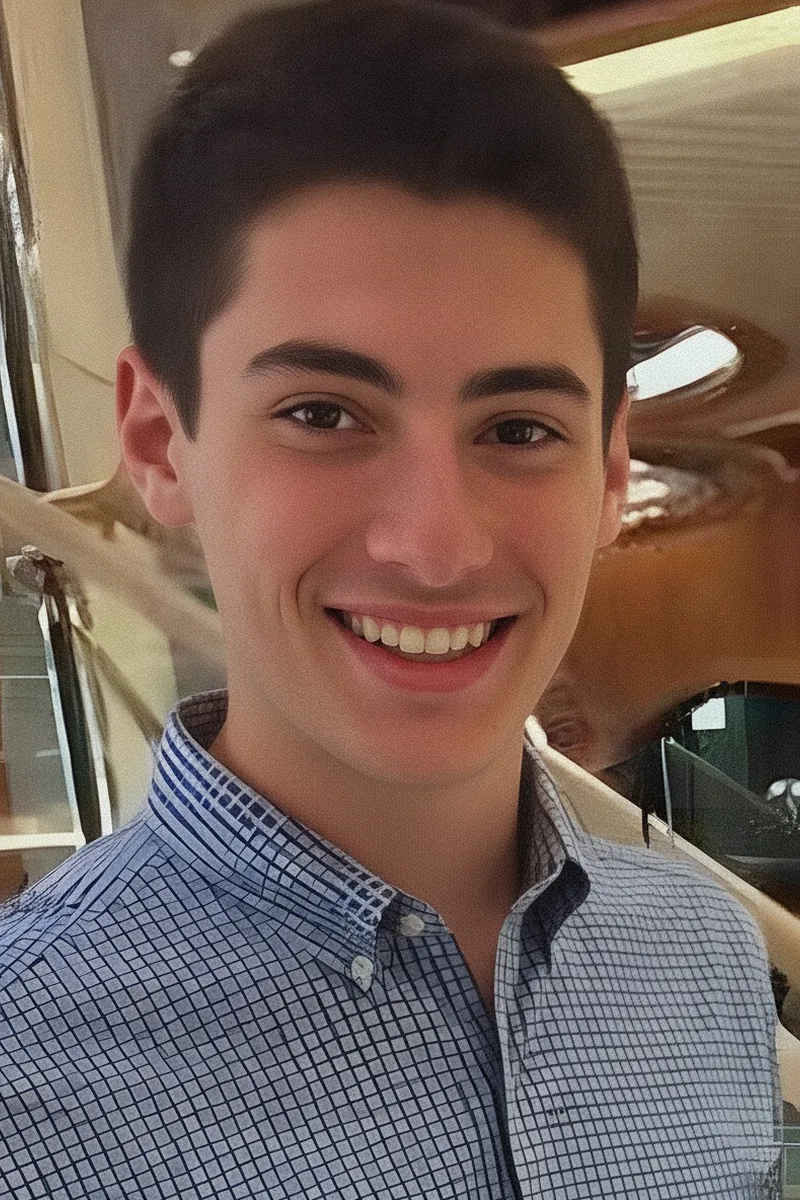
Studying applied mathematics at Stanford means Alex isn't just recalling BC topics from a past exam — he's actively using series, parametric equations, and advanced integration in his current coursework, which keeps his explanations sharp and grounded in how the math actually behaves. He's especially good at tracing a tricky convergence test or Lagrange error bound back to the core AB reasoning that makes it click. Rated 4.8 by students.

Princeton's electrical engineering program leans hard on series expansions and differential equations from day one — Sabrina uses them to analyze circuits and model signal behavior in her applied physics coursework, which means BC topics like Taylor polynomials and convergence tests aren't abstract exercises for her but tools she reaches for weekly. She's especially clear at breaking down the logic behind each convergence test so students can choose the right one on their own instead of guessing. Rated 5.0 by students.
Scoring a 36 on the ACT while studying environmental engineering at Cornell means Akanksha lives in the calculus that BC demands — her coursework in fluid dynamics and pollutant modeling leans heavily on integration techniques, series approximations, and differential equations. She breaks down the transition from AB to BC by treating topics like convergence tests and parametric curves as practical extensions of tools students already trust, not as an overwhelming new syllabus. Rated 4.8 by students.
BC Calculus piles on convergence tests, parametric equations, and polar curves right when students think they've mastered AB material. Satya tackles series and sequences by teaching students to recognize which convergence test applies and why, drawing on the rigorous calculus foundation his Princeton engineering coursework required. His perfect 36 ACT reflects the kind of precision he brings to breaking down multi-step problems.
I am a student at the Honors College of Rutgers - New Brunswick. I am currently working towards attaining a B.S. in Biochemistry, as well as a minor in Business and Administration. Over the last five years, I have reconciled my passion for teaching and my desire to interact with fellow students through tutoring. While I have tutored in a broad range of subjects, I am most passionate about science, math, and English. Having taught many students, each of whom were different in terms of personality and learning style, I understand the importance of tailoring the lesson to the student's strengths. As a result, I work to create unique, individualized learning plans that engage the student and make learning feel like an opportunity, rather than a chore.
Min's MS in Electrical Engineering wasn't just theoretical — it meant routinely using Laplace transforms, Fourier series, and improper integrals to analyze real circuit behavior, which is the exact calculus BC demands past the AB curriculum. She teaches convergence tests by walking through the reasoning behind each one rather than handing students a memorization chart, connecting every new technique back to the limit and derivative logic they already trust. Holds a 5.0 rating.
With plans for a PhD in Mathematics, Alexander treats BC topics like series convergence and Taylor polynomial construction as the opening chapters of deeper theory — which means he teaches them with the kind of precision that makes the reasoning stick, not just the formulas. His math degree from Colby and 5.0 rating come from breaking down exactly where BC builds on AB foundations, so students see improper integrals and parametric derivatives as logical next steps rather than unfamiliar territory.
BC Calculus layers convergence tests, parametric equations, and polar curves on top of an already demanding AB foundation, and the pace leaves little room to fall behind. Rishik tackles series and sequences by teaching students to recognize which convergence test applies and why, turning what feels like guesswork into a systematic decision tree. His 1580 SAT speaks to the kind of precision he brings to mathematical reasoning.
Series convergence tests, parametric equations, and polar area problems are where most BC students start feeling lost — Sophie tackles each of these by connecting them back to the AB foundations students already know. Her chemical engineering coursework at Stevens means she uses these tools daily, so she teaches them with the fluency of someone who genuinely relies on them. Rated 5.0 by students.
BC Calculus piles on convergence tests, parametric equations, and polar curves right when students think they've mastered AB material. Giovanni digs into the logic behind series convergence — ratio test, integral test, comparison — so students can identify which tool fits a problem instead of guessing. His math and CS background at Emory keeps him sharp on the rigorous side of these concepts.
Structural engineering coursework doesn't just use calculus — it demands the specific tools BC covers, from series approximations for load analysis to integration techniques for modeling stress distributions across beams. Dylan brings that applied fluency to tutoring, turning abstract convergence tests and parametric problems into something students can visualize and reason through. Rated 5.0 by students.
BC Calculus layers on concepts like Taylor series, parametric equations, and polar coordinates that demand more than just memorizing formulas — students need to see how each new idea extends what they learned in AB. Shankhadip breaks down topics like convergence tests and integration techniques by building intuition for why each method works, so the logic carries forward into exam problems. Rated 4.8 by students.
Studying for a dual major in Mathematics and Subject-Matter Education means Henry isn't just learning BC topics like series convergence and parametric derivatives — he's simultaneously learning how to teach them, which sharpens how he breaks down the reasoning behind techniques like constructing Taylor polynomials or choosing the right convergence test. That education training shows up in how he sequences ideas, building each BC concept explicitly from the AB foundations underneath it so the course feels like a natural progression rather than a wall of new material.
Georgia Tech's CS curriculum throws convergence, series approximations, and numerical methods at students early — Sophia is working through that material right now, which means she teaches BC topics like Taylor polynomials and integration techniques as someone actively using them, not just remembering them from a textbook. Her 1570 SAT and 5.0 tutoring rating back up an approach that traces every new BC concept to the AB reasoning underneath it, so the course builds rather than buries.
Mechanical engineering at Illinois means Justin is using integration techniques, parametric equations, and series approximations in his coursework right now — so when he teaches BC topics like convergence tests or Taylor polynomial construction, he's drawing on active, working knowledge rather than distant memory. He's especially effective at showing how BC builds directly on AB concepts, breaking down where a new idea like an improper integral is really just a limit argument students have seen before.
BC Calculus layers on series convergence tests, parametric equations, and polar coordinates on top of everything in AB, which means students need rock-solid fundamentals before they can tackle the new material. As a computer science major who scored 1540 on the SAT, Jake approaches these topics with the logical rigor the exam demands — especially when it comes to Taylor series and integration techniques that trip up even strong math students.
Computer engineering coursework at Rutgers has Rahul actively using series expansions and integration techniques in signal processing and circuit analysis — so when he teaches BC topics like Taylor polynomials or convergence tests, he's drawing on problems he solved last week, not concepts he memorized years ago. He's especially sharp at tracing where a BC struggle actually stems from an AB gap, rebuilding the derivative or integral reasoning before layering on the new material. His 1510 SAT and 4.5 rating back up the approach.
BC Calculus layers on convergence tests, parametric equations, and polar curves at a pace that buries students who don't lock in the underlying logic early. Adwait tackles series and sequences by teaching students to recognize which convergence test applies and why, turning what feels like guesswork into a systematic decision process. His own path through advanced math at Rutgers keeps these concepts fresh.
Holding a master's in mathematics, Jacob can trace a student's confusion with, say, constructing a Maclaurin series back to a specific gap in how they think about derivatives — then rebuild the reasoning from that exact point. His approach to error analysis in BC is distinctive: he wants students to understand precisely why their mistakes happen, not just see the corrected work, which turns recurring errors into genuine insight about convergence behavior and polynomial approximation.
When students hit the BC-specific wall — convergence tests blurring together, polar area integrals feeling alien — Brooke traces the confusion back to whichever core idea isn't locked in yet, whether that's a limit concept from AB or a gap in series intuition. Her math degree means she's comfortable moving fluidly between the theory behind something like the Lagrange error bound and the mechanical steps needed to actually compute it on an exam. Rated 4.9 by students.
Computer engineering at Rutgers means Jing is actively using series expansions and integration techniques in signal processing and circuit analysis courses — the same BC topics that trip students up when taught without context. She breaks down convergence tests and Taylor polynomial construction by connecting them to the derivative reasoning students built in AB, making the BC leap feel manageable rather than overwhelming. Rated 5.0 by students.
BC Calculus throws students into series convergence tests, parametric equations, and polar coordinates — topics that feel disconnected unless someone ties them back to the core ideas of AB. Dylan's physics major at Vanderbilt means he uses calculus daily and can show exactly how Taylor series or integration by parts behave visually, not just symbolically. He turns abstract series into something students can sketch, interpret, and reason through on exam day.
BC Calculus layers convergence tests, parametric equations, and polar curves on top of an already demanding AB foundation, and the pacing leaves little room to fall behind. Vinson earned a 36 ACT and National AP Scholar distinction while building the kind of deep mathematical fluency that makes series analysis and integration techniques click. He breaks each new BC topic into the AB concept it extends, so the jump never feels arbitrary.
Molecular biology might seem distant from BC Calculus, but Agustin's 1560 SAT and deep comfort with competition math mean he's built the kind of rigorous problem-solving instincts that make topics like convergence tests and parametric derivatives tractable rather than terrifying. He breaks down the logic behind each technique — why the ratio test actually tells you something, how polar area integrals connect back to Riemann sums — so the BC extension from AB feels like a natural next step. Rated 4.5 by students.
Georgetown's math program gave Peter a rigorous grounding in the theoretical side of calculus — the kind where you prove convergence rather than just test for it — which translates directly into how he teaches BC topics like series, Taylor polynomials, and the Lagrange error bound. He's tutored every level of calculus since high school, and that range means he quickly spots when a BC struggle is actually an AB gap in disguise. Holds a 5.0 rating.
Duke's computer science program required Michelle to live inside the calculus that powers algorithm analysis — convergence behavior, recursive sequences, and the kind of series manipulation that BC students encounter when Taylor polynomials and ratio tests suddenly demand more than AB intuition. She breaks down those topics by tracing each one back to the underlying limit and derivative logic, so the leap to BC feels like a natural next step rather than a wall. Holds a 5.0 rating from students.
Series convergence tests, parametric equations, polar curves — BC Calculus piles on topics fast, and falling behind on even one unit can snowball. JF scored a perfect 1600 SAT and is studying mathematical and computational science at Stanford, where the calculus concepts from BC are the everyday language of coursework. That recent fluency means explanations stay intuitive rather than overly formal.
Series convergence tests, parametric equations, polar curves — BC Calculus piles on concepts fast, and falling behind on one unit can cascade through the rest of the course. Ethan breaks each new topic back to its AB foundation before building upward, so students see Taylor series and integration techniques as extensions of ideas they already own rather than entirely new material.
I am a graduate of Cornell University's College of Arts and Sciences. I received my Bachelor of Arts in Chemistry with Distinction in 2015. Since graduation, I was a physics/chemistry teacher and soccer coach at a private school in Virginia for a year, where I led the soccer team to an undefeated season. Before teaching and coaching professionally, I was a Teaching Assistant for the Cornell Math and Physics Departments, where I taught many subjects including calculus, mechanics, electromagnetism. Throughout my time at Cornell and as a teacher, I tutored subjects ranging from the SAT to AP Physics and Algebra II, which is where my true talents lie: in small group or one-on-one settings where I can give students the full attention they deserve and tailor my approach specifically to their learning styles. This is why I am now pursuing tutoring as a part-time occupation at Varsity Tutors. I embrace teaching all math and science subjects, especially physics and calculus, at both the college and high school level and will go above and beyond to make sure all of my students succeed, according to their definition of success. In my spare time, I enjoy playing league soccer, basketball, tennis and guitar, and also like to travel and see as much of the world as I can.
Studying applied physics at Cornell, Ritesh encounters BC-level calculus constantly — parametric motion in mechanics, series approximations in wave theory, integration techniques in electromagnetism — so he teaches these topics as interconnected tools rather than isolated chapters. He's especially sharp at walking through the logic of convergence tests, where students often memorize steps without understanding which test to reach for and why. His 1440 SAT and 4.6 rating speak to that clarity.
BC Calculus layers convergence tests, parametric equations, and polar curves on top of an already demanding AB foundation, and keeping all of it organized is half the battle. Tessa's approach is to unpack each new topic by tying it back to core ideas students already understand — showing, for instance, how Taylor series are really just an extension of local linearity. She's a math major at Yale with a 4.9 client rating.
Having worked as a teaching assistant for multiple engineering courses at Washington University in St. Louis, Ava spent hours breaking down the calculus that trips students up most — and BC's jump into series convergence, parametric derivatives, and advanced integration techniques is exactly the material she kept revisiting with struggling engineers. Her dual degree in mechanical and energy engineering means she's applied Taylor expansions and improper integrals to real thermodynamic and fluid systems, giving her a concrete vocabulary for explaining why these tools matter beyond the AP exam.
Rachel's 35 ACT and economics coursework at WashU mean she's comfortable with the quantitative reasoning BC demands, though her real edge is in how she breaks down the transition from AB material into BC-specific territory — particularly series convergence and polynomial approximations, where students often memorize tests without understanding what they're actually checking. She approaches each new BC tool by rebuilding the calculus logic underneath it, so topics like the ratio test or integration by parts hold up under exam pressure instead of falling apart.
Testimonials
Because the right AP Calculus BC tutor makes all the difference.
Average Session Rating – Based on 3.4M Learner Ratings
Practice AP Calculus BC
Free practice tests, flashcards, and AI tutoring for AP Calculus BC
Nearby AP Calculus BC Tutors
Other Trenton Tutors
Related Math Tutors in Trenton
Frequently Asked Questions
Varsity Tutors matches Trenton students with expert AP Calculus BC tutors for 1-on-1 instruction. We pair each student with a tutor based on their specific needs, learning style, and goals.
Whether you need homework help, exam prep, or want to get ahead, our AP Calculus BC tutors are ready to help.
Common challenges include gaps from earlier material, difficulty with specific concepts, and trouble applying learning to new problems. These issues can snowball quickly in AP Calculus BC.
A tutor identifies where you're stuck, fills in gaps, and provides targeted practice. The 1-on-1 format means you get help exactly where you need it.
Tutors work with your student's actual coursework—homework assignments, class notes, and upcoming tests. This keeps tutoring directly relevant to what's happening in the classroom.
When you share information about your student's school and curriculum, we can match you with a tutor who has relevant experience.
All tutors complete background checks, credential verification, and teaching evaluation. Many of our AP Calculus BC tutors hold advanced degrees or have years of teaching experience.
You can review tutor profiles to find someone with the right background for your student's level and needs.
Many students see improved grades within a few weeks, along with better understanding of AP Calculus BC concepts and more confidence tackling challenging material.
Tutors track progress and adjust their approach to ensure continued improvement.
Most students benefit from 1-2 sessions per week. More frequent sessions help if your student is significantly behind or has an important exam coming up.
Your tutor can recommend a schedule based on your student's specific situation and goals.
Tutoring is purchased in packages of hours, with rates varying by tutor experience. Varsity Tutors offers several options to fit different budgets and needs.
You can discuss pricing during your consultation to find what works best.
Your tutor will assess where your student is, discuss goals, and start working on priority areas. Most students bring current homework or upcoming test material to focus on.
By the end, you'll have a clear sense of how the tutor can help and a plan for moving forward.
Let’s find your perfect tutor
Answer a few quick questions. We’ll recommend the right plan and match you with a top 5% tutor.