Award-Winning Microeconomics Tutors
serving Newark, NJ
Microeconomics
Tutors in Newark
Private 1-on-1 tutoring, weekly live classes for academic support, test prep & enrichment, practice tests and diagnostics, and more to elevate grades and test scores.
Based on 3.4M Learner Ratings
UniversitiesSchools & Universities
DeliveredHours Delivered
ProficiencyGrowth in Proficiency
Who needs tutoring?
No obligation. Takes ~1 minute.

Supply-and-demand diagrams are easy until you hit consumer and producer surplus, deadweight loss from price controls, or the math behind profit maximization in different market structures. Rohan digs into the logic behind each model so students can derive answers rather than memorize curve shifts. His economics degree means he connects introductory micro concepts to the bigger analytical framework they feed into.
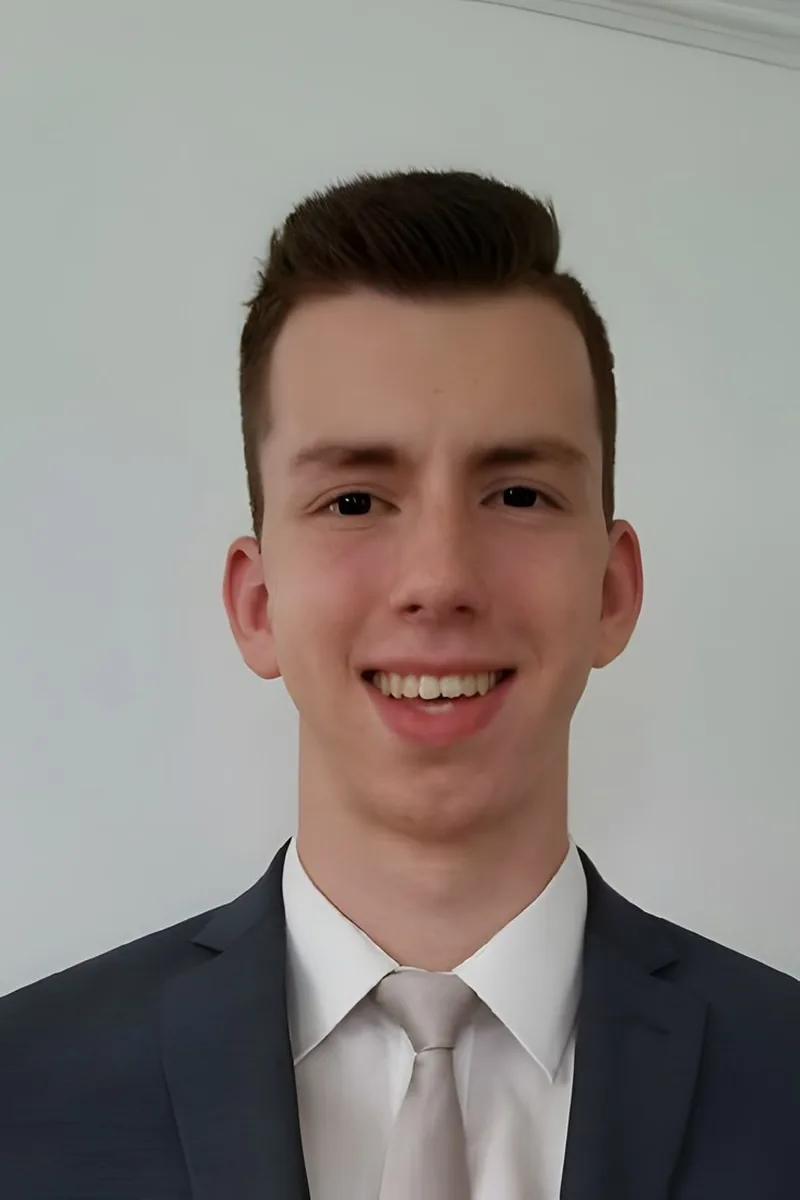
Supply and demand curves look simple until a student has to explain why a price ceiling creates a deadweight loss or how elasticity determines tax incidence. Toni unpacks these concepts using real market examples drawn from her finance coursework at Rutgers, connecting textbook graphs to actual pricing decisions. Her 4.9 rating speaks to an approach that makes economic intuition stick.
Marginal cost curves, deadweight loss, price discrimination — microeconomics is full of concepts that look straightforward on a graph but get tricky the moment a problem changes one variable. Jeremiah's economics degree means he can explain the intuition behind each model, not just the mechanics of solving it. He's particularly effective at teaching students to interpret graphs and translate them into written economic reasoning.
Elasticity, market structures, and consumer choice theory all become clearer when a tutor can show how the math and the intuition fit together. Andre's economics degree and his experience tutoring Econometrics at the Rutgers Learning Center mean he can walk students through utility maximization and cost curves with both graphical and algebraic precision.
An economics minor at Rutgers Business School means Ema is studying microeconomic theory alongside the supply chain coursework where those principles show up constantly — how firms decide what to produce, where pricing power comes from, and why input costs ripple through an entire market. She connects concepts like elasticity and production functions to tangible business scenarios, which tends to make the graphs feel less abstract for students seeing them for the first time. Rated 5.0 by students.
Economics is Andrew's actual major at Vassar, so micro concepts like elasticity, consumer surplus, and firm optimization aren't abstract textbook material — they're what he's actively studying and problem-solving through. His strong quantitative chops (1520 SAT) mean he can handle the math behind indifference curves and cost minimization while keeping the economic intuition accessible, especially for AP students who need both the graphical and analytical sides to click.
I'm a recent graduate of Lehigh University who is extremely excited to begin tutoring. I was initially admitted into Lehigh's school of business and spent a year there before realizing my need to pursue my true passion for English. I graduated in only three and a half years with a Bachelor's degree in English as well as a minor in creative writing. Through my time at school I have peer edited countless papers, critiqued works of fiction, and written a considerable amount of my own material.
I am a very motivated individual that will ensure all my students succeed in their studies. I have a great teaching style that is unique to each student that I work with, and I work hard to make sure my students not only master the material they need to learn, but also understand how to study and prepare on their own.
I am a student at the Honors College of Rutgers - New Brunswick. I am currently working towards attaining a B.S. in Biochemistry, as well as a minor in Business and Administration. Over the last five years, I have reconciled my passion for teaching and my desire to interact with fellow students through tutoring. While I have tutored in a broad range of subjects, I am most passionate about science, math, and English. Having taught many students, each of whom were different in terms of personality and learning style, I understand the importance of tailoring the lesson to the student's strengths. As a result, I work to create unique, individualized learning plans that engage the student and make learning feel like an opportunity, rather than a chore.
I'm an academic in the research fields of mathematics and computer science. I'm a strong believer in the benefits of well-guided mentorship in learning a new topic and have a long history of effective tutoring. I will do everything I can to make sure my students understand concepts thoroughly in an environment that's pleasant and conducive to learning.
I am looking to tutor in the areas of: Math, English, and for test prep. I was an honors student in High School, scored very well on all my tests, and have now earned a scholarship to go to Rutgers University for the Honors Program.
I'm a rising sophomore student at the University of Illinois at Urbana-Champaign! I am primarily looking to help out upper middle school/high school students with subjects like Algebra, SAT prep, as well as AP Statistics and AP Microeconomics. I have had learning experience in all of the above subjects in a high school and/or college setting, and I believe in getting students engaged with real world examples as well as other test prep material, while also providing insight to all the tips and tricks needed for test and subject prep!
I am a sophomore at Rutgers University who loves to learn and teach! Some of my hobbies are classical music singing and watching sports such as soccer and football.
I am a sophomore at Rutgers University studying Computer Science. I have a lot of experience working with both younger children and teenagers, as I have been a volunteer tutor for the past four years. Tutoring in English is always fun for me, as I have been an avid reader since I was a young child, and it is a subject that I have always enjoyed. Moreover, I also like to tutor in math and math related subjects, because I myself often struggled with math when I was younger, and I found it very frustrating. Now that I am older, I realize the reason I found it so uninteresting was because it was taught too quickly without any real discussion of what we were doing. I now make sure that all of my students understand the fundamental ideas behind the materiel they are learning, and this allows them to ace their exams easily.
Elasticity, marginal cost curves, game theory matrices — microeconomics is deceptively math-heavy for a social science. Ryan earned his bachelor's degree in economics and tackles micro by grounding every graph and equation in the real-world decision it represents, so students can reason through unfamiliar problems on exams instead of relying on memorized steps.
Supply and demand curves are just the starting point — microeconomics gets interesting when students tackle consumer theory, elasticity, and market structures like oligopoly and monopolistic competition. Katherine's economics degree from Penn and her day job in management consulting mean she can ground these models in real business decisions, making abstract graphs feel intuitive.
Cognitive science trained Amanda to think about how people make decisions under constraints — which is essentially what microeconomics formalizes with models of consumer choice, firm behavior, and resource allocation. She breaks down the reasoning behind concepts like utility maximization and market equilibria by connecting them to the decision-making frameworks she studied at Northwestern, making the abstract logic behind the graphs feel grounded and intuitive.
A political science degree from Williams College means Noah studied how policy decisions ripple through markets — tax incidence, rent controls, minimum wage effects — where microeconomic models meet real-world trade-offs. He teaches students to trace the logic of those models, breaking down why a subsidy shifts a curve or how deadweight loss emerges, rather than treating graphs as shapes to memorize for an exam.
Marginal cost curves, consumer surplus, and Cournot competition all demand comfort with derivatives and optimization — skills Romeo has sharpened through years of advanced mathematics study. He teaches microeconomics by making the math transparent: once a student can set up and solve the constrained optimization problem, the economic intuition follows naturally.
Elasticity, marginal utility, and market structures like oligopoly and monopolistic competition each require a different way of thinking — and Grant's economics degree gave him deep fluency with all of them. He breaks down consumer and producer theory using concrete examples, making the graphs and equations feel like tools rather than obstacles.
With an applied math degree and PhD-level engineering work, Professor Florence tackles microeconomics from a deeply quantitative angle — the kind that makes optimization problems, constrained utility maximization, and cost function analysis feel like natural extensions of calculus rather than foreign territory. She teaches the mathematical machinery behind economic models so students understand what they're solving, not just how to push symbols around on an exam.
David's sociology research at Columbia and Chicago trained him to model how individuals make decisions under constraints — which is exactly what microeconomics formalizes with utility functions, budget lines, and optimization problems. His computer science background adds fluency with the quantitative side, from setting up cost minimization equations to interpreting the slopes of indifference curves. Rated 4.9 by students.
Consumer choice theory, production functions, market structures — microeconomics is full of models that look abstract until someone shows you how they map onto real behavior. Natalie's dual focus in economics and engineering at Duke means she approaches these models both intuitively and mathematically, breaking down each graph until the logic behind it is clear.
Supply and demand curves are just the starting point — the real challenge in microeconomics is applying them to consumer theory, production costs, and market structures like oligopoly and monopolistic competition. Ezra's economics degree gives him deep fluency with these models, and his finance background means he can connect textbook graphs to actual pricing and strategy decisions students find intuitive.
Elasticity, consumer surplus, market structures, deadweight loss — microeconomics is full of concepts that seem intuitive until you're asked to graph them or solve for equilibrium mathematically. Hans pairs his Northwestern economics training with a knack for walking through the algebra behind the graphs, making sure students understand both the visual and quantitative sides of each model. He holds a 5.0 rating.
Elasticity is where most microeconomics students first feel lost — the formulas seem straightforward, but applying them to tax incidence or consumer surplus problems requires real conceptual understanding. Mustafa tackles these topics by working through progressively harder problems and explaining the economic intuition at each step. Four years of tutoring have given him a sharp sense of where students get stuck between "I memorized it" and "I actually get it."
Testimonials
Because the right Microeconomics tutor makes all the difference.
Average Session Rating – Based on 3.4M Learner Ratings
Nearby Microeconomics Tutors
Other Newark Tutors
Related Business Tutors in Newark
Frequently Asked Questions
Varsity Tutors matches Newark students with expert Microeconomics tutors for 1-on-1 instruction. We pair each student with a tutor based on their specific needs, learning style, and goals.
Whether you need homework help, exam prep, or want to get ahead, our Microeconomics tutors are ready to help.
Common challenges include gaps from earlier material, difficulty with specific concepts, and trouble applying learning to new problems. These issues can snowball quickly in Microeconomics.
A tutor identifies where you're stuck, fills in gaps, and provides targeted practice. The 1-on-1 format means you get help exactly where you need it.
Tutors work with your student's actual coursework—homework assignments, class notes, and upcoming tests. This keeps tutoring directly relevant to what's happening in the classroom.
When you share information about your student's school and curriculum, we can match you with a tutor who has relevant experience.
All tutors complete background checks, credential verification, and teaching evaluation. Many of our Microeconomics tutors hold advanced degrees or have years of teaching experience.
You can review tutor profiles to find someone with the right background for your student's level and needs.
Many students see improved grades within a few weeks, along with better understanding of Microeconomics concepts and more confidence tackling challenging material.
Tutors track progress and adjust their approach to ensure continued improvement.
Most students benefit from 1-2 sessions per week. More frequent sessions help if your student is significantly behind or has an important exam coming up.
Your tutor can recommend a schedule based on your student's specific situation and goals.
Tutoring is purchased in packages of hours, with rates varying by tutor experience. Varsity Tutors offers several options to fit different budgets and needs.
You can discuss pricing during your consultation to find what works best.
Your tutor will assess where your student is, discuss goals, and start working on priority areas. Most students bring current homework or upcoming test material to focus on.
By the end, you'll have a clear sense of how the tutor can help and a plan for moving forward.
Let’s find your perfect tutor
Answer a few quick questions. We’ll recommend the right plan and match you with a top 5% tutor.