Award-Winning Organic Chemistry Tutors
serving Newark, NJ
Organic Chemistry
Tutors in Newark
Private 1-on-1 tutoring, weekly live classes for academic support, test prep & enrichment, practice tests and diagnostics, and more to elevate grades and test scores.
Based on 3.4M Learner Ratings
UniversitiesSchools & Universities
DeliveredHours Delivered
ProficiencyGrowth in Proficiency
Who needs tutoring?
No obligation. Takes ~1 minute.
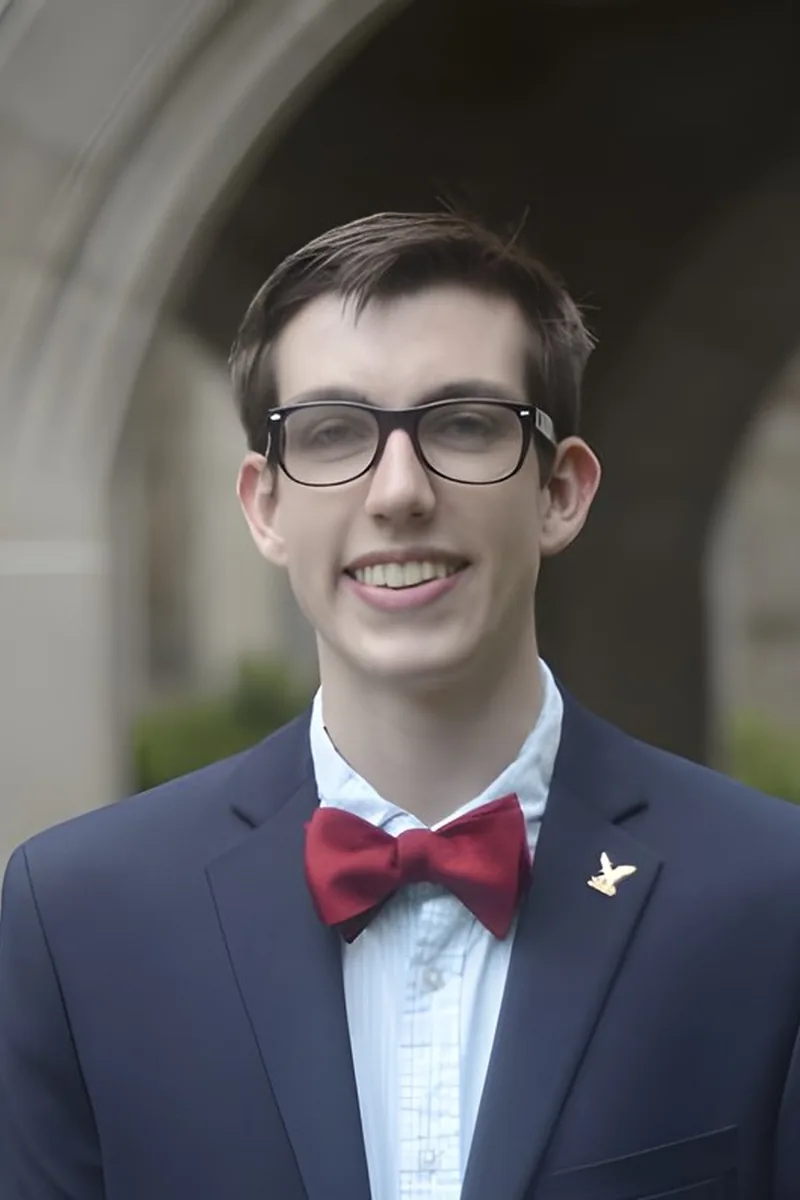
Reaction mechanisms click when you understand electron movement — why a nucleophile attacks one carbon over another, how steric hindrance redirects a pathway, what drives an elimination versus a substitution. Enric's PhD in Chemistry means he's spent years thinking at the mechanistic level and can unpack arrow-pushing, stereochemistry, and retrosynthetic analysis in ways that make each reaction type feel logical rather than arbitrary.
Jeff's molecular biology degree meant spending serious time with organic chemistry — not just passing it, but applying it to understand enzyme active sites, metabolic intermediates, and drug interactions at the molecular level. That applied perspective makes him especially effective at teaching synthesis strategy and functional group transformations, because he can ground abstract mechanisms in real biochemical context. Rated 5.0 by students.
Rohan's economics training built around modeling complex systems and tracing cause-and-effect chains — skills that translate surprisingly well to tracking electron flow through multi-step organic mechanisms. He teaches substitution and elimination reactions by emphasizing the decision points: what makes a good nucleophile, when steric hindrance matters, and how to read a reaction's logic instead of memorizing each outcome individually. Rated 4.9 by students.
As a recent graduate from Cornell University with a degree in biological sciences and someone who plans to attend medical school in the future, my passion and appreciation for the sciences and medicine is something I consider integral to my identity. My favorite subjects to tutor are biology and chemistry as those are the subjects in which I have past teaching experience in the classroom setting. In particular, my teaching style focuses on rephrasing and remodeling initially daunting concepts and information into bite-sized and digestible bits of information that any student can comprehend. I firmly believe that a lot of what slows students down in the learning process is their preconceived notions of course material. My passion for helping students stems from my experiences as an undergraduate where I can remember on countless occasions feeling lost in the material with little direction on how to approach the curriculum. I can think back to the many times I would have benefitted from having someone who could have guided me through stretches of daunting coursework which led me to become a tutor myself. As a teaching assistant, I discovered my passion for helping students manage their way through courses that many considered to be very difficult. Seeing how they reacted to my assistance reminded me why I applied for the position in the first place and motivates me to help students learn more every single day.
Darren's Ph.D. at the University of Pennsylvania centered on synthesizing marine natural products — work that required mastering multi-step reaction sequences, stereochemical control, and retrosynthetic analysis on a daily basis. He teaches organic chemistry by building intuition for electron movement and functional group reactivity, so students learn to predict outcomes instead of memorizing hundreds of individual reactions. That mechanistic approach turns a notoriously difficult course into something genuinely logical.
Reaction mechanisms are the heart of organic chemistry, and Joe reads them the way a musician reads a score — each arrow push tells a story about electron density, sterics, and energetics. His Bachelor's in Chemistry means he's spent serious time with nucleophilic substitutions, elimination reactions, and multi-step synthesis design. He breaks retrosynthetic analysis into a logical, repeatable process instead of treating it as guesswork.
Sam's pre-med coursework at Rutgers put him through the full organic chemistry gauntlet — stereochemistry, spectroscopy, multi-step synthesis — while maintaining a 4.0 GPA. He zeroes in on functional group transformations and teaches students to predict reactivity by analyzing charge distribution and steric environment, turning unfamiliar exam problems into puzzles they can actually solve.
Rachel's biology degree means she didn't just pass organic chemistry — she kept using it, connecting functional group behavior and reaction mechanisms to the biochemical systems she studied in physiology and anatomy courses. That repeated exposure built an intuitive grasp of how carbonyl chemistry and substitution reactions actually work, which she now brings to teaching students who are trying to move past rote memorization of reagent tables. Her 1580 SAT speaks to the kind of precise, analytical thinking that makes arrow-pushing click.
Reaction mechanisms click once you stop memorizing arrow-pushing and start understanding why electrons move the way they do — that's the approach Hannah takes to organic chemistry. Her biology degree means she naturally connects orgo concepts like functional group reactivity and stereochemistry to the biological systems where they actually matter.
I am a student at Boston University majoring in chemistry on the pre-medical track. I will earn my Bachelor of Arts in Chemistry in 2024. I have had experience in the past with peer mentoring and tutoring in which I helped elementary and middle school students with their subjects of difficulty. Through these experiences, I have learned how rewarding tutoring is. I am passionate about helping others reach their goals and I love when I see a student gain confidence in a subject area and apply their newly learned skills to other aspects of their life. My goal is to be a helpful resource to students in tackling their areas of difficulty and succeeding in an academic setting, all while making the learning process enjoyable. While I tutor many subjects, I am most passionate about math, specifically Algebra and Calculus I, and chemistry. I enjoy working with students by explaining problems and concepts with clarity and working with their interests and strengths to help make improvement. I am a firm proponent of communicative teaching and making lessons interesting with beneficial interactive activities and problems. In my spare time, I enjoy reading and being active by playing tennis and running, and spending time outdoors.
Reaction mechanisms, stereochemistry, and functional group transformations all require a kind of visual logic that's unlike anything in general chemistry. Greg's chemical engineering background at Vanderbilt gave him deep exposure to organic reaction pathways, and he teaches students to trace electron movement step by step so they can predict products instead of relying on memorization.
As an MD/PhD student at Northwestern doing doctoral research in organic synthesis, Austin lives in the world of reaction design — figuring out which bonds to form, which protecting groups to use, and why one retrosynthetic route beats another. That daily immersion means he teaches mechanisms and stereochemistry with the fluency of someone who actually builds molecules, not just someone who once passed the course.
Reaction mechanisms are the language of organic chemistry, and Josef teaches students to read them — arrow pushing, stereochemistry, and functional group reactivity — rather than memorize hundreds of individual reactions. His biochemistry focus at Cornell means he can connect orgo concepts like nucleophilic substitution and carbonyl chemistry directly to biological molecules students will encounter later.
Reaction mechanisms are the core of organic chemistry, and most students struggle because they try to memorize arrow-pushing patterns instead of understanding why electrons move where they do. Jamie has tutored organic chemistry extensively alongside his pre-med and medical coursework, and he teaches students to read a mechanism the way you'd read a sentence — identifying the nucleophile, the electrophile, and the driving force before ever drawing an arrow.
Chemical engineering at Cornell meant Rahul didn't just pass organic chemistry — he applied it daily in reactor design, synthesis planning, and thermodynamic analysis of reaction pathways. That engineering lens gives him a distinctive angle on topics like carbonyl chemistry and stereoselectivity, where he ties mechanism logic back to energy landscapes and kinetic versus thermodynamic control. Rated 4.9 by students.
Having completed both semesters of organic chemistry at the University of Michigan — on top of AP Chemistry before that — Ajay knows exactly where students get stuck, whether it's arrow-pushing in reaction mechanisms or keeping substitution and elimination pathways straight. He teaches students to recognize electron behavior patterns so new reactions feel predictable instead of random.
Reaction mechanisms click once you stop memorizing arrow-pushing patterns and start understanding why electrons move the way they do — nucleophilicity, sterics, leaving group stability. Mitchell's neuroscience degree required extensive organic chemistry coursework, and he breaks down everything from substitution and elimination reactions to carbonyl chemistry by connecting each mechanism to the electronic principles driving it.
Daniel's PhD work in genetics and neuroscience at Rockefeller means he uses organic chemistry daily — understanding how small molecules interact with proteins, how drug candidates are designed, and why stereochemistry matters at the molecular level. That real-world context turns topics like carbonyl reactivity and functional group transformations into something students can anchor to actual science, not just exam prep.
Reaction mechanisms in organic chemistry are less about memorizing hundreds of arrows and more about recognizing a handful of recurring patterns — nucleophilic attacks, leaving group stability, and electron density shifts. Aidan studied organic chemistry as part of Notre Dame's premed track and teaches students to predict products by understanding why electrons move, not just where.
Reaction mechanisms are the language of organic chemistry, and Daniel learned to speak it fluently through his microbiology and dental science training. He walks through arrow-pushing, stereochemistry, and functional group reactivity by emphasizing the "why" behind each electron movement — so students can predict products on exam day instead of relying on memorized templates.
Penn's pre-health track put Brittany through rigorous chemistry coursework alongside her psychology degree, and she spent her undergraduate years tutoring General Chemistry I and II at the university's Tutoring Center — building the kind of fluency with reaction fundamentals that carries directly into organic mechanisms. She approaches topics like nucleophilic substitution and carbonyl reactivity by connecting them back to the foundational principles of electron behavior and molecular structure, making each new reaction type feel like an extension of something students already know.
Reaction mechanisms are the language of organic chemistry, and Casey reads them fluently after years of bioengineering coursework that demanded constant fluency in electron-pushing, stereochemistry, and functional group transformations. She teaches students to recognize patterns across reaction types — why nucleophilic additions behave the way they do, how leaving groups dictate substitution vs. elimination — so each new chapter feels like a variation on something familiar rather than a fresh nightmare.
Testimonials
Because the right Organic Chemistry tutor makes all the difference.
Average Session Rating – Based on 3.4M Learner Ratings
Practice Organic Chemistry
Free practice tests, flashcards, and AI tutoring for Organic Chemistry
Nearby Organic Chemistry Tutors
Other Newark Tutors
Related Science Tutors in Newark
Frequently Asked Questions
Varsity Tutors matches Newark students with expert Organic Chemistry tutors for 1-on-1 instruction. We pair each student with a tutor based on their specific needs, learning style, and goals.
Whether you need homework help, exam prep, or want to get ahead, our Organic Chemistry tutors are ready to help.
Common challenges include gaps from earlier material, difficulty with specific concepts, and trouble applying learning to new problems. These issues can snowball quickly in Organic Chemistry.
A tutor identifies where you're stuck, fills in gaps, and provides targeted practice. The 1-on-1 format means you get help exactly where you need it.
Tutors work with your student's actual coursework—homework assignments, class notes, and upcoming tests. This keeps tutoring directly relevant to what's happening in the classroom.
When you share information about your student's school and curriculum, we can match you with a tutor who has relevant experience.
All tutors complete background checks, credential verification, and teaching evaluation. Many of our Organic Chemistry tutors hold advanced degrees or have years of teaching experience.
You can review tutor profiles to find someone with the right background for your student's level and needs.
Many students see improved grades within a few weeks, along with better understanding of Organic Chemistry concepts and more confidence tackling challenging material.
Tutors track progress and adjust their approach to ensure continued improvement.
Most students benefit from 1-2 sessions per week. More frequent sessions help if your student is significantly behind or has an important exam coming up.
Your tutor can recommend a schedule based on your student's specific situation and goals.
Tutoring is purchased in packages of hours, with rates varying by tutor experience. Varsity Tutors offers several options to fit different budgets and needs.
You can discuss pricing during your consultation to find what works best.
Your tutor will assess where your student is, discuss goals, and start working on priority areas. Most students bring current homework or upcoming test material to focus on.
By the end, you'll have a clear sense of how the tutor can help and a plan for moving forward.
Let’s find your perfect tutor
Answer a few quick questions. We’ll recommend the right plan and match you with a top 5% tutor.