Award-Winning Algebra Tutors
serving Newark, NJ
Algebra
Tutors in Newark
Private 1-on-1 tutoring, weekly live classes for academic support, test prep & enrichment, practice tests and diagnostics, and more to elevate grades and test scores.
Based on 3.4M Learner Ratings
UniversitiesSchools & Universities
DeliveredHours Delivered
ProficiencyGrowth in Proficiency
Who needs tutoring?
No obligation. Takes ~1 minute.
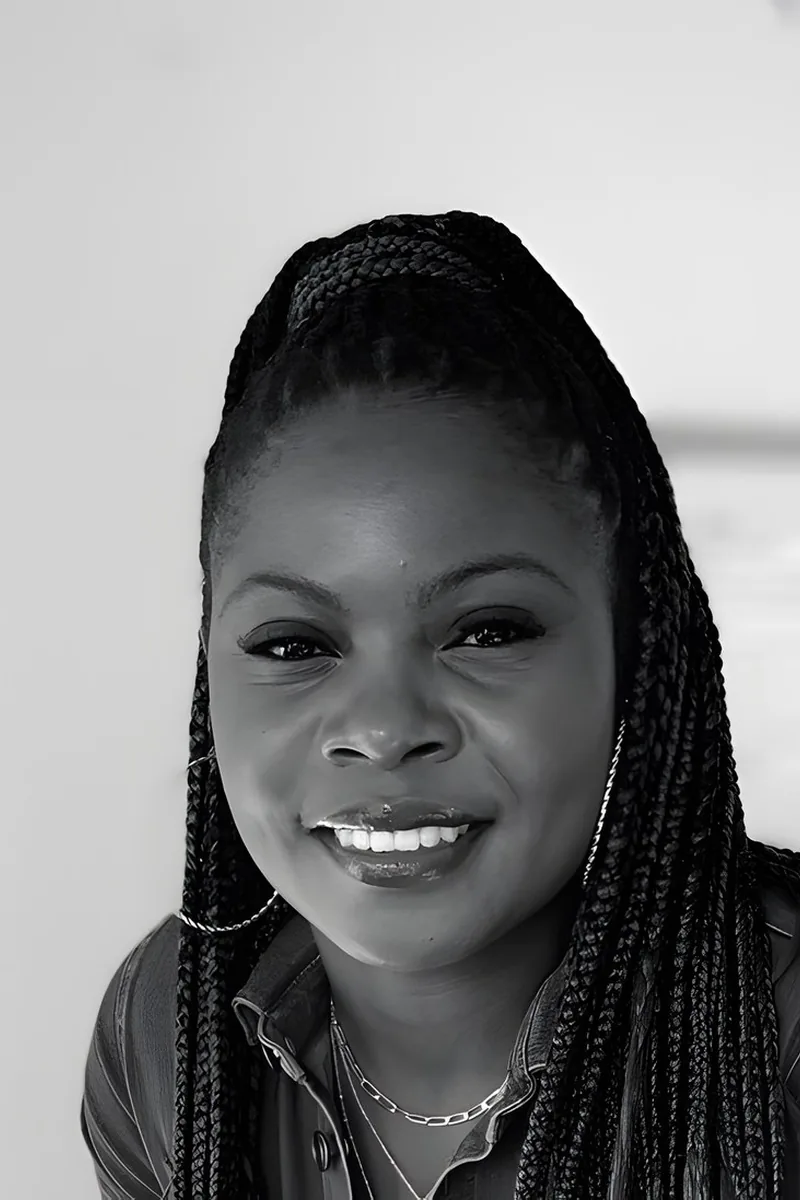
Before students can tackle engineering-level math, they need algebra that actually makes sense — not just memorized procedures. Fadzai breaks down topics like systems of equations and quadratic modeling by tying them to design problems she encountered in her Yale engineering coursework, giving variables and expressions a concrete purpose.

The moment algebra stops being about "solve for x" and starts involving systems, inequalities, or quadratic behavior, many students lose the thread connecting each new technique to the ones before it. Belinda maps those connections explicitly — showing, for instance, how factoring, completing the square, and the quadratic formula are three views of the same problem. Her 5.0 rating comes from making that kind of structural thinking feel natural rather than overwhelming.
A solid grasp of algebraic manipulation — factoring, working with rational expressions, solving systems — is the engine behind every quantitative science course that follows. Sam approaches algebra through that lens, connecting each technique to problems students will actually encounter in chemistry, biology, and beyond.
Word problems are where most algebra students freeze, and that's exactly where Zoe's English background becomes an advantage — she teaches students to translate sentences into equations by identifying what the problem is really saying. Her approach to variables, linear equations, and inequalities emphasizes reading comprehension as much as computation.
The jump from arithmetic to algebra trips students up because suddenly they're solving for unknowns, graphing linear relationships, and manipulating expressions with variables — all at once. Franshesca slows that down, isolating each skill so that solving multi-step equations or factoring polynomials feels like a logical next step rather than a leap. Her goal-oriented session structure keeps progress visible and momentum steady.
When a student stalls in algebra, it's usually not the mechanics — it's that they've lost the thread connecting, say, slope-intercept form to the behavior of a real system. Matt zeroes in on that conceptual link, building fluency with expressions, inequalities, and functions by tying each one back to what it actually represents.
Renee treats algebra as a language with its own grammar — variables, expressions, and equations follow rules that make sense once you see the underlying logic. Her background in linguistics and literary analysis gives her a knack for translating abstract notation into plain, intuitive explanations of topics like systems of equations and polynomial operations.
The jump from solving simple equations to factoring quadratics or working with systems of equations trips up a lot of students who were doing fine before. Akarsh tackles algebra by teaching the reasoning behind each manipulation, so students can set up and solve problems they haven't seen before instead of relying on memorized steps.
The jump from solving simple equations to manipulating systems, factoring polynomials, and interpreting graphs is where many students lose their footing in algebra. Erika teaches each technique by tying it to a logical reason — why we factor, what a solution actually represents on a graph — so that procedures stick instead of evaporating after the test.
Most Algebra struggles come down to one thing: students learn procedures without understanding what the symbols actually represent. Pranav unpacks the reasoning behind operations like factoring quadratics or solving systems of equations, so students can adapt when problems look unfamiliar. His science and engineering training at Johns Hopkins means he constantly translates real-world questions into algebraic setups — a perspective he brings directly into tutoring sessions.
Training as an actor in New York City means Marc thinks in terms of beats and logic — every scene has a setup, a turn, and a resolution, which maps surprisingly well onto solving multi-step algebraic equations where each move has to follow from the last. His 1550 SAT speaks to genuine math chops, and he brings a performer's knack for reading when something isn't landing and shifting his explanation on the fly.
Kyle approaches algebra the way he approaches a good argument: every step needs to follow logically from the last. Whether it's solving systems of equations or simplifying rational expressions, he breaks each problem into smaller moves and explains the reasoning behind them rather than just rattling off procedures.
The moment algebra stops making sense — whether it's factoring trinomials, solving systems, or graphing linear inequalities — every math course that follows gets harder. Alex pinpoints exactly where a student's understanding breaks down and rebuilds from that specific gap rather than re-teaching everything from scratch. His applied math background at Stanford gives him a deep bench of ways to explain the same idea until one clicks.
The jump from arithmetic to algebra trips students up when they try to memorize procedures without understanding why they work. Scott teaches the reasoning behind each step — why you flip an inequality sign when dividing by a negative, or how distributing actually connects to area models — so that solving equations feels intuitive rather than mechanical.
Most algebra frustration comes from not knowing *why* a rule works — why you flip the inequality sign when multiplying by a negative, or why cross-multiplication is valid. Samuel digs into those explanations, drawing on his experience teaching and running tutoring programs in high school to make concepts like systems of equations and factoring feel logical instead of arbitrary.
A lot of algebra frustration comes from memorizing steps without understanding what an equation actually represents. Calleigh unpacks topics like factoring, slope-intercept form, and systems of equations by showing what's happening visually and logically — not just procedurally. Studying economics at Yale has given her a deep appreciation for how algebraic thinking applies well beyond the classroom.
The jump from arithmetic to algebra trips students up when they can't see what a variable actually *represents* — it becomes symbol-shuffling without meaning. Czarina tackles this by grounding each problem type, whether it's solving linear equations or factoring quadratics, in a concrete scenario before moving to the abstract notation. Her 770 SAT Math score and 5.0 rating speak to how well that approach lands.
When variables and equations start feeling abstract, it usually means the connection between the math and what it represents has gotten lost. Grace tackles algebra by grounding concepts like systems of equations and inequalities in concrete scenarios, making the logic behind each manipulation visible rather than mechanical.
Sometimes the biggest barrier in algebra isn't the math itself — it's decoding what a word problem is actually asking. Amy's strength in language and reading comprehension makes her especially effective at teaching students to translate real-world scenarios into equations and inequalities. She tackles everything from linear systems to quadratic expressions with a focus on clarity.
The jump from arithmetic to algebraic thinking trips up a lot of students, especially when variables start representing unknowns in equations and inequalities. River breaks down that transition by connecting abstract expressions to concrete situations — turning a word problem into a solvable equation step by step. Her UChicago training in research methods reinforces the logical structure that algebra demands.
The jump from solving one-step equations to factoring quadratics or manipulating rational expressions trips up a lot of algebra students because the rules seem to multiply overnight. Isaiah tackles this by teaching pattern recognition — showing how distributing, factoring, and simplifying all stem from the same underlying logic. Rated 4.8 by students.
Biochemistry coursework means Elijah solves algebra constantly without calling it that — rearranging rate laws, isolating variables in dilution equations, balancing stoichiometric relationships. That embedded fluency lets him teach skills like solving for unknowns and working with systems of equations as something students will actually use, not just endure. Holds a 5.0 rating.
The jump from arithmetic thinking to algebraic thinking is where most students struggle — suddenly letters replace numbers, and problems require setting up relationships before solving. Samica tackles this transition head-on, walking through how to translate word problems into equations and building fluency with factoring, inequalities, and graphing so the mechanics become second nature.
The jump from solving simple equations to factoring quadratics, graphing linear systems, and working with inequalities is where a lot of students decide they're "not a math person." Krupa pushes back on that narrative — she connects each algebraic concept to a student's own interests so the reasoning behind each step becomes intuitive. Her teaching spans everything from pre-algebra through calculus, so she knows exactly which foundational skills need reinforcing.
Paige tackles algebra by treating equations like scripts — every variable has a role, and the goal is figuring out how the pieces interact. Her methodical approach to systems of equations and quadratic expressions draws on the same close-reading instincts she honed earning a Yale degree Cum Laude.
Alex approaches algebra as a language with its own grammar — variables, expressions, and equations follow rules that become intuitive once you see the underlying logic. His knack for clear explanation, honed through years of writing and literary analysis at Brown, makes untangling word problems and working through systems of equations feel far less intimidating.
Before anyone can thrive in calculus or physics, the algebra has to be automatic — factoring, manipulating rational expressions, solving systems. Sabrina treats algebra as the language it actually is, connecting each manipulation to what it will eventually let a student do in more advanced courses. Her engineering background means she can show exactly where these skills pay off.
As a high school counselor with doctoral-level research in learning disabilities, Mati understands why algebra concepts like variables, inequalities, and systems of equations can feel abstract and frustrating — especially for students who process information differently. She builds each lesson around how a particular student thinks, connecting algebraic reasoning to concrete, real-world scenarios that click. Rated 5.0 by students.
A solid grip on algebra — manipulating expressions, solving systems, understanding function notation — determines how smoothly every later math course goes. Akanksha spent time at Kumon Learning Center working with students on exactly these foundational skills, building fluency with variables and equations from the ground up. She connects algebraic techniques to tangible problems so the rules feel logical rather than arbitrary.
The jump into algebra trips students up when they try to memorize procedures for solving equations, factoring, or graphing lines without understanding why those procedures work. Lauren's training in education at Northwestern gave her concrete strategies for making abstract reasoning accessible — she walks through each algebraic concept with enough context that students can reconstruct steps on their own, not just repeat them.
Factoring, systems of equations, and quadratic functions each demand a slightly different way of thinking, and many algebra students get lost toggling between them. Joyce approaches each topic by building a clear mental model first — what the equation represents, what the solution actually means — before drilling the mechanics. Her quantitative background in biostatistics at Brown keeps her algebra skills sharp and applicable.
A solid grip on variables, factoring, and linear equations opens the door to every STEM subject that follows. Sharon has been teaching algebra concepts for over eight years, and her science-heavy background at Cornell means she naturally ties algebraic thinking to real problems students will see again in chemistry, biology, and beyond. She holds a 5.0 rating.
A math degree builds fluency in algebra that most people never reach, and Janet uses that depth to teach the logic behind techniques like factoring, completing the square, and solving systems of equations. When a student gets stuck on word problems or abstract notation, she traces the idea back to something tangible until the confusion clears. Rated 5.0 by students.
Solving multi-step equations and working with inequalities trips students up when they lose track of *why* each step is valid. Victoria breaks algebraic procedures down into logical reasoning chains, drawing on the same systematic thinking she uses in her PA coursework at Rutgers. She's especially strong at translating word problems into equations students can actually set up on their own.
Building mathematical models of mechanical systems — stress equations, fluid dynamics, kinematic chains — means Jared solves algebra problems the way a mechanic uses a wrench: constantly and without thinking twice. That automatic fluency, built through a biomedical engineering degree and PhD-level mechanical engineering coursework, lets him zero in on where a student's reasoning breaks down when tackling things like systems of equations or function composition. Rated 4.6 by students.
Factoring, systems of equations, quadratic formulas — algebra is full of procedures that feel arbitrary until someone explains the structure underneath them. Raaga approaches each topic by showing students the pattern first, then the shortcut, so they can reconstruct a method even when a problem looks unfamiliar. Her 1550 SAT and 36 ACT scores came from exactly this kind of structural thinking applied under pressure.
From her peer tutoring days in high school through her college coursework, Jenny has spent years untangling algebra for students who feel stuck. She's especially good at walking through word problems step by step — translating messy real-world scenarios into clean equations and showing exactly where variables come from.
Philosophy, Politics and Economics — Noah's triple major — is essentially applied logic, and algebra is where that logic first takes mathematical form. He's sharp at teaching students how to translate word problems into equations and work through multi-step solving, because his training treats every problem as an argument that needs to be constructed step by step. His 1510 SAT backs up the quantitative chops behind that analytical approach.
Grant taught Algebra in a public school classroom, which means he's seen every variety of mistake students make when first encountering variables, linear equations, and systems. He breaks problems into decision points — what operation to apply and why — so that students build reasoning skills instead of just mimicking steps from a textbook example.
Alison's background is firmly in the humanities — history, literature, and acting — so she approaches algebra the way a careful reader approaches a dense text, breaking down each problem into its component parts and asking what each piece is doing. It's an unconventional angle, but it works especially well for students who think in words rather than numbers and need someone to translate abstract expressions into plain language before the mechanics make sense.
Testimonials
Because the right Algebra tutor makes all the difference.
Average Session Rating – Based on 3.4M Learner Ratings
Practice Algebra
Free practice tests, flashcards, and AI tutoring for Algebra
Nearby Algebra Tutors
Other Newark Tutors
Related Math Tutors in Newark
Frequently Asked Questions
Varsity Tutors matches Newark students with expert Algebra tutors for 1-on-1 instruction. We pair each student with a tutor based on their specific needs, learning style, and goals.
Whether you need homework help, exam prep, or want to get ahead, our Algebra tutors are ready to help.
Common challenges include gaps from earlier material, difficulty with specific concepts, and trouble applying learning to new problems. These issues can snowball quickly in Algebra.
A tutor identifies where you're stuck, fills in gaps, and provides targeted practice. The 1-on-1 format means you get help exactly where you need it.
Tutors work with your student's actual coursework—homework assignments, class notes, and upcoming tests. This keeps tutoring directly relevant to what's happening in the classroom.
When you share information about your student's school and curriculum, we can match you with a tutor who has relevant experience.
All tutors complete background checks, credential verification, and teaching evaluation. Many of our Algebra tutors hold advanced degrees or have years of teaching experience.
You can review tutor profiles to find someone with the right background for your student's level and needs.
Many students see improved grades within a few weeks, along with better understanding of Algebra concepts and more confidence tackling challenging material.
Tutors track progress and adjust their approach to ensure continued improvement.
Most students benefit from 1-2 sessions per week. More frequent sessions help if your student is significantly behind or has an important exam coming up.
Your tutor can recommend a schedule based on your student's specific situation and goals.
Tutoring is purchased in packages of hours, with rates varying by tutor experience. Varsity Tutors offers several options to fit different budgets and needs.
You can discuss pricing during your consultation to find what works best.
Your tutor will assess where your student is, discuss goals, and start working on priority areas. Most students bring current homework or upcoming test material to focus on.
By the end, you'll have a clear sense of how the tutor can help and a plan for moving forward.
Let’s find your perfect tutor
Answer a few quick questions. We’ll recommend the right plan and match you with a top 5% tutor.