Award-Winning Pre-Calculus Tutors
serving Newark, NJ
Pre-Calculus
Tutors in Newark
Private 1-on-1 tutoring, weekly live classes for academic support, test prep & enrichment, practice tests and diagnostics, and more to elevate grades and test scores.
Based on 3.4M Learner Ratings
UniversitiesSchools & Universities
DeliveredHours Delivered
ProficiencyGrowth in Proficiency
Who needs tutoring?
No obligation. Takes ~1 minute.

Trigonometric identities, rational functions, and the shift from arithmetic thinking to function thinking — Pre-Calculus is where math starts demanding a new level of abstraction. Franshesca's pre-med science background means she regularly uses these tools in coursework, so she teaches them as practical skills rather than isolated formulas. She walks through each problem type until the logic behind it becomes second nature.
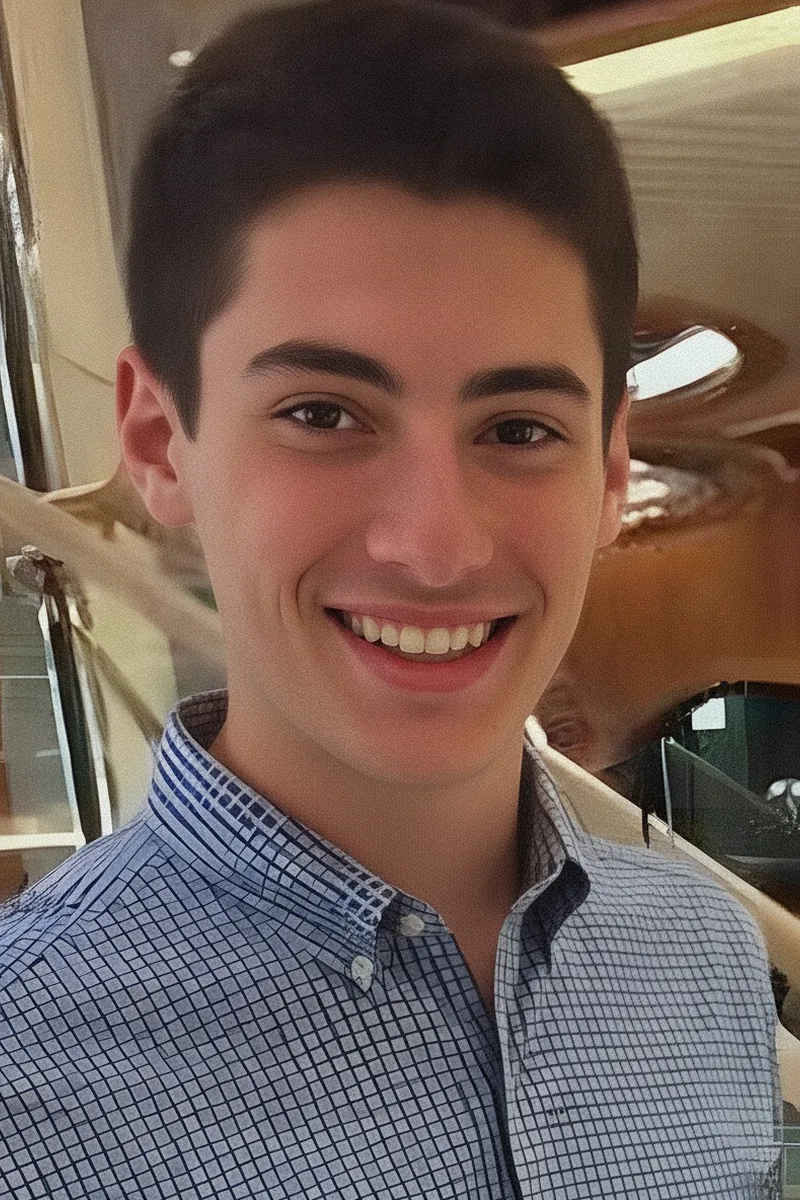
An applied mathematics degree from Stanford means Alex didn't just pass through pre-calculus — he built an entire major on top of it, so he knows exactly which concepts in trigonometric reasoning, function transformations, and limit intuition carry the most weight later. He teaches the course as a bridge rather than a checklist, connecting each new idea back to the algebra underneath it and forward to the calculus ahead. His 35 ACT and 4.8 rating reflect a tutor who's still close enough to the material to remember where it gets confusing.
The leap from trig identities to limits can feel abrupt if the underlying logic of functions isn't solid. Pranav tackles Pre-Calculus by connecting topics like rational functions, polar coordinates, and sequences back to the graphical intuition students already have. As a Biomedical Engineering student at Johns Hopkins, he uses these tools daily and can show students why each concept matters beyond the textbook.
The jump from algebra to calculus-readiness often stalls at one specific point: understanding how functions actually behave — why a rational expression blows up near an asymptote, how composite functions layer transformations, what makes polynomial end behavior predictable. Samuel tackles that conceptual bridge head-on, drawing on his applied mathematics training at Caltech where these ideas aren't theoretical warm-ups but working tools. His 1550 SAT confirms the quantitative sharpness behind his teaching.
Biochemistry coursework throws everything pre-calculus covers at you simultaneously — logarithmic pH calculations, exponential decay in reaction kinetics, trigonometric wave functions in spectroscopy — so Elijah learned these tools under pressure before ever tutoring them. He zeroes in on the moment where algebra stops being enough and functional thinking has to take over, making that transition concrete instead of mysterious. Holds a 34 ACT and a 5.0 rating from students.
Having taught everything from pre-algebra through calculus — plus AP Chemistry and AP Biology — Sharon knows exactly which pre-calculus skills become load-bearing later and which ones students can safely revisit. Her medical training at Cornell built deep comfort with the exponential and logarithmic modeling that trips up most pre-calc students, since drug dosing curves and population growth models were daily fare. Rated 5.0 by students.
Trigonometric identities, limits, and the behavior of polynomial functions all converge in pre-calculus, and students who don't build intuition here often struggle when calculus arrives. Joyce's biostatistics training at Brown means she uses these tools daily and can explain not just the procedures but the reasoning behind them.
Through Cornell's STEP program, Akanksha teaches high school students the exact pre-calculus material — trigonometric functions, polynomial behavior, and function transformations — that she then uses daily in her environmental engineering coursework to model things like pollutant decay and seasonal water cycles. That feedback loop between teaching a concept and applying it professionally gives her an unusually grounded sense of where students get stuck, especially when functions shift from concrete arithmetic to abstract notation. Her 36 ACT and 4.8 rating reflect the rigor she brings to each session.
Having scored 1510 on the SAT and recently completed coursework in philosophy, politics, and economics, Noah knows how to think structurally about quantitative problems — a skill that pays off especially when pre-calculus students hit the wall of abstract function behavior and trigonometric reasoning. He tackles topics like domain restrictions and graph transformations by walking through the logical "why" before the mechanical "how," drawing on the same analytical rigor his PPE training sharpened. His proximity to the material — he took these courses only a few years ago — means he remembers exactly where the confusion tends to hide.
Having scored a 1590 on the SAT and taught math at every level from elementary through calculus, Emily knows exactly where pre-calculus sits in the bigger picture — and which algebraic skills need to be rock-solid before tackling topics like rational expressions and trigonometric graphs. Her work in Princeton's writing center sharpened her ability to break down complex reasoning step by step, a skill she applies directly when walking through function transformations or the logic behind inverse relationships. Rated 4.8 by students.
Teresa's biology major at Boston College means she's constantly applying the pre-calculus toolkit — exponential models for population dynamics, logarithmic scales for pH and enzyme kinetics, trigonometric functions for periodic biological rhythms — so she teaches these topics with a practitioner's intuition rather than purely textbook framing. She's especially sharp at bridging the gap between algebraic manipulation and the functional reasoning that trips students up before calculus. Her 1580 SAT and 4.8 rating back that up.
The jump from Algebra 2 to Pre-Calculus is where many students first encounter function transformations, rational expressions, and limit-adjacent thinking that will define their calculus experience. Enric treats Pre-Calculus as genuine preparation for what's next, spending time on *why* composite and inverse functions behave the way they do. His PhD-level math background means he can always show where a concept is heading.
Jeff's molecular biology background meant mastering the same exponential and logarithmic modeling that trips up most pre-calc students — growth curves, decay functions, dose-response relationships — before ever stepping into a tutoring session. He teaches those function families alongside the trigonometric and polynomial reasoning that rounds out the course, connecting each topic back to the algebra underneath it so the jump to calculus feels like a natural next step. His 1560 SAT and 5.0 rating confirm he delivers on that approach.
Every day as a mechanical engineer, Eric uses the trigonometric relationships, vector math, and function analysis that pre-calculus students are just starting to wrestle with — calculating forces on a beam or modeling oscillations in a system means these aren't abstract topics for him. He zeroes in on making the unit circle and function transformations intuitive by tying them to the physical problems where they actually matter. His 1440 SAT and master's in mechanical engineering anchor the quantitative depth behind his explanations.
As a math major at Vanderbilt, Allen is currently immersed in the coursework that pre-calculus feeds directly into, so he teaches topics like rational functions, trigonometric identities, and limits intuition with a clear sense of what's coming next and what needs to be airtight before students get there. His 1580 SAT reflects the kind of precision he brings to breaking down function transformations and composition — two areas where shaky understanding quietly derails students once calculus starts.
I am a student at the Honors College of Rutgers - New Brunswick. I am currently working towards attaining a B.S. in Biochemistry, as well as a minor in Business and Administration. Over the last five years, I have reconciled my passion for teaching and my desire to interact with fellow students through tutoring. While I have tutored in a broad range of subjects, I am most passionate about science, math, and English. Having taught many students, each of whom were different in terms of personality and learning style, I understand the importance of tailoring the lesson to the student's strengths. As a result, I work to create unique, individualized learning plans that engage the student and make learning feel like an opportunity, rather than a chore.
Chemical and biomolecular engineering at Princeton means Satya hits pre-calculus material — rational functions, exponential models, trigonometric identities — every semester in courses that treat these as prerequisites, not endpoints. That constant exposure sharpens how he teaches the bridge between algebra and calculus, particularly when it comes to building intuition around limits of function behavior and rates of change before students formally encounter them. His 36 ACT reflects the mathematical precision he brings to each session.
Albina's microbiology graduate work required constant fluency with exponential and logarithmic models — growth curves, decay rates, dose-response relationships — which are exactly the function families that trip students up in pre-calculus. She teaches these concepts by grounding them in what they actually describe, so students internalize the behavior of a function instead of just memorizing its rules. Rated 4.6 by students.
Benjamin's environmental biology degree required serious quantitative work — modeling population dynamics with exponential and logarithmic functions, using trigonometry to analyze cyclical ecological data — so he teaches pre-calculus concepts as tools he's actually applied. He's especially effective at unpacking function behavior and transformations, showing students the reasoning behind each step rather than just the procedure. Rated 5.0 by students.
An MD/MBA track means Sagar hits pre-calculus concepts from two angles — the biological modeling side (exponential growth, logarithmic dose-response curves) and the business analytics side (polynomial cost functions, rate-of-change intuition that previews calculus). He zeroes in on building the algebraic fluency underneath each topic, particularly when students can handle the mechanics but stumble on why a function behaves the way it does. His 1480 SAT confirms the quantitative range behind that dual perspective.
The jump to Pre-Calculus trips students up because it demands fluency with function behavior — transformations, compositions, and the shift from polynomial to trigonometric thinking. Michael teaches these transitions by connecting each new function family back to patterns students already recognize, so concepts like the unit circle or rational asymptotes feel like extensions rather than entirely new material. He holds a 5.0 rating from past students.
Hello! My name is Mihir, and I'm a passionate and experienced math tutor with a strong academic foundation. I hold a B.S. in Mathematics from Carnegie Mellon University, where I concentrated in Discrete Mathematics and Logic and earned a Minor in Computer Science. I also completed my M.S. in Computer Science at the University of Illinois at Urbana-Champaign. My background equips me with both deep mathematical knowledge and a problem-solving mindset that I bring into every tutoring session. I specialize in tutoring Math at the middle and high school levels. In the past, I've taught SAT Math, AP Calculus, AP Chemistry, and Algebra 1 and 2, among other subjects. My teaching approach focuses on building intuition and a sense of methodical problem-solving so that students can avoid memorization and cramming. I believe that this is the best way for students to be assured of their own skills and have confidence in tackling problems on their own.
I am looking to tutor in the areas of: Math, English, and for test prep. I was an honors student in High School, scored very well on all my tests, and have now earned a scholarship to go to Rutgers University for the Honors Program.
Planning for a PhD in mathematics, Alexander approaches pre-calculus as the course where algebraic thinking has to mature into functional thinking — and he knows exactly where that transition breaks down, especially around polynomial end behavior and rational function analysis. His math degree from Colby and experience tutoring in the college's math department mean he's diagnosed these sticking points hundreds of times. Holds a 5.0 rating.
Sean's physics degree means he first learned pre-calculus concepts like trigonometric functions and limits of sequences not as isolated math topics but as the scaffolding for understanding motion, waves, and energy — and he teaches them the same way, grounding each idea in the physical intuition that makes it stick. He's especially sharp on the transition from algebraic thinking to the functional reasoning calculus demands, since he tutors the full chain from algebra through multivariable calc and knows exactly which pre-calc skills carry the most weight later. Holds a 5.0 rating and a 1560 SAT.
Preparing for medical school while holding a 1540 SAT, Ruby tackles pre-calculus from the perspective of someone actively building the quantitative toolkit she needs for higher-level science — exponential models, logarithmic relationships, and the function behavior that underpins everything from dosage calculations to data analysis. Her College of Letters background also means she can explain the 'why' behind each concept clearly, not just walk through the mechanics. She's especially sharp at bridging the gap between comfortable algebra skills and the more abstract reasoning pre-calc demands.
Sophie treats Pre-Calculus as the course where everything from earlier math classes finally converges — polynomial behavior, trigonometric identities, and function transformations all need to click before calculus makes sense. As a chemical engineering student at Stevens, she knows exactly which Pre-Calc skills carry the most weight in higher math and builds sessions around those connections.
The jump to pre-calculus — especially trigonometric identities, complex numbers, and limits — trips up students who were comfortable in earlier math courses. Dylan approaches trig and function analysis the way he learned them as a civil engineering student: visually, with graphs and unit-circle reasoning that make the relationships stick.
The jump from algebra to calculus hinges on pre-calc concepts like trigonometric identities, composite functions, and limits intuition. Natalia teaches these as tools she actually uses in her engineering program, which gives her a concrete way to explain why mastering something like the unit circle or rational function behavior matters beyond the exam.
Biomedical engineering at Lehigh means Tyler regularly translates messy biological systems into clean mathematical models — the kind built on the trigonometric, exponential, and logarithmic functions that form the backbone of pre-calculus. He zeroes in on how function transformations and compositions actually work mechanically, so students can reason through unfamiliar problems instead of hunting for a matching template. Holds a 5.0 rating and a 32 ACT.
The jump into Pre-Calculus means juggling trigonometric identities, polar coordinates, and limit intuition all at once. Badri's experience teaching across the full math sequence — from algebra through Calc 2 — means he can pinpoint exactly which earlier concept is causing a stumbling block and patch it quickly. Rated 5.0 by students.
The jump to pre-calculus is where many students first encounter trigonometric identities, polar coordinates, and limits — concepts that feel abstract until someone connects them to something tangible. Steven's engineering background gives him a toolbox of physical examples (projectile motion, wave behavior, force vectors) that make these ideas click in a way textbook diagrams often don't.
Tutoring Calculus 1 to peers during his freshman year at Rutgers showed Kevin exactly which pre-calculus gaps trip students up most — shaky grasp of trigonometric identities, weak intuition about function transformations, or an incomplete understanding of how logarithmic and exponential families actually behave. His aerospace engineering coursework keeps these tools in constant rotation, so he teaches them as practical building blocks rather than isolated chapters to survive. He's especially sharp at bridging the algebra-to-calculus transition, making sure each concept lands solidly before the next one stacks on top.
Mechanical engineering at Illinois means Justin spends most of his time in calculus and beyond, but that's exactly what makes him sharp on the pre-calculus material that feeds into it — he knows which skills in polynomial behavior, rational expressions, and trig actually matter when the stakes get higher. His math minor and honors coursework keep him close to the formal side of these topics, so he can explain not just the how but the structural why behind things like composite functions and asymptotic behavior.
Having scored a 1580 on the SAT and earned a biology degree, Rachel brings serious quantitative chops to the pre-calculus concepts that trip students up most — particularly the behavior of exponential and logarithmic functions she used constantly in biological modeling. She unpacks each topic by showing students the underlying structure, so when they hit a trig identity or a rational function, they're reasoning through it rather than pattern-matching from memory.
Training to be a math teacher while studying mathematics at the college level means Henry is learning pre-calculus content twice — once as theory and once as pedagogy, figuring out exactly where students get tripped up on topics like rational functions and trigonometric graphs. That dual lens lets him anticipate common misconceptions and address them before they snowball, especially during the jump from algebraic manipulation to analyzing function behavior. His 1440 SAT confirms the quantitative grounding behind his teaching instincts.
The leap from algebra to calculus hinges on how well a student internalizes pre-calc concepts like limits, trigonometric identities, and the behavior of rational functions. Gene teaches these topics as a connected toolkit rather than isolated chapters, so students see why they're learning each piece before calculus demands they use it fluently. His broad math background — from pre-algebra through calculus — means he can pinpoint exactly where a gap is hiding.
Sophia's CS coursework at Georgia Tech runs on the discrete and continuous math that pre-calculus ties together — recursion maps onto sequences and series, graphics programming demands fluency with parametric equations and trigonometric transformations, and algorithm analysis requires solid command of logarithmic and exponential growth. She zeroes in on building that algebraic-to-functional thinking bridge, especially around composition and inverses where CS training gives her a concrete way to explain what's actually happening under the notation. Rated 5.0 by students, with a 1570 SAT confirming the math fundamentals.
Joe's chemistry degree means he's spent years working with the polynomial and trigonometric relationships that pre-calculus introduces — reaction rate curves, orbital geometry, spectroscopic wave functions — so these aren't abstract concepts to him. He zeroes in on how algebraic intuition from earlier courses translates into the functional thinking pre-calc demands, especially around transformations and graphing behavior. His 1550 SAT confirms the quantitative precision behind his teaching.
A 4.0 GPA through Rutgers' pre-med track means Sam didn't just pass through pre-calculus — he aced the sequence and then leaned on it daily in physics, pharmacology, and quantitative research methods. He's particularly sharp on rational functions and polynomial end behavior, two areas where students often hit a wall right before the material clicks. His 1480 SAT confirms the math fluency behind his teaching.
Testimonials
Because the right Pre-Calculus tutor makes all the difference.
Average Session Rating – Based on 3.4M Learner Ratings
Practice Pre-Calculus
Free practice tests, flashcards, and AI tutoring for Pre-Calculus
Nearby Pre-Calculus Tutors
Other Newark Tutors
Related Math Tutors in Newark
Frequently Asked Questions
Varsity Tutors matches Newark students with expert Pre-Calculus tutors for 1-on-1 instruction. We pair each student with a tutor based on their specific needs, learning style, and goals.
Whether you need homework help, exam prep, or want to get ahead, our Pre-Calculus tutors are ready to help.
Common challenges include gaps from earlier material, difficulty with specific concepts, and trouble applying learning to new problems. These issues can snowball quickly in Pre-Calculus.
A tutor identifies where you're stuck, fills in gaps, and provides targeted practice. The 1-on-1 format means you get help exactly where you need it.
Tutors work with your student's actual coursework—homework assignments, class notes, and upcoming tests. This keeps tutoring directly relevant to what's happening in the classroom.
When you share information about your student's school and curriculum, we can match you with a tutor who has relevant experience.
All tutors complete background checks, credential verification, and teaching evaluation. Many of our Pre-Calculus tutors hold advanced degrees or have years of teaching experience.
You can review tutor profiles to find someone with the right background for your student's level and needs.
Many students see improved grades within a few weeks, along with better understanding of Pre-Calculus concepts and more confidence tackling challenging material.
Tutors track progress and adjust their approach to ensure continued improvement.
Most students benefit from 1-2 sessions per week. More frequent sessions help if your student is significantly behind or has an important exam coming up.
Your tutor can recommend a schedule based on your student's specific situation and goals.
Tutoring is purchased in packages of hours, with rates varying by tutor experience. Varsity Tutors offers several options to fit different budgets and needs.
You can discuss pricing during your consultation to find what works best.
Your tutor will assess where your student is, discuss goals, and start working on priority areas. Most students bring current homework or upcoming test material to focus on.
By the end, you'll have a clear sense of how the tutor can help and a plan for moving forward.
Let’s find your perfect tutor
Answer a few quick questions. We’ll recommend the right plan and match you with a top 5% tutor.