Award-Winning College Physics Tutors
serving Jersey City, NJ
College Physics
Tutors in Jersey City
Private 1-on-1 tutoring, weekly live classes for academic support, test prep & enrichment, practice tests and diagnostics, and more to elevate grades and test scores.
Based on 3.4M Learner Ratings
UniversitiesSchools & Universities
DeliveredHours Delivered
ProficiencyGrowth in Proficiency
Who needs tutoring?
No obligation. Takes ~1 minute.
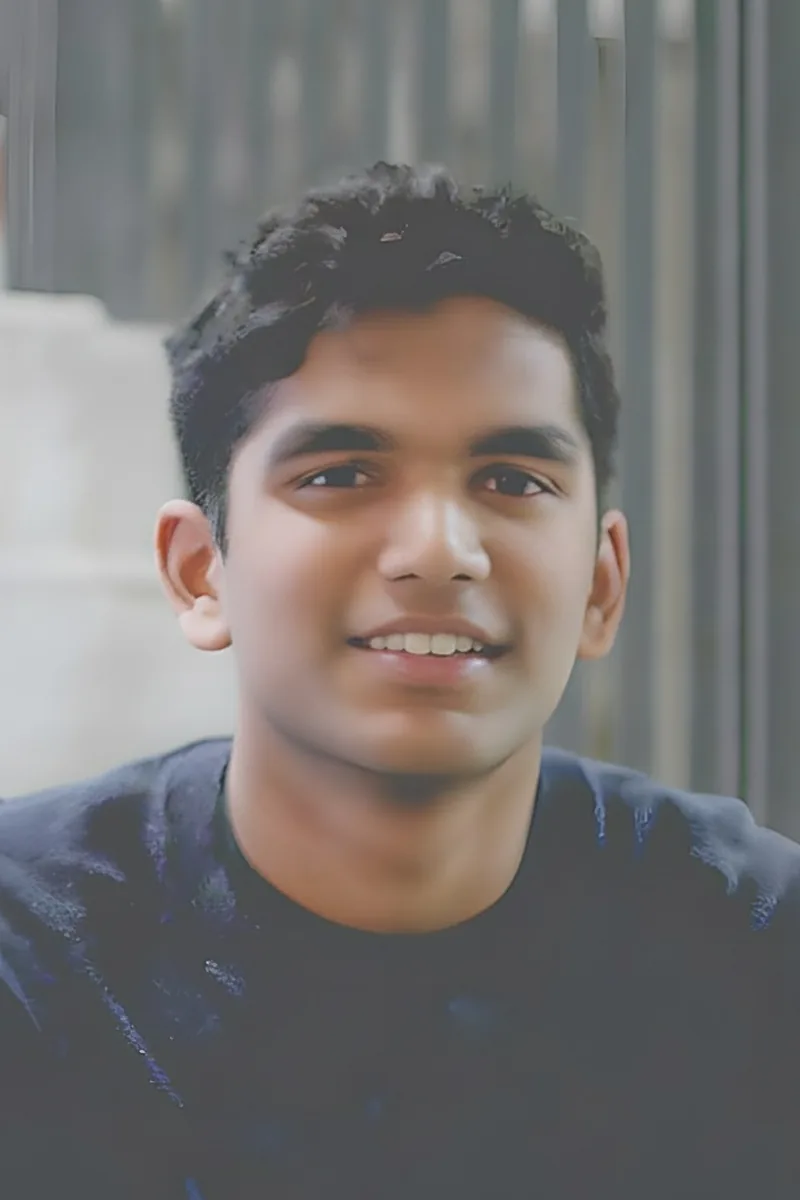
College-level physics demands more than plug-and-chug — problems in electrodynamics, rotational mechanics, or thermodynamics often require combining multiple principles in a single solution. Pranav digs into these multi-step problems as a Biomedical Engineering student at Johns Hopkins, where physics underpins much of his coursework. He walks through derivations and problem-solving strategies that build real fluency with the material rather than surface-level familiarity.
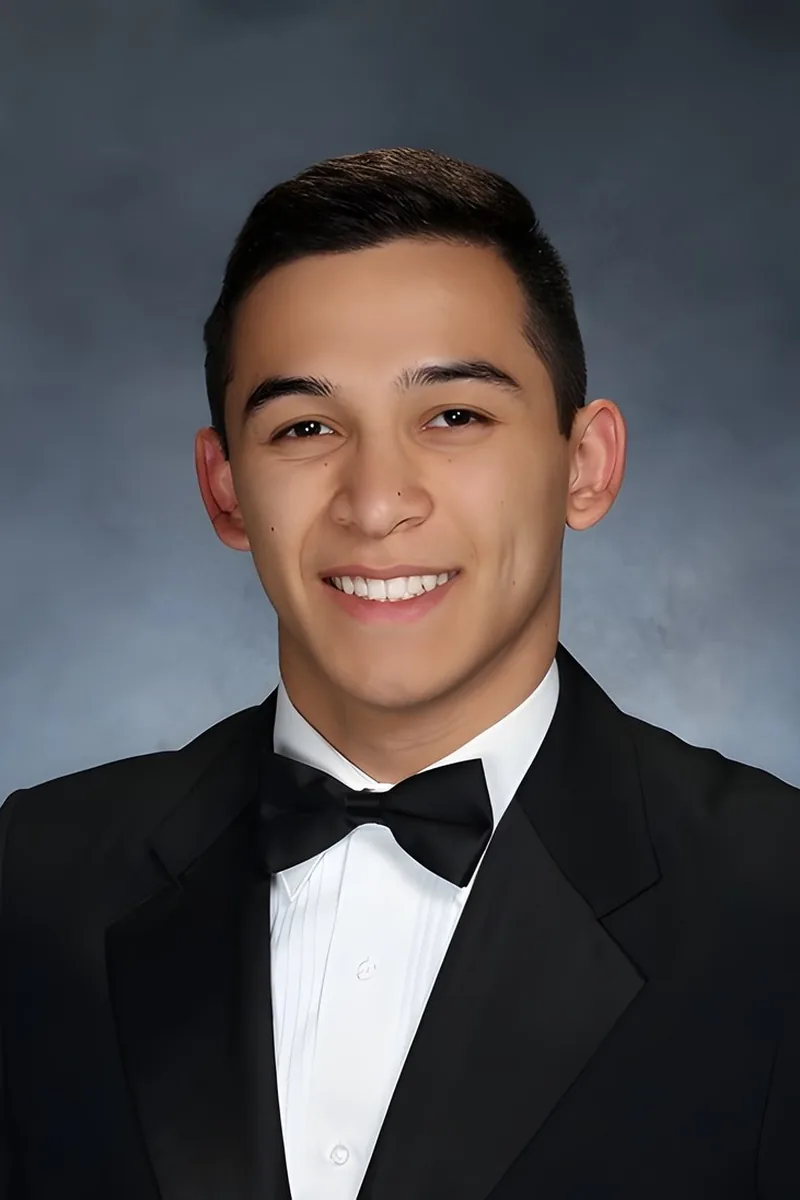
Studying applied mathematics at Caltech means Samuel encounters physics constantly — from classical mechanics and energy conservation to electromagnetism and wave behavior. He breaks down the math behind physical systems so that equations like Maxwell's or Newton's second law feel like tools rather than obstacles.
Thermodynamics and biomechanics aren't just chapters in a textbook for Jared — they're the core of his mechanical engineering PhD research and his biomedical engineering undergrad training, which means he's spent years applying Newton's laws, energy methods, and fluid principles to real systems under real constraints. He breaks down calculus-based physics problems by connecting the math to the physical situation first, so students learn to reason through force diagrams and conservation laws instead of hunting for the right formula.
A PhD in chemistry means Enric has spent years working through the physics that chemistry demands — thermodynamics, kinetics, quantum mechanics, and the calculus tying them together — giving him a perspective that's deeply rooted in how physical laws actually govern molecular behavior. He's particularly strong at teaching students to translate word problems into free-body diagrams or energy diagrams before touching an equation, a step that consistently unsticks people who know the formulas but can't figure out when to use them. Rated 5.0 by students.
Fadzai's Yale mechanical engineering degree means she spent years grinding through calculus-based physics — kinematics, rotational dynamics, thermodynamics, fluid mechanics — as core requirements, not electives. Her engineering teaching experience with robotics platforms like VEX adds a practical layer: she can explain why a torque equation matters by connecting it to a motor actually stalling under load. Rated 5.0 by students.
Statics, dynamics, thermodynamics, fluid mechanics — Eric doesn't just remember these topics from grad school, he applies them daily as a practicing mechanical engineer. That real-world context means he can show students how free-body diagrams and conservation laws actually play out in engineered systems, making abstract physics problems feel concrete and solvable.
A microbiology master's means Albina has spent serious time with the physics that underpins lab work — optics in microscopy, fluid dynamics in cell cultures, and pressure and temperature relationships in sterilization protocols. She teaches college physics concepts by connecting them to tangible systems rather than leaving them as abstract equations on a whiteboard. Rated 4.6 by students.
Rohan's economics training — building quantitative models, optimizing under constraints, interpreting marginal changes — maps surprisingly well onto the problem-solving structure of college physics, especially when setting up force balances or energy accounting in mechanics problems. He teaches students to treat each problem like an economic model: define your variables, identify your constraints, then solve systematically rather than hunting for a formula that looks right. Rated 4.9 by students.
I am a graduate of Cornell University. I received my Bachelor of Science in Human Biology, Health and Society. Since graduation, I have continued my education at Kean University. I plan to complete an informal postbach and apply directly to medical school. While I tutor a broad range of subjects, I am most passionate about Biology and Physics. I would best describe my tutoring style as very strategic and presenting the content as easy as possible to understand. In my spare time, I enjoy jogging, boxing and developing mobile games.
College-level physics ramps up the mathematical demands fast, layering calculus-based derivations onto concepts students may have only seen algebraically before. Sean's dual strength in physics and higher math lets him tackle everything from rotational dynamics to Gauss's law without hand-waving through the integrals. He's rated 5.0 across his tutoring subjects.
Premed biochemistry coursework at Drew forced Ved through the full sequence — mechanics, electromagnetism, thermodynamics, waves — alongside the organic chemistry and biology that give those physics concepts real context, like understanding pressure gradients in circulatory systems or energy transfer in metabolic pathways. That cross-disciplinary fluency means he can explain a free-body diagram or a calorimetry problem without treating it as an isolated exercise. His 36 ACT reflects the kind of precise quantitative reasoning that college physics problem sets demand.
Biomedical engineering coursework means Tyler has tackled college-level mechanics, electromagnetism, and fluid dynamics with real clinical applications — not just textbook problem sets. He breaks down concepts like torque, circuit analysis, and wave optics by connecting them to physical systems students can visualize. Rated 5.0 by students.
Structural engineering is essentially applied Newtonian mechanics — Dylan's master's work means he's spent years calculating how forces distribute through beams, trusses, and frames, which is exactly the kind of statics and dynamics reasoning that dominates college physics problem sets. He breaks down free-body diagrams and equilibrium conditions with the fluency of someone who uses them professionally, not just academically. Holds a 5.0 rating.
Pre-med coursework at Rutgers put Sam through the full sequence of physics that medical schools care about — mechanics, fluids, optics, electricity — and he graduated summa cum laude with a 4.0, which means he didn't just survive those courses but genuinely commanded the material. Currently deep in MCAT preparation, he's actively re-engaging with physics problems daily, keeping his instincts for force diagrams, circuit analysis, and wave behavior sharp and immediately accessible to students working through the same content.
Mechanical engineering at Illinois means Justin spent semesters grinding through calculus-based physics — statics, dynamics, thermodynamics, E&M — where the concepts weren't just coursework but prerequisites for everything that followed. He's especially sharp at walking students through the transition from plug-and-chug formula use to setting up problems from first principles, particularly in mechanics and energy methods where engineering intuition fills in gaps that textbooks leave vague.
College physics ramps up fast, layering calculus-based mechanics, electromagnetism, and thermodynamics into dense problem sets. Robert is currently deep in this material as an engineering student, which means he knows exactly which concepts professors emphasize and where students commonly lose the thread. He unpacks multi-step problems into clear physical reasoning paired with the right mathematical tools.
Computer engineering at Rutgers means Rahul's daily coursework runs on the physics most students are still trying to learn — circuit analysis, electromagnetic fields, signal behavior, and the calculus tying it all together. He's particularly useful for the electricity and magnetism half of college physics, where he can walk through concepts like capacitor networks and Faraday's law with the fluency of someone who actually builds with them. Rated 4.5 by students.
Winning the New York Fed Challenge required Andre to build quantitative models under pressure — the same skill set that makes college physics problem sets manageable, since both demand translating messy real-world scenarios into clean mathematical frameworks. His economics degree plus actuarial exams in probability and financial mathematics mean he's comfortable with the calculus, vector analysis, and statistical reasoning that underpin mechanics and thermodynamics. He teaches students to set up problems systematically, identifying constraints and conserved quantities before touching an equation.
College physics ramps up fast once electromagnetic fields, rotational dynamics, and thermodynamics enter the picture. Justin tackles these topics as a computer engineering student at Rutgers who uses Maxwell's equations and circuit theory in his own coursework, so he can unpack the math and the physical meaning simultaneously.
Working at the National Museum of Mathematics taught Ethan something most physics tutors never learn — how to make abstract concepts tangible on the spot, explaining the physical reasoning behind an exhibit to someone who walked in with zero background. His applied physics degree from Stevens means he's deeply comfortable with the calculus-based mechanics and electromagnetism that define college physics courses, and he leans on multiple problem-solving approaches rather than a single formulaic method. Rated 4.6 by students.
Neuroscience and behavioral biology at Emory means Margaret regularly encounters physics in disguise — action potentials as RC circuits, diffusion as a thermodynamic process, and imaging technologies built on wave mechanics and electromagnetism. She uses those connections to make college physics problems feel purposeful rather than abstract, grounding equations in the biological systems they actually describe. Holds a 5.0 rating.
Mechanical engineering at Rutgers means Anthony lives in physics — from free-body diagrams and Newton's laws to thermodynamics and fluid mechanics, these aren't abstract textbook problems for him but tools he uses in his own coursework daily. He breaks down multi-step problems by teaching students to identify which principles apply before touching a single equation, which builds real problem-solving intuition. Rated 5.0 by students.
Biomedical engineering at Rutgers means Mahir solves physics problems with real stakes attached — calculating fluid flow through artificial vessels, modeling stress on implant materials, analyzing the electrical behavior of biosensors. That daily overlap with mechanics, thermodynamics, and electromagnetism gives him a practical fluency with the exact topics that fill college physics problem sets. He's especially strong at walking through the calculus-based derivations that connect abstract equations to physical systems students can actually picture.
Two years tutoring physics and calculus at Stevens, plus a mechanical engineering degree, means Hamza has worked through the exact problem types — free-body diagrams, rotational motion, energy methods — that fill college physics courses, and he's done it both as a student and as someone explaining it at a whiteboard. He leans hard on building up from the underlying concept rather than pattern-matching to memorized formulas, which pays off especially when exam problems don't look like the homework. Rated 4.5 by students.
Engineering coursework at Rutgers means Jing tackles physics problems daily — from circuit analysis and electromagnetism to Newtonian mechanics and energy conservation. That constant application gives her a practical intuition for connecting equations to real physical systems, which is exactly what college physics demands. Rated 5.0 by students.
A chemistry degree gives Matthew a leg up in the thermodynamics and wave optics portions of college physics, where understanding molecular behavior and energy transfer isn't optional — it's the whole point. He breaks down force diagrams and conservation laws by connecting them to the quantitative reasoning that earned him a 1510 SAT, keeping the math precise without losing sight of the physical intuition underneath.
A psychology major with a biology minor might not scream 'physics tutor,' but Ahmed's years teaching across calculus, chemistry, and competition math mean he's comfortable with the quantitative reasoning that college physics actually tests — setting up force diagrams, tracking energy through a system, applying Newton's laws to unfamiliar scenarios. He brings a problem-solving style shaped by working across disciplines, which is useful when students need someone who can explain the same concept three different ways until one clicks.
A PhD in biomedical engineering means Andrew has spent years applying physics to biological systems — modeling forces on joints, analyzing fluid flow through tissues, understanding how electromagnetic fields interact with the body. That depth in mechanics, thermodynamics, and E&M carries directly into the calculus-based problem solving college physics courses demand. Rated 4.9 by students.
Between simulating supernova shock fronts at Princeton and building optical filters at Norfolk State, Dennis has applied college-level physics across mechanics, electromagnetism, thermodynamics, and wave optics in real research settings. He unpacks difficult problem sets by connecting each concept to the physical scenario it describes — an approach that's especially effective for students transitioning from plug-and-chug to genuine problem-solving.
Biomedical engineering at Brown means Phillip solves physics problems with real biological stakes — modeling fluid flow through vessels, analyzing stress on implant materials, calculating electrical signals in tissue. That daily overlap with mechanics, thermodynamics, and electromagnetism gives him a practical fluency that makes college physics problem sets feel less abstract and more like puzzles with actual answers. Rated 5.0 by students.
A physics degree means Nima didn't just pass college physics — he built his entire undergraduate education on top of it, from classical mechanics through electromagnetism and modern physics. He breaks down multi-step problems by teaching students to identify the governing principle first, then translate it into math, which is where a 1580 SAT and deep comfort with calculus-based reasoning pay off.
A computer science degree from UCLA means Michael spent semesters deep in the physics that underpins simulation and graphics — kinematics, force modeling, energy systems — and his 1560 SAT confirms the quantitative chops to handle calculus-based problem solving. He teaches students to treat each physics problem like debugging code: isolate what you know, identify the governing principle, then execute step by step until the answer falls out.
Studying mechanical engineering at Harvard means Christopher applies physics daily — from free-body diagrams and torque calculations to thermodynamic cycles and fluid dynamics. He breaks down multi-step problems by identifying which conservation law applies and walking through the math from there, so the problem-solving process becomes repeatable rather than mysterious.
Studying civil engineering at Cornell means Ryan solves physics problems for a living — calculating load distributions, analyzing force vectors in structural systems, and applying fluid mechanics principles that come straight out of college physics coursework. He scored a 35 ACT, which speaks to the quantitative precision he brings when breaking down mechanics or electromagnetism problems step by step. Rated 4.7 by students.
Three physics-related bachelor's degrees give Avram an unusually deep undergraduate perspective on the subject — he's worked through mechanics, electromagnetism, and modern physics multiple times across different programs, which means he knows exactly where the conceptual gaps tend to hide. He breaks down wave phenomena and optics problems by connecting the math back to physical intuition, so equations feel like descriptions of real behavior rather than symbols to manipulate. His 1520 SAT reflects the quantitative precision he brings to problem solving.
Premed coursework and a computing degree at Notre Dame meant Aidan sat through the full sequence of calculus-based physics — mechanics, E&M, waves — while simultaneously learning to think algorithmically about complex problems. That combination is particularly useful when students hit the wall where physics stops being plug-and-chug and starts requiring multi-step reasoning, like connecting free-body diagrams to energy methods or translating a word problem into the right integral. His 35 ACT speaks to the quantitative fluency he brings to those tougher setups.
Molecular biology might seem like a different world from physics, but Annabel's coursework lives in the overlap — understanding diffusion requires thermodynamics, membrane potentials are voltage problems, and imaging techniques depend on wave optics and electromagnetism. She brings that life-sciences lens to college physics topics like energy conservation and fluid dynamics, making the material click for pre-med students who need to see why these concepts matter beyond the problem set.
Studying computer science and applied math at Harvard means Derek uses physics constantly — from electromagnetism in circuit design to mechanics in computational modeling. He tackles college-level topics like Lagrangian dynamics and wave equations by connecting the math to physical intuition, making dense derivations feel less abstract.
Studying applied physics at Cornell means Ritesh isn't just teaching college physics concepts — he's actively using them in coursework and research. He digs into the areas that trip up most introductory students, like applying Newton's laws to rotational systems, working through Gauss's law problems, or connecting energy conservation to real circuits. His 4.6 rating speaks to his ability to make those connections click.
Testimonials
Because the right College Physics tutor makes all the difference.
Average Session Rating – Based on 3.4M Learner Ratings
Nearby College Physics Tutors
Other Jersey City Tutors
Related Science Tutors in Jersey City
Frequently Asked Questions
Varsity Tutors matches Jersey City students with expert College Physics tutors for 1-on-1 instruction. We pair each student with a tutor based on their specific needs, learning style, and goals.
Whether you need homework help, exam prep, or want to get ahead, our College Physics tutors are ready to help.
Common challenges include gaps from earlier material, difficulty with specific concepts, and trouble applying learning to new problems. These issues can snowball quickly in College Physics.
A tutor identifies where you're stuck, fills in gaps, and provides targeted practice. The 1-on-1 format means you get help exactly where you need it.
Tutors work with your student's actual coursework—homework assignments, class notes, and upcoming tests. This keeps tutoring directly relevant to what's happening in the classroom.
When you share information about your student's school and curriculum, we can match you with a tutor who has relevant experience.
All tutors complete background checks, credential verification, and teaching evaluation. Many of our College Physics tutors hold advanced degrees or have years of teaching experience.
You can review tutor profiles to find someone with the right background for your student's level and needs.
Many students see improved grades within a few weeks, along with better understanding of College Physics concepts and more confidence tackling challenging material.
Tutors track progress and adjust their approach to ensure continued improvement.
Most students benefit from 1-2 sessions per week. More frequent sessions help if your student is significantly behind or has an important exam coming up.
Your tutor can recommend a schedule based on your student's specific situation and goals.
Tutoring is purchased in packages of hours, with rates varying by tutor experience. Varsity Tutors offers several options to fit different budgets and needs.
You can discuss pricing during your consultation to find what works best.
Your tutor will assess where your student is, discuss goals, and start working on priority areas. Most students bring current homework or upcoming test material to focus on.
By the end, you'll have a clear sense of how the tutor can help and a plan for moving forward.
Let’s find your perfect tutor
Answer a few quick questions. We’ll recommend the right plan and match you with a top 5% tutor.