Award-Winning Calculus Tutors
serving Jersey City, NJ
Calculus
Tutors in Jersey City
Private 1-on-1 tutoring, weekly live classes for academic support, test prep & enrichment, practice tests and diagnostics, and more to elevate grades and test scores.
Based on 3.4M Learner Ratings
UniversitiesSchools & Universities
DeliveredHours Delivered
ProficiencyGrowth in Proficiency
Who needs tutoring?
No obligation. Takes ~1 minute.

Two MBA programs mean Smriti has worked through the calculus that underpins business decision-making — optimization problems, marginal analysis, and the derivative logic behind cost and revenue curves. She teaches those concepts by connecting them to the business scenarios where they actually get used, which gives students a concrete reason to care about each rule they're learning. Rated 4.7 by students.
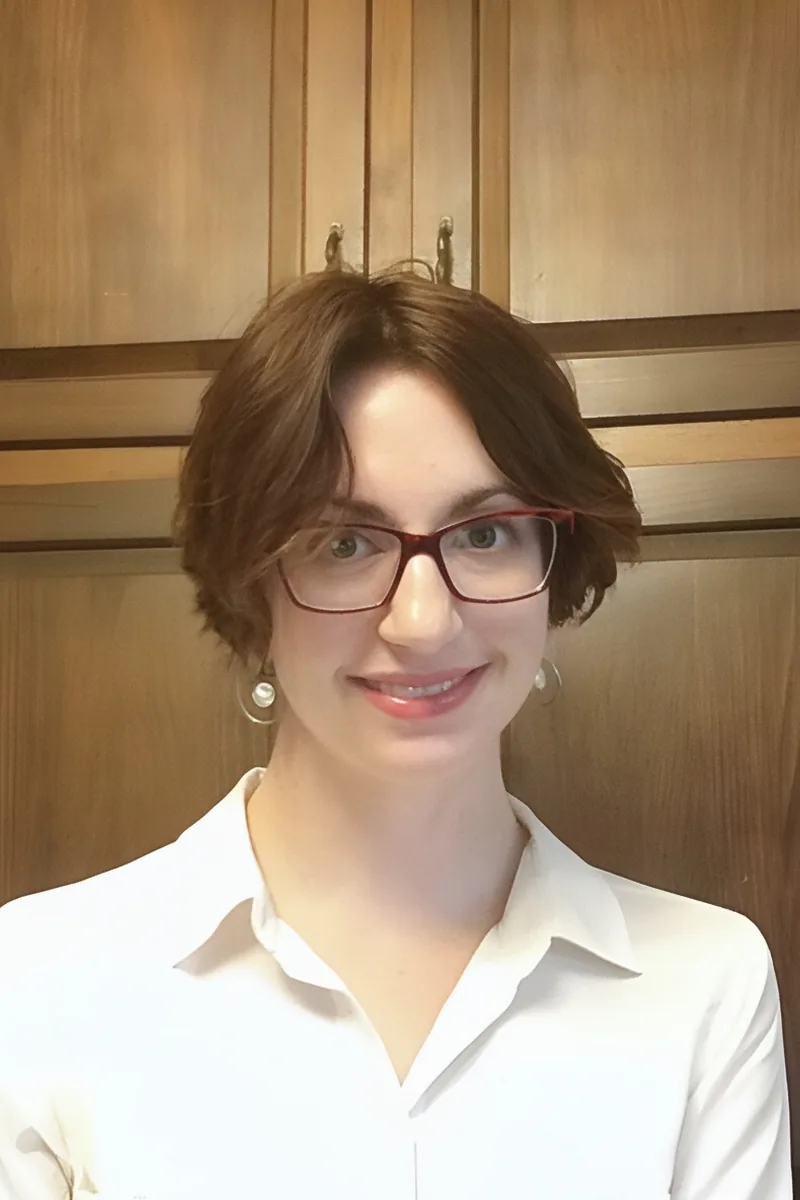
Derivatives and integrals demand a kind of thinking that's different from anything students have done before — suddenly, math is about rates of change and accumulation rather than static answers. Ruby is currently deep in her pre-med science track, where calculus shows up in everything from pharmacokinetics to population modeling, so she teaches concepts like the chain rule and Riemann sums with real applications in mind.
I am currently working towards a doctorate in medicine from New Jersey Medical School. Throughout high school, college, and graduate school, I have tutored students ranging in age from elementary school to college freshmen in a variety of subjects particularly math and science. My favorite subject to tutor is math because it is very methodical and visual. Having a passion to help others, I am drawn to tutoring for the opportunity to share my knowledge with others. My family and friends have described me as being patient, compassionate, and personableall of the qualities that I believe I bring to my students. Outside of tutoring, I like Notre Dame football, dogs (especially my family's German Shepherd!), yoga, cooking, and reading.
Keerthana's data science program at NYU means she uses derivatives and integrals regularly, not just in theory but in applied contexts like optimization and rate-of-change problems. She breaks down the logic behind limit definitions and the chain rule so students can see the reasoning instead of just memorizing formulas.
An English major with a 1470 SAT, Noreen has the quantitative reasoning chops to support early calculus topics, though math isn't her primary lane. Her writing center background trained her to slow down and unpack dense, unfamiliar material step by step — the same skill that makes limit definitions and basic derivative notation less intimidating when a student first encounters them.
The jump from algebra to calculus trips students up when they can't see how limits, derivatives, and integrals build on each other. Emily treats each new concept as an extension of something already familiar — connecting the derivative to slope and the integral to accumulated area — so the abstraction feels grounded. Her economics coursework keeps her actively using calculus in applied settings.
Computer science at NJIT means Anurag writes code that depends on calculus daily — optimization algorithms, gradient descent, and the derivative-driven logic behind machine learning all require fluency with rates of change and accumulation. He teaches limits and integration by connecting them to the computational problems where they actually get used, making the abstract feel purposeful.
Though her PhD work at Columbia is in Italian Studies, Nicole's undergraduate coursework included the math and analytical reasoning that make early calculus concepts like limits and continuity accessible territory. She breaks down the logic behind derivatives step by step, treating each new rule as something to genuinely understand rather than rush past.
Teaching calculus at the university level across two different departments gives Dilruba an unusual advantage: she can explain limits, derivatives, and integrals from both a pure math perspective and an applied engineering one. When a student struggles with related rates or optimization, she pulls from real-world civil engineering problems — fluid flow, load distribution, curve analysis — to make the concepts tangible.
Hello! My name is Mihir, and I'm a passionate and experienced math tutor with a strong academic foundation. I hold a B.S. in Mathematics from Carnegie Mellon University, where I concentrated in Discrete Mathematics and Logic and earned a Minor in Computer Science. I also completed my M.S. in Computer Science at the University of Illinois at Urbana-Champaign. My background equips me with both deep mathematical knowledge and a problem-solving mindset that I bring into every tutoring session. I specialize in tutoring Math at the middle and high school levels. In the past, I've taught SAT Math, AP Calculus, AP Chemistry, and Algebra 1 and 2, among other subjects. My teaching approach focuses on building intuition and a sense of methodical problem-solving so that students can avoid memorization and cramming. I believe that this is the best way for students to be assured of their own skills and have confidence in tackling problems on their own.
Four years of volunteering as an SAT tutor sharpened Renee's quantitative skills — her 1530 SAT confirms that — but her real strength is translating abstract notation into language that clicks, a skill she built as a Writing Consultant breaking down complex ideas for diverse learners. She applies that same clarity to early calculus concepts like limits and continuity, walking through the reasoning behind each step so the logic holds up long after the session ends.
Three BS degrees including one in Finance means Matt has worked through the calculus that underpins financial modeling — present value derivations, marginal cost optimization, and the continuous compounding formulas that rely on limits and exponentials. His 1530 SAT confirms the quantitative chops to back that up, and he teaches the material by connecting each rule to the business logic that makes it worth learning.
Limits, derivatives, and integrals all build on each other, so one shaky concept can derail an entire semester. Akarsh approaches calculus by making sure each layer is solid before moving on — walking through chain rule applications or Riemann sums until the logic behind the formulas becomes second nature.
Public policy analysis leans heavily on quantitative modeling — interpreting rate changes in economic indicators, optimizing resource allocation, understanding how small shifts in one variable cascade through a system — all of which are calculus problems at their core. Erika's Master of Public Policy training means she can ground derivatives and integrals in real decision-making contexts, turning abstract rules into something with stakes. Rated 5.0 by students.
Marc's three arts degrees and public policy training don't scream calculus, so he's honest that this isn't his deepest subject — but a 1550 SAT confirms he can handle rigorous quantitative work, and his policy studies involved the kind of data-driven, analytical reasoning that overlaps with early calculus concepts. He approaches limits and derivatives by slowing down the logic behind each step, treating a proof the way he'd build a policy argument: one clearly justified claim at a time.
As an Applied and Computational Mathematics major at Caltech, Samuel doesn't just remember calculus — he's actively extending it in coursework on differential equations, numerical methods, and mathematical modeling. He tackles integration techniques, convergence tests, and multivariable concepts by showing the reasoning behind each method so the problem-solving process feels less like guesswork.
Earning a 35 ACT composite proves Kyle can handle serious quantitative reasoning, even though his degree is in English at Yale rather than mathematics. His strength is in breaking down intimidating notation into plain language — treating a derivative explanation the way he'd treat a close reading, pulling apart each piece until the logic is transparent. That skill translates especially well to early calculus concepts like limits and the chain rule, where understanding the structure matters more than memorizing formulas.
Cellular and molecular biology at Johns Hopkins means Pranav has used calculus as a working tool — modeling reaction rates, analyzing enzyme kinetics curves, and interpreting the differential relationships that govern how cells grow and divide. That hands-on scientific context lets him teach derivatives and integrals as things that describe real behavior, not just notation to manipulate on an exam.
Studying applied mathematics at Stanford means Alex uses calculus — differentiation, integration, multivariable techniques — as an everyday tool, not a distant memory from a class he once took. That closeness to the material lets him explain concepts like the fundamental theorem or u-substitution with the kind of intuition textbooks rarely capture. He adapts his approach depending on whether a student needs conceptual clarity, computational practice, or both.
Cultural anthropology doesn't scream calculus, but Scott's 1580 SAT demonstrates serious quantitative chops, and six years of tutoring across math subjects from pre-algebra through calculus means he's walked the full conceptual arc with students many times over. He's especially effective at translating the abstract — what a limit is really saying, why the chain rule works — into plain, step-by-step reasoning that sticks.
Economics at Yale means Calleigh has worked through calculus where it actually lives — utility maximization, marginal analysis, and the derivative-heavy reasoning behind supply and demand curves. That applied fluency lets her explain concepts like the chain rule or integration by connecting each step to an economic model where the math drives real decisions.
An English and Theatre Arts graduate from Brown, Alex doesn't claim calculus as a specialty — but a 1540 SAT score shows the quantitative reasoning is genuinely there. His approach mirrors how he tackles literary analysis: slow down, break the problem into its moving parts, and make sure every step logically earns the next, which is exactly the mindset that makes limits and early derivative concepts click.
An MBA means Krupa has spent real time with the calculus that drives business decisions — optimization problems, marginal analysis, and interpreting how rates of change affect cost and revenue curves. She teaches derivatives and integrals by connecting them to those practical scenarios, which tends to make the abstract rules stick faster than purely mechanical drill. Rated 4.9 by students.
Theater studies at Yale won't appear on any list of calculus prerequisites, but Paige's Cum Laude academic record and her structured analytical training mean she can break down early concepts like limits and derivative rules with the same precision she brings to dissecting a script. Her strength is in translating dense notation into clear, logical steps — making the unfamiliar feel manageable rather than overwhelming.
Psychology at the University of Chicago involves more quantitative work than most people expect — statistical modeling, research design, and the kind of analytical reasoning that makes early calculus concepts like limits and rates of change feel approachable rather than alien. River's 1570 SAT confirms serious math ability, and she brings a structured, step-by-step clarity to unpacking derivative rules and their underlying logic.
The jump from pre-calc to calculus often comes down to one thing: understanding what a limit actually means before diving into derivatives and integrals. Elijah approaches calculus conceptually first — explaining why the chain rule works, what an integral is accumulating — then builds speed with problem-solving techniques. His STEM coursework in biochemistry keeps him sharp on the applied side, from related rates to differential equations.
Grace's International Relations major at Stanford isn't a math degree, so she's honest that calculus isn't her deepest subject — but a 1570 SAT and genuine enthusiasm for math mean she's comfortable with quantitative reasoning at a high level. Her experience as a middle school TA and academic program director built a teaching instinct for slowing down at exactly the right moments, which pays off when students hit the conceptual shift from algebra into limits and early derivatives.
An English major with a 1500 SAT, Amy brings strong analytical and quantitative reasoning to the table even though math isn't her primary field of study. She tackles early calculus topics like limits and continuity by treating them almost like close-reading exercises — slowing down, parsing each piece of notation, and making sure the underlying logic is clear before moving forward.
Studying finance and business analytics at Wharton, Samica applies calculus daily — optimization problems, rates of change in economic models, and integration for cumulative analysis. She breaks down concepts like the chain rule and related rates by connecting them to tangible scenarios, making the logic behind each step click before moving to harder problems.
Isaiah's academic background is in arts and film production rather than mathematics, so calculus isn't his deepest subject — but a 1590 SAT demonstrates serious quantitative ability, and his coursework has given him the analytical chops to support early calculus concepts. He's particularly effective at translating abstract ideas like limits and instantaneous rates of change into plain, intuitive language, approaching each concept the way a storyteller builds a scene: one clear, logical step at a time.
Between AP Calculus, a biophysics degree, and premed coursework at Johns Hopkins, Czarina has worked through derivatives and integrals in both pure math and applied science settings — modeling reaction rates, analyzing biological systems, and solving the optimization problems that show up constantly in chemistry and physics. Her 1540 SAT confirms the quantitative fluency she brings to breaking down chain rule applications or integration techniques so each step makes sense. Rated 5.0 by students.
Electrical engineering at Princeton means Sabrina doesn't just remember calculus — she applies it constantly, from modeling circuits with differential equations to using integrals to compute charge distributions. That ongoing fluency makes her especially effective at teaching the 'why' behind concepts like the chain rule, related rates, and the fundamental theorem. She carries a 5.0 client rating.
Thirty years of professional writing might not scream calculus, but Mati's doctoral work on learning disabilities gave her deep practice in breaking down complex, abstract processes into steps that actually make sense to struggling learners — exactly what's needed when limits and derivatives first appear. Her background as a high school counselor means she's seen where students typically shut down in math and knows how to rebuild confidence around the specific notation and concepts that cause the most anxiety. Rated 5.0 by students.
Lauren's Education and Social Policy degree at Northwestern isn't a math-heavy credential, so she's honest that calculus is outside her primary wheelhouse — but a 34 ACT and 1530 SAT show she can handle rigorous quantitative thinking when it counts. She approaches early calculus concepts like limits and basic differentiation the way she tackles any dense material: breaking the notation down into plain language and making sure each step makes logical sense before moving on.
Janet's math degree gives her the formal foundation in calculus, and her medical training put it to daily use — modeling drug absorption rates, interpreting cardiac output curves, and calculating dosage changes over time. That combination means she can teach integration techniques or the chain rule through problems that have real physiological stakes, not just textbook exercises. Rated 5.0 by students.
Between Cornell's Human Biology program and medical school, Sharon has used calculus in contexts most math tutors never touch — modeling drug absorption rates, interpreting growth curves in physiology, and working through the quantitative backbone of biostatistics. That hands-on experience means she teaches derivatives and integrals as tools with real meaning, not just symbolic manipulation exercises. Rated 5.0 by students.
Engineering students live in calculus — Akanksha applies integration, differential equations, and multivariable techniques in her Cornell Environmental Engineering classes every week. That constant use means she can explain concepts like the chain rule or u-substitution with real modeling examples instead of abstract notation. She's equally comfortable with students seeing calculus for the first time or reviewing it for an engineering prerequisite.
Studying biostatistics at Brown means Joyce lives in calculus — derivatives model rates of disease spread, integrals quantify population-level outcomes, and differential equations describe biological systems over time. She unpacks these ideas with concrete applications that make the chain rule or integration by parts feel like tools with a purpose, not just exam hurdles.
History and literature degrees don't scream calculus, and Alison would be the first to say this is far from her home turf. That said, her experience tutoring math and her knack for breaking down dense, unfamiliar material — a skill sharpened by years of close reading and textual analysis — means she can walk students through the early conceptual hurdles like understanding what a limit is actually describing or why a function's behavior matters before the formulas take over.
Psychology research leans heavily on statistical analysis, and Michele's undergraduate training in the field means she's worked through the quantitative reasoning that underpins early calculus — understanding how rates change, how curves behave, and what a function's shape actually tells you. She breaks down intimidating notation into plain, step-by-step language, making concepts like limits and basic derivatives accessible to students who feel overwhelmed by the abstraction.
Testimonials
Because the right Calculus tutor makes all the difference.
Average Session Rating – Based on 3.4M Learner Ratings
Nearby Calculus Tutors
Other Jersey City Tutors
Related Math Tutors in Jersey City
Frequently Asked Questions
Varsity Tutors matches Jersey City students with expert Calculus tutors for 1-on-1 instruction. We pair each student with a tutor based on their specific needs, learning style, and goals.
Whether you need homework help, exam prep, or want to get ahead, our Calculus tutors are ready to help.
Common challenges include gaps from earlier material, difficulty with specific concepts, and trouble applying learning to new problems. These issues can snowball quickly in Calculus.
A tutor identifies where you're stuck, fills in gaps, and provides targeted practice. The 1-on-1 format means you get help exactly where you need it.
Tutors work with your student's actual coursework—homework assignments, class notes, and upcoming tests. This keeps tutoring directly relevant to what's happening in the classroom.
When you share information about your student's school and curriculum, we can match you with a tutor who has relevant experience.
All tutors complete background checks, credential verification, and teaching evaluation. Many of our Calculus tutors hold advanced degrees or have years of teaching experience.
You can review tutor profiles to find someone with the right background for your student's level and needs.
Many students see improved grades within a few weeks, along with better understanding of Calculus concepts and more confidence tackling challenging material.
Tutors track progress and adjust their approach to ensure continued improvement.
Most students benefit from 1-2 sessions per week. More frequent sessions help if your student is significantly behind or has an important exam coming up.
Your tutor can recommend a schedule based on your student's specific situation and goals.
Tutoring is purchased in packages of hours, with rates varying by tutor experience. Varsity Tutors offers several options to fit different budgets and needs.
You can discuss pricing during your consultation to find what works best.
Your tutor will assess where your student is, discuss goals, and start working on priority areas. Most students bring current homework or upcoming test material to focus on.
By the end, you'll have a clear sense of how the tutor can help and a plan for moving forward.
Let’s find your perfect tutor
Answer a few quick questions. We’ll recommend the right plan and match you with a top 5% tutor.