Award-Winning Economics Tutors
serving Atlantic City, NJ
Economics
Tutors in Atlantic City
Private 1-on-1 tutoring, weekly live classes for academic support, test prep & enrichment, practice tests and diagnostics, and more to elevate grades and test scores.
Based on 3.4M Learner Ratings
UniversitiesSchools & Universities
DeliveredHours Delivered
ProficiencyGrowth in Proficiency
Who needs tutoring?
No obligation. Takes ~1 minute.
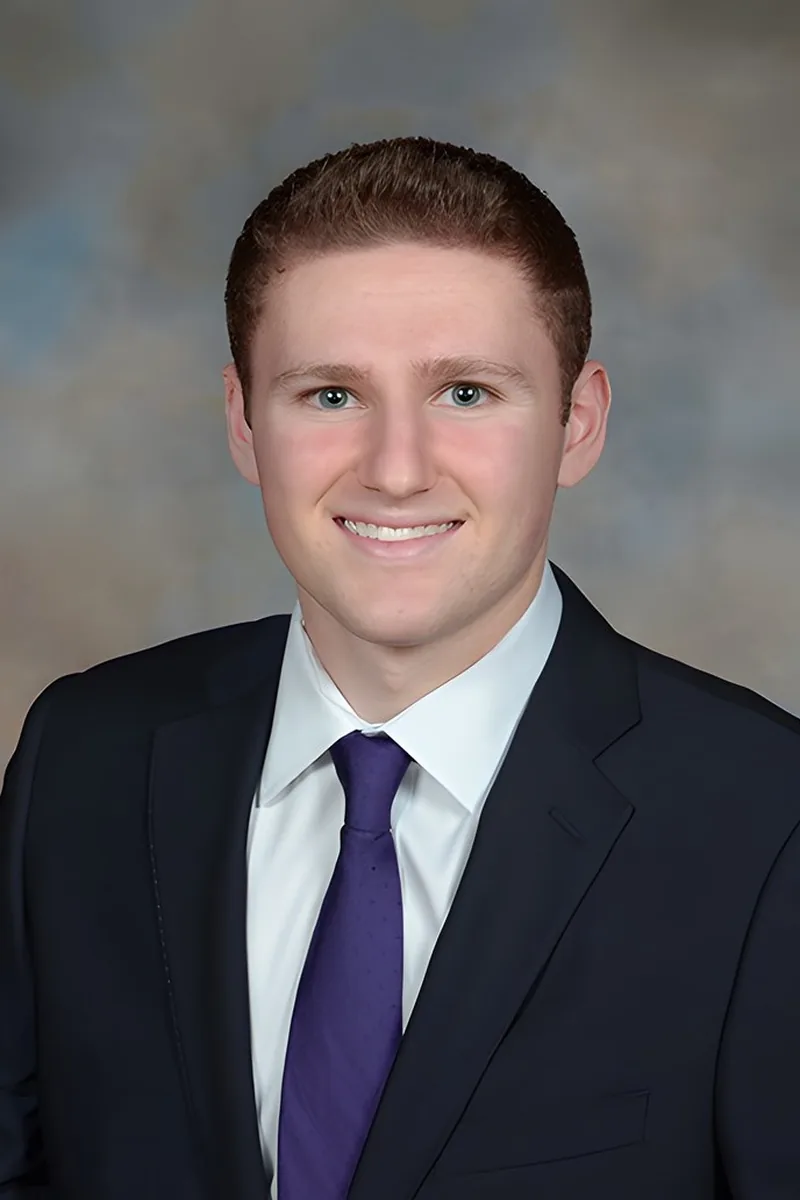
Matt's finance degree means he learned economics not as an isolated academic subject but as the engine behind investment decisions, corporate strategy, and market behavior — so when he teaches concepts like elasticity or market structures, he can show students where the theory actually lands. His SAT score of 1530 also signals the kind of sharp analytical reading that economics coursework demands, especially when students need to interpret dense graphs or parse tricky problem setups.
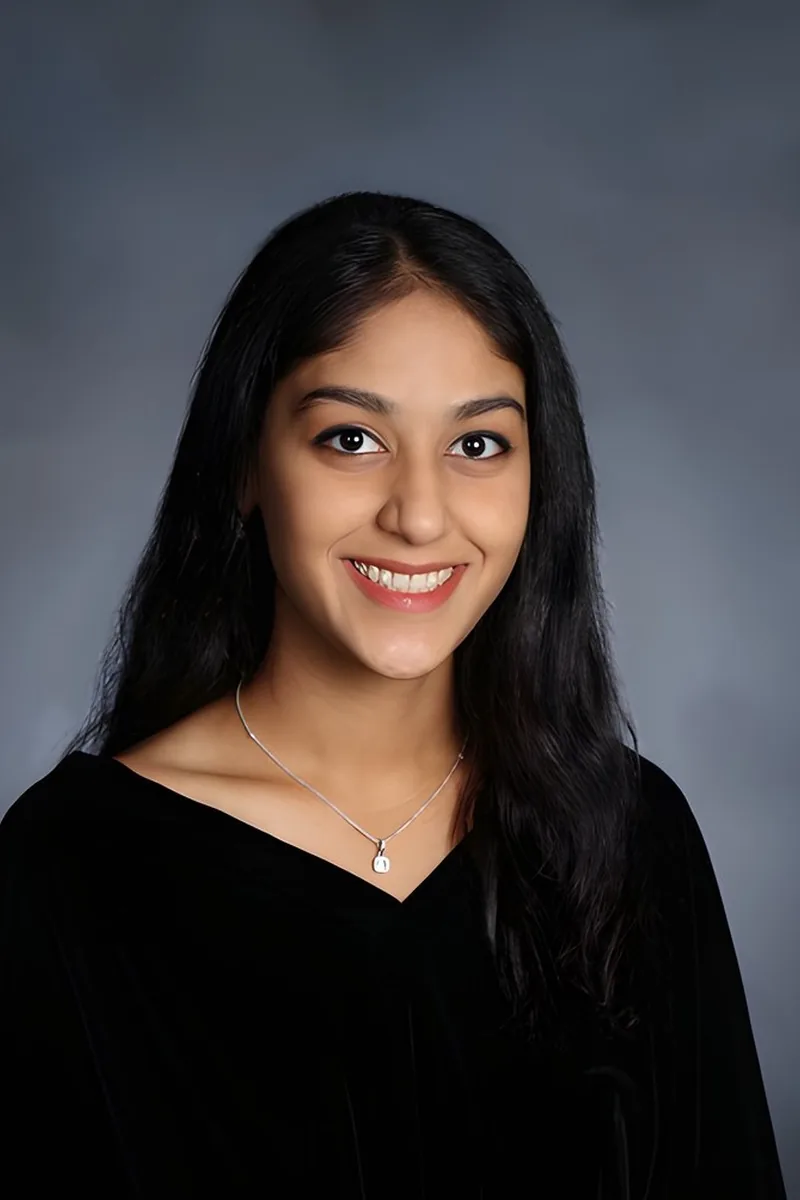
Studying economics and finance at Wharton means Samica encounters micro and macroeconomic theory daily — supply and demand curves, market structures, GDP modeling — and can translate those concepts into clear, intuitive explanations. She connects abstract ideas like elasticity or comparative advantage to real-world business cases, which makes the material stick far better than rote definition review.
I am a student at the Honors College of Rutgers - New Brunswick. I am currently working towards attaining a B.S. in Biochemistry, as well as a minor in Business and Administration. Over the last five years, I have reconciled my passion for teaching and my desire to interact with fellow students through tutoring. While I have tutored in a broad range of subjects, I am most passionate about science, math, and English. Having taught many students, each of whom were different in terms of personality and learning style, I understand the importance of tailoring the lesson to the student's strengths. As a result, I work to create unique, individualized learning plans that engage the student and make learning feel like an opportunity, rather than a chore.
Rohan earned his bachelor's in economics and also teaches econometrics, which means he's comfortable on both sides of the discipline — the intuitive logic of how markets work and the quantitative modeling that proves it. That range is especially useful when students hit topics like elasticity or game theory, where a clean graph matters as much as the algebra behind it. Rated 4.9 by his students.
An MD/MBA track means Sagar lives at the intersection of quantitative analysis and real-world decision-making — exactly the skillset that makes microeconomic reasoning about incentives, trade-offs, and marginal costs click for students. His biology and business training lets him pull examples from healthcare markets and corporate strategy, turning abstract supply-and-demand models into scenarios students can actually visualize.
Michael's economics degree means he built his understanding of microeconomic concepts like elasticity, market structures, and consumer choice through the same coursework his students are navigating now — and his math and computer science research background lets him handle the quantitative side without flinching. When a problem requires translating an economic intuition into a graph or equation, he can walk through both the reasoning and the mechanics. Rated 5.0 by his students.
Studying economics at Emory means Sai lives in this material daily — from modeling supply and demand elasticity to analyzing market failures and game theory. He breaks down the math behind economic models so the intuition follows naturally, whether students are tackling micro, macro, or econometrics. Rated 4.5 by students.
I am looking to tutor in the areas of: Math, English, and for test prep. I was an honors student in High School, scored very well on all my tests, and have now earned a scholarship to go to Rutgers University for the Honors Program.
Jeremiah earned his bachelor's in economics from Calvin College, so concepts like elasticity, market equilibrium, and GDP accounting aren't abstract textbook ideas to him — they're the foundation of his academic training. He unpacks economic models by connecting them to real-world examples, making supply-and-demand analysis or game theory intuitive rather than formulaic. Rated 5.0 by students.
Studying finance at Rutgers means Shankhadip works with economic concepts in their applied form every day — interest rate models, market behavior, firm valuation — so he can unpack ideas like elasticity or monetary policy by showing where they actually land in financial decision-making. He also teaches AP Micro, AP Government, and statistics, which gives him a sharp sense of how economics overlaps with political institutions and quantitative reasoning. Rated 4.8 by his students.
Pursuing an economics minor alongside her business degree at Rutgers, Ema sees both the theoretical and applied sides of the discipline daily. She unpacks core concepts like opportunity cost, elasticity, and market equilibrium by connecting abstract graphs to real-world pricing and policy decisions that make the logic intuitive rather than formulaic.
Supply and demand curves are straightforward until you have to apply them — explaining why a price ceiling creates a shortage or how elasticity changes a tax's impact. Shivani connects abstract economic models to real-world examples that make the logic intuitive, drawing on her bioinformatics training to bring a data-literate perspective to graphs and quantitative problems.
Winning first place in the New York Fed Challenge with Rutgers Newark — and advancing to the national finals at the Federal Reserve — meant Andre had to build and defend economic arguments under pressure, not just recite textbook definitions. His actuarial exams in probability and financial mathematics sharpen how he teaches the quantitative side of economics, particularly topics like expected utility, risk modeling, and the math behind market behavior.
Supply-and-demand diagrams are just the entry point — the real challenge in economics is applying those tools to questions about trade, market failure, and policy tradeoffs. Andrew tackles these applications head-on as a Vassar economics major who can walk through both the math and the reasoning behind concepts like elasticity, comparative advantage, and externalities.
Supply and demand curves are intuitive enough, but economics gets tricky when students hit elasticity calculations, market equilibrium shifts, or the difference between short-run and long-run cost curves. Eimi breaks these concepts down using real-world examples — pricing decisions, trade policy, labor markets — so the graphs and equations carry actual meaning.
I'm a recent graduate of Lehigh University who is extremely excited to begin tutoring. I was initially admitted into Lehigh's school of business and spent a year there before realizing my need to pursue my true passion for English. I graduated in only three and a half years with a Bachelor's degree in English as well as a minor in creative writing. Through my time at school I have peer edited countless papers, critiqued works of fiction, and written a considerable amount of my own material.
Vidhaath earned a double minor in Statistics and Economics at Rutgers, which means he can teach both the intuition behind concepts like elasticity and comparative advantage and the quantitative models that back them up. Now in law school at Iowa, he brings real-world policy context to supply-and-demand analysis and market structure discussions.
Supply and demand curves are just the starting point — the real challenge in economics is applying models like elasticity, comparative advantage, and market equilibrium to messy real-world scenarios. Tiffany's international business degree gave her a strong grounding in both micro and macro principles, and she teaches students to think through cause-and-effect chains rather than memorize graph shifts.
I am a rising junior studying finance at Rutgers University. For high school, I attended Bergen County Academies and completed the International Baccalaureate (IB) program as part of the Academy for Business and Finance. I have a vast amount of experience tutoring different subject material to different age groups, with a specialty in test prep. I tutored a high school freshman in Algebra 2 for a year (helping her get an A), a rising high school senior for the ACT (boosting his initial score by 25%), and groups of high schoolers for SAT prep. I have also worked with younger age groups as a camp counselor and a tutor at an elementary school near my university. I love tutoring because it gives me the chance to help my students reach their academic goals, which I know they care about deeply. I also enjoy getting to know a variety of people and being able to watch them grow as individuals and intellectuals through the tutoring process. Outside of academia, I enjoy sports, music, and spending time with friends and family.
I'm a rising sophomore student at the University of Illinois at Urbana-Champaign! I am primarily looking to help out upper middle school/high school students with subjects like Algebra, SAT prep, as well as AP Statistics and AP Microeconomics. I have had learning experience in all of the above subjects in a high school and/or college setting, and I believe in getting students engaged with real world examples as well as other test prep material, while also providing insight to all the tips and tricks needed for test and subject prep!
I am a sophomore at Rutgers University studying Computer Science. I have a lot of experience working with both younger children and teenagers, as I have been a volunteer tutor for the past four years. Tutoring in English is always fun for me, as I have been an avid reader since I was a young child, and it is a subject that I have always enjoyed. Moreover, I also like to tutor in math and math related subjects, because I myself often struggled with math when I was younger, and I found it very frustrating. Now that I am older, I realize the reason I found it so uninteresting was because it was taught too quickly without any real discussion of what we were doing. I now make sure that all of my students understand the fundamental ideas behind the materiel they are learning, and this allows them to ace their exams easily.
Rithi's quantitative backbone — a neuroscience degree, a master's in biotechnology, and deep coursework in statistics and calculus — means she can tackle the math-heavy side of economics that often catches students off guard, like working through elasticity calculations, interpreting cost curves, or setting up optimization problems. Her 4.9 rating speaks to an ability to make that quantitative reasoning feel approachable even for students who came in expecting a purely conceptual course.
Jake's marketing degree means he studied the demand side of economics firsthand — consumer behavior, pricing strategy, and how firms respond to market signals are concepts he's applied, not just memorized. His strong quantitative background (he tutors AP Statistics and both AP Calculus courses) lets him handle the graphing and algebraic reasoning that economics problems demand when students move past definitions into actual analysis. Rated 4.9 by his students.
Monetary policy, banking systems, and market behavior aren't abstractions to Cole — they were the focus of his cum laude master's thesis at the University of Amsterdam. He teaches economics by grounding theory in current events, so students see how supply-and-demand diagrams or GDP calculations connect to headlines they've actually read. Rated 5.0 by students.
Natalie's Health Care Management minor at Penn exposed her to microeconomic principles like supply and demand, cost-benefit analysis, and market structures — all through the lens of real industries. She breaks down economic models by connecting them to concrete examples students can actually picture, whether it's pricing decisions or how incentives shape behavior.
Harvard's Public Policy curriculum gave Alyssa a rigorous grounding in micro and macroeconomic theory — supply and demand modeling, market failures, fiscal policy analysis — that she now breaks down for students tackling college-level econ. She connects abstract concepts like elasticity and comparative advantage to real policy debates, making the material click rather than just survive on a formula sheet.
Supply and demand curves are just the starting point — Dawn digs into the mechanics of market equilibrium, elasticity, monetary policy, and game theory that make economics click at the college level. Her B.S. in Economics with a finance concentration from Duke means she can connect textbook models to how markets actually behave.
Few economics tutors can explain supply-and-demand curves AND describe how those models play out inside a trading floor at Goldman Sachs or a policy meeting at the World Bank. Denise earned her B.S. in Economics from Wharton and her master's in International Finance and Economic Policy from Columbia, giving her the depth to teach everything from microeconomic theory and market structures to macroeconomic policy and international trade with real-world fluency.
Clive is currently studying economics at Brown, where he's immersed in everything from microeconomic theory and market structures to macroeconomic policy and econometric modeling. That active coursework means he knows exactly which concepts — opportunity cost, elasticity, game theory, aggregate demand — tend to trip students up and how current professors frame them.
As a Finance major at Boston College, Andy engages with economic theory daily — from GDP and inflation to trade policy and market structures. He unpacks concepts like supply-and-demand equilibrium and opportunity cost by tying them to real headlines and business decisions, making the logic behind economic models click rather than feel abstract.
Dylan's undergraduate degree in Policy Analysis and Management required working through the economic frameworks that underpin real policy decisions — microeconomic reasoning about incentives, cost-benefit trade-offs, and how markets respond to regulation. His additional coursework in econometrics and AP Microeconomics means he can move fluidly between the intuitive side of economics and the quantitative tools students need to actually model outcomes.
Carter earned his economics degree at Brown and then taught game theory to advanced middle school students at a Johns Hopkins CTY program in Hong Kong — so he knows how to make concepts like Nash equilibria, marginal analysis, and market structures click for learners at very different levels. He connects economic models to real decisions rather than leaving them as abstract graphs. His approach digs into the intuition behind supply-and-demand shifts, elasticity, and welfare analysis so the math and the logic reinforce each other.
Supply and demand curves are simple enough on the surface, but the real challenge is applying them — shifting curves correctly, interpreting elasticity, or reasoning through market failures. Benjamin's Economics degree from Notre Dame gave him deep fluency with both micro and macro frameworks, and he teaches students to think through cause-and-effect chains rather than memorize graph shapes.
Testimonials
Because the right Economics tutor makes all the difference.
Average Session Rating – Based on 3.4M Learner Ratings
Nearby Economics Tutors
Other Atlantic City Tutors
Related Business Tutors in Atlantic City
Frequently Asked Questions
Varsity Tutors matches Atlantic City students with expert Economics tutors for 1-on-1 instruction. We pair each student with a tutor based on their specific needs, learning style, and goals.
Whether you need homework help, exam prep, or want to get ahead, our Economics tutors are ready to help.
Common challenges include gaps from earlier material, difficulty with specific concepts, and trouble applying learning to new problems. These issues can snowball quickly in Economics.
A tutor identifies where you're stuck, fills in gaps, and provides targeted practice. The 1-on-1 format means you get help exactly where you need it.
Tutors work with your student's actual coursework—homework assignments, class notes, and upcoming tests. This keeps tutoring directly relevant to what's happening in the classroom.
When you share information about your student's school and curriculum, we can match you with a tutor who has relevant experience.
All tutors complete background checks, credential verification, and teaching evaluation. Many of our Economics tutors hold advanced degrees or have years of teaching experience.
You can review tutor profiles to find someone with the right background for your student's level and needs.
Many students see improved grades within a few weeks, along with better understanding of Economics concepts and more confidence tackling challenging material.
Tutors track progress and adjust their approach to ensure continued improvement.
Most students benefit from 1-2 sessions per week. More frequent sessions help if your student is significantly behind or has an important exam coming up.
Your tutor can recommend a schedule based on your student's specific situation and goals.
Tutoring is purchased in packages of hours, with rates varying by tutor experience. Varsity Tutors offers several options to fit different budgets and needs.
You can discuss pricing during your consultation to find what works best.
Your tutor will assess where your student is, discuss goals, and start working on priority areas. Most students bring current homework or upcoming test material to focus on.
By the end, you'll have a clear sense of how the tutor can help and a plan for moving forward.
Let’s find your perfect tutor
Answer a few quick questions. We’ll recommend the right plan and match you with a top 5% tutor.