Award-Winning Geometry Tutors
serving Atlantic City, NJ
Geometry
Tutors in Atlantic City
Private 1-on-1 tutoring, weekly live classes for academic support, test prep & enrichment, practice tests and diagnostics, and more to elevate grades and test scores.
Based on 3.4M Learner Ratings
UniversitiesSchools & Universities
DeliveredHours Delivered
ProficiencyGrowth in Proficiency
Who needs tutoring?
No obligation. Takes ~1 minute.
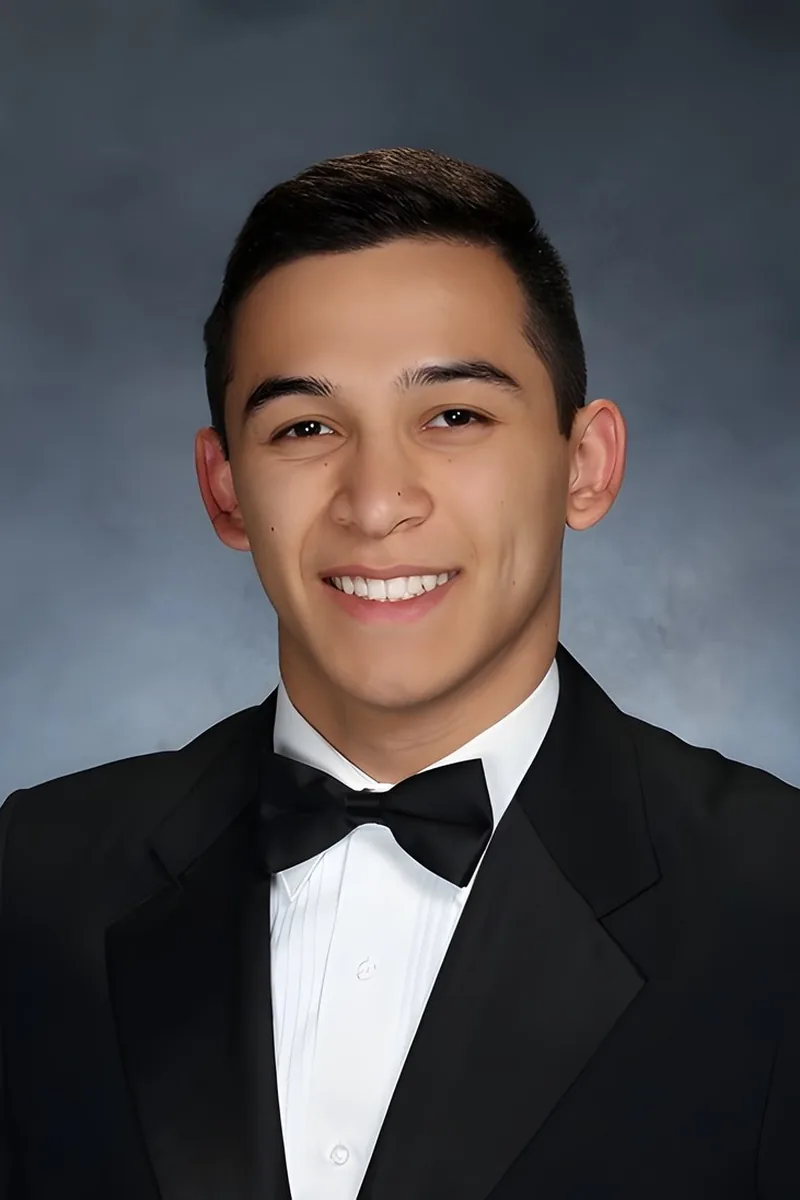
Proofs are usually the first place geometry students get stuck, because suddenly math requires constructing an argument instead of computing an answer. Samuel's background in algorithmic and combinatorial thinking — he served as a teaching assistant for a discrete math course — translates directly to teaching logical reasoning, from triangle congruence proofs to circle theorems.
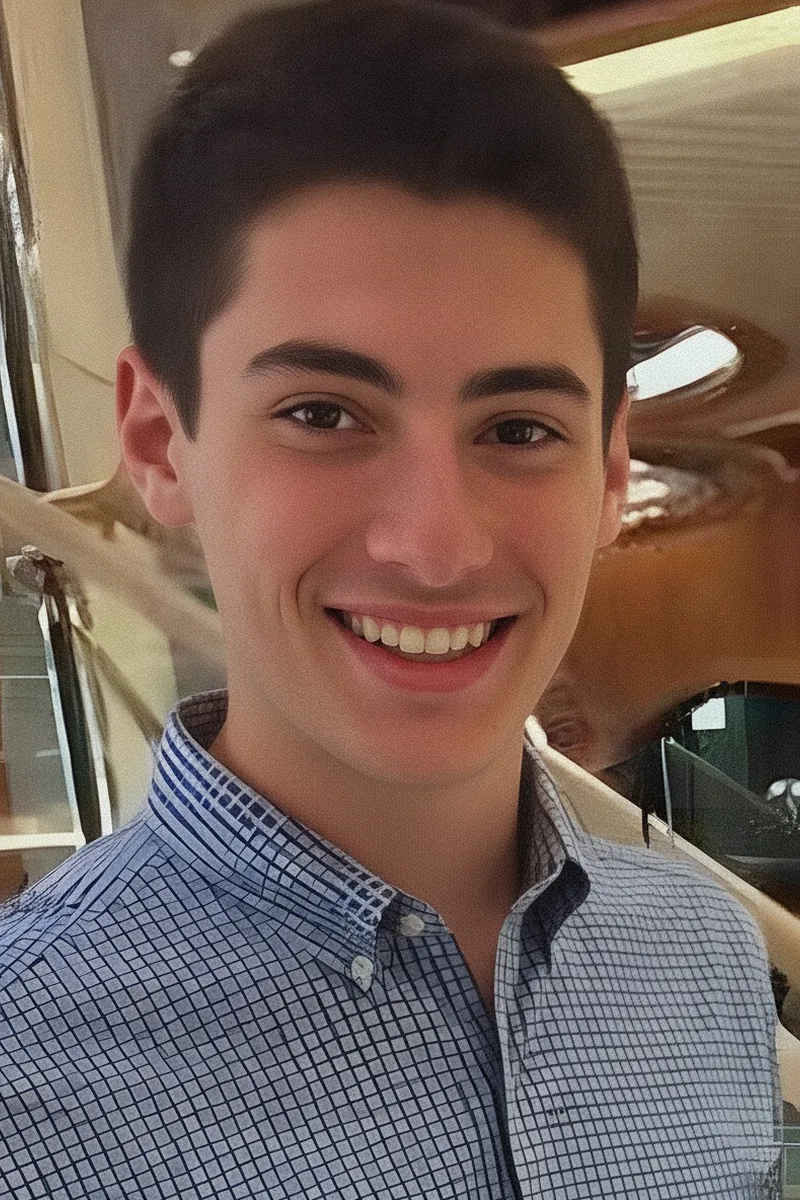
An applied math major at Stanford, Alex approaches geometry problems the way a mathematician would — by asking what's actually true about a figure before deciding which tools to use. That habit is especially valuable when students face problems combining circle theorems, inscribed angles, and arc-length relationships, where jumping to formulas too early usually leads nowhere. Rated 4.8 by students.
Economics at Yale is surprisingly geometry-adjacent — Calleigh's coursework involves reading complex graphs, reasoning about slopes and curves, and building logical arguments from quantitative evidence. She brings that same structured thinking to geometric proofs and circle theorems, teaching students to trace each step back to a specific postulate or definition rather than guessing at what comes next.
Proof-writing trips up most geometry students because it requires a completely different kind of thinking than arithmetic or algebra — you're building logical arguments, not solving for x. Elijah teaches students to map out their reasoning step by step, whether they're working through triangle congruence, circle theorems, or coordinate geometry problems. Rated 5.0 by students, he makes the transition from computation to deduction feel manageable.
Proofs are usually the first place geometry students feel stuck, because suddenly math asks them to build an argument instead of compute an answer. Czarina approaches proof-writing as a logic puzzle: identify what's given, figure out what connects to what, and chain the reasoning step by step. Her background spanning both STEM and writing-intensive coursework makes her especially effective at teaching that structured reasoning.
Proofs are usually the first time a math student has to build a logical argument instead of just computing an answer, and that shift trips up a lot of geometry students. Akanksha's experience teaching middle and high schoolers through both Kumon and Cornell's STEP program gives her a clear sense of how to walk someone through triangle congruence, similarity reasoning, or circle theorems step by step. She makes the 'why' behind each proof feel as concrete as the 'what.'
Proofs trip up most geometry students because they require a completely different kind of thinking — building logical arguments step by step rather than just computing answers. Sharon's medical training sharpened exactly that diagnostic reasoning, and she applies it to teach students how to structure proofs, work with congruence, and reason about angle relationships.
Teaching algebra in public school and philosophy at a community college gave Grant an unusual double fluency — he can walk through the computational steps of a geometry problem and also teach the logical structure behind a two-column proof with equal confidence. His math degree and nearly a decade of tutoring mean he knows exactly where students stall, whether it's setting up angle relationships in parallel line diagrams or connecting triangle congruence criteria to a proof's conclusion.
Proofs are where most geometry students stall — the jump from calculating angles to constructing logical arguments feels like a different subject entirely. Jared approaches geometric reasoning the way engineers do, connecting spatial intuition with rigorous step-by-step logic so that congruence proofs and circle theorems actually make sense rather than feel like arbitrary rules.
Princeton's writing center trained Emily to build airtight arguments — a skill that turns out to be exactly what geometry proofs demand, since each step requires justifying a claim with a definition, postulate, or previously proven theorem. Her experience tutoring younger students in math also means she can quickly spot when a geometry struggle is really an arithmetic or pre-algebra gap in disguise. Rated 4.8 by students.
Proofs are usually the biggest source of frustration in Geometry — students can see that two triangles are congruent but struggle to articulate the logical chain that proves it. Enric approaches geometric reasoning the same way he approaches scientific arguments: identify what you know, state your assumptions, and build step by step toward a conclusion.
I am a student at the Honors College of Rutgers - New Brunswick. I am currently working towards attaining a B.S. in Biochemistry, as well as a minor in Business and Administration. Over the last five years, I have reconciled my passion for teaching and my desire to interact with fellow students through tutoring. While I have tutored in a broad range of subjects, I am most passionate about science, math, and English. Having taught many students, each of whom were different in terms of personality and learning style, I understand the importance of tailoring the lesson to the student's strengths. As a result, I work to create unique, individualized learning plans that engage the student and make learning feel like an opportunity, rather than a chore.
Proofs are usually the part of geometry that trips students up — suddenly math requires structured arguments, not just calculations. Jeff walks through each proof by identifying what's given, what's needed, and which theorem bridges the gap, turning a frustrating exercise into a logical puzzle. His science background makes him particularly good at teaching this kind of deductive reasoning.
Proofs are usually the first place Geometry students feel lost, because the class suddenly asks them to justify every step instead of just computing an answer. Obi teaches logical reasoning as a skill in its own right, walking through how to structure two-column and paragraph proofs before tackling congruence and similarity. His science training at Princeton reinforced exactly this kind of rigorous, step-by-step thinking.
Proofs are where most geometry students panic, because suddenly math asks you to build an argument instead of just compute an answer. Benjamin, who studied writing alongside science at WashU, treats geometric proofs as structured persuasion — each statement needs evidence, each step needs justification. That logical scaffolding carries over to everything from triangle congruence to circle theorems.
I am a graduate of Cornell University. I received my Bachelor of Science in Human Biology, Health and Society. Since graduation, I have continued my education at Kean University. I plan to complete an informal postbach and apply directly to medical school. While I tutor a broad range of subjects, I am most passionate about Biology and Physics. I would best describe my tutoring style as very strategic and presenting the content as easy as possible to understand. In my spare time, I enjoy jogging, boxing and developing mobile games.
Proofs are usually the first place geometry students feel lost, because suddenly math requires written logical arguments instead of just calculations. Jill walks through each proof as a chain of reasoning — identifying given information, choosing the right theorem, and connecting steps until the conclusion clicks. Her approach turns what feels like guesswork into a repeatable process for congruence, similarity, and parallel line problems.
Proofs are usually the first place Geometry students feel lost — the leap from computing angles to constructing logical arguments is a different kind of thinking entirely. Michael treats proof-writing as a skill closer to building an argument in an essay than solving an equation, breaking each one into a chain of small, defensible claims. His research background in mathematics makes that logical scaffolding second nature.
Proofs are usually the first place geometry students hit a wall, because suddenly math requires written logical arguments instead of just calculations. Rishik teaches proof-writing as a skill closer to programming than to arithmetic: identify what you know, state what you need, and build a chain of justified steps in between. He also covers coordinate geometry and circle theorems with the same structured, step-by-step approach.
Proofs are usually the sticking point in geometry: students can calculate an angle but freeze when asked to justify each step logically. Alexander's background in both mathematics and philosophy at Colby College gave him deep practice in structured argumentation, and he applies that skill to teaching two-column and paragraph proofs so the reasoning feels systematic rather than mysterious.
I am looking to tutor in the areas of: Math, English, and for test prep. I was an honors student in High School, scored very well on all my tests, and have now earned a scholarship to go to Rutgers University for the Honors Program.
The IB program at Bergen County Academies — one of the most rigorous high school curricula in the country — drilled Toni in the kind of structured logical reasoning that geometry demands, from constructing proofs to applying properties of parallel lines and congruent triangles. Her finance background adds a practical edge: she's comfortable translating geometric relationships into precise calculations, which keeps students from losing points on problems where the reasoning is right but the arithmetic falls apart. Rated 4.9 by students.
I am pursuing a career in dentistry/oral surgery and will be beginning dental school at Boston University this fall. For this reason I recently took the DAT, which I am capable of assisting you with as well. During my undergraduate education, which I completed this past December, I worked in my school's tutoring center, helping my peers succeed in mathematics and science courses. Outside of my academic life, I am a big sports fan and I mostly follow the New York sports teams. For fun, I like to play basketball and golf with my friends. I am looking forward towards getting to know you and helping you with your academic needs.
I am currently working towards a doctorate in medicine from New Jersey Medical School. Throughout high school, college, and graduate school, I have tutored students ranging in age from elementary school to college freshmen in a variety of subjects particularly math and science. My favorite subject to tutor is math because it is very methodical and visual. Having a passion to help others, I am drawn to tutoring for the opportunity to share my knowledge with others. My family and friends have described me as being patient, compassionate, and personableall of the qualities that I believe I bring to my students. Outside of tutoring, I like Notre Dame football, dogs (especially my family's German Shepherd!), yoga, cooking, and reading.
Proofs are usually where geometry goes from manageable to intimidating — suddenly students need to justify every step with a theorem they barely remember. Jeremiah tackles this by teaching students to read diagrams like arguments, identifying given information and building logical chains before ever writing a formal two-column proof. His economics background means he's comfortable with structured reasoning and translates that skill into geometric thinking.
Proofs are usually where geometry students panic — the leap from calculating angles to writing logical arguments feels enormous. Tyler approaches proofs as puzzles with a clear entry point, teaching students to identify given information and chain reasoning one statement at a time. His engineering background makes spatial reasoning and precise logic second nature.
Proofs are where most geometry students panic — the logic feels nothing like the arithmetic they're used to. Natalia tackles proofs by walking through the reasoning step by step, treating each one like a puzzle where angle relationships, congruence postulates, and parallel-line theorems are the pieces to assemble.
A special education background changes how you teach geometry — Blake knows that the jump from 'I see it' to 'I can prove it' requires different scaffolding for different learners, especially when two-column proofs demand both visual reasoning and precise language at the same time. His theatre training also means he's comfortable making abstract ideas concrete and physical, turning transformations and symmetry into something students can act out and internalize rather than just memorize. Rated 5.0 by students.
A mathematical statistics major at Smith, Kate brings an unusual edge to geometry: she's trained to think about shapes and space in terms of probability and data, which means she naturally asks questions like 'what properties must be true here?' before jumping to calculations. That analytical habit pays off most on proof-based problems — setting up congruence arguments, working through parallel line reasoning, and building the logical chains that geometry courses increasingly demand. Rated 4.8 by students.
High school math tutoring gave Michelle her start, and geometry is where structured thinking and creativity collide — figuring out which triangles are congruent, how to set up a two-column proof, or why a particular auxiliary line unlocks an entire problem. Her Princeton education built the kind of disciplined, question-driven reasoning that makes the logical side of geometry feel less like memorization and more like puzzle-solving.
Architecture students live inside geometry — every design problem Arthur tackles at Princeton involves angles, spatial relationships, and precise measurements translated from concept to structure. That daily practice with shapes, symmetry, and proportion gives him an intuitive grasp of everything from triangle congruence to transformations that he brings directly into tutoring sessions. Rated 5.0 by students.
As a math major at Penn who spent years in the university's peer tutoring department, Brian developed a knack for spotting exactly where a student's reasoning breaks down in a geometric proof — whether it's a missing justification in a two-column argument or a misapplied theorem about similar triangles. He teaches the proof-building process as a series of small, checkable steps rather than one intimidating block of logic, which makes even the trickiest congruence and circle problems feel approachable. Rated 4.9 by students.
Rachel's biology and history training built two skills that map directly onto geometry: diagramming complex systems and constructing evidence-based arguments. She applies both when teaching coordinate geometry and transformations, breaking problems into visual components before translating them into precise calculations. Her 1580 SAT score speaks to the kind of analytical rigor she brings to spatial reasoning.
An English major might seem like an unusual fit for geometry, but Gene's 1580 SAT score shows he's no stranger to mathematical reasoning — and the argument-building skills from literary analysis translate directly to writing two-column proofs. He approaches geometric proofs the way he'd approach a close reading: identify what you're given, figure out what you need to show, and build the logical chain connecting them. Rated 5.0 by students.
Proofs are usually the first place Geometry students hit a wall, because suddenly math requires structured logical arguments instead of just calculations. Sophia's training in computer science — where writing formal proofs and logical sequences is routine — gives her a natural framework for teaching two-column and paragraph proofs. She also covers congruence, similarity, and coordinate geometry with clear visual explanations.
Proofs are usually the first time a math student has to build a logical argument from scratch, and that's where most geometry frustration starts. Sam walks through each proof as a chain of reasoning — identifying given information, selecting the right theorems, and constructing a case step by step — so the process feels structured instead of random.
Proofs are usually the first time a math student has to construct a logical argument instead of just computing an answer, and that shift trips up a lot of geometry students. Justin's engineering training at Illinois sharpened his ability to think spatially — from congruence and similarity theorems to coordinate geometry and circle properties, he connects each proof technique to a visual or physical example. He makes the reasoning behind each step explicit so students can replicate it on their own.
Computer engineering coursework has Rahul constantly thinking in terms of spatial layouts and coordinate systems, which gives him a practical handle on geometry topics like transformations, angle relationships, and properties of polygons. He breaks down problems by first labeling every relationship visible in the diagram — a habit from circuit design that keeps students from skipping steps or misreading figures. Rated 4.5 by students.
Proofs are where most geometry students panic, but Andre treats them as logic puzzles — each one a chain of small, defensible steps rather than a mysterious block of text. His competition math background and LSAMP research experience gave him practice constructing rigorous arguments, a skill he now applies to teaching congruence, similarity, and circle theorems. He also connects geometric reasoning to coordinate methods so students see multiple paths to a solution.
Proofs are where most geometry students freeze up, unsure how to connect one logical step to the next. Justin's engineering background at Rutgers runs on spatial reasoning and structured logic, so he breaks down triangle congruence, parallel line theorems, and coordinate geometry in ways that actually build intuition rather than just memorizing postulates.
Testimonials
Because the right Geometry tutor makes all the difference.
Average Session Rating – Based on 3.4M Learner Ratings
Practice Geometry
Free practice tests, flashcards, and AI tutoring for Geometry
Nearby Geometry Tutors
Other Atlantic City Tutors
Related Math Tutors in Atlantic City
Frequently Asked Questions
Varsity Tutors matches Atlantic City students with expert Geometry tutors for 1-on-1 instruction. We pair each student with a tutor based on their specific needs, learning style, and goals.
Whether you need homework help, exam prep, or want to get ahead, our Geometry tutors are ready to help.
Common challenges include gaps from earlier material, difficulty with specific concepts, and trouble applying learning to new problems. These issues can snowball quickly in Geometry.
A tutor identifies where you're stuck, fills in gaps, and provides targeted practice. The 1-on-1 format means you get help exactly where you need it.
Tutors work with your student's actual coursework—homework assignments, class notes, and upcoming tests. This keeps tutoring directly relevant to what's happening in the classroom.
When you share information about your student's school and curriculum, we can match you with a tutor who has relevant experience.
All tutors complete background checks, credential verification, and teaching evaluation. Many of our Geometry tutors hold advanced degrees or have years of teaching experience.
You can review tutor profiles to find someone with the right background for your student's level and needs.
Many students see improved grades within a few weeks, along with better understanding of Geometry concepts and more confidence tackling challenging material.
Tutors track progress and adjust their approach to ensure continued improvement.
Most students benefit from 1-2 sessions per week. More frequent sessions help if your student is significantly behind or has an important exam coming up.
Your tutor can recommend a schedule based on your student's specific situation and goals.
Tutoring is purchased in packages of hours, with rates varying by tutor experience. Varsity Tutors offers several options to fit different budgets and needs.
You can discuss pricing during your consultation to find what works best.
Your tutor will assess where your student is, discuss goals, and start working on priority areas. Most students bring current homework or upcoming test material to focus on.
By the end, you'll have a clear sense of how the tutor can help and a plan for moving forward.
Let’s find your perfect tutor
Answer a few quick questions. We’ll recommend the right plan and match you with a top 5% tutor.