Award-Winning Geometry Tutors
serving Spring Valley, NV
Geometry
Tutors in Spring Valley
Private 1-on-1 tutoring, weekly live classes for academic support, test prep & enrichment, practice tests and diagnostics, and more to elevate grades and test scores.
Based on 3.4M Learner Ratings
UniversitiesSchools & Universities
DeliveredHours Delivered
ProficiencyGrowth in Proficiency
Who needs tutoring?
No obligation. Takes ~1 minute.

I'm trying to work on personal projects. I really enjoy snowboarding, and have been doing that since the third grade. I also enjoy playing sports and video games.
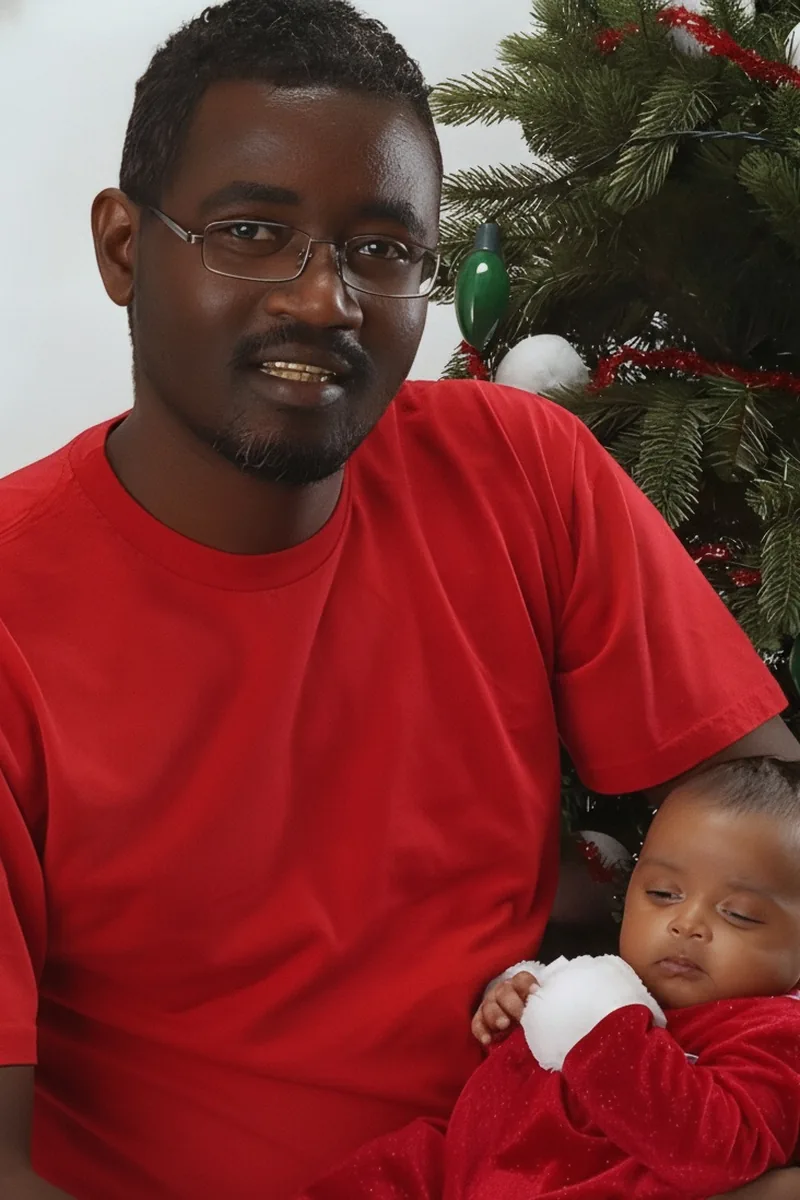
Proofs intimidate most geometry students because they require a completely different kind of thinking than arithmetic or algebra. Zelalem approaches them as logical arguments: set up what you know, identify the relationship, and build toward the conclusion one justified step at a time. His engineering background reinforces that structured reasoning in every session.
Proofs are usually the first time a math student has to construct a logical argument, and that transition from "find the answer" to "explain why" is where Michael excels. He teaches students to approach two-column and paragraph proofs the way a scientist builds a case — claim, evidence, reasoning — making the structure feel less foreign. Triangle congruence, circle theorems, and coordinate geometry all become more manageable once that logical framework is in place.
Training specifically to teach secondary math means Justin has spent years studying not just geometry content but how students actually get stuck on it — the leap from memorizing postulates to writing a two-column proof, or the moment a multi-step problem with circles and inscribed angles stops making visual sense. He breaks those sticking points down by rebuilding the reasoning from simpler cases, connecting each theorem back to something a student can draw and verify on paper.
Proofs are usually the make-or-break moment in Geometry — students either learn to construct logical arguments or they start memorizing steps without understanding them. Katherine walks through each proof as a chain of reasoning, teaching students to identify what they know, what they need, and which theorem bridges the gap. That skill pays off well beyond the geometry classroom.
Proofs are usually the first place geometry students panic — the logic feels nothing like the computation they're used to. Orestes approaches them as structured arguments, teaching students to map out what they know, what they need to show, and which postulates connect the two, turning an intimidating format into a repeatable process.
Proofs are usually the first place Geometry students feel stuck, because the logic feels nothing like the algebra they're used to. Kyle teaches proof structure as a step-by-step argument — identifying givens, choosing the right theorem, and building toward the conclusion — so the reasoning becomes a skill rather than a mystery.
Proofs are the part of geometry that makes students groan, but they're also where real mathematical reasoning begins. Adriana teaches proof-writing as a skill — picking the right postulate, structuring a logical chain, knowing when to use congruence versus similarity — so that it feels like building an argument rather than performing a ritual.
A math minor and biology major at UNLV's Honors College, Henry brings a cross-disciplinary eye to geometry — particularly coordinate geometry and transformations, where algebraic thinking and spatial reasoning overlap. His 5.0 client rating speaks to how clearly he breaks down multi-step problems, from area and volume applications to the logic behind angle and arc relationships.
A political science degree from the University of Chicago means Asta spent four years constructing airtight arguments from premises to conclusions — exactly the skill that makes geometric proofs click. She applies that structured reasoning to two-column proofs and logical chains involving congruence, triangle properties, and circle theorems, treating each one like a case to be built rather than a formula to memorize. Rated 5.0 by students.
Cornell's biological engineering program threw Mary into years of modeling physical systems — fluid flow through channels, stress on biomaterials, device dimensions — all of which demand precise geometric reasoning about shapes, cross-sections, and spatial relationships. She brings that practical fluency to topics like circle theorems, properties of quadrilaterals, and area-volume calculations, making abstract definitions feel grounded in real measurement. Rated 5.0 by students.
Proofs are usually the first place geometry students feel lost, because suddenly they're being asked to construct arguments instead of compute answers. Ben teaches proof-writing as a logical skill: identifying what's given, what's needed, and which theorems bridge the gap. His approach turns the frustration of "I don't know where to start" into a repeatable process.
Three years of tutoring math across elementary through high school gave Talia a clear picture of where geometry trips students up — and it's almost always the transition from calculating answers to constructing logical arguments in proofs. Her approach leans on breaking down each proof into plain-language reasoning first, then translating that thinking into formal geometric statements about congruence, angle relationships, or parallel lines. Rated 5.0 by students.
Proofs are where most geometry students get stuck — the leap from calculating angles to constructing logical arguments feels like a different subject entirely. Jonathan breaks that transition down by teaching students to identify given information, spot congruence relationships, and build each proof step by step. His 4.9 rating speaks to how well that structured approach clicks.
Proofs are usually where geometry stops feeling like math and starts feeling like a foreign language. JF breaks down the logic behind two-column and paragraph proofs so students see them as structured arguments, not mysterious rituals. A 5.0 client rating speaks to an approach that makes even angle-chasing problems feel manageable.
Economics at UChicago is surprisingly proof-heavy — Ellie's coursework in mathematical economics requires the same kind of structured, step-by-step logical reasoning that geometry proofs demand. She applies that training to help untangle the visual-to-logical leap students struggle with, particularly when translating a diagram involving circle theorems or polygon properties into a written argument. Her 1520 SAT speaks to the broader math fluency she brings to the table.
An English major might seem like an unlikely geometry tutor, but Ayako's 1540 SAT score speaks to serious quantitative chops — and she approaches geometric reasoning the way she approaches a close reading, breaking a complex figure into its component parts and asking what each piece tells you. She's especially effective at teaching students how to extract usable information from dense diagrams involving circles, inscribed angles, and overlapping triangles. Rated 5.0 by students.
Proofs are usually the first time a geometry student has to explain *why* something is true, not just calculate an answer. Vansh teaches proof-writing as a logical argument rather than a mysterious format, walking through triangle congruence, parallel-line theorems, and circle properties with enough patience to make the reasoning feel natural.
Proofs are usually the first place geometry students get stuck, because suddenly math asks them to argue logically instead of just compute. Ian approaches proof-writing the way he approaches physics derivations at Yale — step by step, with each claim grounded in a specific theorem or postulate. He also covers triangle congruence, circle theorems, and coordinate geometry with the same structured clarity.
Proofs are where most geometry students freeze up — the leap from calculating angles to constructing logical arguments feels like a different subject entirely. Paula bridges that gap by connecting each theorem back to something visual and concrete, whether it's triangle congruence or parallel line relationships. Her psychology background gives her a sharp read on where a student's reasoning breaks down.
Proofs are usually where geometry students panic, but they're really just structured arguments — and Dane approaches them that way. Studying engineering at Duke sharpened his spatial reasoning across topics like congruence, similarity, and coordinate geometry, and he teaches students to visualize relationships before translating them into formal logic.
Testimonials
Because the right Geometry tutor makes all the difference.
Average Session Rating – Based on 3.4M Learner Ratings
Practice Geometry
Free practice tests, flashcards, and AI tutoring for Geometry
Other Spring Valley Tutors
Related Math Tutors in Spring Valley
Frequently Asked Questions
Varsity Tutors matches Spring Valley students with expert Geometry tutors for 1-on-1 instruction. We pair each student with a tutor based on their specific needs, learning style, and goals.
Whether you need homework help, exam prep, or want to get ahead, our Geometry tutors are ready to help.
Common challenges include gaps from earlier material, difficulty with specific concepts, and trouble applying learning to new problems. These issues can snowball quickly in Geometry.
A tutor identifies where you're stuck, fills in gaps, and provides targeted practice. The 1-on-1 format means you get help exactly where you need it.
Tutors work with your student's actual coursework—homework assignments, class notes, and upcoming tests. This keeps tutoring directly relevant to what's happening in the classroom.
When you share information about your student's school and curriculum, we can match you with a tutor who has relevant experience.
All tutors complete background checks, credential verification, and teaching evaluation. Many of our Geometry tutors hold advanced degrees or have years of teaching experience.
You can review tutor profiles to find someone with the right background for your student's level and needs.
Many students see improved grades within a few weeks, along with better understanding of Geometry concepts and more confidence tackling challenging material.
Tutors track progress and adjust their approach to ensure continued improvement.
Most students benefit from 1-2 sessions per week. More frequent sessions help if your student is significantly behind or has an important exam coming up.
Your tutor can recommend a schedule based on your student's specific situation and goals.
Tutoring is purchased in packages of hours, with rates varying by tutor experience. Varsity Tutors offers several options to fit different budgets and needs.
You can discuss pricing during your consultation to find what works best.
Your tutor will assess where your student is, discuss goals, and start working on priority areas. Most students bring current homework or upcoming test material to focus on.
By the end, you'll have a clear sense of how the tutor can help and a plan for moving forward.
Let’s find your perfect tutor
Answer a few quick questions. We’ll recommend the right plan and match you with a top 5% tutor.