Award-Winning Geometry Tutors
serving Reno, NV
Geometry
Tutors in Reno
Private 1-on-1 tutoring, weekly live classes for academic support, test prep & enrichment, practice tests and diagnostics, and more to elevate grades and test scores.
Based on 3.4M Learner Ratings
UniversitiesSchools & Universities
DeliveredHours Delivered
ProficiencyGrowth in Proficiency
Who needs tutoring?
No obligation. Takes ~1 minute.

I'm trying to work on personal projects. I really enjoy snowboarding, and have been doing that since the third grade. I also enjoy playing sports and video games.
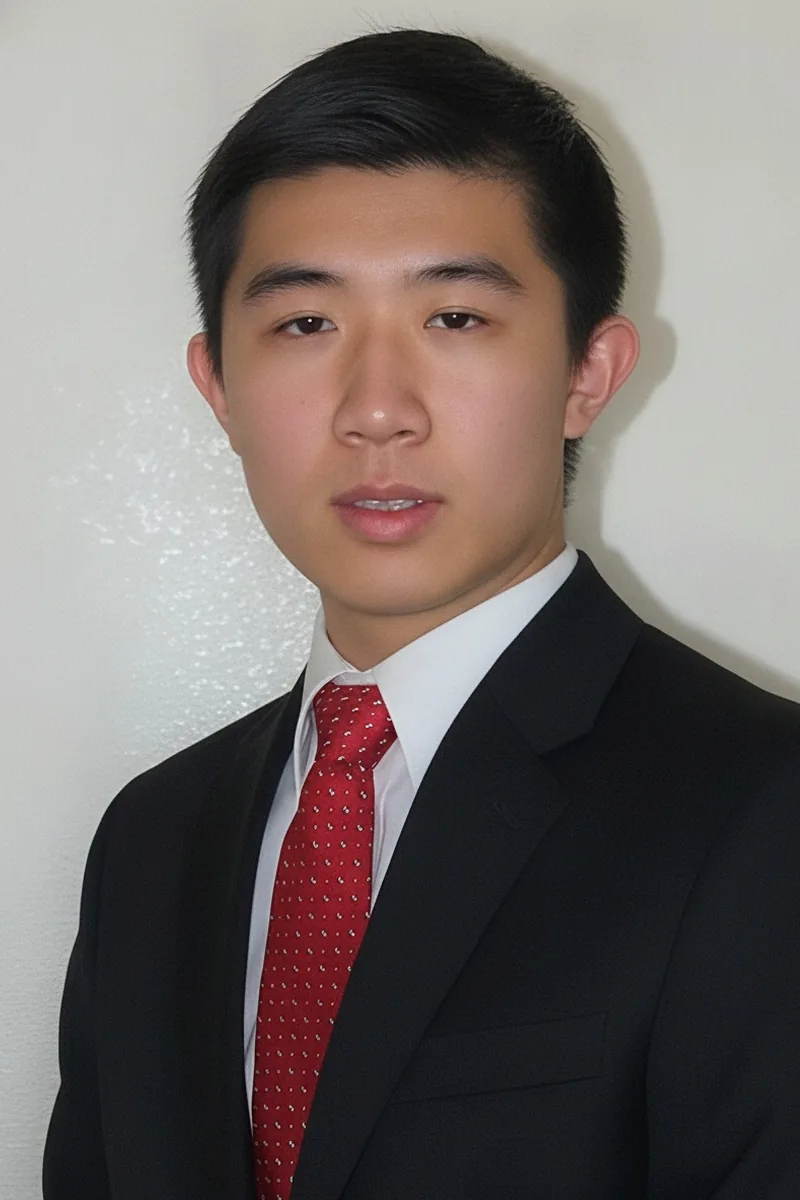
Proofs are usually the first time a math student has to construct a logical argument, and that transition from "find the answer" to "explain why" is where Michael excels. He teaches students to approach two-column and paragraph proofs the way a scientist builds a case — claim, evidence, reasoning — making the structure feel less foreign. Triangle congruence, circle theorems, and coordinate geometry all become more manageable once that logical framework is in place.
Proofs intimidate most geometry students because they require a completely different kind of thinking than arithmetic or algebra. Zelalem approaches them as logical arguments: set up what you know, identify the relationship, and build toward the conclusion one justified step at a time. His engineering background reinforces that structured reasoning in every session.
Training specifically to teach secondary math means Justin has spent years studying not just geometry content but how students actually get stuck on it — the leap from memorizing postulates to writing a two-column proof, or the moment a multi-step problem with circles and inscribed angles stops making visual sense. He breaks those sticking points down by rebuilding the reasoning from simpler cases, connecting each theorem back to something a student can draw and verify on paper.
Proofs are usually the make-or-break moment in Geometry — students either learn to construct logical arguments or they start memorizing steps without understanding them. Katherine walks through each proof as a chain of reasoning, teaching students to identify what they know, what they need, and which theorem bridges the gap. That skill pays off well beyond the geometry classroom.
Proofs are usually the first place geometry students panic — the logic feels nothing like the computation they're used to. Orestes approaches them as structured arguments, teaching students to map out what they know, what they need to show, and which postulates connect the two, turning an intimidating format into a repeatable process.
Proofs are usually the first place Geometry students feel stuck, because the logic feels nothing like the algebra they're used to. Kyle teaches proof structure as a step-by-step argument — identifying givens, choosing the right theorem, and building toward the conclusion — so the reasoning becomes a skill rather than a mystery.
Proofs are the part of geometry that makes students groan, but they're also where real mathematical reasoning begins. Adriana teaches proof-writing as a skill — picking the right postulate, structuring a logical chain, knowing when to use congruence versus similarity — so that it feels like building an argument rather than performing a ritual.
A math minor and biology major at UNLV's Honors College, Henry brings a cross-disciplinary eye to geometry — particularly coordinate geometry and transformations, where algebraic thinking and spatial reasoning overlap. His 5.0 client rating speaks to how clearly he breaks down multi-step problems, from area and volume applications to the logic behind angle and arc relationships.
Proofs are usually where geometry students panic, so Samantha teaches them as structured arguments rather than mysterious rituals — each statement earns its place with a reason. She also digs into the spatial reasoning behind congruence, similarity, and circle theorems, connecting diagrams to the algebra students already know. Her Duke science background means she's comfortable making abstract relationships concrete.
An English major might seem like an unlikely geometry tutor, but Ayako's 1540 SAT score speaks to serious quantitative chops — and she approaches geometric reasoning the way she approaches a close reading, breaking a complex figure into its component parts and asking what each piece tells you. She's especially effective at teaching students how to extract usable information from dense diagrams involving circles, inscribed angles, and overlapping triangles. Rated 5.0 by students.
Most geometry struggles come down to proofs: students can identify that two triangles look congruent but can't articulate why in a logical chain. Sam's engineering and statistics background trained him in rigorous argumentation, and he applies that same structured thinking to walk through two-column and paragraph proofs until the reasoning clicks.
Neurobiology at Harvard meant Emma spent years interpreting complex diagrams of neural pathways and brain structures — skills that translate directly to reading the dense, multi-layered figures in geometry where you have to pull out the right angle relationship or identify similar triangles buried inside a larger shape. She tackles the subject from the logic side, treating each proof like a scientific hypothesis that needs step-by-step evidence. Rated 5.0 by students.
Every proof in geometry is really an exercise in building a logical argument from a set of given constraints — a skill Jeffrey sharpened through years of engineering coursework at Notre Dame and his PhD work at Rice. He teaches students to approach triangle congruence, parallel line theorems, and circle properties as puzzles with clear reasoning chains rather than formulas to memorize.
Proofs are usually the first place geometry students get stuck, because suddenly math requires constructing an argument instead of computing an answer. Samuel's background in algorithmic and combinatorial thinking — he served as a teaching assistant for a discrete math course — translates directly to teaching logical reasoning, from triangle congruence proofs to circle theorems.
A biology major from Rice with a 1570 SAT, Perry approaches geometry problems the way he approaches lab work — by breaking complex diagrams into discrete, manageable pieces and reasoning through each relationship step by step. He's especially effective at teaching circle theorems and polygon properties, where students often know the individual rules but freeze when a problem layers several together. Rated 5.0 by students.
A year as a course assistant in Harvard's math department taught Richard how to break abstract reasoning into concrete steps — a skill that pays off in geometry when students need to connect definitions, postulates, and theorems into a coherent proof. His government major, which is essentially an exercise in building airtight arguments from messy evidence, reinforces the same logical sequencing that two-column and paragraph proofs demand.
Proofs are where most geometry students panic — the logic feels nothing like the arithmetic they're used to. Pinelopi breaks two-column and paragraph proofs into small reasoning steps, treating each one like a mini-argument rather than a memorization exercise. Her Duke psychology training actually lends itself well to teaching logical structure.
Proofs are usually where geometry students panic — the jump from calculating angles to constructing logical arguments feels like a different subject entirely. Isabella's MIT math training means formal reasoning is second nature to her, and she walks students through how to build a proof step by step, connecting geometric intuition to the structured logic on the page. She also covers coordinate geometry and triangle congruence with the same emphasis on understanding over memorization.
Proofs are usually where geometry students hit a wall — the shift from calculating answers to constructing logical arguments feels like a completely different subject. Tom's background in American Studies, which is essentially built on evidence-based argumentation, gives him a unique angle on teaching students to chain geometric theorems into airtight reasoning. He also covers the computational side, from triangle congruence to circle theorems, with the same step-by-step precision.
Proofs are usually where geometry stops feeling like math and starts feeling like a foreign language. Ava tackles that disconnect by teaching students to read diagrams actively — identifying congruent triangles, parallel line relationships, and angle pairs before ever writing a formal statement. Her engineering background means spatial reasoning is second nature to her.
Testimonials
Because the right Geometry tutor makes all the difference.
Average Session Rating – Based on 3.4M Learner Ratings
Practice Geometry
Free practice tests, flashcards, and AI tutoring for Geometry
Other Reno Tutors
Related Math Tutors in Reno
Frequently Asked Questions
Many students struggle with the transition from algebra's computational focus to geometry's emphasis on visual reasoning and logical proof. Common pain points include understanding why geometric theorems work (not just memorizing them), tackling multi-step proofs, applying concepts to word problems, and visualizing 3D shapes. Personalized tutoring helps students build conceptual understanding alongside procedural skills, so they can see the patterns and connections that make geometry click.
Proofs require both logical thinking and clear communication—skills that benefit enormously from 1-on-1 guidance. A tutor can break down the proof-writing process step-by-step, help students identify which theorems and postulates apply, and teach them how to structure their reasoning clearly. Regular practice with immediate feedback builds confidence and helps students recognize proof patterns, turning a frustrating skill into something manageable.
During an initial session, a tutor will assess your student's current understanding of geometry concepts, identify specific areas of struggle (whether it's proofs, coordinate geometry, or spatial reasoning), and learn about their learning style. This helps the tutor create a personalized plan that targets your student's needs and builds on their strengths. You'll leave with a clear picture of next steps and how tutoring can help.
Yes. Reno schools use various geometry programs, and tutors are experienced working across different curricula and approaches. Whether your student's school uses a traditional proof-heavy curriculum or a more integrated approach, Varsity Tutors connects you with tutors who understand the specific standards and materials your student is learning from. This alignment ensures tutoring reinforces what's happening in the classroom.
Word problems require students to translate language into geometric concepts and then solve—a multi-step process where confusion can happen at any stage. Tutors teach problem-solving strategies like drawing diagrams, identifying what's given versus what's asked, and breaking complex problems into manageable pieces. With guided practice, students build the confidence and systematic approach needed to tackle word problems independently.
Absolutely. Math anxiety often stems from feeling lost or unsupported, and personalized 1-on-1 instruction directly addresses this. When a student works with a tutor who explains concepts at their pace, celebrates small wins, and creates a judgment-free space to ask questions, confidence naturally grows. Many students discover that geometry makes sense once they have someone to help them work through the reasoning—and that realization is powerful.
Visualization is core to geometry success. Tutors use diagrams, manipulatives, coordinate planes, and dynamic tools to help students see how shapes relate to each other and how transformations work. By connecting abstract concepts to visual representations, students develop spatial reasoning skills and can apply those visuals to solve problems. This concrete-to-abstract approach makes geometry less intimidating and more intuitive.
Varsity Tutors connects you with qualified tutors experienced in teaching geometry to students in Reno. Simply share details about your student's current level, specific challenges, and scheduling preferences, and we'll match them with a tutor who fits their needs. The process is straightforward, and you can start personalized instruction quickly to help your student succeed.
Let’s find your perfect tutor
Answer a few quick questions. We’ll recommend the right plan and match you with a top 5% tutor.