Award-Winning AP Calculus BC Tutors
serving Spring Valley, NV
AP Calculus BC
Tutors in Spring Valley
Private 1-on-1 tutoring, weekly live classes for academic support, test prep & enrichment, practice tests and diagnostics, and more to elevate grades and test scores.
Based on 3.4M Learner Ratings
UniversitiesSchools & Universities
DeliveredHours Delivered
ProficiencyGrowth in Proficiency
Who needs tutoring?
No obligation. Takes ~1 minute.

Most people who breeze through math can't explain it — Daniel learned BC Calculus by grinding through the logic of every convergence test, every parametric derivative, every series expansion until it genuinely made sense, and that's exactly how he teaches it. As an applied mathematics undergrad, he's currently using these tools in upper-level coursework, so he knows which BC concepts tend to feel arbitrary and how to make the reasoning behind them stick.
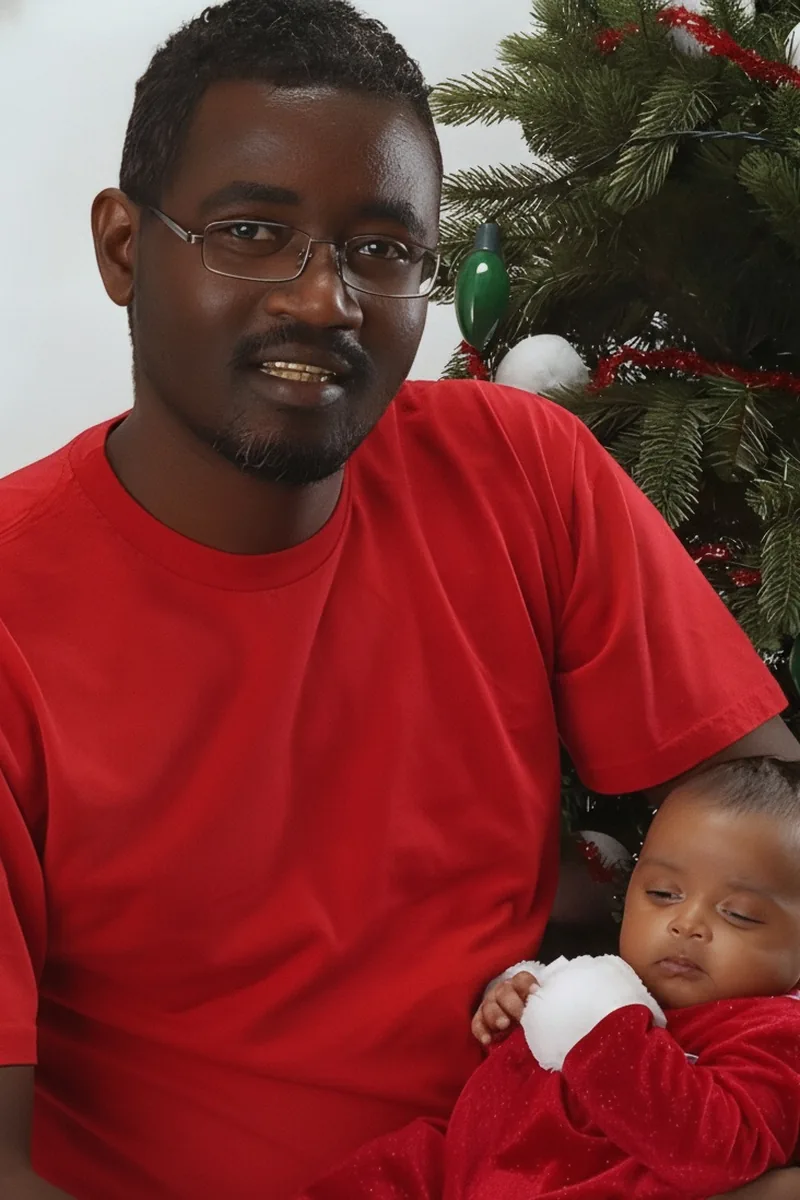
Three years teaching the full Algebra-through-Precalculus sequence at Chaparral High School means Zelalem knows exactly which gaps in earlier math trip students up when BC introduces series convergence, parametric derivatives, or Taylor polynomial construction — because he's the one who taught those foundational layers. His chemical engineering graduate work reinforced that calculus knowledge from the applied side, using integration techniques and differential equations to model real systems like heat transfer and fluid flow. Rated 4.9 by students.
Most BC students can memorize the list of convergence tests but freeze when asked which one to actually use on a given series — Deepal tackles that decision-making process by teaching the reasoning behind each test rather than just its formula. Biomedical engineering coursework at USC keeps him actively using Taylor expansions, integration techniques, and parametric equations, so he brings a 1570 SAT scorer's precision to problems that trip students up at the AB-to-BC transition.
I consider mathematics as an essential skill for success in life regardless of one's chosen career. It is a beautiful application of human reasoning to create an understanding of the universe we live in and to admire the incredible technical achievements of mankind. I hope to instill this appreciation for the subject in my students as they build the skills necessary to not only master the techniques and skills of math, but to enjoy and admire how math is used and the geniuses who developed the methods.
Kyle has completed Calculus 2 at the university level, which means he's already worked through the full range of BC topics — Taylor series, parametric equations, polar curves, and advanced integration techniques. He breaks down multi-step problems by connecting each new concept back to the foundational ideas students already know from AB.
Series convergence tests, parametric equations, and polar curves make BC the course where strong calculus students suddenly feel lost. Henry tackles these topics by connecting each new BC concept back to the AB foundations students already know, building intuition for why Taylor series approximate functions or how integration techniques extend into new coordinate systems. His 5.0 rating speaks to how well that approach lands.
BC Calculus throws students into series convergence tests, parametric equations, and polar coordinates — topics that feel disconnected unless someone ties them back to the core ideas of AB. Dylan's physics major at Vanderbilt means he uses calculus daily and can show exactly how Taylor series or integration by parts behave visually, not just symbolically. He turns abstract series into something students can sketch, interpret, and reason through on exam day.
Engineering physics at Cornell means Daniel is currently neck-deep in the math that BC Calculus builds toward — using series to model oscillating systems, applying integration techniques to energy problems, and solving differential equations that describe real physical behavior. That context gives him a clear picture of which BC skills actually matter and how to teach something like the ratio test or parametric arc length by grounding it in the AB intuition a student already carries. Rated 5.0 by students.
BC Calculus layers convergence tests, parametric equations, and polar curves on top of an already demanding AB foundation, and the pacing leaves little room to fall behind. Vinson earned a 36 ACT and National AP Scholar distinction while building the kind of deep mathematical fluency that makes series analysis and integration techniques click. He breaks each new BC topic into the AB concept it extends, so the jump never feels arbitrary.
Biomedical engineering at Johns Hopkins means Bidyut uses series approximations and differential equations to model biological systems — the same convergence tests and integration techniques that define the BC curriculum beyond AB. He's especially sharp at showing how a topic like Taylor polynomial error bounds connects back to the derivative reasoning students already trust, turning what feels like a wall of new material into a logical extension. Holds a 5.0 rating and a 36 ACT composite.
Managing an immunology research lab at Columbia means Matthew lives in the quantitative deep end — modeling biological systems, analyzing experimental data — and his physics degree built the calculus fluency that makes that possible. He's especially sharp on the BC topics that trip students up after AB: constructing Taylor series from scratch, navigating convergence tests systematically, and connecting parametric or polar problems back to the derivative logic underneath them.
BC Calculus throws students into deep water fast — Taylor and Maclaurin series, parametric equations, and convergence tests all pile up in a single semester. Rahi's applied mathematics engineering background means he can unpack these topics by connecting them to the real-world modeling problems they were designed to solve. He builds each concept from its AB foundation so students see how the BC extensions actually work.
As a multivariable calculus teaching assistant at Harvard's Math Department, Kristi spent semesters watching exactly where students' BC foundations cracked under pressure — shaky series intuition, mechanical convergence testing, parametric reasoning that never quite solidified. Her astrophysics training means she learned these tools by necessity, using Taylor expansions to model orbital mechanics and integration techniques to analyze planetary data, so she teaches the logic driving each method rather than just the steps. Rated 5.0 by students.
Princeton's electrical engineering program leans hard on series expansions and differential equations from day one — Sabrina uses them to analyze circuits and model signal behavior in her applied physics coursework, which means BC topics like Taylor polynomials and convergence tests aren't abstract exercises for her but tools she reaches for weekly. She's especially clear at breaking down the logic behind each convergence test so students can choose the right one on their own instead of guessing. Rated 5.0 by students.
Coming out of Thomas Jefferson High School for Science and Technology — one of the most rigorous STEM pipelines in the country — Rhamy had BC Calculus concepts like series convergence and parametric integration locked down before most students even encounter them. His computer engineering program at Vanderbilt keeps those tools sharp daily, since signal analysis and circuit design lean heavily on the same Taylor expansions and differential equations that define the BC curriculum. Rated 5.0 by students.
Series convergence tests, parametric equations, polar curves — BC Calculus piles on concepts fast, and falling behind on one unit can cascade through the rest of the course. Ethan breaks each new topic back to its AB foundation before building upward, so students see Taylor series and integration techniques as extensions of ideas they already own rather than entirely new material.
Two years teaching math at every level at Mathnasium gave Amy an unusual skill for BC Calculus: she can trace a student's confusion with, say, a convergence test or polar area setup back to the specific algebraic or AB-level gap causing the problem. Her biochemistry coursework at Notre Dame also means she's used series approximations and integration techniques in applied contexts like enzyme kinetics and thermodynamics. A 1570 SAT and 35 ACT speak to the across-the-board precision she brings to the trickiest parts of the BC curriculum.
Molecular biology at Yale means Maxwell lives in calculus-heavy territory — modeling gene expression rates, quantifying cell growth curves, analyzing reaction kinetics — so BC topics like differential equations and series approximations aren't abstract exercises for him but tools he actually reaches for in research. He's especially good at walking through the logic of integration techniques and parametric problems by grounding them in the AB concepts students already trust. Holds a 5.0 rating.
Testimonials
Because the right AP Calculus BC tutor makes all the difference.
Average Session Rating – Based on 3.4M Learner Ratings
Practice AP Calculus BC
Free practice tests, flashcards, and AI tutoring for AP Calculus BC
Other Spring Valley Tutors
Related Math Tutors in Spring Valley
Frequently Asked Questions
Varsity Tutors matches Spring Valley students with expert AP Calculus BC tutors for 1-on-1 instruction. We pair each student with a tutor based on their specific needs, learning style, and goals.
Whether you need homework help, exam prep, or want to get ahead, our AP Calculus BC tutors are ready to help.
Common challenges include gaps from earlier material, difficulty with specific concepts, and trouble applying learning to new problems. These issues can snowball quickly in AP Calculus BC.
A tutor identifies where you're stuck, fills in gaps, and provides targeted practice. The 1-on-1 format means you get help exactly where you need it.
Tutors work with your student's actual coursework—homework assignments, class notes, and upcoming tests. This keeps tutoring directly relevant to what's happening in the classroom.
When you share information about your student's school and curriculum, we can match you with a tutor who has relevant experience.
All tutors complete background checks, credential verification, and teaching evaluation. Many of our AP Calculus BC tutors hold advanced degrees or have years of teaching experience.
You can review tutor profiles to find someone with the right background for your student's level and needs.
Many students see improved grades within a few weeks, along with better understanding of AP Calculus BC concepts and more confidence tackling challenging material.
Tutors track progress and adjust their approach to ensure continued improvement.
Most students benefit from 1-2 sessions per week. More frequent sessions help if your student is significantly behind or has an important exam coming up.
Your tutor can recommend a schedule based on your student's specific situation and goals.
Tutoring is purchased in packages of hours, with rates varying by tutor experience. Varsity Tutors offers several options to fit different budgets and needs.
You can discuss pricing during your consultation to find what works best.
Your tutor will assess where your student is, discuss goals, and start working on priority areas. Most students bring current homework or upcoming test material to focus on.
By the end, you'll have a clear sense of how the tutor can help and a plan for moving forward.
Let’s find your perfect tutor
Answer a few quick questions. We’ll recommend the right plan and match you with a top 5% tutor.