Award-Winning Geometry Tutors
serving Paradise, NV
Geometry
Tutors in Paradise
Private 1-on-1 tutoring, weekly live classes for academic support, test prep & enrichment, practice tests and diagnostics, and more to elevate grades and test scores.
Based on 3.4M Learner Ratings
UniversitiesSchools & Universities
DeliveredHours Delivered
ProficiencyGrowth in Proficiency
Who needs tutoring?
No obligation. Takes ~1 minute.

I'm trying to work on personal projects. I really enjoy snowboarding, and have been doing that since the third grade. I also enjoy playing sports and video games.
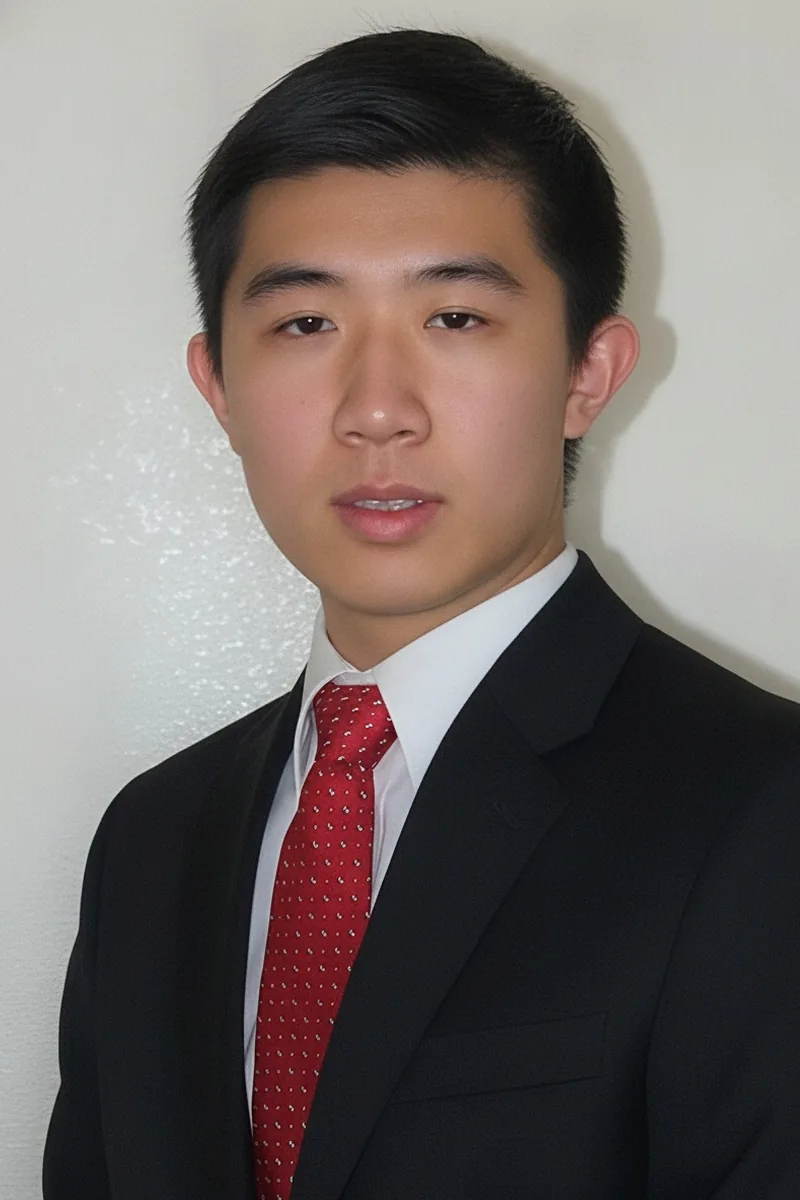
Proofs are usually the first time a math student has to construct a logical argument, and that transition from "find the answer" to "explain why" is where Michael excels. He teaches students to approach two-column and paragraph proofs the way a scientist builds a case — claim, evidence, reasoning — making the structure feel less foreign. Triangle congruence, circle theorems, and coordinate geometry all become more manageable once that logical framework is in place.
Proofs intimidate most geometry students because they require a completely different kind of thinking than arithmetic or algebra. Zelalem approaches them as logical arguments: set up what you know, identify the relationship, and build toward the conclusion one justified step at a time. His engineering background reinforces that structured reasoning in every session.
Training specifically to teach secondary math means Justin has spent years studying not just geometry content but how students actually get stuck on it — the leap from memorizing postulates to writing a two-column proof, or the moment a multi-step problem with circles and inscribed angles stops making visual sense. He breaks those sticking points down by rebuilding the reasoning from simpler cases, connecting each theorem back to something a student can draw and verify on paper.
Proofs are usually the first place geometry students panic — the logic feels nothing like the computation they're used to. Orestes approaches them as structured arguments, teaching students to map out what they know, what they need to show, and which postulates connect the two, turning an intimidating format into a repeatable process.
Proofs are usually the make-or-break moment in Geometry — students either learn to construct logical arguments or they start memorizing steps without understanding them. Katherine walks through each proof as a chain of reasoning, teaching students to identify what they know, what they need, and which theorem bridges the gap. That skill pays off well beyond the geometry classroom.
Proofs are usually the first place Geometry students feel stuck, because the logic feels nothing like the algebra they're used to. Kyle teaches proof structure as a step-by-step argument — identifying givens, choosing the right theorem, and building toward the conclusion — so the reasoning becomes a skill rather than a mystery.
Proofs are the part of geometry that makes students groan, but they're also where real mathematical reasoning begins. Adriana teaches proof-writing as a skill — picking the right postulate, structuring a logical chain, knowing when to use congruence versus similarity — so that it feels like building an argument rather than performing a ritual.
A math minor and biology major at UNLV's Honors College, Henry brings a cross-disciplinary eye to geometry — particularly coordinate geometry and transformations, where algebraic thinking and spatial reasoning overlap. His 5.0 client rating speaks to how clearly he breaks down multi-step problems, from area and volume applications to the logic behind angle and arc relationships.
Proofs are usually the first place geometry students get stuck, because suddenly math requires structured argumentation instead of computation. Sami approaches geometric reasoning the way he learned to build logical arguments in computer science at Duke — step by step, with each claim justified before moving to the next. He covers everything from triangle congruence to circle theorems with that same emphasis on clear, connected thinking.
Most geometry struggles aren't about the shapes — they're about constructing logical arguments. Writing a two-column proof or reasoning through circle theorems requires a style of thinking that Justin, trained in mathematical proof at both the undergraduate and doctoral level, breaks down into concrete steps. He treats each theorem as a claim that needs defending, which builds reasoning skills students carry into every future math class.
Competition math taught Tracy to look at a geometry figure and immediately spot the relationships that matter — which triangles are similar, where auxiliary lines unlock a problem, how a single angle chase can crack open a complicated diagram. That instinct, sharpened through years of math competitions and a 36 ACT, carries over directly when she teaches students to approach proofs and problem-solving with strategy instead of panic. Rated 4.9 by students.
Every proof in geometry is really an exercise in building a logical argument from a set of given constraints — a skill Jeffrey sharpened through years of engineering coursework at Notre Dame and his PhD work at Rice. He teaches students to approach triangle congruence, parallel line theorems, and circle properties as puzzles with clear reasoning chains rather than formulas to memorize.
Holding dual degrees from UCLA in biology and mathematics-economics, Vinay brings an unusual ability to toggle between abstract reasoning and concrete problem-solving — exactly what geometry demands when a student has to move from reading a diagram to constructing a formal proof. He unpacks circle theorems and polygon properties by tying them back to the algebraic foundations students already have, closing gaps before they compound. Rated 5.0 by students.
A year as a course assistant in Harvard's math department taught Richard how to break abstract reasoning into concrete steps — a skill that pays off in geometry when students need to connect definitions, postulates, and theorems into a coherent proof. His government major, which is essentially an exercise in building airtight arguments from messy evidence, reinforces the same logical sequencing that two-column and paragraph proofs demand.
Proofs are usually where geometry students panic, but they're really just logical arguments written in a specific format. Mackenzie teaches students to read a diagram like a puzzle — identifying congruent triangles, parallel-line angle relationships, or circle theorems before ever picking up a pencil. That visual-first strategy makes even two-column proofs and coordinate geometry problems feel approachable.
Proofs are usually the moment geometry stops feeling intuitive and starts feeling impossible. Noah approaches them as logical arguments rather than memorization exercises, drawing on the same analytical reasoning he sharpened through his political science training at Penn. He also tackles coordinate geometry and triangle congruence by emphasizing the visual logic behind each theorem.
Proofs are usually where geometry goes from comfortable to confusing — suddenly students need to justify every step with logic instead of just measuring. Matt approaches geometric reasoning as a structured argument, walking through angle relationships, congruence criteria, and parallel-line theorems in a way that makes each proof feel like solving a puzzle rather than following a script.
Proofs are where most geometry students start to struggle, because suddenly math requires building logical arguments instead of just computing answers. Margaret's background in both computer science and political science at Stanford means she thinks in structured logic all day — and she brings that same rigor to angle relationships, congruence, and circle theorems.
Proofs are usually where geometry students panic, but they're really just structured arguments — and Dane approaches them that way. Studying engineering at Duke sharpened his spatial reasoning across topics like congruence, similarity, and coordinate geometry, and he teaches students to visualize relationships before translating them into formal logic.
Proofs are usually where geometry students hit a wall — the shift from calculating answers to constructing logical arguments feels like a completely different subject. Tom's background in American Studies, which is essentially built on evidence-based argumentation, gives him a unique angle on teaching students to chain geometric theorems into airtight reasoning. He also covers the computational side, from triangle congruence to circle theorems, with the same step-by-step precision.
Testimonials
Because the right Geometry tutor makes all the difference.
Average Session Rating – Based on 3.4M Learner Ratings
Practice Geometry
Free practice tests, flashcards, and AI tutoring for Geometry
Other Paradise Tutors
Related Math Tutors in Paradise
Frequently Asked Questions
Varsity Tutors matches Paradise students with expert Geometry tutors for 1-on-1 instruction. We pair each student with a tutor based on their specific needs, learning style, and goals.
Whether you need homework help, exam prep, or want to get ahead, our Geometry tutors are ready to help.
Common challenges include gaps from earlier material, difficulty with specific concepts, and trouble applying learning to new problems. These issues can snowball quickly in Geometry.
A tutor identifies where you're stuck, fills in gaps, and provides targeted practice. The 1-on-1 format means you get help exactly where you need it.
Tutors work with your student's actual coursework—homework assignments, class notes, and upcoming tests. This keeps tutoring directly relevant to what's happening in the classroom.
When you share information about your student's school and curriculum, we can match you with a tutor who has relevant experience.
All tutors complete background checks, credential verification, and teaching evaluation. Many of our Geometry tutors hold advanced degrees or have years of teaching experience.
You can review tutor profiles to find someone with the right background for your student's level and needs.
Many students see improved grades within a few weeks, along with better understanding of Geometry concepts and more confidence tackling challenging material.
Tutors track progress and adjust their approach to ensure continued improvement.
Most students benefit from 1-2 sessions per week. More frequent sessions help if your student is significantly behind or has an important exam coming up.
Your tutor can recommend a schedule based on your student's specific situation and goals.
Tutoring is purchased in packages of hours, with rates varying by tutor experience. Varsity Tutors offers several options to fit different budgets and needs.
You can discuss pricing during your consultation to find what works best.
Your tutor will assess where your student is, discuss goals, and start working on priority areas. Most students bring current homework or upcoming test material to focus on.
By the end, you'll have a clear sense of how the tutor can help and a plan for moving forward.
Let’s find your perfect tutor
Answer a few quick questions. We’ll recommend the right plan and match you with a top 5% tutor.