Award-Winning ACT Reading Tutors
serving Paradise, NV
ACT Reading
Tutors in Paradise
Private 1-on-1 tutoring, weekly live classes for academic support, test prep & enrichment, practice tests and diagnostics, and more to elevate grades and test scores.
Based on 3.4M Learner Ratings
UniversitiesSchools & Universities
DeliveredHours Delivered
ProficiencyGrowth in Proficiency
Who needs tutoring?
No obligation. Takes ~1 minute.

I'm trying to work on personal projects. I really enjoy snowboarding, and have been doing that since the third grade. I also enjoy playing sports and video games.
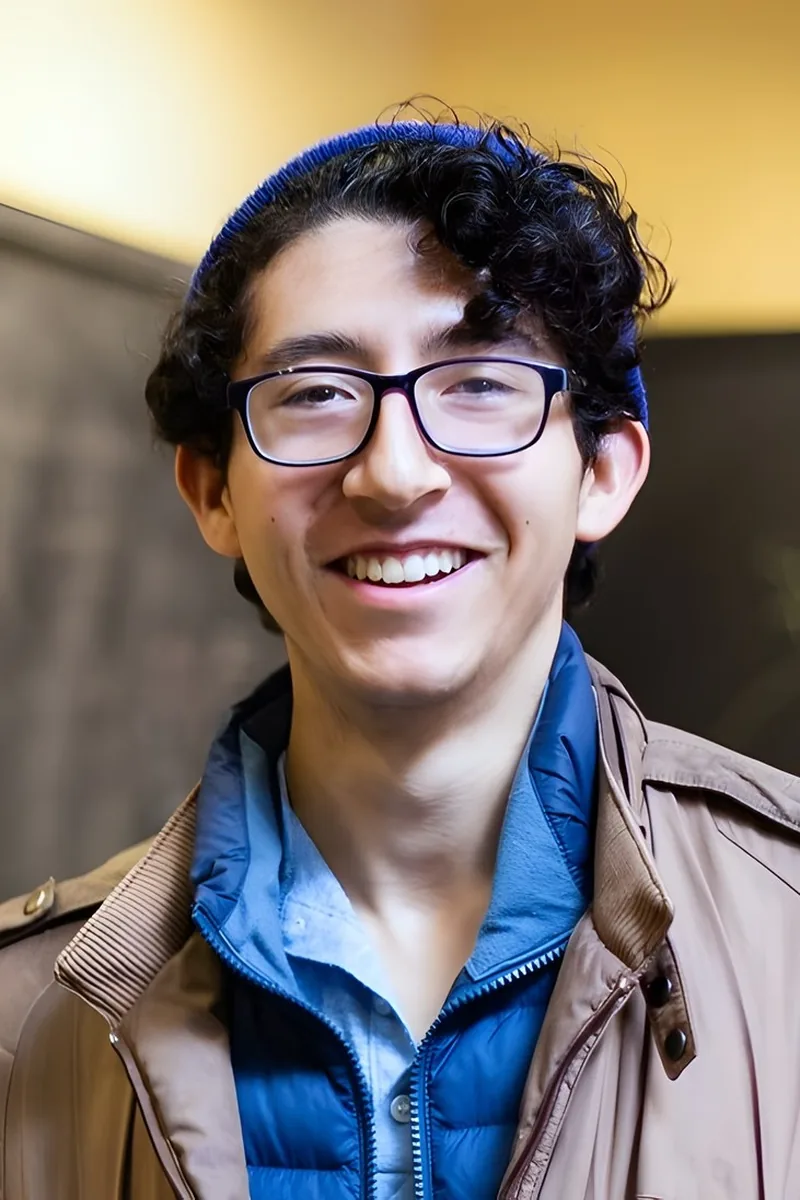
Studying both computational neuroscience and philosophy at MIT means Tim spends his days toggling between two very different kinds of dense reading — technical research papers and argument-heavy philosophical texts — which is essentially what the ACT Reading section does when it jumps from a natural science passage to a humanities one. He teaches students to quickly identify the structural role each paragraph plays in the overall argument, so detail and inference questions become a matter of knowing where to look rather than re-reading everything. His 34 ACT composite and 4.9 student rating back up the approach.
I'm a sophomore at USC studying Biomedical Engineering. In high school, I maintained a 4.0 GPA while participating in organizations like Mu Alpha Theta so that I could tutor struggling math students in subjects ranging from Algebra to Calculus III. Seeing how comfortable I was in the environment really made an impact on me, and I want to continue that experience tutoring through Varsity Tutors both online and in person. Students I have tutored before in math and standardized testing subjects tell me that my strategies and quick methods for arriving at solutions saves them a great deal of time and energy as they take their exams, which reaffirms my passion and love of tutoring. In my classroom experiences, I found that sometimes the methods that were taught were just too confusing, so then I either created or looked up better ways that secured a better grade for me in the class; the idea that the same problem can be solved in many ways is an idea I try to impart in all of my students so that they can feel comfortable using a process they picked out instead. In my free time, Iove to watch movies, play Super Smash Bros, listen to new music, and read articles on Flipboard.
I'm 18 years old and I am a sophomore at Fordham University. I promise I won't disappoint!
I am currently an undergraduate at Ohio State University. I am studying economics with a math minor in the Honors College of Arts and Sciences.
Seven years of tutoring math and science gave Cassandra an unexpected advantage on ACT Reading: she already knows how to teach students to extract precise information from dense, unfamiliar material — whether it's a chemistry textbook or a social science passage. With a 33 ACT composite and a 4.9 student rating, she drills the habit of reading each passage for its argument structure first, so detail and inference questions become evidence checks rather than memory tests.
I'm currently applying to be a Ph.D. candidate in the hopes of becoming a professor in the social sciences, as my greatest passion is helping students harness their potential and realize their success!
As an avid reader and history major who regularly digests dense primary sources, Lauryn brings genuine reading fluency to ACT Reading prep. She teaches students to distinguish between what a passage states explicitly and what it implies, and shows them how to manage the four-passage, 35-minute format without sacrificing accuracy for speed.
I love teaching patiently and accurately to achieve concrete goals. A National Merit scholar, a college student, and an aspiring writer, I encourage high achievement and creativity in all my students. With 2+ years of tutoring experience and 1+ years of teaching experience, both in-person and online, I will gladly adapt to your educational and personal needs! Primarily, I tutor the SAT and ACT. I have the most experience in tutoring English (up to 12th grade) and math (up to Algebra II/pre-calc). I can also tutor competitive Lincoln-Douglas and policy debate as well as Impromptu speech at a middle/high school level or general public speaking and argumentation. My favorite subjects are English, which I am pursuing at UNLV, and Speech & Debate, which I teach at a private school. I have an AP Honors Diploma and AP Scholar with Distinction Award from high school.
I'm referring to math, of course, but I didn't always like the subject. Until about age 16, I thought of math as a boring, mind-numbing process of blindly memorizing formulas and then forgetting them after the test, but a series of wonderful teachers showed me the truth. I had thought that everything in math was invented arbitrarily just to torture students, but actually it all made sense in a deep way. When I caught a glimpse of what math really was, I found it irresistible and I ended up majoring in math in college at UChicago. I'm currently a Master's student in Computer Science at NYU.
Most ACT Reading mistakes come from time pressure, not comprehension — students understand passages but can't consistently answer 40 questions in 35 minutes. Elliot teaches a triage strategy: how to identify question types, when to skim versus close-read, and how to eliminate answer choices that paraphrase the passage just enough to seem right. Rated 5.0 by students.
The ACT Reading section gives students just 35 minutes for four dense passages, which means raw reading speed matters less than knowing where to look. Alyssa teaches a passage-mapping strategy that pinpoints main claims and key details before touching the questions — an approach refined from her own 35 composite score. She's rated 5.0 by students.
Scoring a 36 ACT composite means Emily has beaten every passage type the Reading section throws at students — prose fiction, social science, humanities, natural science — under real time pressure. Her computational biology training at Cornell, which requires constant toggling between dense scientific papers and code documentation, built a habit of extracting exactly what a text claims without getting pulled into irrelevant detail. She teaches students to pre-map each passage's argument in under two minutes, so question time is spent confirming answers rather than hunting for them.
I am a patient, intellectual, and calm college student at the University of Michigan passionate about tutoring others to improve their proficiency in a wide variety of subjects. I teach students by creating individualized plans that cater to the strengths and weaknesses of the student. I work hard and as long as it takes to ensure that the student derives maximum benefit. I love teaching a wide variety of subjects, and have a speciality in standardized tests.
I am most excited about helping other students achieve their dreams of going to medical school by helping them study for the MCAT. Besides MCAT tutoring, my favorite subjects are chemistry, biology, and math which are all subjects I have tutored in before. I believe that every student can learn the material they hope to with the right guidance and effort. I hope that I can help students realize their full potential and grow in confidence as a learner. Outside of teaching, I like to perform in musicals, most recently I have been in local productions of Mamma Mia and Footloose, as well spend time with friends.
The ACT Reading section isn't really about reading — it's about quickly locating evidence and matching it to answer choices under a brutal time constraint. Nicholas, who earned a perfect 36 composite, teaches a systematic passage-attack strategy that prioritizes where to look over how fast to read, cutting down the guesswork that costs students points in the final minutes.
I am excited to help anyone who might need it!
I'm not tutoring, I love walking through New York for design inspiration and taking carpentry, metalworking, and illustration classes.
Reading four dense passages in 35 minutes forces a different kind of reading than most students are used to. Sugi's cognitive science training at Rice gives her a framework for teaching active reading strategies — how to map an argument's structure on a first pass so that inference and tone questions become straightforward rather than agonizing. She holds a perfect 36 ACT composite and a 5.0 tutoring rating.
I am no longer needed.
The ACT Reading section isn't really testing how well you read — it's testing how quickly you can locate specific evidence in passages you've never seen before. Sreya scored a 36 composite and developed a systematic approach to dual passages and inference questions that cuts through the time pressure. She teaches students to identify what each question is actually asking before they go back to the text.
Testimonials
Because the right ACT Reading tutor makes all the difference.
Average Session Rating – Based on 3.4M Learner Ratings
Practice ACT Reading
Free practice tests, flashcards, and AI tutoring for ACT Reading
Other Paradise Tutors
Related Test Prep Tutors in Paradise
Frequently Asked Questions
Varsity Tutors matches Paradise students with expert ACT Reading tutors for 1-on-1 instruction. We pair each student with a tutor based on their specific needs, learning style, and goals.
Whether you need homework help, exam prep, or want to get ahead, our ACT Reading tutors are ready to help.
Common challenges include gaps from earlier material, difficulty with specific concepts, and trouble applying learning to new problems. These issues can snowball quickly in ACT Reading.
A tutor identifies where you're stuck, fills in gaps, and provides targeted practice. The 1-on-1 format means you get help exactly where you need it.
Tutors work with your student's actual coursework—homework assignments, class notes, and upcoming tests. This keeps tutoring directly relevant to what's happening in the classroom.
When you share information about your student's school and curriculum, we can match you with a tutor who has relevant experience.
All tutors complete background checks, credential verification, and teaching evaluation. Many of our ACT Reading tutors hold advanced degrees or have years of teaching experience.
You can review tutor profiles to find someone with the right background for your student's level and needs.
Many students see improved grades within a few weeks, along with better understanding of ACT Reading concepts and more confidence tackling challenging material.
Tutors track progress and adjust their approach to ensure continued improvement.
Most students benefit from 1-2 sessions per week. More frequent sessions help if your student is significantly behind or has an important exam coming up.
Your tutor can recommend a schedule based on your student's specific situation and goals.
Tutoring is purchased in packages of hours, with rates varying by tutor experience. Varsity Tutors offers several options to fit different budgets and needs.
You can discuss pricing during your consultation to find what works best.
Your tutor will assess where your student is, discuss goals, and start working on priority areas. Most students bring current homework or upcoming test material to focus on.
By the end, you'll have a clear sense of how the tutor can help and a plan for moving forward.
Let’s find your perfect tutor
Answer a few quick questions. We’ll recommend the right plan and match you with a top 5% tutor.