Award-Winning AP Calculus AB Tutors
serving Paradise, NV
AP Calculus AB
Tutors in Paradise
Private 1-on-1 tutoring, weekly live classes for academic support, test prep & enrichment, practice tests and diagnostics, and more to elevate grades and test scores.
Based on 3.4M Learner Ratings
UniversitiesSchools & Universities
DeliveredHours Delivered
ProficiencyGrowth in Proficiency
Who needs tutoring?
No obligation. Takes ~1 minute.
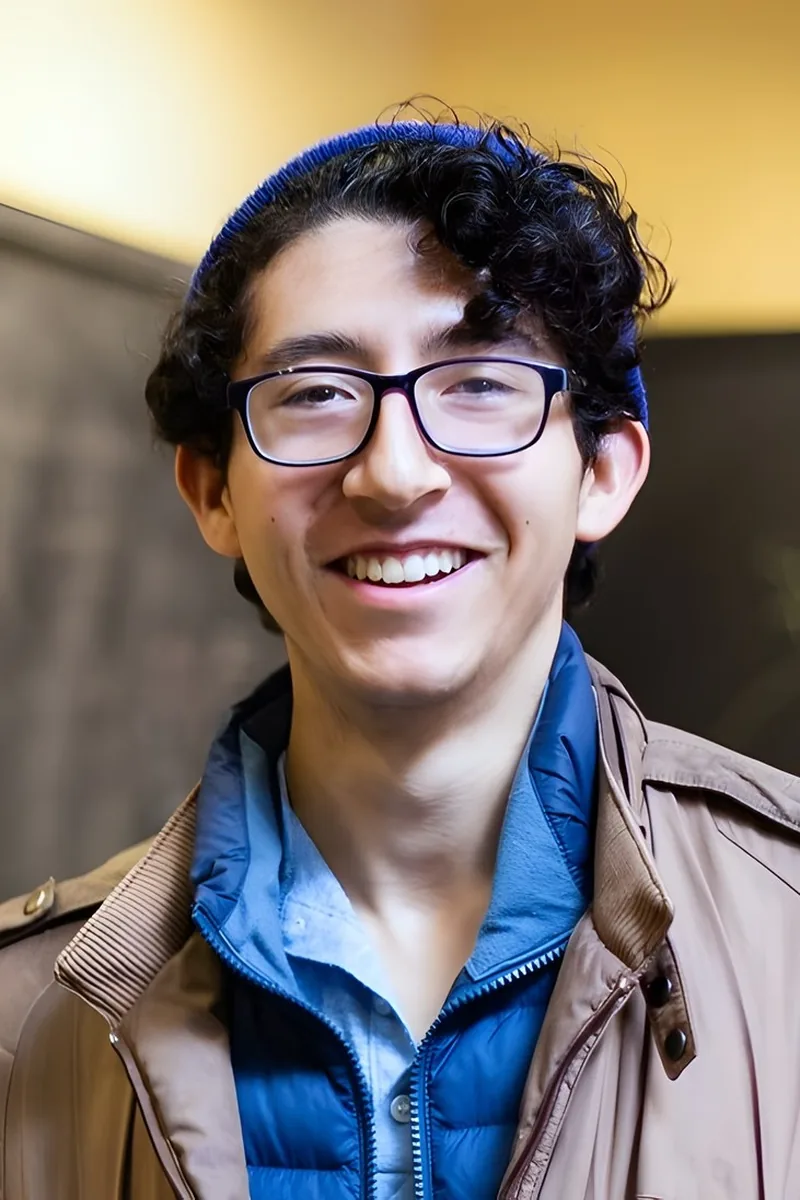
Limits, derivatives, and integrals click faster when a student sees how each concept builds on the last — and Tim's computational science training at MIT means he can show exactly how those connections work, from the epsilon-delta definition through the Fundamental Theorem. He's tutored every level of high school math up through AP Calculus BC, so he knows precisely where AB students tend to stumble on topics like related rates and accumulation functions.

The jump from Pre-Calc to AP Calculus AB trips up students who never fully grasped limits or the logic behind the chain rule. Daniel's approach is to rebuild each concept from scratch when needed — he's an applied math major who got where he is by sitting with hard material until it clicked, not by breezing through it. That means he knows exactly where the confusion usually lives in topics like related rates, Riemann sums, and the Fundamental Theorem.
Having already completed multivariable calculus and linear algebra as a freshman in Northwestern's engineering program, Dylan teaches AB concepts like limits, derivative rules, and integration techniques with the confidence of someone who uses them as building blocks for more advanced work every week. His 1500 SAT and 5.0 rating back up an approach grounded in making sure students understand the reasoning behind each step before moving on to the next application.
Seven years of tutoring math and science across middle school through college means Cassandra has seen exactly where AB students stumble — and it's almost always the transition from computing derivatives mechanically to knowing which technique a free-response problem is actually asking for. Her biology training adds an unexpected edge: she teaches rate-of-change and accumulation concepts through growth models and concentration curves that make the abstraction tangible. A 33 ACT and 4.9 rating back up an approach built around getting students to reason through problems independently.
Limits, derivatives, and integrals each build on the last — and a shaky grasp of one derails everything that follows. Zelalem teaches AP Calculus AB with an engineer's eye for connecting each concept to concrete problems, drawing on years of high school math instruction to pinpoint exactly where understanding breaks down.
Limits, derivatives, and integrals each build on the last in AP Calculus AB, and Michael teaches them as a connected story rather than isolated chapters. His biology coursework at UNLV requires heavy calculus application — modeling population growth, reaction rates, enzyme kinetics — so he brings real examples that make abstract rules feel purposeful. He also knows the AP exam's free-response patterns well enough to drill the specific justification language that earns full credit.
Economics majors at Ohio State's Honors College don't just take calculus — they use it to model marginal cost, elasticity, and consumer surplus, which means Brian teaches derivatives and integrals with a sense of what the math actually describes in practice. That economic intuition is especially useful for AP Calculus AB's application problems, where translating a real-world scenario into the right integral setup separates a 3 from a 5. His 33 ACT and math minor coursework back up the quantitative depth behind his explanations.
Training specifically to teach high school math — not just do it — gives Justin a different lens on AP Calculus AB than tutors who picked it up through engineering or science programs. His Secondary Math Education degree means he studied how students actually learn concepts like limits, the chain rule, and the Fundamental Theorem, so he can spot where a misunderstanding started and rebuild the reasoning from there. He's especially effective at turning the AB exam's free-response prompts into structured, step-by-step setups that feel manageable rather than overwhelming.
Between a biology major and a pivot into computer science at UNLV, Samuel has taken calculus from both the life-science and computational angles — modeling population growth with derivatives in one course, then thinking algorithmically about convergence and approximation in the next. That crossover makes him especially useful for AB students struggling with the conceptual leap from computing a Riemann sum to understanding why it converges to a definite integral. Rated 5.0 by students.
Between competition math and a subject list spanning physical chemistry, thermodynamics, and calculus 3, Katherine has the kind of mathematical depth that makes the AB curriculum's trickiest moments — limit definitions, the chain rule's layered logic, optimization setups — feel like well-charted territory. She teaches the reasoning behind each step so students can handle unfamiliar free-response prompts without relying on memorized patterns. Rated 5.0 by students.
Limits, derivatives, and integrals each build on the one before, and losing the thread at any point can make the rest of AB feel impossible. Kyle's approach is to slow down at those transition points — especially the jump from understanding what a derivative means to actually applying differentiation rules in related rates and optimization problems. His university-level calculus background keeps him sharp on the details that trip students up on the AP exam.
The free-response section of the AP Calculus AB exam is where most students lose points — not because they can't differentiate or integrate, but because they struggle to justify their reasoning in writing. Adriana's applied mathematics background means she teaches the logic behind each step, from Riemann sums to the Fundamental Theorem, so students can articulate their work clearly under exam pressure. Rated 4.9 by students.
The leap from "find the derivative" to "explain what the derivative means in context" is where most AP Calculus AB students lose points on the exam. Henry, a math minor in the UNLV Honors College, unpacks limits, related rates, and the Fundamental Theorem by grounding each concept in what's actually happening on the graph. That emphasis on interpretation over rote calculation makes free-response questions far less intimidating.
Limits, derivatives, and the Fundamental Theorem of Calculus all require a shift in mathematical thinking that trips up even strong algebra students. Jake's quantitative training at Northwestern gives him a clear framework for walking through each concept step by step, connecting the graphical intuition to the formal rules. His 5.0 rating speaks to how well that approach lands.
Having taught introductory calculus as a course assistant at Harvard, Richard has seen firsthand which AP Calculus AB concepts — limits, the chain rule, related rates, accumulation functions — trip students up most often. He builds intuition around why derivatives and integrals work the way they do, which makes the problem-solving on exam day feel less like guesswork.
Limits, derivatives, and integrals become far more intuitive when a student sees why they matter, not just how to compute them. Dennis's physics background means he can ground every AB Calculus concept — from the chain rule to Riemann sums — in tangible problems involving motion, area, and rates of change.
Being a TA for two math classes at Stanford sharpened Helen's ability to spot exactly where students lose the thread — whether it's the conceptual jump from average to instantaneous rate of change or the mechanics of setting up a definite integral from a word problem. Her 1580 SAT and 34 ACT reflect the kind of precise, fast reasoning that the AB exam's time-pressured free-response section demands. Rated 5.0 by students.
Most AB students can differentiate a polynomial just fine — it's the moment a free-response question asks them to interpret the meaning of a derivative or set up an integral from a word problem that things fall apart. Zac tackles those conceptual gaps head-on, breaking application problems into smaller reasoning steps before any computation starts. His 34 ACT and 4.9 rating point to the kind of structured, clear thinking that makes tough calculus concepts land.
Cognitive science at Penn might not scream calculus, but Samantha's coursework required enough mathematical modeling — derivatives for rate-of-change problems, integrals for cumulative distributions — that she teaches AP Calculus AB with real fluency. She's especially effective at walking through optimization and curve-sketching problems, where translating a word problem into the right function is half the battle. Her 1460 SAT reflects the quantitative precision she brings to exam prep.
The jump from memorizing derivative rules to actually reasoning through related rates and accumulation problems is where most AP Calc AB students stall. Agustin breaks those multi-step problems into smaller physical questions — what's changing, what's fixed, what depends on what — an approach rooted in how he uses calculus in his molecular biology studies. Rated 4.5 by students.
Studying neuroscience at Vanderbilt meant Benjamin couldn't escape calculus — modeling membrane potentials, analyzing signal decay curves, computing rates of neurotransmitter diffusion — so the AB curriculum's core concepts aren't textbook abstractions for him but tools he's actually used. His 34 ACT reflects the quantitative precision he brings to teaching limits and the chain rule, two topics where small conceptual gaps snowball into free-response mistakes. He's especially good at slowing down the problem-setup phase so students learn to read what a question is really asking before jumping into computation.
Studying Applied and Computational Mathematics at Caltech, Samuel lives in the world of calculus daily — limits, derivatives, integrals, and the Fundamental Theorem aren't abstract ideas to him but tools he actively uses. He breaks down AP Calculus AB concepts like related rates and Riemann sums by connecting them to the intuition behind why each technique works, not just the mechanical steps.
Kate breaks AB Calculus into two core skills: understanding what derivatives and integrals actually represent, and learning the mechanical techniques to compute them quickly. Her environmental engineering training required heavy use of related rates, optimization, and area-under-the-curve problems, so she can show students exactly how these concepts connect to real applications.
Chemical engineering at the undergraduate level and then medical school means Siva has been setting up and solving calculus problems in high-stakes contexts for years — from modeling heat transfer and reaction kinetics to quantifying physiological rates of change. That depth shows when he teaches limits, continuity, and the mechanics of integration, because he can explain not just the procedure but the reasoning that makes free-response setups feel logical instead of mysterious. Rated 5.0 by students, with a 1560 SAT backing up the quantitative precision behind his approach.
Having tutored AP Calculus students through New York State Regents and AP exams since her time at Phillips Exeter, Violet knows exactly where the AB curriculum trips people up — particularly the shift from computing derivatives mechanically to interpreting them on free-response questions about rates and accumulation. Her math degree from Brown means she can trace a concept like the Fundamental Theorem back to its foundations when a student's intuition stalls, then rebuild it with concrete examples that stick. She holds a 4.5 rating and a 1550 SAT that speaks to her precision under timed, high-stakes conditions.
Testimonials
Because the right AP Calculus AB tutor makes all the difference.
Average Session Rating – Based on 3.4M Learner Ratings
Practice AP Calculus AB
Free practice tests, flashcards, and AI tutoring for AP Calculus AB
Other Paradise Tutors
Related Math Tutors in Paradise
Frequently Asked Questions
Varsity Tutors matches Paradise students with expert AP Calculus AB tutors for 1-on-1 instruction. We pair each student with a tutor based on their specific needs, learning style, and goals.
Whether you need homework help, exam prep, or want to get ahead, our AP Calculus AB tutors are ready to help.
Common challenges include gaps from earlier material, difficulty with specific concepts, and trouble applying learning to new problems. These issues can snowball quickly in AP Calculus AB.
A tutor identifies where you're stuck, fills in gaps, and provides targeted practice. The 1-on-1 format means you get help exactly where you need it.
Tutors work with your student's actual coursework—homework assignments, class notes, and upcoming tests. This keeps tutoring directly relevant to what's happening in the classroom.
When you share information about your student's school and curriculum, we can match you with a tutor who has relevant experience.
All tutors complete background checks, credential verification, and teaching evaluation. Many of our AP Calculus AB tutors hold advanced degrees or have years of teaching experience.
You can review tutor profiles to find someone with the right background for your student's level and needs.
Many students see improved grades within a few weeks, along with better understanding of AP Calculus AB concepts and more confidence tackling challenging material.
Tutors track progress and adjust their approach to ensure continued improvement.
Most students benefit from 1-2 sessions per week. More frequent sessions help if your student is significantly behind or has an important exam coming up.
Your tutor can recommend a schedule based on your student's specific situation and goals.
Tutoring is purchased in packages of hours, with rates varying by tutor experience. Varsity Tutors offers several options to fit different budgets and needs.
You can discuss pricing during your consultation to find what works best.
Your tutor will assess where your student is, discuss goals, and start working on priority areas. Most students bring current homework or upcoming test material to focus on.
By the end, you'll have a clear sense of how the tutor can help and a plan for moving forward.
Let’s find your perfect tutor
Answer a few quick questions. We’ll recommend the right plan and match you with a top 5% tutor.