Award-Winning Trigonometry Tutors
serving North Las Vegas, NV
Trigonometry
Tutors in North Las Vegas
Private 1-on-1 tutoring, weekly live classes for academic support, test prep & enrichment, practice tests and diagnostics, and more to elevate grades and test scores.
Based on 3.4M Learner Ratings
UniversitiesSchools & Universities
DeliveredHours Delivered
ProficiencyGrowth in Proficiency
Who needs tutoring?
No obligation. Takes ~1 minute.
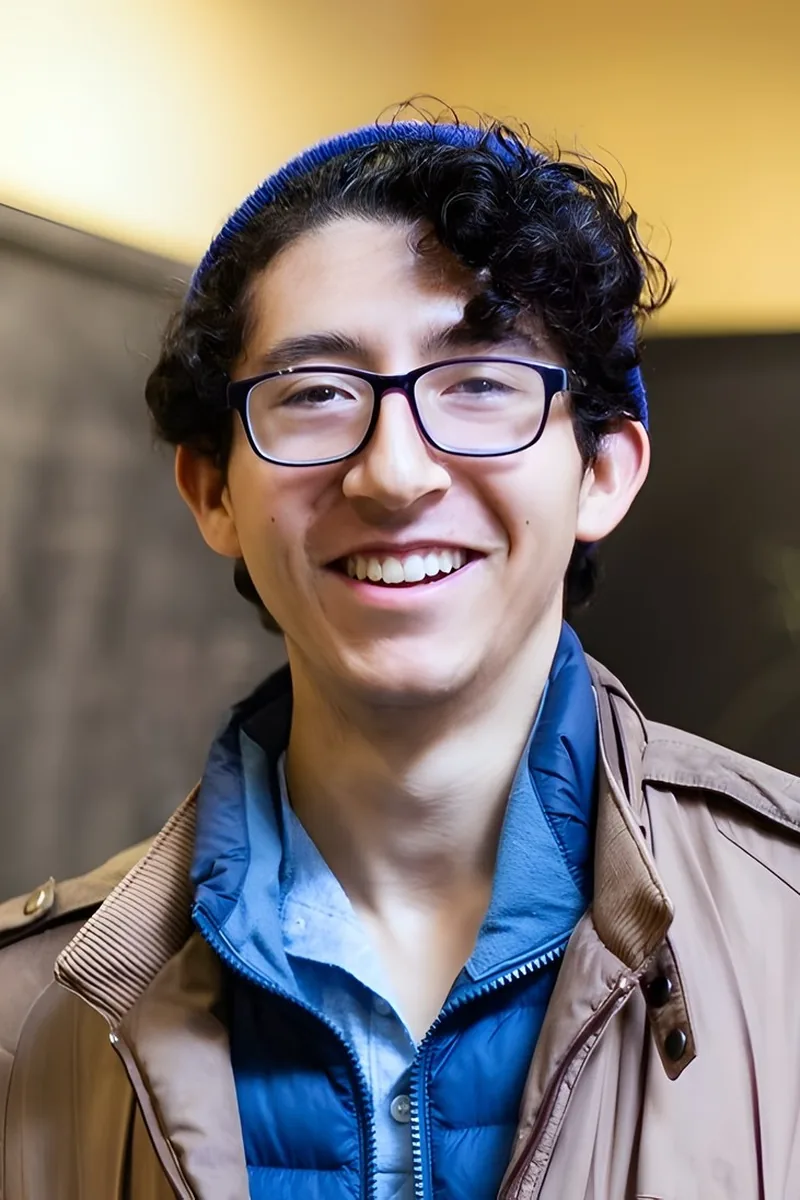
The unit circle doesn't have to be a memorization nightmare. Tim teaches trig identities and sinusoidal functions by connecting them back to the geometry students already know, building intuition for why these relationships exist — an approach sharpened by his computational science coursework at MIT, where trigonometric functions show up constantly in modeling and signal analysis.

I'm trying to work on personal projects. I really enjoy snowboarding, and have been doing that since the third grade. I also enjoy playing sports and video games.
The jump from memorizing SOH-CAH-TOA to actually understanding the unit circle, identities, and inverse trig functions is where most students stall. Shawn walks through each identity derivation so students see the underlying structure, making verification problems and equation-solving feel systematic instead of random.
Trig identities and unit circle values tend to feel like an overwhelming wall of things to memorize, but there's real structure underneath. As an electrical engineering major at UNLV, Serena applies sine, cosine, and phase relationships in her coursework constantly, so she teaches trig as a connected system rather than a list of formulas to cram.
The unit circle, identities, and inverse trig functions trip students up mostly because they're taught as things to memorize rather than things to understand. Michael unpacks the logic behind identities like the double-angle and sum-to-product formulas so students can derive what they forget. His experience teaching across the full calculus sequence means he also knows exactly which trig skills matter most for what comes next.
The unit circle, trig identities, and graphing sinusoidal functions trip students up because they require a different kind of mathematical thinking — everything is cyclical and interconnected. Justin tackles Trigonometry by grounding abstract identities in visual and geometric reasoning, connecting back to the triangle relationships students already know. His Secondary Math Education training at UNH gave him structured methods for teaching exactly these kinds of conceptual leaps.
Trig identities and unit circle memorization tend to feel arbitrary until someone shows you the underlying logic. Karen approaches trigonometry by connecting sine, cosine, and tangent relationships to visual and applied contexts — an instinct sharpened by years of working with quantitative models in her finance coursework.
The unit circle trips up most trigonometry students because they try to memorize it as a table of values instead of understanding the geometry behind it. Samuel teaches trig identities and angle relationships by tying them back to visual reasoning — an approach shaped by years of math coursework supporting his science studies at UNLV.
Katherine's competition math background gives her a different angle on trigonometry — she's used to finding elegant shortcuts through problems involving law of cosines, polar coordinates, and angle relationships that most students only see in their most straightforward form. She teaches trig as a toolkit for creative problem-solving, connecting graphing transformations and identities to the kinds of multi-step challenges that build real fluency. Rated 5.0 by students.
The unit circle is where most trig students either click or check out — and the difference usually comes down to whether someone explains why sine and cosine are defined the way they are. Adriana walks through identities, inverse functions, and the Law of Sines and Cosines by grounding each one in that geometric intuition rather than handing over formulas to memorize.
Trig identities can feel like an endless list of formulas to memorize — until someone shows you how they all derive from the unit circle. Henry approaches trigonometry by anchoring every identity, graph transformation, and inverse function back to that single geometric picture. His math minor at UNLV means he uses trig regularly in his own coursework, keeping the material sharp.
The unit circle doesn't have to be a memorization nightmare. Tracy teaches trig identities and angle relationships by showing how they're derived, so students can reconstruct formulas on the fly instead of blanking on a test. She connects sine, cosine, and tangent to their geometric origins, making topics like law of sines and inverse functions feel intuitive.
The unit circle doesn't have to be a memorization nightmare. Mosab teaches trigonometry by building intuition for how sine, cosine, and tangent relate to actual rotation and periodic behavior — so identities and inverse functions start to feel logical rather than arbitrary.
Trig identities and unit circle values can feel like an endless list to memorize, but there's a structure underneath that makes most of it derivable on the spot. Charles approaches trigonometry by teaching students to see the relationships between sine, cosine, and tangent graphically and algebraically, so they aren't relying on flashcards during exams. His strong math background across algebra through calculus means he connects trig concepts to what comes next.
Trig identities and the unit circle can feel like arbitrary rules until someone shows you the geometry underneath them. Charles uses trigonometry constantly in his Yale mechanical engineering coursework — from force decomposition to wave analysis — and breaks down concepts like the law of cosines and radian measure by connecting them to problems you can actually picture.
Trig identities and the unit circle can feel like a wall of disconnected formulas until someone shows you the geometry underneath them. Jake teaches students to visualize sine, cosine, and tangent as relationships on the coordinate plane, turning memorization into understanding that carries through to calculus.
The unit circle tends to be where trigonometry either clicks or collapses for students, and everything afterward — identities, inverse functions, the law of cosines — depends on that foundation. Kathleen approaches trig by building the logic behind each identity rather than asking students to memorize a sheet of formulas. Her math background at WashU means she can also show how trig connects forward into calculus and physics.
Trig identities and the unit circle can feel like a wall of arbitrary formulas until someone shows you the geometric intuition underneath. Heather's quantitative background at Vanderbilt gives her the tools to unpack why sine and cosine behave the way they do, turning memorization into understanding.
Trig identities and unit circle values click faster when a student understands *why* sine and cosine behave the way they do, not just where to look on a reference sheet. Czarina's biophysics coursework at Johns Hopkins means she uses trigonometric functions constantly — in wave equations, vector decomposition, and signal analysis — so she teaches them with real context baked in.
The unit circle, sine and cosine graphs, and identity proofs all click faster when a student sees how they connect instead of treating each as a separate formula to memorize. Vansh approaches trig by grounding every new identity in the geometric intuition behind it, so students can reconstruct what they need even under test pressure.
The jump from memorizing the unit circle to actually applying sine, cosine, and tangent in identities and equations trips up a lot of students. Tameem approaches trig by building intuition around what the functions represent graphically and geometrically, which makes solving problems with the law of sines or verifying identities far less mechanical.
A year as a course assistant in Harvard's math department meant Richard taught calculus daily — and calculus lives and dies on trig fluency, from evaluating limits of sinusoidal functions to integrating with trig substitutions. That constant reinforcement gives him a sharp sense of exactly where students get tripped up on identities, graphing transformations, and radian-degree conversions. His perfect 1600 SAT and 36 ACT confirm the foundational math chops behind that teaching experience.
The unit circle, identities, and inverse trig functions all start making sense once a student sees them as tools rather than formulas to memorize. June's electrical engineering work at Brown relies heavily on trigonometry — from signal analysis to circuit phasors — so she can show exactly why sine and cosine behave the way they do. She walks through each identity derivation so students understand the geometry behind it.
Testimonials
Because the right Trigonometry tutor makes all the difference.
Average Session Rating – Based on 3.4M Learner Ratings
Practice Trigonometry
Free practice tests, flashcards, and AI tutoring for Trigonometry
Other North Las Vegas Tutors
Related Math Tutors in North Las Vegas
Frequently Asked Questions
Varsity Tutors matches North Las Vegas students with expert Trigonometry tutors for 1-on-1 instruction. We pair each student with a tutor based on their specific needs, learning style, and goals.
Whether you need homework help, exam prep, or want to get ahead, our Trigonometry tutors are ready to help.
Common challenges include gaps from earlier material, difficulty with specific concepts, and trouble applying learning to new problems. These issues can snowball quickly in Trigonometry.
A tutor identifies where you're stuck, fills in gaps, and provides targeted practice. The 1-on-1 format means you get help exactly where you need it.
Tutors work with your student's actual coursework—homework assignments, class notes, and upcoming tests. This keeps tutoring directly relevant to what's happening in the classroom.
When you share information about your student's school and curriculum, we can match you with a tutor who has relevant experience.
All tutors complete background checks, credential verification, and teaching evaluation. Many of our Trigonometry tutors hold advanced degrees or have years of teaching experience.
You can review tutor profiles to find someone with the right background for your student's level and needs.
Many students see improved grades within a few weeks, along with better understanding of Trigonometry concepts and more confidence tackling challenging material.
Tutors track progress and adjust their approach to ensure continued improvement.
Most students benefit from 1-2 sessions per week. More frequent sessions help if your student is significantly behind or has an important exam coming up.
Your tutor can recommend a schedule based on your student's specific situation and goals.
Tutoring is purchased in packages of hours, with rates varying by tutor experience. Varsity Tutors offers several options to fit different budgets and needs.
You can discuss pricing during your consultation to find what works best.
Your tutor will assess where your student is, discuss goals, and start working on priority areas. Most students bring current homework or upcoming test material to focus on.
By the end, you'll have a clear sense of how the tutor can help and a plan for moving forward.
Let’s find your perfect tutor
Answer a few quick questions. We’ll recommend the right plan and match you with a top 5% tutor.