Award-Winning AP Calculus BC Tutors
serving Reno, NV
AP Calculus BC
Tutors in Reno
Private 1-on-1 tutoring, weekly live classes for academic support, test prep & enrichment, practice tests and diagnostics, and more to elevate grades and test scores.
Based on 3.4M Learner Ratings
UniversitiesSchools & Universities
DeliveredHours Delivered
ProficiencyGrowth in Proficiency
Who needs tutoring?
No obligation. Takes ~1 minute.
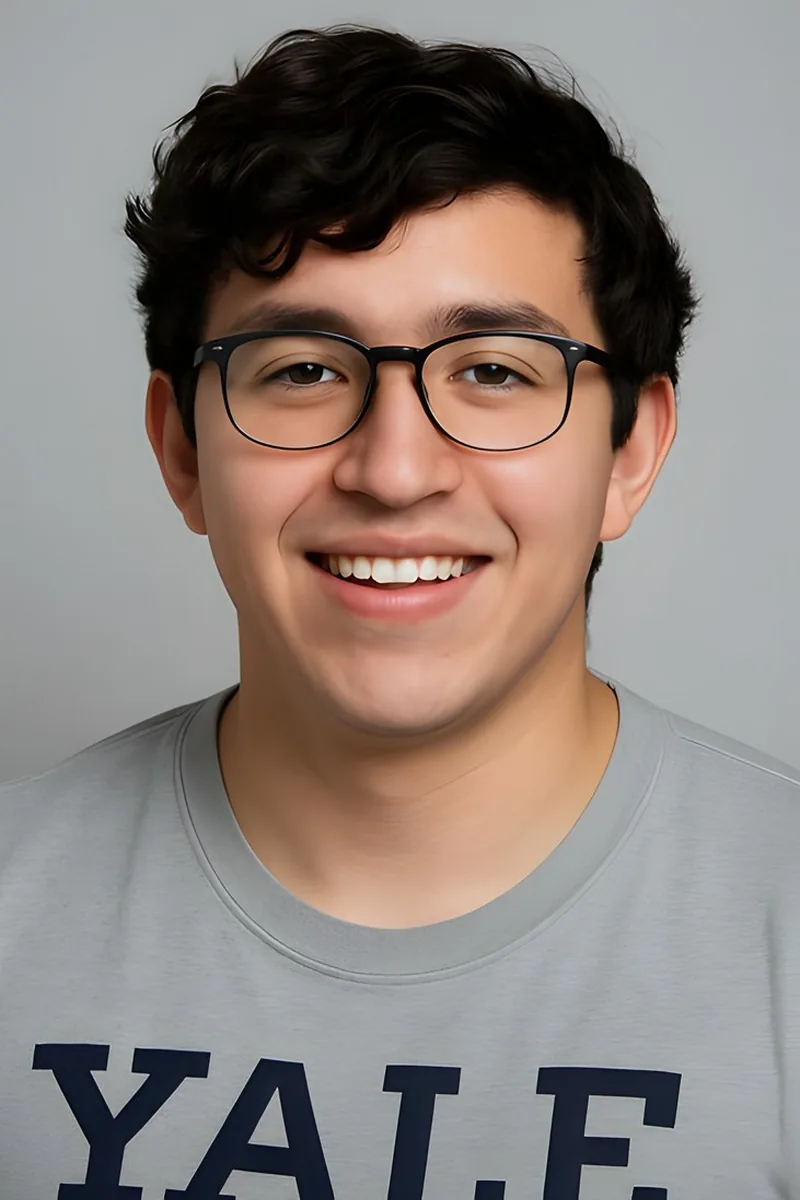
Most people who breeze through math can't explain it — Daniel learned BC Calculus by grinding through the logic of every convergence test, every parametric derivative, every series expansion until it genuinely made sense, and that's exactly how he teaches it. As an applied mathematics undergrad, he's currently using these tools in upper-level coursework, so he knows which BC concepts tend to feel arbitrary and how to make the reasoning behind them stick.
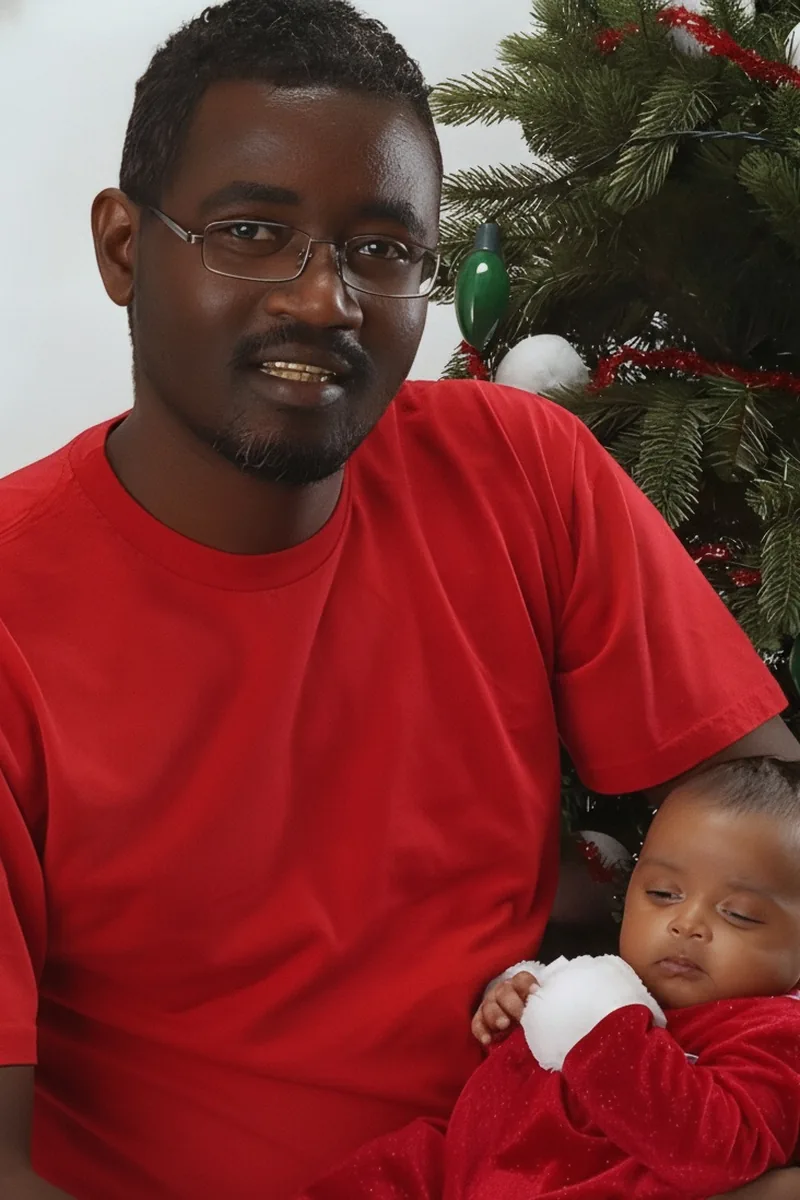
Three years teaching the full Algebra-through-Precalculus sequence at Chaparral High School means Zelalem knows exactly which gaps in earlier math trip students up when BC introduces series convergence, parametric derivatives, or Taylor polynomial construction — because he's the one who taught those foundational layers. His chemical engineering graduate work reinforced that calculus knowledge from the applied side, using integration techniques and differential equations to model real systems like heat transfer and fluid flow. Rated 4.9 by students.
Most BC students can memorize the list of convergence tests but freeze when asked which one to actually use on a given series — Deepal tackles that decision-making process by teaching the reasoning behind each test rather than just its formula. Biomedical engineering coursework at USC keeps him actively using Taylor expansions, integration techniques, and parametric equations, so he brings a 1570 SAT scorer's precision to problems that trip students up at the AB-to-BC transition.
I consider mathematics as an essential skill for success in life regardless of one's chosen career. It is a beautiful application of human reasoning to create an understanding of the universe we live in and to admire the incredible technical achievements of mankind. I hope to instill this appreciation for the subject in my students as they build the skills necessary to not only master the techniques and skills of math, but to enjoy and admire how math is used and the geniuses who developed the methods.
Kyle has completed Calculus 2 at the university level, which means he's already worked through the full range of BC topics — Taylor series, parametric equations, polar curves, and advanced integration techniques. He breaks down multi-step problems by connecting each new concept back to the foundational ideas students already know from AB.
Series convergence tests, parametric equations, and polar curves make BC the course where strong calculus students suddenly feel lost. Henry tackles these topics by connecting each new BC concept back to the AB foundations students already know, building intuition for why Taylor series approximate functions or how integration techniques extend into new coordinate systems. His 5.0 rating speaks to how well that approach lands.
Penn's economics program leans heavily on calculus-driven modeling, and Mandy is working through that curriculum right now — which means BC topics like series approximations and integration techniques show up in her coursework as tools for analyzing economic behavior, not just abstract exercises. She's especially clear at walking through the logic of convergence tests and connecting new BC material back to the AB foundations underneath it. Holds a 5.0 rating.
Managing an immunology research lab at Columbia means Matthew lives in the quantitative deep end — modeling biological systems, analyzing experimental data — and his physics degree built the calculus fluency that makes that possible. He's especially sharp on the BC topics that trip students up after AB: constructing Taylor series from scratch, navigating convergence tests systematically, and connecting parametric or polar problems back to the derivative logic underneath them.
BC Calculus throws students into convergence tests, parametric equations, and polar curves on top of an already demanding AB foundation — it's a lot to hold in your head at once. Corrina's mechanical engineering degree meant living in multivariable and differential equations daily, so she teaches series and integration techniques with the fluency of someone who actually uses them. Rated 4.7 by students.
Biology majors at WashU don't just memorize — Laura's upper-level coursework in evolutionary modeling and physical chemistry means she's actively using integration techniques, differential equations, and series approximations to solve problems outside a math classroom. That cross-disciplinary fluency is especially useful for BC's trickiest conceptual leap: understanding what a Taylor polynomial actually approximates and why specific convergence tests apply in specific situations. Rated 5.0 by students.
Most BC students can follow a convergence test step by step but freeze when asked to choose which test to apply — that decision-making is where Nima, a physics major heading to Duke on a full merit scholarship, spends most of his teaching energy. His physics training means he treats series and parametric equations as descriptions of real motion and real forces, which gives students an intuitive anchor when the abstraction piles up. A 1580 SAT and 4.7 rating back up his ability to make that AB-to-BC jump feel manageable.
Justin's PhD work in Computational and Applied Mathematics at the University of Chicago means he doesn't just teach Taylor series and convergence — he builds on them daily in research involving image processing and climate modeling, where approximation methods have to actually hold up under real conditions. That perspective sharpens how he explains error bounds and series manipulation, grounding each technique in why it matters rather than just how to execute it on an exam. Rated 5.0 by students.
Biomedical engineering at Yale means Jonathan lives in the calculus that comes after most students stop — modeling biological systems with differential equations, approximating nonlinear tissue behavior with series expansions, running convergence analysis on numerical simulations. That daily exposure makes him especially effective at teaching the logic behind the ratio and integral tests, because he's seen firsthand what happens when you pick the wrong one. Holds a 5.0 rating.
Convergence tests, parametric equations, and Taylor series expansions are where BC separates from AB — and where many students start to feel lost. Rithi breaks these topics into intuitive steps, connecting new concepts back to the foundational calculus reasoning students already have. Her 1550 SAT and deep STEM background reflect the kind of mathematical fluency that makes those connections clear.
I am a graduate of Cornell University's College of Arts and Sciences. I received my Bachelor of Arts in Chemistry with Distinction in 2015. Since graduation, I was a physics/chemistry teacher and soccer coach at a private school in Virginia for a year, where I led the soccer team to an undefeated season. Before teaching and coaching professionally, I was a Teaching Assistant for the Cornell Math and Physics Departments, where I taught many subjects including calculus, mechanics, electromagnetism. Throughout my time at Cornell and as a teacher, I tutored subjects ranging from the SAT to AP Physics and Algebra II, which is where my true talents lie: in small group or one-on-one settings where I can give students the full attention they deserve and tailor my approach specifically to their learning styles. This is why I am now pursuing tutoring as a part-time occupation at Varsity Tutors. I embrace teaching all math and science subjects, especially physics and calculus, at both the college and high school level and will go above and beyond to make sure all of my students succeed, according to their definition of success. In my spare time, I enjoy playing league soccer, basketball, tennis and guitar, and also like to travel and see as much of the world as I can.
Engineering physics at Cornell means Daniel is currently neck-deep in the math that BC Calculus builds toward — using series to model oscillating systems, applying integration techniques to energy problems, and solving differential equations that describe real physical behavior. That context gives him a clear picture of which BC skills actually matter and how to teach something like the ratio test or parametric arc length by grounding it in the AB intuition a student already carries. Rated 5.0 by students.
Studying both mathematics and computer science at Rice, William is taking the courses that treat BC topics like series convergence and parametric integration as foundational tools rather than standalone exam material. His 1540 SAT reflects the kind of precise, structured reasoning he brings to breaking down the jump from AB to BC — especially when Taylor polynomial construction or convergence tests start feeling like they came out of nowhere.
BC Calculus piles on topics like Taylor series, parametric equations, and convergence tests at a pace that leaves little room for falling behind. As a Penn math major who also tutors multivariable calculus and linear algebra, Ben understands these concepts at a depth that lets him explain not just the how but the why behind each technique. That deeper perspective makes integration methods and series analysis click faster.
Testimonials
Because the right AP Calculus BC tutor makes all the difference.
Average Session Rating – Based on 3.4M Learner Ratings
Practice AP Calculus BC
Free practice tests, flashcards, and AI tutoring for AP Calculus BC
Other Reno Tutors
Related Math Tutors in Reno
Frequently Asked Questions
AP Calculus BC covers all of AP Calculus AB content plus additional topics including parametric equations, polar coordinates, vector-valued functions, and series/sequences. The exam tests your understanding of limits, derivatives, integrals, and differential equations, with an emphasis on applications and problem-solving. Most students take BC after completing precalculus or honors algebra, and the course typically moves at a faster pace than AB.
Students in Reno often struggle most with series convergence tests, parametric and polar curve analysis, and applying integration techniques to unfamiliar problem types. The jump from AB to BC content—particularly with sequences and series—can feel steep, and many students find the conceptual leap from concrete derivatives to abstract convergence challenging. A tutor can help you build intuition around these abstract topics and practice the problem-solving strategies that appear on the exam.
Score improvement depends on your starting point and how consistently you engage with tutoring and practice. Students who work with a tutor typically see gains by identifying knowledge gaps early, mastering test-taking strategies, and building confidence with challenging topics. Most students benefit from starting tutoring 3-4 months before the exam, which gives enough time to review all content, take practice tests, and refine your approach to different question types.
Your first session will focus on understanding your current level, identifying which topics feel solid and which need work, and learning about your learning style. A tutor will likely review some recent classwork or a practice test to pinpoint specific gaps, then create a personalized study plan that targets your weak areas while building on your strengths. This diagnostic approach ensures your tutoring time is spent where it matters most.
Practice tests are essential—they help you get comfortable with the exam format, identify timing issues, and reveal which topics need more review. The AP Calculus BC exam is 3 hours and includes both multiple-choice and free-response sections, so practicing under timed conditions is crucial. A tutor can help you review your practice test results, analyze where you lost points, and develop strategies to avoid similar mistakes on test day.
Look for tutors with strong mathematics backgrounds—ideally those who've taught or tutored calculus and have experience with AP exam preparation. They should understand the specific format and expectations of the BC exam, be able to explain abstract concepts clearly, and know which topics typically trip up students. Varsity Tutors connects you with expert tutors in Reno who have proven experience helping students master AP Calculus BC content and improve their scores.
Most students benefit from 1-2 tutoring sessions per week, combined with regular independent practice and homework review. The ideal schedule depends on your current level and the exam date—if you're starting several months out, one session weekly may be sufficient, but if you're closer to the exam or struggling with multiple topics, two sessions per week helps accelerate progress. Your tutor can recommend a schedule based on your specific needs and goals.
Confidence comes from preparation and familiarity with the exam format. By working through practice problems, taking full-length practice tests, and reviewing your mistakes with a tutor, you'll feel more prepared and less anxious on test day. A tutor can also teach you test-taking strategies like time management, how to approach unfamiliar questions, and when to move on versus spend more time on a problem—skills that reduce anxiety and improve performance.
Let’s find your perfect tutor
Answer a few quick questions. We’ll recommend the right plan and match you with a top 5% tutor.