Award-Winning Middle School Math Tutors
serving Grand Rapids, MI
Middle School Math
Tutors in Grand Rapids
Private 1-on-1 tutoring, weekly live classes for academic support, test prep & enrichment, practice tests and diagnostics, and more to elevate grades and test scores.
Based on 3.4M Learner Ratings
UniversitiesSchools & Universities
DeliveredHours Delivered
ProficiencyGrowth in Proficiency
Who needs tutoring?
No obligation. Takes ~1 minute.
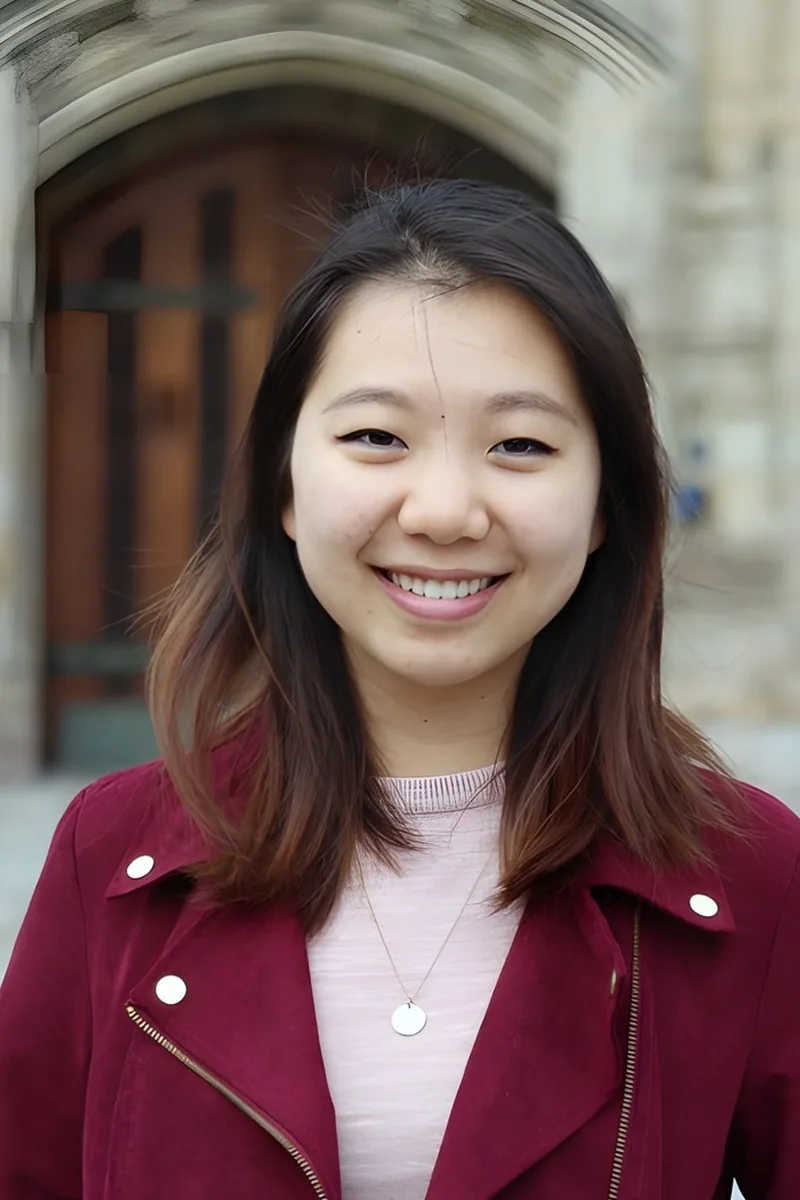
Fractions, ratios, and proportional reasoning are where math starts to feel abstract for the first time — and where a lot of students quietly lose confidence. Megan spent four years tutoring K-12 math and knows how to make concepts like integer operations and basic geometry click before students carry gaps into high school. Rated 5.0 by students.
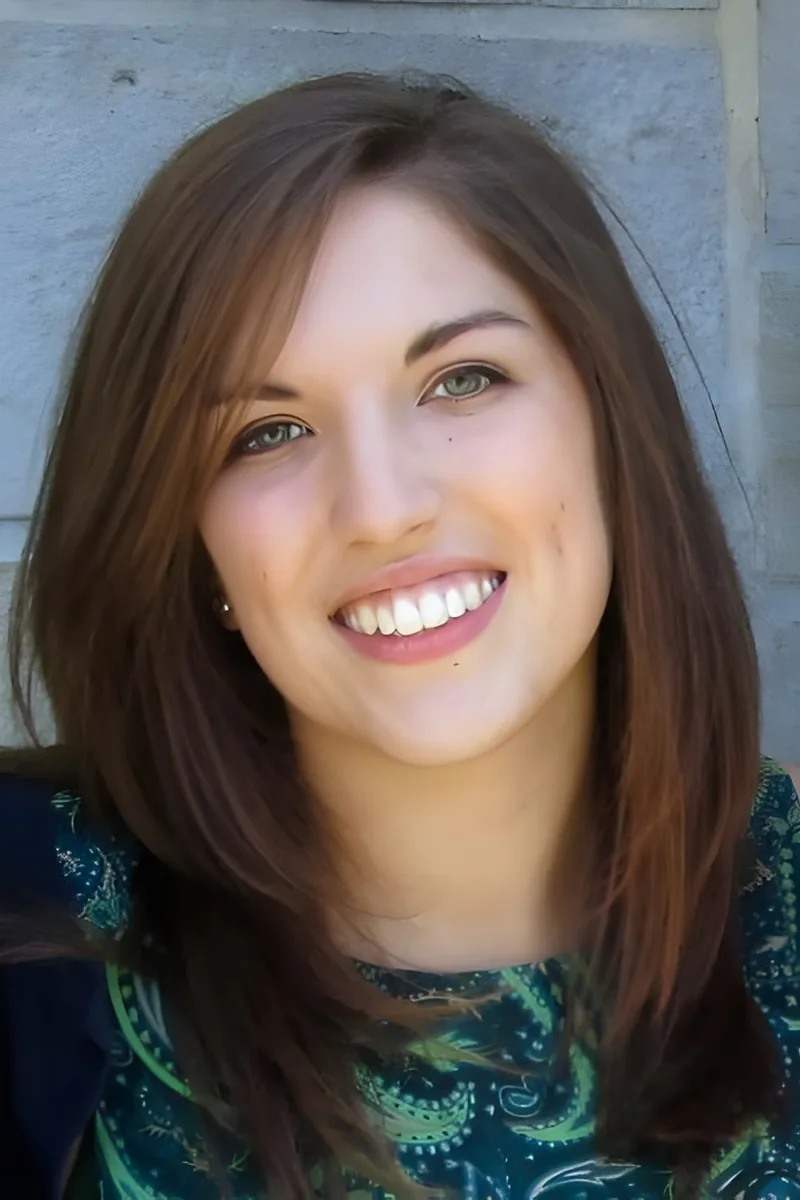
Ratios, proportional reasoning, and introductions to negative numbers can feel like a completely new language for middle schoolers. Suzie makes these concepts concrete — she's the kind of tutor who'll use a real scenario to explain why dividing by a fraction means multiplying, then make sure the mechanics stick through practice. She holds a 5.0 rating across her students.
Fractions, ratios, proportions, and that first encounter with negative numbers — middle school math is where confidence either builds or breaks. As a former classroom teacher who worked with every ability level in Detroit public schools, Rebecca knows how to make these foundational concepts stick by tying them to problems students actually find interesting.
The jump from arithmetic to algebraic thinking is one of the biggest leaps in a student's math life, and it happens in middle school. Andrew tackles topics like ratios, proportions, integer operations, and introductory equations by tying them to tangible scenarios — the kind of intuitive problem-solving that his own engineering training reinforced.
The jump from arithmetic to algebraic thinking is one of the biggest shifts in a student's math life — suddenly there are variables, negative numbers, and multi-step word problems. Ashley approaches middle school math by connecting each new idea to something concrete, drawing on the same problem-solving instincts she developed through her engineering training at Michigan.
A chemistry degree might not be the first thing you'd expect from a middle school math tutor, but David's science training means he constantly connects ratios, proportions, and graphing to real scenarios students can visualize. He's particularly effective at teaching fraction operations and decimal conversions — the skills that quietly determine whether a student thrives or struggles in high school math.
Fractions, ratios, proportions, and that first encounter with negative numbers — middle school math is where students either build momentum or start losing it. Eric tackles each of these topics with concrete examples and a collaborative style, making sure a student genuinely understands a concept before moving to the next one. He teaches across a wide range of math levels, so he knows exactly where these middle school skills are heading.
The jump from elementary arithmetic to proportional reasoning, negative numbers, and basic geometry can feel overwhelming without someone who breaks each concept into manageable pieces. Rae's economics background means she's constantly pulling in real-world examples — budgets, percentages, data interpretation — that make abstract middle school math click.
I am a learner for life and I love sharing my knowledge with others. I have tutored middle-school students for one year and university students for two years. My focus is mainly on mathematics, chemistry, and related fields. I have degrees in both mathematics and biomedical engineering so I cover a lot of ground in the physiological sciences, computer programming, and statistics as well. Taking tests is one of my strong points and I have some killer strategies to share!
I am a undergraduate freshman of the University of Michigan, studying business at the Ross School of Business. Working together with students and having a good time while seeing steady improvements has proven to provide me great joy. I believe that communication and relationship building is crucial for students to open up about their struggles and also for me to identify problems they don't realize they can improve on, so this is a key aspect of all of my lessons. During my free time, I enjoy playing sports or snacking on desserts while binge-watching Friends!
Growing up in a large family, Matthew was the younger sibling who got walked through homework problems at the kitchen table — and now he plays that role for middle schoolers wrestling with fractions, decimals, ratios, and early equation-solving. He knows that confidence matters as much as correctness at this stage, so he builds in brain breaks and celebrates small wins to keep students engaged. He's currently an honors math major at Notre Dame, rated 4.9 by students and families.
Tutoring middle schoolers through the Detroit Education Society gave Jack a sharp sense of where students typically stumble — whether it's proportional reasoning, negative numbers, or translating word problems into equations. He makes math feel approachable by connecting new ideas to things students already understand, building momentum heading into high school. His 4.9 rating speaks to how well that approach lands with families.
Medical school in Pakistan means Pareesa solves math daily — dosage calculations, unit conversions, statistical analysis — so the proportional reasoning and equation-solving middle schoolers are tackling is territory she navigates constantly. Her English literature degree from the University of Michigan also sharpened her ability to break down complex word problems into clear, logical steps. Rated 5.0 by students.
The jump from arithmetic to middle school math — negative numbers, proportional reasoning, basic geometry — trips up a lot of students who were doing fine before. Surina went through that exact struggle herself, and she's spent years since then figuring out what makes these transitional concepts actually stick. She turns abstract ideas like coordinate graphing and two-step equations into something students can visualize and talk through.
The jump from elementary math to middle school math trips students up when ratios, proportional reasoning, and basic geometry all land at once. Nikitha's approach is discussion-driven — she talks through problems with students so they can articulate what they understand and where they're getting stuck. Her computer science background also means she's comfortable connecting math to real-world logic and problem-solving.
Ratios, proportional reasoning, and early equation work are the skills that either set a student up for algebra or leave them playing catch-up for years. Rohan has tutored middle schoolers through organizations like P.A.A.S.N. of Novi and privately, building comfort with these building-block concepts. He adjusts pacing to each student rather than rushing toward the next topic.
Tara's MBA means she's spent years working with budgets, forecasting, and quantitative models — so when a middle schooler asks "when will I ever use this," she can answer with specifics. She leans into that business lens to make topics like percentages, ratios, and basic equation-solving feel like practical tools rather than abstract exercises. Rated 4.9 by families.
The jump from fifth-grade math to proportional reasoning, negative numbers, and basic geometry catches a lot of middle schoolers off guard. Trishani has been tutoring students at this level for years and knows exactly where the conceptual gaps tend to hide — especially around fractions, ratios, and translating word problems into equations. She holds a 5.0 rating from the families she's worked with.
The jump from elementary arithmetic to middle school topics like ratios, proportional reasoning, and basic geometry catches a lot of students off guard. Rachel teaches these concepts by connecting them to concrete situations students already understand, then gradually building toward the abstract. Her special education training gives her a sharp eye for where a student's understanding is actually breaking down versus where they're just making procedural errors.
Reed College's political science program is heavy on formal logic and structured argumentation — skills Aiden now applies to breaking down the kind of multi-step problems that trip up sixth and seventh graders, especially when variables first enter the picture. His 33 ACT score confirms he's comfortable with quantitative reasoning, and his extensive algebra teaching list means he can see exactly where today's middle school lesson is heading and prepare students for what's coming next.
Fractions, ratios, and early equation-solving can feel like disconnected rules if nobody explains the logic underneath. Matthew treats middle school math as a chance to build the kind of number sense that makes algebra feel natural later on. His engineering background means he always has a real-world example ready — whether it's proportions in a car design or negative numbers on a thermometer.
Sheyna's special education master's degree trained her to diagnose exactly where a student's understanding is breaking down and rebuild from that point — a skill that's particularly useful when middle schoolers hit the wall between arithmetic and early algebraic thinking. She zeroes in on the conceptual gaps behind topics like integer operations and equation-solving, rather than just re-demonstrating the procedure a student already didn't follow the first time.
The jump from fifth-grade arithmetic to middle school math — negative numbers, fraction operations, intro to variables — trips up a lot of students who were previously confident. Joyce tackles that transition head-on, building comfort with concepts like ratios, proportional reasoning, and basic equation-solving so they feel routine rather than intimidating. She's a Columbia Biomedical Engineering student rated 5.0 by her students.
The jump from fifth-grade arithmetic to proportions, negative numbers, and basic geometry catches a lot of middle schoolers off guard. Rebekah's approach is to try multiple explanations until one lands — if a visual model for fractions doesn't work, she'll switch to a number line or a real-world scenario. That flexibility, sharpened across years of teaching kids in very different settings, is why she holds a 5.0 rating.
Ratios, proportions, and introductory equations can feel like a maze when a middle schooler's textbook jumps between topics every week. Krisha ties these ideas together so students see how fractions, decimals, and percentages are really the same concept in different forms. She's been tutoring math across grade levels for years and holds a 5.0 client rating.
Fractions, ratios, and proportional reasoning are the concepts that quietly determine whether a student thrives or struggles in high school math. Davis breaks these topics down using concrete examples — unit pricing, recipe scaling, sports statistics — so the reasoning clicks before the formulas come out.
I am currently working toward a Master of Arts in Education in Teaching English as a Second Language at Aquinas College. I consider myself a life-long learner and am excited to get started with Varsity Tutors. I am open to tutoring a wide range of subjects and levels as each brings a unique set of challenges and rewards. In my free time, I am an avid reader of both fiction and nonfiction texts and enjoy kayaking with my son and spending time outdoor with our dogs.
The jump from elementary arithmetic to middle school math — ratios, negative numbers, basic equation solving — is where many students first decide whether they're "math people" or not. Nikki has been tutoring this age group for years and knows how to make topics like fractions and proportional relationships feel logical instead of intimidating.
The jump from arithmetic to proportional reasoning, integer operations, and basic geometry catches a lot of middle schoolers off guard. Samantha tackles these transitions by tying abstract concepts to tangible examples, building the kind of number sense that pays off long before algebra starts. Her 35 ACT composite speaks to the depth of her own math fluency.
The jump from elementary arithmetic to middle school topics like ratios, proportional reasoning, and negative numbers catches a lot of students off guard. Alexandra tackles each of these concepts with several different problem-solving strategies, letting students discover which method makes the most sense to them. Her 5.0 rating speaks to how well that flexible approach lands with middle schoolers.
Olivia approaches middle school math the way she's been trained to teach in her Elementary Special Education program: by identifying exactly where a student's understanding breaks down and rebuilding from that point. Whether it's ratios, proportional reasoning, or early geometry, she makes each concept concrete before moving to the abstract.
Ratios, proportions, and basic equation-solving tend to feel abstract until someone connects them to problems a student actually cares about. Nicholas brings a science-heavy background from the University of Michigan's biochemistry program, so he naturally ties middle school math concepts to real measurements, conversions, and data — making the "why" behind each topic click.
The jump from elementary math to middle school math introduces concepts like integer operations, basic equation solving, and coordinate graphing that set the trajectory for everything through high school. Michael takes a patient, logical approach that gives students room to make mistakes and actually learn from them. He's the kind of tutor who'll slow down on a tricky fraction problem rather than rush ahead to check a box.
Fractions, ratios, and proportional reasoning trip up a lot of middle schoolers because the concepts stack on each other — miss one piece and the rest feels impossible. Anna breaks these topics into concrete steps, connecting abstract operations to real-world scenarios so the logic clicks. Her psychology background gives her a sharp read on where a student's understanding breaks down.
Fractions, ratios, proportions, early geometry — middle school math piles on foundational topics fast, and gaps here snowball quickly. Jack tackles each concept with concrete examples and checks understanding at every step before layering on complexity. Rated 4.9 by students, he's particularly effective at rebuilding confidence when a student has started to feel like they're "just bad at math."
Fractions, ratios, and proportional reasoning trip up a lot of middle schoolers — not because the concepts are hard, but because they're often taught as disconnected procedures. Juliane's applied physics background means she naturally ties these ideas to real measurements and scenarios that make the math click. Rated 4.9 by students.
Fractions, decimals, and early equation-solving can feel like disconnected rules unless someone shows the thread connecting them. Jonathan approaches middle school math by finding what each student is genuinely interested in — sports stats, music, even superheroes — and turning those interests into the word problems and examples that make concepts stick.
Chemical engineering at the graduate level means Raha solves differential equations and models complex systems daily — so she can trace middle school topics like ratios, proportional reasoning, and basic equation-solving all the way forward to where they actually lead. That big-picture view lets her explain *why* a technique works in a way that sticks, not just *how* to get through tonight's homework. Her experience teaching across age groups means she knows how to dial the complexity to exactly where a sixth or seventh grader needs it.
From fractions and ratios to early equation-solving, middle school math is where students either build real number sense or start faking it. Kinza's experience teaching in classrooms spanning three countries gave her a knack for spotting exactly where a concept falls apart for a student and rebuilding understanding from that point. Rated 4.8 by students.
From fractions and ratios to early linear equations, middle school math covers a huge range of skills in a short time. Sarnath's strength in both math and economics means he can show students why concepts like percentages and proportions actually matter — making the material click instead of feeling like busywork.
Testimonials
Because the right Middle School Math tutor makes all the difference.
Average Session Rating – Based on 3.4M Learner Ratings
Other Grand Rapids Tutors
Related Math Tutors in Grand Rapids
Frequently Asked Questions
Middle school math shifts from learning procedures (like "how to divide") to understanding why those procedures work. Students move from concrete examples to abstract thinking—working with variables, equations, and proofs. This transition can feel challenging because it requires a different type of thinking, but personalized tutoring helps students build conceptual understanding alongside their procedural skills, making the jump feel more natural.
Different schools across Grand Rapids's 27 school districts may use different textbooks and teaching approaches. Varsity Tutors connects you with expert tutors who understand these variations and can tailor instruction to match your student's specific curriculum, whether they're using traditional textbooks, integrated math sequences, or other approaches. During your first session, the tutor will learn about your student's classroom materials and teaching style to ensure seamless alignment.
Word problems require students to translate language into mathematical operations—a skill that takes practice and strategy. Expert tutors teach students how to break down problems into steps, identify what information matters, and choose the right approach. Through guided practice and pattern recognition, students build confidence and develop a toolkit of strategies they can apply to unfamiliar problems.
Showing work reveals a student's thinking process and helps teachers identify where misunderstandings happen—not just whether the answer is right. It also helps students catch their own mistakes and builds mathematical communication skills. Tutors work with students on explaining their reasoning clearly, which deepens understanding and improves grades on assignments and tests that require work to be shown.
Math anxiety is common in middle school, especially during the conceptual shift, but personalized 1-on-1 instruction in a low-pressure environment can transform how students feel about math. Tutors work at your student's pace, celebrate progress, and help them see patterns and connections they might miss in a classroom setting. As students experience success and understand concepts more deeply, confidence naturally grows.
Multi-step equations, graphing, and introductory proofs are common stumbling blocks because they require students to juggle multiple concepts at once. Word problems involving these topics add another layer of difficulty. Expert tutors break these topics into manageable pieces, help students see how different concepts connect, and provide targeted practice so students build mastery step by step.
The first session is about getting to know your student—their learning style, current challenges, and goals. The tutor will assess where your student stands, understand what's been taught in their classroom, and identify specific areas to focus on. You'll leave with a clear sense of how personalized instruction can help, and a plan for moving forward together.
Varsity Tutors matches you with expert tutors who specialize in middle school math and understand the Grand Rapids area. Simply share your student's needs and goals, and you'll get connected with tutors available to work with your student. From there, you can start with a first session and see if it's the right fit.
Let’s find your perfect tutor
Answer a few quick questions. We’ll recommend the right plan and match you with a top 5% tutor.